AI Growth Depends on Power, Permitting, and Broader Ownership

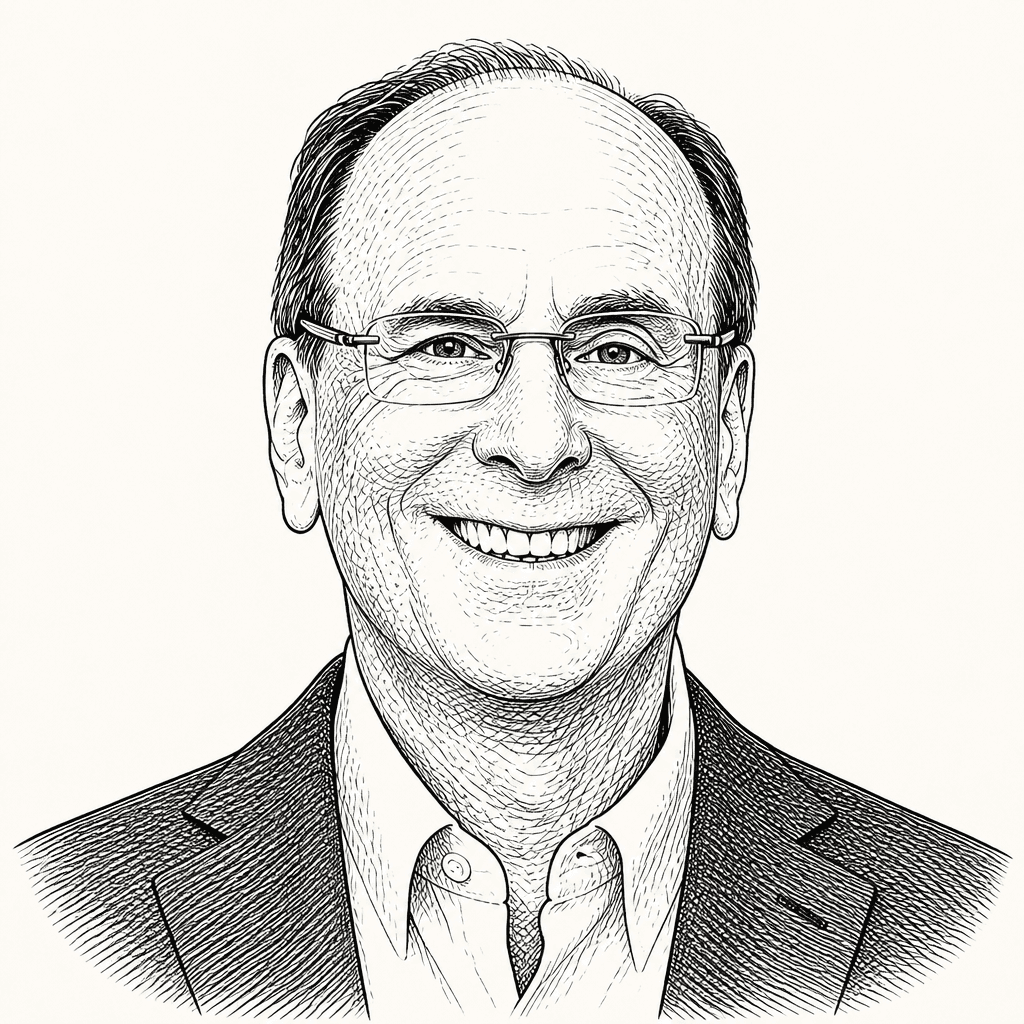
BlackRock chief executive Larry Fink used an Aspen Ideas Festival conversation with Fareed Zakaria to argue that AI can sustain a new phase of U.S. growth only if the country builds the physical infrastructure behind it. Fink’s case was that power grids, data centers, skilled labor, faster permitting and deeper capital markets matter as much as algorithms — and that the political test is whether more households can own a share of the gains rather than watch them accrue to a narrow set of companies and investors.

AI-era optimism depends on infrastructure and ownership
Larry Fink presented the central economic constraint of the AI boom as less about demand than about whether the United States can build and finance the infrastructure behind it. The opportunity, he said, is large enough to sustain long-term optimism. But the gains will not spread automatically. They depend on power grids, data centers, compute, skilled labor, faster permitting, and broader participation in capital markets.
Fink’s optimism began with the oil market. He described the global economy’s response to the Iran war and the related oil-market stress as a live example of why he remains constructive over long periods. Between 10 million and 20 million barrels a day, he said, could not be transported, and some energy-company leaders privately warned that oil might trade above $200 a barrel. But the system adapted.
Saudi Arabia, Fink said, used a second pipeline to move exports from the Persian Gulf to the Red Sea. Abu Dhabi had another pipeline. China cut daily consumption by 4 million barrels, using reserves and probably more coal, while continuing to build nuclear capacity and large solar fields. The United States added 3 million barrels of production, and Venezuela increased from roughly 200,000 barrels before U.S. involvement to about 1.3 million barrels. Fink also said, without elaborating, that Abu Dhabi “left OPEC” and had capacity to export another million barrels.
That mix, he argued, “basically equalized” the shock. If there is “true peace” and Iran can sell oil freely without sanctions, he said, oil could go to $50. The larger point was not about oil alone. It was about the ability of markets, governments, companies, and consumers to find substitutes under pressure.
For me to watch how the global economy navigated this is one of the fundamental examples why I'm a long-term optimist. We solve problems.
But Fink’s optimism was not an argument that resilience happens automatically. Across the discussion, it depended on three conditions: infrastructure must be built fast enough, capital must be available for long-term investment, and more people must own a stake in the growth that follows. Resilience, for Fink, is the capacity to redirect supply, finance new capacity, and keep investing through shocks.
Fareed Zakaria framed the oil response as part of a broader pattern: the global financial crisis, COVID, tariffs, and war have all hit the economy, yet the system has shown “extraordinary resilience” precisely because it is global. Fink accepted the premise and expanded it. He added the dot-com crash to the list, noting that markets fell 30% to 40% then, but over the past 25 or 26 years the market is up roughly eightfold.
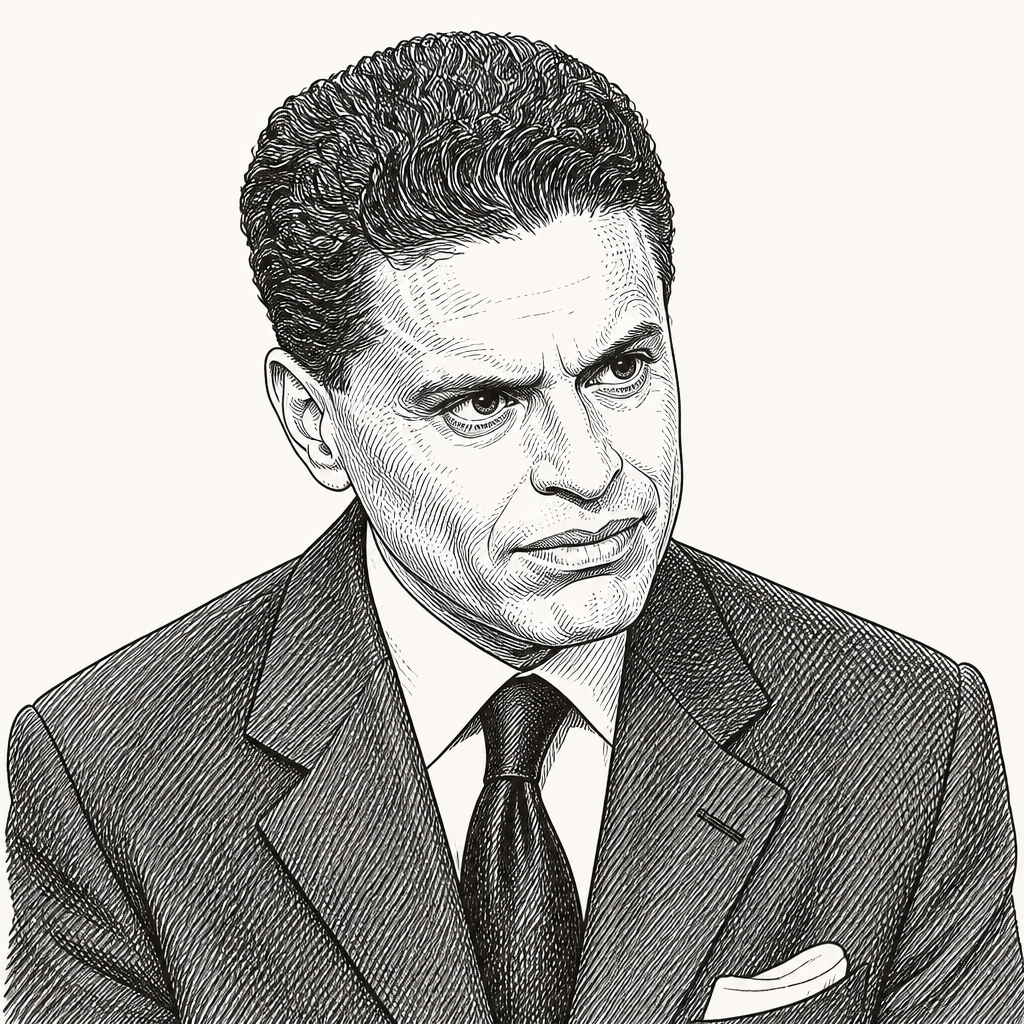
His conclusion was explicitly distributional. Capital owners, he said, have been far better off than people dependent only on wages. The lesson was not that investors should trade crises, but that they should stay invested through them. He said missing 10 pivotal market days would have cut returns by more than half. That is why, in his telling, more people should be invested in their country’s economy: Americans, Germans, or citizens of any country should be able “to grow with your country.”
The AI boom is creating profits because it is creating shortages
Zakaria pressed Fink on whether valuations had become “frothy,” citing SpaceX trading at about 90 times revenues and comparing that with Amazon at roughly four times revenues. Fink did not defend every company-specific valuation, but said the overall S&P price-earnings ratio looked “pretty fair” for current conditions.
The more important distortion, he argued, is not inflated multiples but inflated earnings caused by shortages. AI build-out has created scarcity in memory chips, power, and other essential inputs. Companies selling into those bottlenecks can charge multiples of what they charged two years earlier. Fink’s formulation was precise: “We don’t have a PE ratio problem, we may have inflated earnings.”
That distinction connects AI to inflation. Fink argued that the economy has “too much demand and not enough supply” in fundamental areas. Traditional monetary policy is built to suppress demand. Higher interest rates can cool borrowing and spending, but they do not directly produce more chips, more copper wire, more skilled workers, or more power-grid capacity. The Federal Reserve’s usual tools, in this account, do not fit a supply shortage.
The most acute supply constraint, he said, is compute. BlackRock is using OpenAI models to inspect vulnerabilities, and Fink said these models are exposing significant risks. He was not worried about BlackRock or JPMorgan being able to pay for security-related AI tools. He was worried about municipalities, hospitals, transit systems, and state and local governments. If they cannot afford the models, the benefits and protections of AI will accrue unevenly.
AI in the short run is more inflationary than deflationary because we gotta spend all this money doing it.
Fink’s phrase for the resulting industrial structure was a “K economy”: a few big winners and many losers inside industry after industry. Scale operators will benefit because they can afford compute, models, and infrastructure. Smaller and medium-sized businesses may not. He still called AI a strong long-term investment platform, but warned that if the gains go only to a few firms and a few investors, democracy itself faces a problem.
The policy conclusion he drew was not to slow AI down. It was to reduce the cost of compute and broaden access. Every hospital, municipal transit system, state government, local government, and smaller business, he argued, needs a way to participate. For governors and states blocking data centers, Fink’s response was blunt: if the United States slows down, China will not. “So you want China to win?” was how he put the question.
Power, not algorithms, may decide the AI race
Fink turned the AI discussion into a discussion about electricity. “AI is just a bunch of electrons,” he said. Without power generation and power distribution, the United States will not succeed in AI.
The core constraint, for Fink, is the American grid. He said the United States has 19 segments in its power grid, while Europe has one grid. Europe has power-supply problems; the United States, he argued, has abundant power through natural gas but cannot distribute it properly. States with better grids are attracting more manufacturing. States such as California and New York, which he described as denying the needed build-out, are losing growth to places that can supply power.
Fink estimated that the United States will need to invest hundreds of billions of dollars in the power grid. That investment is not ancillary to the AI economy. It is the precondition for it. Data centers, compute capacity, manufacturing facilities, and the broader AI supply chain all require electricity.
Zakaria asked whether the AI economy itself has become a source of fragility. If AI is removed from the stock market, he said, market performance looks less impressive; if AI spending is removed from the economy, there is barely any growth. Fink answered in his optimistic register — “thank God we have AI and we’re not Europe” — and said that, looking at the economy, “at least 50 plus percent” is being driven by AI. He tied that claim to the build-out of data centers, power infrastructure, and related capacity rather than to a formal economic measure.
The build-out, however, is not only benefiting technology companies. Fink connected AI investment to skilled labor and middle-class wages. He said the economy has shortages of electricians, plumbers, welders, HVAC workers, and other trades. He cited a CEO who added 2,000 workers at a plant in Greenville, South Carolina, where the average wage was $80,000. States allowing AI-related infrastructure to be built, he argued, are rebuilding their middle class faster than states resisting it.
That labor-market claim was central to his case for AI infrastructure. Fink was not presenting data centers merely as assets for investors or tools for large technology firms. He was arguing that the physical economy around AI — power, construction, manufacturing, cooling, skilled trades — can create middle-class jobs, if permitting and power constraints do not choke it off.
The distributional answer is broader ownership of growth
The ownership argument was not separate from Fink’s AI case. It was his answer to the political problem created by an economy in which AI, compute, and scale concentrate profits. If a small number of companies and investors capture the upside, he warned, the technology’s economic success could become socially unstable. If more households own productive assets, the same growth can narrow the gap between the wealthy and the middle class.
Fink tied this to the deficit. On January 1, 2000, after 223 years as a nation, he said, the U.S. government had an $8 trillion deficit. Today, he said, it is close to $38 trillion, meaning the country added roughly $30 trillion over 25 and a half years. Both parties, he said, are guilty. His solution was simple in statement and difficult in execution: grow the economy by 3% a year. Without that, he said, the country is in trouble.
That requires empowering private capital, streamlining permitting, and making it easier to invest in infrastructure and productive capacity. Permitting was one of his clearest examples of political mismatch. The Inflation Reduction Act, he said, was passed overwhelmingly by Democrats over Republican opposition, but roughly 80% of the money went to red states. The reason, in his telling, was not ideology but permitting speed: red states could approve and build projects faster than blue states. For Fink, that should be a wake-up call. The places that support investment rhetorically may not be the places able to receive it.
He praised Trump accounts and said BlackRock is matching the government’s $1,000 contribution for every child born to its employees. He argued every company should do the same, and even suggested finding ways to give every young child $10,000 because compounding could eventually help pay for college and more.
His critique of Social Security followed from the same ownership logic. Fink called Social Security “your worst investment in your lifetime,” while acknowledging it was designed as foundational insurance rather than an investment. In his framing, an individual contributes 6% of income up to about $150,000 and the company matches 6%, creating what he described as a 12% contribution. If a person retires at 65, he said the math shows they break even at 80, implying “zero return” over those 15 years.
Fink contrasted that with systems such as Australia’s, where retirement money goes into investment accounts. Australia, he said, has about 28 million people and the fifth-largest retirement system in the world. He also said Mexico now has a better retirement system than the United States. He did not call for changing Social Security for people over 50, who are already dependent on it. But for younger workers, he argued the country should rethink participation, perhaps with a system that is partly insurance and partly investment.
The obstacle, he said, is that Social Security contributions help fund the federal government’s cash flow. The country has become dependent on that money. Breaking that dependency, in his view, is necessary if younger Americans are to build wealth by investing in America rather than merely financing current obligations.
Inflation and interest rates are being shaped by supply, not just demand
Fink distinguished between types of inflation. Five percent wage inflation, he suggested, is not automatically bad. Inflation in goods and services can be more problematic, depending on the category. He said inflation has been running higher than desired, but corporate margins have risen because technology has created efficiencies that offset some price increases. That helps explain, he said, why stocks have performed well even as many households feel squeezed.
His account also explains why official measures can look better than lived experience. Efficiency gains and corporate margins can improve the aggregate picture, while consumers still feel higher prices in their “pocketbook.”
On interest rates, Fink defended the need for an independent Federal Reserve, while also saying that every president wants lower rates. If oil falls to $50 and lower energy costs filter through the economy, he said, that could create a path toward moderating inflation and therefore lower rates. But he warned that the Fed cannot simply force the full market outcome it wants.
The reason is the bond market. The Fed can control the overnight federal funds rate, but it cannot control the long end of the yield curve, particularly beyond the 10-year point that affects mortgage rates. If the Fed cut rates when markets thought it should not, Fink said, the yield curve could steepen and mortgage rates could rise rather than fall. His conclusion was that capital markets are now larger than any central bank.
That view fits with his broader argument about American strength. The United States, he said, is differentiated from other countries by its capital markets. Those markets depend on trustworthy data and an independent governing body in the Federal Reserve. But independence does not mean omnipotence. If the market disagrees with the Fed’s decision, “the market will overwhelm it.”
Government involvement is rising because markets optimized for cheapness, not security
Zakaria challenged Fink on what he described as an economy increasingly run by politics rather than economics: tariffs applied and withdrawn idiosyncratically, government decisions about favored or disfavored companies, and a president personally intervening in economic decisions. Fink pushed back on the word “interference” and substituted “government involvement.”
Fink did not defend every presidential behavior or specific negotiation. His broader claim was that governments around the world have realized that national security requires deeper coordination with business. The free market, left alone, tends to find the cheapest source of manufacturing. That logic left the United States fully dependent on chips manufactured in Taiwan and rare earths from China, he said. Governments have a legitimate role, he argued, in reducing those vulnerabilities.
He drew a line between strategic and nonstrategic dependence. Depending on China to build toys is not a national-security issue, he said. Depending on China for solar panels and battery technology is different. Fink said he is a believer in solar and favors being “energy agnostic,” but nearly every solar panel is built in China and the best battery technology is “100% China.” If the United States wants solar to become a leading energy source, it must either build more of the supply chain itself or find other countries that can manufacture cheaply.
Battery storage was the category he emphasized most. The United States needs the ability to make energy-storage systems domestically, he argued. He pointed to Ford’s partnership with CATL, the Chinese battery company, as a possible first wave of such production, and said he did not see a national-security problem in Ford and CATL building battery storage in the United States.
From ESG to energy pragmatism
Zakaria pressed Fink on his earlier public advocacy around environmental standards, green technology, and ESG, and on the political backlash that followed. Fink said people often took fragments from his 2020 letter and ignored an important line: he said never to divest from hydrocarbons.
Fink said his current language has changed from the “green premium” to “energy pragmatism.” The green premium — the higher cost of decarbonizing — was, in his estimate, 50% to 100%. With rising populism and little tolerance for long-term planning, he concluded that governments and voters were not willing to absorb that premium.
He said the change in language was not caused by the current administration. It was caused by the Ukraine war. The war exposed Europe’s vulnerability from dependence on Russian gas. He added that the U.S. Northeast also had dependence on Russian gas because pipelines from the Marcellus were not allowed; before Russia’s invasion of Ukraine, he said, Boston Harbor was receiving gas from Russia.
The point was not to abandon renewables, but to stop treating energy policy as a moral binary. BlackRock, he said, has more money invested in renewable power sources than ever. But he now argues for “all the energy we can” because more power means cheaper electricity, better AI prospects, and less vulnerability. Underinvestment in the grid and in energy infrastructure is already showing up in higher utility costs and could cause the United States to lose the AI race.
Private capital is essential to that build-out, he said. Public money alone cannot finance the grid, data centers, new energy technologies, and broader infrastructure, especially given U.S. deficits. Fink said he sees opportunities for “mid-teen returns” in new technologies and data centers, and said he is more optimistic than he has been in 10 years because of technology’s effect on health, longevity, medicines, and productivity.
New York’s risk is a weak value proposition for taxpayers
Zakaria asked Fink about New York City’s new mayor, Mamdani, and what BlackRock might do in response to his agenda. Fink said he is worried about New York. His concern was less framed as opposition to taxation than as a warning about the tax base and service quality.
Fink said 47% of New York City taxes are paid by the top 1%. If the city loses 5,000 people from that group, he argued, it could offset the administration’s other plans. He said it looks likely the city will lose 5,000 or more.
He criticized what he called 13 years of weak administration in New York City, saying the last good mayor was Michael Bloomberg. Quality of life has deteriorated, he said, and the issue is beginning to show up across the city. New York is his adopted home, and he said he has never objected to paying his full taxes there. His objection is that the exchange has become asymmetric: he does not believe the services justify the tax burden.
He compared high earners in New York and California, who he said pay about 54% in fully loaded federal, state, and local taxes, with high earners in the Netherlands, who he said pay roughly the same but receive free medical care and free college education for their children. New Yorkers, he said, do not receive that value proposition. He extended the criticism beyond New York to “many of the different municipalities,” saying mismanagement is the issue.
Asked directly whether BlackRock is thinking about moving jobs out of New York or growing elsewhere, Fink said the firm has about 25,000 to 26,000 employees globally and about 8,000 in New York. It already has platforms in Atlanta and elsewhere around the world. If the New York environment weakens, he said, BlackRock would consider not moving outright, but deploying more U.S. resources to other locations.
The global view reinforces his American optimism
Asked how he keeps track of the world, Fink described a routine built around reading, travel, and constant conversations with clients and governments. He reads four publications before bed — the New York Post, The New York Times, The Wall Street Journal, and The Economist — and said he still reads physical newspapers because he wants to see where editors place stories, not only what appears in a digital feed. The reason for reading several, he said, is that he cannot trust any one of them.
He also said he travels at least two weeks a month. BlackRock is helping Ukraine, on a pro bono basis, prepare a reconstruction fund for when peace comes. It is working with Saudi Arabia to restructure its retirement system, with India on a large digital retirement-investment platform, and with retirement funds in Mexico. That global work, he said, reinforces his comparative confidence in the United States.
Despite the deficits, political fights, infrastructure problems, and inequality risks he spent much of the discussion describing, Fink ended on the view that Americans underappreciate the country’s advantages. Traveling the world, he said, reminds him that there is no other place he would rather live.