Russia’s Nuclear Bastion Makes Arctic Access a NATO Priority
 Eirik Kristoffersen
 Thomas Dans
 Lara Seligman
 Pasi Rajala
 Jesper SørensenThe Aspen InstituteSaturday, July 18, 20269 min read
Russia’s nuclear forces on the Kola Peninsula make the Arctic a direct NATO security concern, Norway’s Chief of Defense Eirik Kristoffersen argues, linking the region to Atlantic defense and U.S. homeland security. Kristoffersen, U.S. Arctic Research Commission chair Thomas Dans and Finnish state secretary Pasi Rajala contend that expanded NATO membership must be matched by ice-capable forces, polar-orbit communications and persistent surveillance. They also argue that alliance coordination should coexist with limited practical cooperation with Russia on shared Arctic problems.

Russia’s nuclear bastion makes the Arctic a core NATO security problem
Russia’s concentration of nuclear deterrent forces and nuclear-capable submarines at the Kola Peninsula base complex, just outside Norway and Finland, is the Arctic’s central military fact, according to Eirik Kristoffersen. Those weapons are not principally aimed at Helsinki or Oslo, he said. Their strategic targets are the United States and major European capitals including Berlin, London, and Paris.
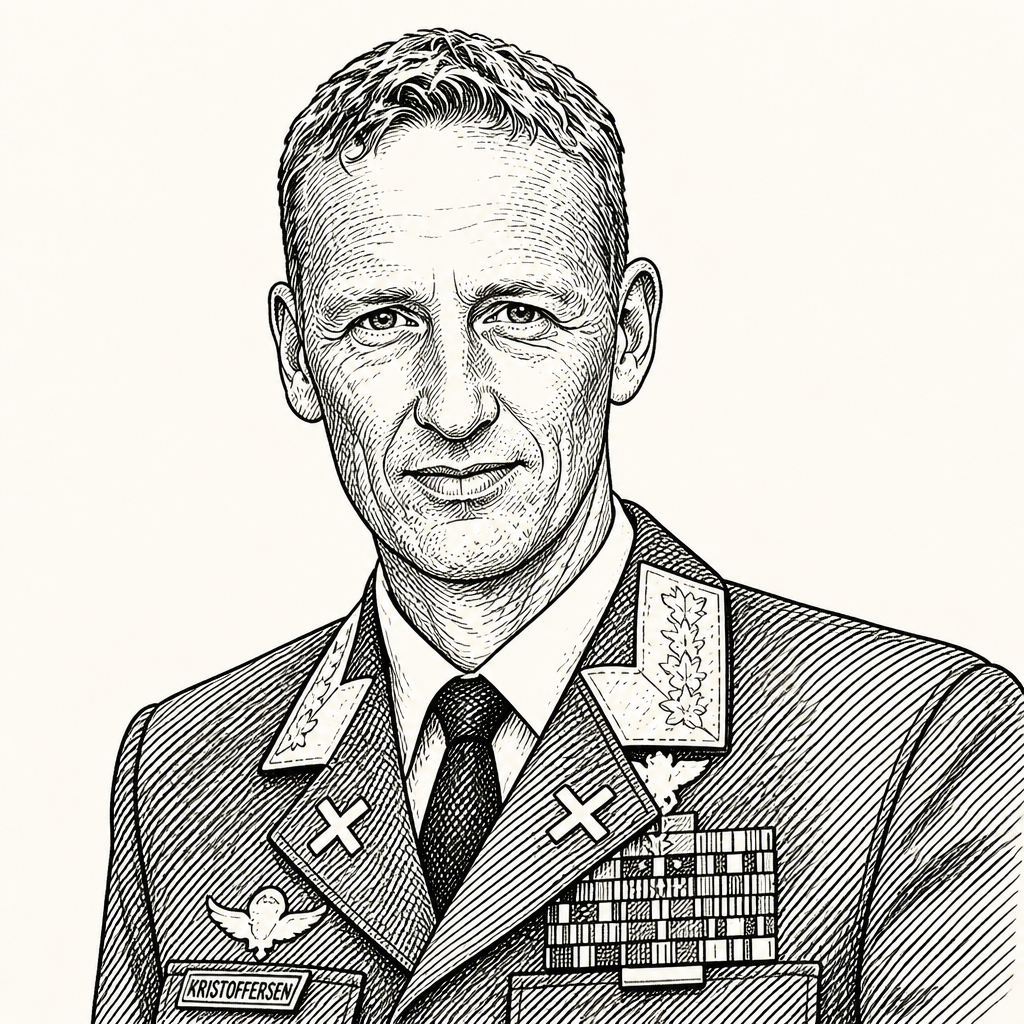
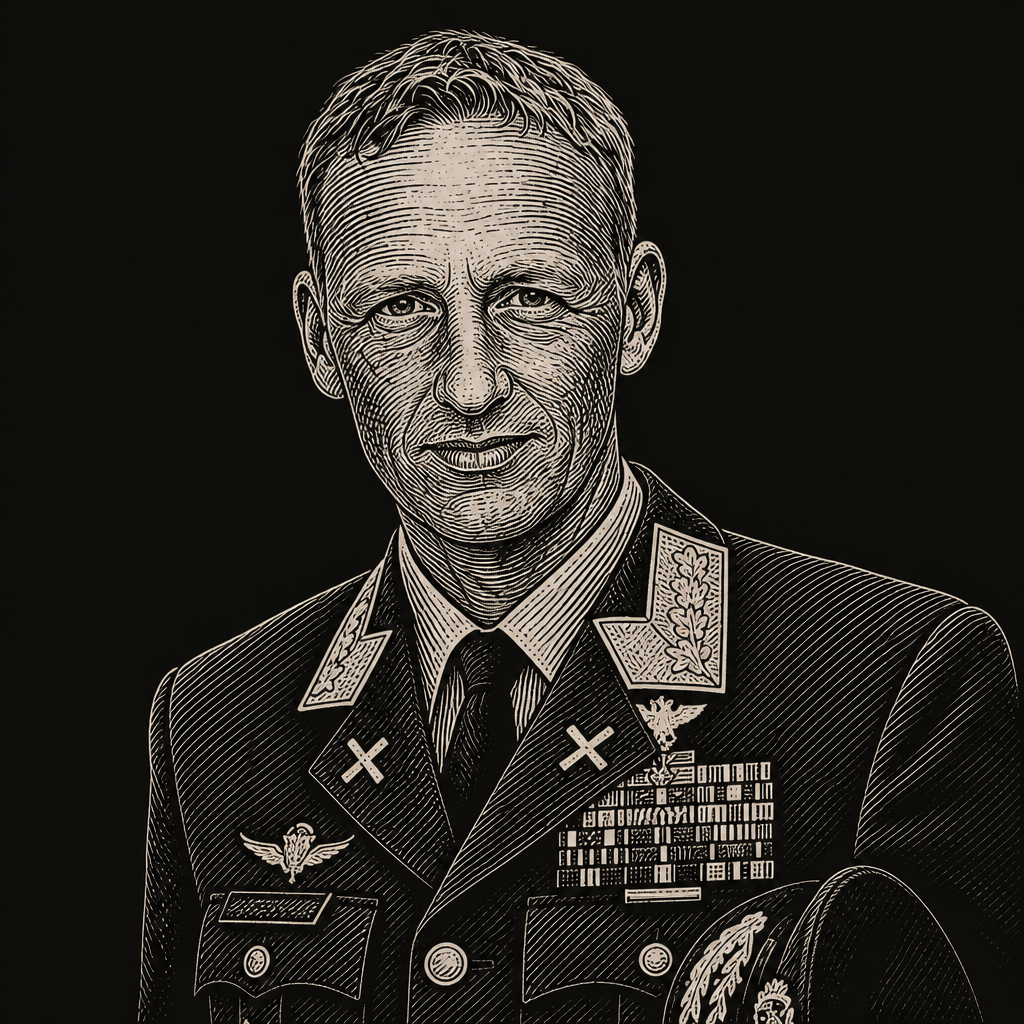
Russian submarines can move through the GIUK gap into the Atlantic, where Kristoffersen said they become difficult to follow and track. The Arctic therefore connects directly to Atlantic defense, European security, and U.S. homeland defense.
The only thing we know that is certain is that Russia will remain heavily on the nuclear deterrence to remain a global power.
Much else is less certain. Kristoffersen named climate change, the world’s future reliance on hydrocarbons, and the eventual shape of Russia-China cooperation as variables whose outcomes cannot yet be known. But Russia’s continued dependence on nuclear power is, in his telling, the durable feature of the region’s security environment.
Thomas Dans similarly identified Russia and China as U.S. “pacing concerns,” while arguing that they should not be treated as one challenge. Russia is an Arctic neighbor, with what Dans described as a 1,500-mile maritime boundary with the United States. China is a newer arrival. Both, he said, are moving more quickly than the United States in certain areas.


The alliance structure has changed materially. Kristoffersen said the seven Arctic nations other than Russia are now NATO members, after Finland and Sweden joined the alliance. The last meeting with Russia’s chief of defense took place in 2013, before Russia’s annexation of Crimea. Since then, the practical military frame has been the Arctic Seven working together rather than the eight Arctic states acting as a single security group.
For Pasi Rajala, the West is recovering from a post-Cold War lapse in attention. Nuclear deterrence once compelled sustained focus on the Arctic, he said; after the Cold War, “many of us kind of dropped the ball.” The response he proposed is not episodic visibility but a durable presence: troops on the ground, ships at sea, aircraft in the air, and surveillance from space.


Access is the capability that turns alliance commitments into Arctic defense
The Arctic’s geography makes access a military capability in its own right. Rajala said opening sea routes and economic opportunity does not make the region easy to use. Its waters remain rough, and operating there requires ice-capable vessels—not only icebreakers, but naval ships designed for the environment.
Finland is working with the U.S. Coast Guard to build Arctic security cutters, Rajala said, drawing on Finland’s experience building ice-capable ships. Those cutters are part of the practical requirement to reach and operate in waters where ordinary maritime assumptions do not hold.
Climate change increases the strategic importance of that access while also creating economic openings. New sea lanes are opening, Rajala said, and Russia and China both have incentives to pursue them. Russia depends on the Arctic for energy revenues and military power; China describes itself as a “near-Arctic nation” and is pursuing a Polar Silk Road through northern waters. Rajala said China seeks both sea routes and access to energy supplied by Russia.
Rajala characterized the Russia-China relationship as “not a marriage of love,” but “a marriage of convenience,” and said Russia is becoming increasingly dependent on China for finance, technology, and other support. Kristoffersen offered a narrower assessment of the military relationship in the Arctic: Norway does not see close military-to-military cooperation there, and Russia may not welcome China into what Moscow regards as a core strategic area.
What is visible, Kristoffersen said, is more limited but consequential: Coast Guard-level exercises, Chinese vessels, research activity that is often dual-use, and Chinese development of icebreakers. China does not need those vessels in the South China Sea, he noted; it needs them in the Arctic. How far the cooperation will go remains unclear.
Rajala made the case most explicitly for persistent allied mobility. He pointed to Finland and Sweden’s NATO membership, forward land-force arrangements involving Sweden, Finland, Italy, and other allies, and Nordic participation in the F-35 program. Kristoffersen emphasized surveillance and the alliance mechanisms needed to coordinate a response, while Dans stressed U.S. capability alongside limited practical cooperation with Russia. Their emphasis differed, but each treated Arctic security as requiring capabilities that can be used in the region rather than declarations of interest in it.
Polar-orbit connectivity is necessary to see and operate in the Arctic
Eirik Kristoffersen said satellite coverage is needed for communications, positioning and timing, surveillance, and research across Arctic distances that cannot be managed from the ground alone. Reliable communications at high latitudes require satellites in polar orbit, rather than the orbits used by many existing systems.
Norway’s Arctic Satellite Broadband Mission, he said, combines civilian and military payloads and is undertaken with partners including the United States and Denmark. The need for collaboration is partly financial: a small country cannot independently build the constellations required for Arctic coverage.
Rajala argued for sovereign satellite capacity “in our own hands,” including optical and radar systems. Radar satellites matter because long Arctic winters and cloud cover limit ordinary visual observation. They can monitor traffic and activity, but also map ice patterns and help track climate change.
Dans described the technical problem in more expansive terms: a race for the ionosphere, the atmospheric region in which the Earth’s magnetic fields converge and charged particles disturb communications. The aurora borealis is one visible expression of that environment; interference with high-frequency communications is another.
The operational goal, he said, is predictive modeling. States need to collect data on changing ionospheric conditions and use it to sustain communications, navigation, and surveillance. Dans also suggested that better understanding could support the ability to deny an adversary communications while preserving one’s own.
Submarine navigation illustrates the stakes. Submarines cannot rely on a consumer mapping system, Dans said. They use inertial navigation, periodically supplemented by information from above and by the Earth’s magnetic environment. In his account, the Arctic’s physical conditions shape both undersea operations and the communications architecture on which military and civilian systems depend.
The climate case reinforces the need for observation. Kristoffersen described changes he has observed near his childhood home north of the Arctic Circle: glaciers that once remained snow-covered through the fall became bare ice and, in some places, have since disappeared. Thawing permafrost is affecting infrastructure, including on the Russian side and in Norway’s Svalbard archipelago, where he said the airfield requires more frequent renovation.
No one claimed to know precisely how diminishing ice will alter weather, waves, or ocean conditions. Kristoffersen’s expectation was more extreme weather and harder operating conditions alongside new possibilities. That uncertainty makes Arctic monitoring part of the region’s basic security infrastructure as well as its environmental research.
Greenland is a test of whether Arctic security can remain an alliance project
Greenland brought the alliance question into its most politically sensitive form. Pasi Rajala called Greenland strategically important and said NATO needs to rebuild Arctic presence that diminished after the Cold War. But he was unequivocal that Greenland’s future is for Greenlanders alone to decide, including whom they choose to partner with.
Rajala’s position combined self-determination with collective security. He said there are not Chinese ships sailing around Greenland at present, but that the alliance must secure Greenland as part of a broader Arctic posture over the longer term. Denmark is already investing heavily, he said, and NATO initiatives are increasing activity. The relevant answer, in his view, is allied action rather than a unilateral approach.
Jesper Sørensen, Denmark’s ambassador to the United States, argued that the operational means for stronger cooperation already exist. The United States had 17 bases or facilities in Greenland during the Cold War and now has one, he said; that reduction was an American decision, not a Danish refusal to cooperate. Denmark has remained open to discussions about expanding security and economic collaboration within the existing relationship between the Kingdom of Denmark and the United States.


Sørensen’s concern was not that more security activity would be illegitimate. It was that it should proceed through diplomacy and existing arrangements, because the consequences of a rupture would extend well beyond the bilateral relationship.
Rajala made the potential cost of coercion explicit. He said he did not see a plausible route to a forceful U.S. approach, and expressed trust in the discussions between Washington and the Kingdom of Denmark. But if one occurred, he argued, it would have consequences for the global political system and economy, including what he called a “free pass” for China to pursue plans concerning Taiwan.
Kristoffersen redirected attention to the Kola Peninsula, which he considers the source of the more immediate military threat. Greenland is important to U.S. security, he said, but NATO already has mechanisms to secure the Arctic: shared situational awareness, coordinated planning, and the capacity to respond if necessary. Those mechanisms are the framework he urged allies to use.
Economic opportunity depends on keeping the High North manageable
The Arctic’s strategic value is not exhausted by deterrence. Dans framed U.S. priorities around military and national security, energy security, economic development, and community security. But the economic examples offered were projects and opportunities that depend on operating successfully in a contested environment.
Dans pointed to a proposed two-stage liquefied-natural-gas project that he described as the largest investment ever in the U.S. Arctic energy industry. It would move North Slope gas first to Anchorage and then support exports, primarily to U.S. partners in Asia.
He also identified naturally occurring “white” or “gold” hydrogen in Alaska and geothermal energy in the Aleutian Islands as longer-horizon possibilities under examination by the U.S. Arctic Research Commission. These were prospective opportunities, not claims of established production.
Kristoffersen offered a parallel Norwegian example. His hometown of Bjerkvik, near Narvik and north of the Arctic Circle, has substantial hydropower, and he said OpenAI is building a large data center there. For Norway, Arctic resources include hydropower, oil and gas, and fisheries; development is part of the country’s view of the High North as its future.
But Kristoffersen attached a condition to that future: “High North with low tensions.” Norway seeks to preserve dialogue with Russia not because the military problem has disappeared, but because durable economic activity and manageable security conditions are connected.
Dans made a similar case for limited practical cooperation. The United States needs to resolve major issues with Russia, including those involving Ukraine, he said, and must approach Russia from a position of strength. Yet neighbors still share Arctic problems. He cited king salmon and king crab that he said have moved from Alaskan into Russian waters, while scientific cooperation is absent.
The United States, with all its military might, with all its economic might, with all its innovation, the United States still needs its allies.
Rajala’s closing proposition was that allies should be treated as assets rather than liabilities. Kristoffersen likewise urged the United States to use its leadership to bring together the Arctic Seven, pursue dialogue with Russia where practical, cooperate scientifically to preserve the Arctic, and include Japan in that work.