Communities Build Trust When They Control Their Own Stories
 Claire Maracle
 Jeremy Williams
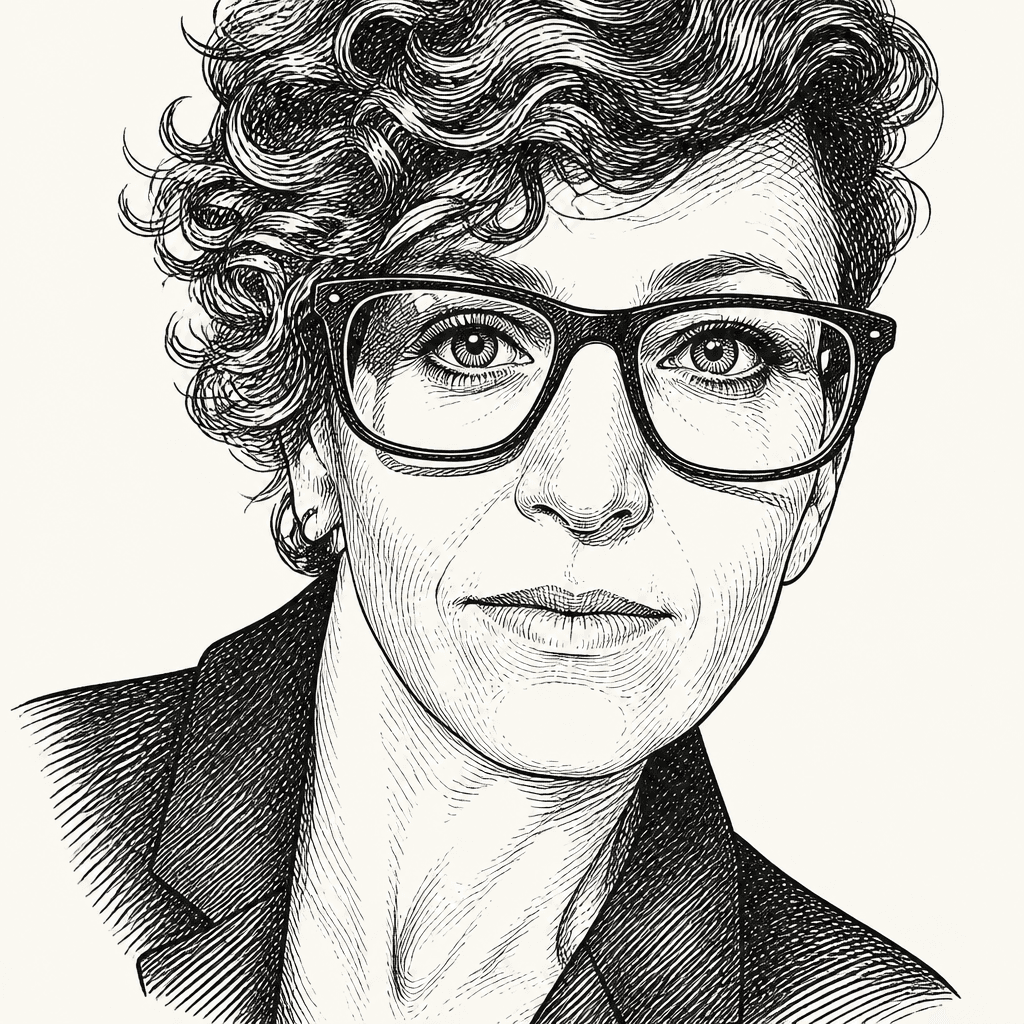 Amy Saidman
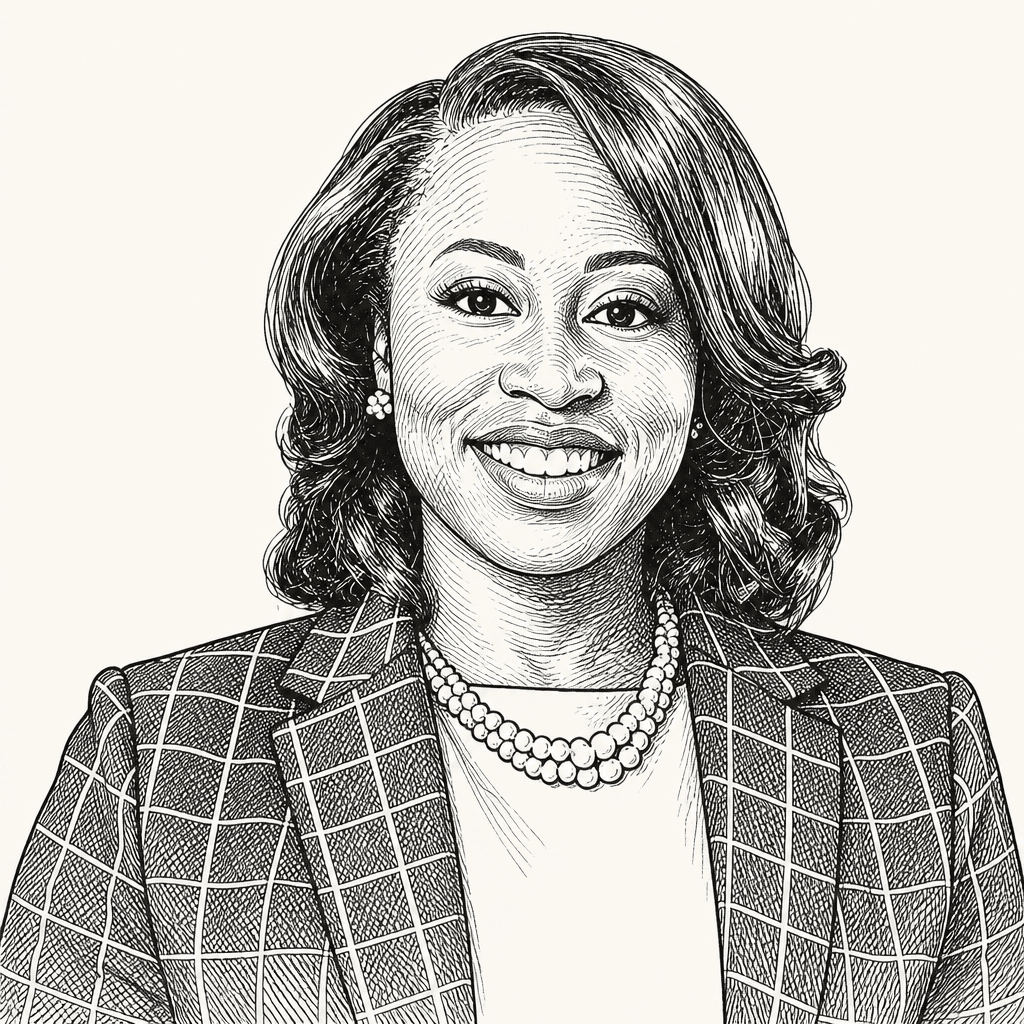 Olajumoke Banjo
 Anee KormeThe Aspen InstituteWednesday, August 5, 202613 min read
Community storytelling builds trust only when people retain control over whether a space is safe, how their stories are shared, and what follows from being heard, argue Claire Maracle of Words of the People, Amy Saidman of Story District, and Jeremy Williams of Freedom Dreams Foundation. Their approaches differ—from consent-centered Indigenous-language gatherings to coached public performances and community-led media production—but each rejects treating testimony as extractable content. For Williams, the governing principle is that stories move at the pace of trust, not production schedules.

Trust begins when communities control the conditions of telling
Stories do not build trust simply because an institution has invited people to speak. Trust depends on who decides whether a space is safe enough, who controls the story’s form and timing, whether listening produces action, and whether community members remain authors rather than raw material.
Claire Maracle makes the first of those conditions explicit: a convening organization cannot declare safety into existence. In her work at Words of the People, which opens pathways for Indigenous-language expression through poetry, music, and song, she prefers to call a gathering welcoming and leave each participant to determine whether it is safe for them.
I can say, you know, this is a safe space, but I'd much rather say it's a welcoming space and you can decide if it's safe for you.
That distinction shifts authority away from the host. It recognizes that safety is not a branding claim or a feature of the room; it is a judgment made by someone bringing their own history, risks, and experience into it.
Maracle’s account of Mohawk language explains why storytelling cannot be separated from that history. She recalls Elder Tom Porter saying that the Mohawk word for one, énska, shares a root with counting time or retelling the creation story. For her, that connection reframed language as more than vocabulary: it is a code for remembering where a people come from. In a community confronting erasure and language loss, fluency becomes an act of remembering stories that are already embedded in the way people count and speak.
The work of building relationships across Black and Indigenous communities cannot, Maracle says, be organized around a grant-cycle timeline. It requires showing up with no agenda beyond relationship, treating people in the room as experts in their own lived experience, and making life—not a report or deliverable—the primary context. That also requires a more disciplined balance between speaking and listening.
Being heard, in this account, is not equivalent to being recorded. Maracle asks communities to define what hearing should produce: a mural, a policy shift, a reciprocal exchange, or another outcome that matters to them.
To be heard is to really see your story, I think, change something in the material conditions of your life.
Amy Saidman describes a different but related practice at Story District, which has developed storytellers and personal stories for 30 years. Its setting is often public performance, with ticketed shows, themes, pitches, coaching, and audiences. But the path to a stage is deliberately gradual. Someone uneasy about performing may begin with a class or workshop, then pitch a story, work through several sessions, and build confidence within a group that listens closely and roots for one another.
The speaker retains ownership of the account. Coaches help find a narrative arc and prepare the story for an audience, but Saidman says the story is still the teller’s lived experience and the one they choose to share. That matters because trust is not only built among people who recognize themselves in one another. It also asks listeners to lower defenses, question assumptions, and encounter a person as a whole person rather than as a representative of a category.
Saidman points to Joni, a storyteller who spoke about living with bipolar disorder. Joni brought humor to a subject often surrounded by taboo, allowing audiences to open themselves to an experience they might otherwise flatten or avoid. Her stories helped inspire Mind Over Matter, a Story District mental-health show that brought more stories into public view.
Jeremy Williams gives the relational standard a concise formulation, crediting a definition shared by Najla Liddell.
What is true for me is safe with you.
At Freedom Dreams Foundation, Williams says that proposition structures the Freedom Dreams Lab, a fellowship in which community leaders spend months developing their storytelling voice before public sharing is expected. The work rests on three practices: modeling, listening, and action over time. Facilitators ask people to be honest only after they have practiced honesty themselves. Listening must be present enough that a person can ask whether someone is really with them and receive a genuine yes. Action asks the harder institutional question: what changed because someone spoke?
Williams recalls a fellow who initially shared little. By the end of the fellowship, she chose to speak on camera about her grandmother and mother, both educators who opened their homes to the community. He does not attribute that emergence to an especially effective prompt. The story became possible, he says, because trust had accumulated over time.
Consent is not paperwork; it is a relationship to a living story
Safety alone does not settle who has permission to retell a story, who determines its meaning, who benefits from it, or whether it should become public at all. Maracle, Saidman, and Williams work through different forms—consent and witness, coached performance, and community production—but each treats those questions as part of storytelling itself.
Maracle describes stories as living things rather than inert content. A person may be explicitly told that a story can be shared. Or they may be entrusted with something to carry privately, perhaps because it will become relevant later in their life. The recipient does not thereby own it. A story has context and a season; some stories are sacred. Receiving one creates a responsibility to decide whether it should be held, shared, or passed on only with permission.
That is why Words of the People tries not to make extraction—or even documentation—the default response when people speak. Its gatherings can center consent and witness without converting testimony into data, an audio product, or material for a grant report. The priority is the process of relationship, not the production of an artifact.
Williams makes a parallel argument about authorship. Through Dream Free Productions, Freedom Dreams Foundation designs projects in which community members are not simply the subjects of a story. They can be the producers, interviewers, editors, and decision-makers. The point is not to speak for people but to create the conditions in which they can speak for themselves.
Authorship also has material implications. Williams argues that people contributing expertise, perspective, and creative labor should be compensated as collaborators, not treated as volunteers supplying content. And readiness cannot be determined by a production calendar.
Stories move at the pace of trust, not at the pace of production schedules.
Sometimes, Williams says, the ethical choice is to wait because the container required for public sharing does not yet exist.
Story District operates within a more overtly public framework. It builds shows around themes, invites people to pitch stories, and prepares them to perform before an audience. Yet Saidman describes the coaching process as a way to draw out the story the person wants and needs to tell, not to substitute an institution’s version for their own. A coach listens for structure and audience connection, but the storyteller has lived the experience and decides what to bring forward.
The distinction between these models matters. Maracle resists treating disclosure as a product at all. Saidman creates a supported route from personal memory to public performance. Williams seeks to redistribute the means of production so that a community controls not just what is said but how a story is made. None of those approaches is reducible to an institution collecting testimony.
Narrating experience can change who people believe they are
The case for community control is not only ethical. Williams and Saidman describe storytelling as a practice through which people can recognize their own capacity, relationships, and inherited histories differently.
Williams points to work in McComb, Mississippi, where young people helped reshape their learning experiences through a project focused on mental health. They learned required English-language-arts standards and took the associated tests. They also interviewed mothers, fathers, uncles, administrators, and others; examined the transcripts of questions they developed and the answers they received; and brought what they learned to the local school board, identifying what they believed their community needed for sustainable mental health.
For Williams, the decisive moment was turning the camera around. The young people could see themselves speaking truth to power and acting as leaders. The project did not merely document their concerns; it gave them a way to see their own questions, interviews, and public advocacy as meaningful work.
He sees a related process among community leaders at Freedom Dreams Foundation. Many arrive carrying substantial weight in their personal lives and leadership roles. Having space to hear their own freedom dreams reflected back, Williams says, can support reflection and healing. It can also reconnect people to the future they want and help open capacity to assemble the tools and resources needed to pursue it.
Saidman sees the process at an individual scale. Preparing a story requires someone to revisit experience, identify meaning they may not previously have had time to articulate, and build something that can be shared. The result can be confidence, self-understanding, and lasting relationships within a creative community.
The audience is part of that exchange, but it is not the sole beneficiary. Based on years of feedback, Saidman says listeners may leave having learned something, opened their hearts to another person’s experience, recognized themselves, or felt less alone. Shows centered on an affinity community can offer a particular form of validation by bringing people together around stories with shared context.
Williams’s own understanding of inherited narrative began with stories of his mother’s childhood. Born in the 1950s as one of 16 children of farming parents, she attended an elementary school on the same dirt road and hill where Williams later grew up. Family agricultural work sometimes took precedence over school. As a child, he heard those accounts as ordinary family history. As he grew older, he understood them as an inheritance of sacrifice, resilience, and possibility—evidence that his own story did not begin with his individual experience.
Trust repair means accepting accountability and acting on it
Control over storytelling does not eliminate conflict. Trust is dynamic, and repair requires more than a carefully facilitated conversation. Williams, Maracle, and Saidman describe repair as a combination of self-examination, accountability, and follow-through—while also acknowledging that not every difference can or should produce sustained community.
Jeremy Williams says repair begins with empathy and a willingness to examine what ego is protecting. That work makes an authentic apology possible, along with responsibility and a commitment to action.
In McComb, he encountered tensions between his instinct to follow what young people wanted and the responsibilities teachers, administrators, and district officials held to the state and the law. Williams says he had to move beyond binary thinking and recognize that both realities could be true at once. He did not describe this as abandoning his values; rather, it required understanding competing responsibilities and modeling for young people how to hold more than one truth.
Claire Maracle connects trust to the ability to correct one another. Recalling a discussion with Alonzo Wahid of B.E.A.T. about relationships between Black and Indigenous communities, she says that trusting someone includes trusting them to say when you are not doing what you should be doing—or could do better. If offered with care, such accountability is not a failure of trust. It can be an expression of it.
Maracle’s own earliest experience of broken trust was racialized and institutional. At five, newly enrolled in a segregated school in Mississippi, she joined Black girls playing Double Dutch. White girls put her in a headlock and punched her. When her parents took the matter to the principal, she says, he responded that she should have known better than to play with children who did not look like her.
The injury was compounded by an authority figure who justified it. Maracle connects that disruption of safety and trust to the urgency she brings to work rooted in Black liberation and Indigenous sovereignty.
She also describes a Haudenosaunee practice for entering disagreement: the Thanksgiving Address. Before a meeting, participants name and give thanks for the earth, sky, sun, waters, fish, and other conditions that sustain life. The practice begins with what people agree on before turning to what they do not. Seven-generation thinking supplies another orientation: decisions should account for the next seven generations.
That shared starting point does not resolve all moral divides. Asked how to build trust with people who fundamentally disagree about the common good, Williams was direct that he does not currently want sustained community with people whose idea of the common good differs from his own. He has done that work for much of his career, he said, and is tired. His present focus is supporting his people in reaching their freedom dreams.
Amy Saidman frames repair at the organizational level as a social contract. People who spend time or money on a class, workshop, show, or engagement should be able to trust that Story District respects that investment and will offer something of value. If a person has a poor experience, perhaps because of a communication breakdown, Saidman feels responsible for making another experience possible—one that can replace the sense that they were not cared for.
The struggle over storytelling includes the right to imagine
Control over narrative also includes control over future-making. The speakers distinguish personal testimony from imaginative work and debate technology’s place in storytelling, but they return to the same underlying question: who gets to shape the horizons a community can see?
Amy Saidman says Story District has a defined lane: personal, true stories drawn from lived experience. That does not diminish the value of fictional or speculative storytelling; it describes the form of exchange her organization is built to support.
Jeremy Williams values both. He points to Afrofuturism and to writers including Octavia Butler, S.A. Cosby, and Evan Winter, whose work imagines worlds and futures beyond their literal personal experience. Those stories can be inspirational, he says, while still being rooted in what their authors have encountered. World-building can depart from present conditions without being detached from experience.
Claire Maracle takes the strongest position on artificial intelligence. For her, language and Indigenous ways of knowing are themselves technologies. She does not use AI and argues against ceding human imagination to it. It is easy, she says, to imagine catastrophe; it is harder to imagine a world 150 years from now in which everyone thrives, or to imagine the end of capitalism. Words of the People seeks Indigenous languages that are revived and spoken even if that work takes 200 years. Such a future must be imagined and embodied by people themselves through language.
Saidman values oral storytelling for a related reason. Story District wants audiences to hear someone’s voice and encounter their conversational self, rather than a recited or overperformed version. In a moment when people may wonder whether something is true or a deepfake, live storytelling can offer a speaker’s most truthful account of experience in that moment.
She also describes a limited administrative use of AI: summarizing feedback, notes, and questions from in-person or online sessions so a participant has something to take away. That use may make coaching easier to administer, but it does not replace the person speaking or the relational work around the story.
An institution should be ready to answer these questions before asking for a story
The practical standard is not whether an organization can collect compelling accounts. It is whether it can share control over the conditions in which an account is told, heard, used, and acted upon.
- Who decides whether the space is safe enough? Maracle’s distinction between welcoming and safe spaces leaves that judgment with the participant.
- Who controls the story’s use and retelling? A story may be shared, held privately, or passed on only with explicit permission. Context and timing are part of consent.
- Who has editorial power? Williams’s community-production model involves people as producers, interviewers, editors, and decision-makers, not merely as subjects.
- Who is recognized and compensated? Expertise, perspective, and creative labor should be treated as collaboration rather than free material.
- What will listening change? Communities should be able to define what being heard means, whether that is a policy shift, reciprocal exchange, or another material outcome.
- Can the story wait? Public readiness cannot be assumed because an event, report, or production deadline is approaching.
- Is there a relationship around the story? Saidman recommends a story buddy or group because meaning often emerges in conversation. Maracle’s prompts—asking for the story of a person’s name, community, or gift—begin from context rather than extraction.
Williams offers one concrete application through Freedom Dreams Foundation’s partnership with the Gentlemen’s League in Memphis, a Black male mentorship organization that has invested in young Black men for nearly a decade. The work is building an archive of the organization’s 10-year story while inviting the young men themselves to decide which questions matter, interview mentors and parents, and make meaning from their experiences.
For Williams, an archive can become an altar: a place where something is left and something is taken, particularly across generations. A mother and son or an elder and young person may express gratitude; young people and adults may come to understand themselves more deeply. The relationship is not just a means of producing an artifact. It is part of what the artifact is for.