States Test Financing and Training Models to Expand Employee Ownership
 William Castellano
 Hilary Abell
 Julien Rosenbloom
 Shannon Lundgren
 Andrew ZwickerThe Aspen InstituteTuesday, June 9, 202616 min read
At the Aspen Institute’s 2026 Employee Ownership Ideas Forum, Iowa state Rep. Shannon Lundgren, New Jersey state Sen. Andrew Zwicker and the Department of Labor’s Hilary Abell argued that states are becoming the main testing ground for expanding employee ownership. Their case was practical rather than theoretical: states can help owners and workers navigate outreach, feasibility studies, financing and post-transition education, while Washington funds, convenes and learns from those experiments without imposing a single model.
States are becoming the implementation layer for employee ownership policy
States are becoming the practical machinery for employee ownership policy. The work described here is not mainly about endorsing the idea in principle. It is about implementation: outreach to business owners, feasibility studies, technical assistance, transaction financing, and education for workers who may suddenly be owners but do not yet understand what ownership changes.
William Castellano of Rutgers framed the state role as one of policy experimentation. In New Jersey, he said, Rutgers has partnered with the New Jersey Economic Development Authority to promote awareness of employee ownership strategies through online programs, webinars, chambers of commerce, professional associations, and business-owner conferences. The financing component is more concrete: for qualified businesses looking to sell to employees through an ESOP transaction, the state program is willing to pay 90% of a feasibility study, up to $35,000.
Castellano’s broader point was that state-level work can become source material for federal policy. States, in his words, have long been “incubators” of policy and regulatory innovation. The panel put that idea next to three vantage points: Iowa’s established ESOP work, New Jersey’s attempt to codify and finance a broader employee-ownership strategy, and the Department of Labor’s new Employee Ownership Initiative.
Julien Rosenbloom set the frame around scale. The question was not whether employee ownership can matter to existing employee owners; it was what states can do to make that experience available to “tens of thousands if not hundreds of thousands or millions” more Americans.


The central tension is that states can create awareness and technical assistance relatively cheaply, but the harder tests come later. Transaction financing determines whether a willing owner can actually sell to employees. Post-transition education and ownership culture determine whether employees understand the asset they hold, how their work affects it, and what ownership requires from them.
The state approaches were not presented as interchangeable. Iowa’s model has grown around an economic development authority and the University of Northern Iowa. New Jersey is trying to move from a pilot and memorandum of understanding toward legislation that would create state capacity and a revolving loan fund. The federal government, through the Department of Labor, is trying to support state programs while acknowledging that it does not yet know the best mix of interventions.
That uncertainty is central to the state-by-state experimentation model described by the panelists.
Iowa’s case for ESOPs starts with rural retention and worker understanding
Shannon Lundgren described employee ownership through the lens of rural Iowa, manufacturing, and local business continuity. Her district in northeast Iowa is rural and has a large manufacturing presence. The example she returned to was Mi-T-M, a manufacturing company that makes pressure washers for companies including John Deere and Husqvarna while also marketing its own products.
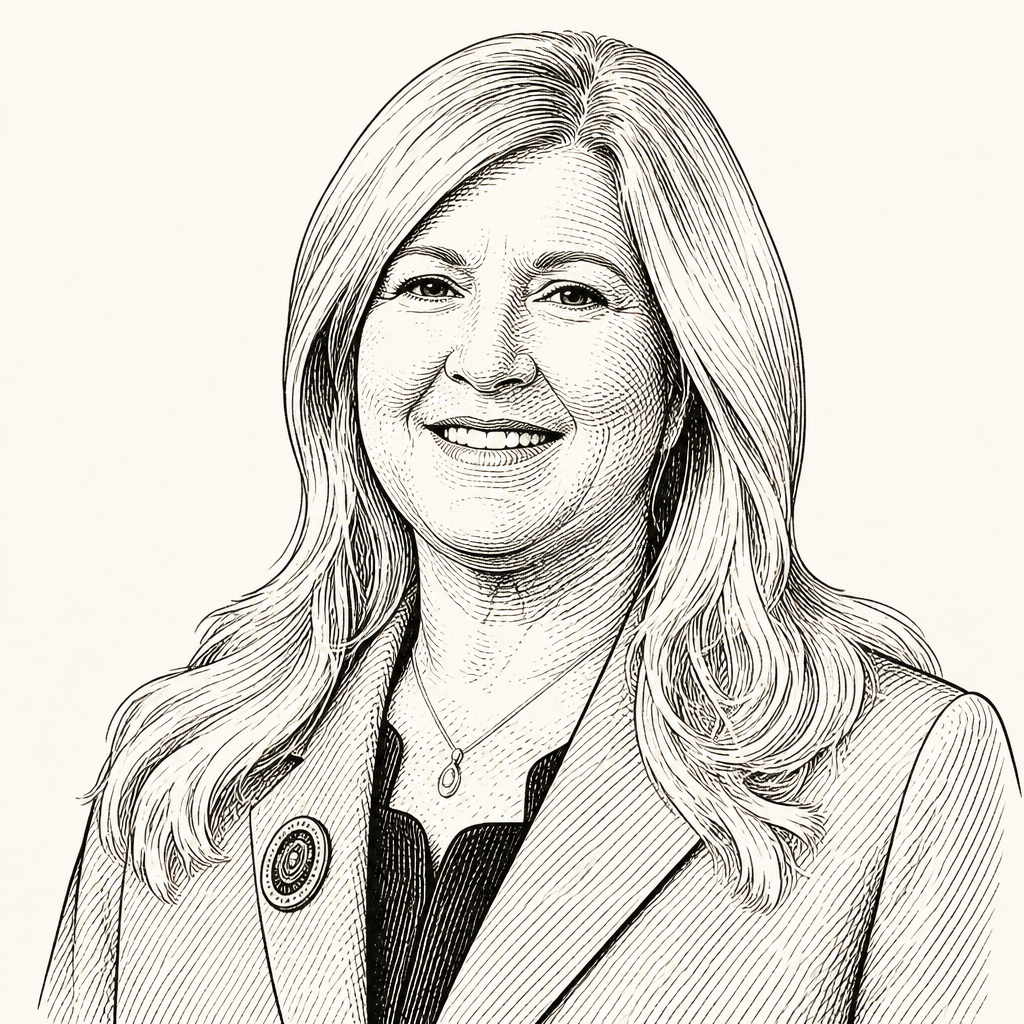
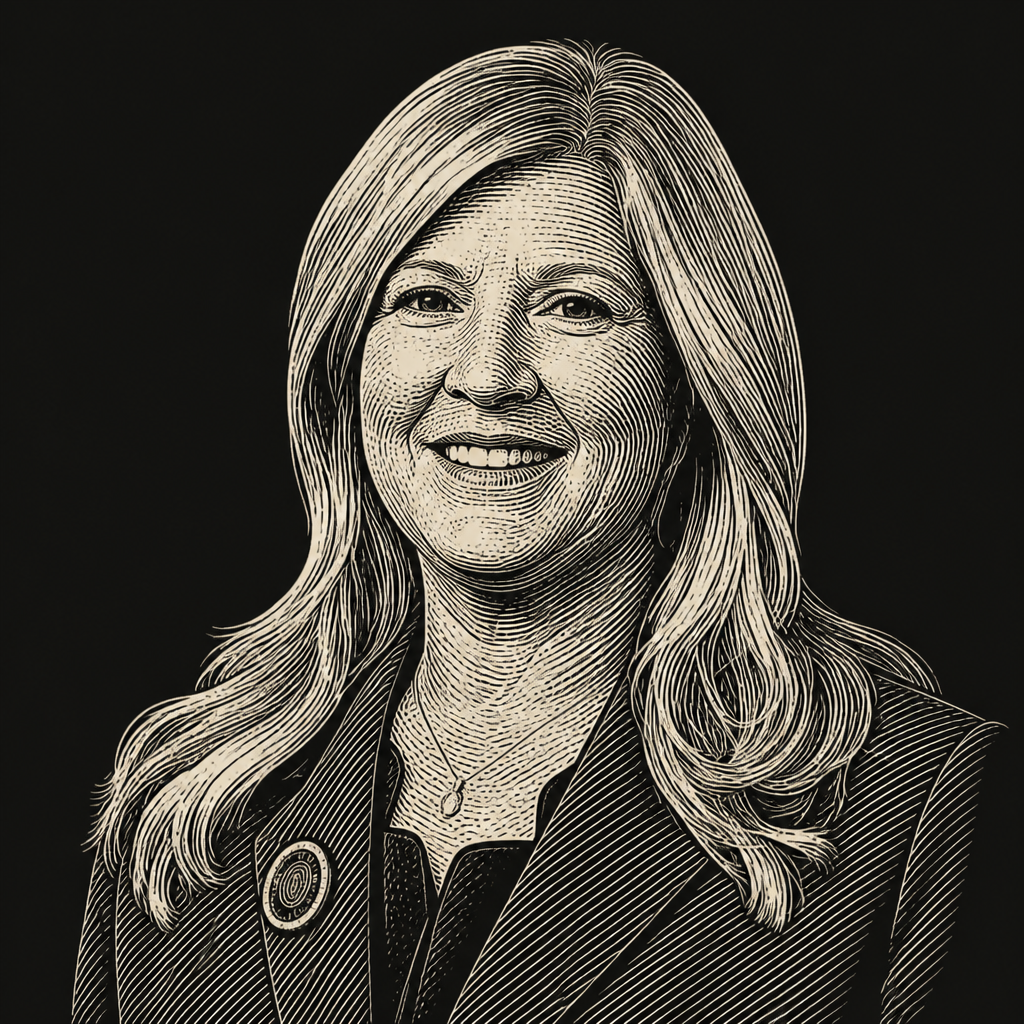
According to Lundgren, Mi-T-M’s owner was about 80 years old and wanted to retire. He could have sold the company to a large equity firm and “probably made a lot more money,” she said. Instead, he sold the company to employees. For Lundgren, the significance was not only that the company stayed locally rooted, but that the workforce had a chance to benefit from future growth.
She cited two stock-price increases at Mi-T-M that had begun to make the ESOP tangible to employees: one year’s stock-option reveal showed an increase of about 134%, followed by another year at 47%. Iowa’s tax treatment of retirement income added another piece to the value proposition: Lundgren emphasized that in Iowa, retirement income is tax-free.
But the example also exposed a problem: employee ownership does not automatically produce employee understanding. Lundgren said that when Mi-T-M held a stock-option reveal in her hometown, some employees were “grumbling” because they did not understand the benefit or its value to them. They were being told they owned part of the company, but the practical implications had not yet landed.
The education gap, in Lundgren’s telling, is not an abstract policy gap. It shows up when workers do not know how to interpret a stock-value increase, what an ESOP means for retirement, or why their own performance affects the value of what they hold. She argued that employees need to understand that if they invest their “time and talent” in the company they own, the retirement outcome may exceed what they could have done through wages alone.
Rosenbloom added an important clarification: in these ESOP transitions, workers generally are not paying out of pocket to become owners. The return they receive is not a return on cash they personally contributed from wages.
Lundgren contrasted the Mi-T-M story with other companies in rural Iowa that have not chosen an ESOP path. In those cases, she said, communities see turnover, disgruntled employees, declining benefits, and declining morale. Her case for ESOPs in rural communities is therefore partly economic and partly civic: employee ownership can help preserve morale, continuity, and a sense that workers are building something that will pay off over time.
The state role she emphasized was supportive rather than heavy-handed. The University of Northern Iowa, she said, is already working to address the worker education gap without needing new legislation. Iowa legislators are prepared to step in if policy is needed, but for now she wants UNI to lead.
The way that education is delivered matters. Lundgren recounted that at a Mi-T-M event, the financier, insurance company, and stock manager were present in suits. She was there catering through her restaurant business, wearing jeans and a trackside hat. Employees asked her more questions than they asked their financial advisers. The lesson she drew was that employee-owner education may work best when it is delivered in plain, familiar settings by people who are not perceived as part of the company’s financial apparatus.
New Jersey is trying to solve the financing gap, not just the awareness gap
Andrew Zwicker entered employee ownership through what he called a “kitchen table issue,” not through his scientific background as a plasma physicist. Castellano’s writing had introduced him to the topic, and conversations at home with his partner, whom he described as an expert on employee displacement, helped make the issue personal.

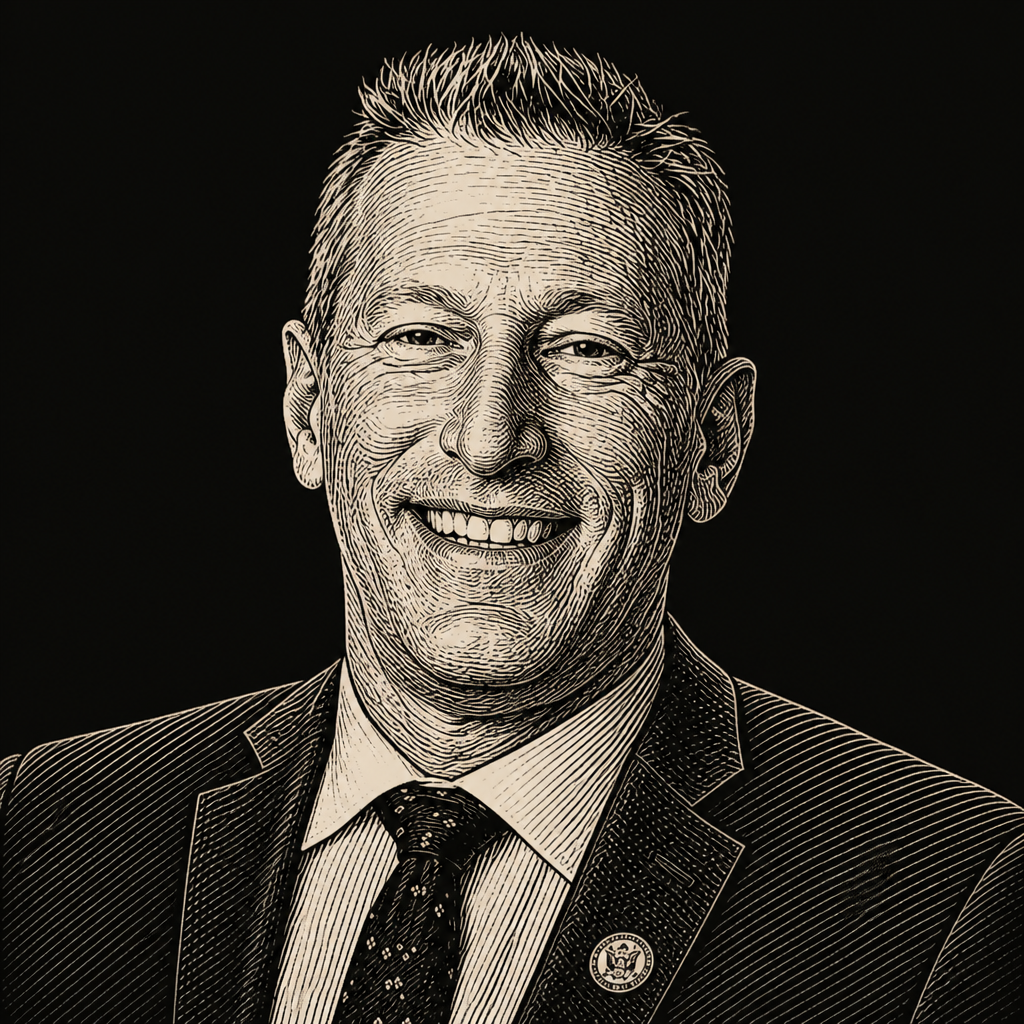
New Jersey already has an employee-ownership pilot connected to the New Jersey Economic Development Authority. Zwicker’s legislative effort would codify that pilot and extend it. Rosenbloom described the bill as creating a director of employee ownership at the EDA, establishing an advisory commission, and creating a revolving loan fund to finance employee-ownership transitions directly.
Zwicker argued that outreach, education, and feasibility support are necessary but incomplete. At a New Jersey Chamber of Commerce event where he discussed ESOPs, he said the first barrier among people who already knew about the model was financing: “How do you bridge that gap?”
That question is sharpened by state budget constraints. Zwicker said New Jersey, like many states, faces significant fiscal limits. An annual general-fund appropriation of $5 million, $10 million, or $20 million may be politically difficult even if advocates can argue that employee ownership produces a positive return over time. State budgets have to balance now; future revenue gains do not solve the immediate political problem.
The revolving loan fund is meant to address both the financing need and the budget politics. Zwicker acknowledged that the fund would need seed capital. But if structured as a low-interest revolving fund, repayments could replenish it over time, making it less dependent on repeated annual appropriations. That self-sustaining feature is, in his view, both politically practical and sound public policy. “Anything that’s self-sustaining,” he said, means he does not have to fight for a budget appropriation “year after year after year.”
Rosenbloom noted that the New Jersey proposal is deliberately broad about capitalization. The fund could receive state appropriations, program revenue from the EDA, philanthropic contributions, or federal funding. Zwicker said that breadth is intentional. If legislation is too prescriptive, it can become obsolete quickly; if it is too vague, it can be interpreted in ways never intended. Given fiscal uncertainty, relying on a single funding source would put the fund at risk.
The New Jersey approach therefore combines several state capacities: education, feasibility-study reimbursement, an employee-ownership director inside the EDA, an advisory commission, and financing. Yet Zwicker later identified a possible missing piece after hearing the federal overview: post-transition support. A company should not simply be financed, become an ESOP, and be left alone. The state may also need tools to help build ownership culture, financial education, open-book management, or peer learning from newly employee-owned companies to others considering the path.
That admission made clear that Zwicker viewed the proposal as a framework still capable of learning from other state models.
The federal government sees patterns, but not yet a single model
Hilary Abell brought a national view, shaped by her role as chief of the Employee Ownership Division at the Department of Labor and by her earlier work as co-founder of Project Equity. Her entry point was personal: she had been an employee owner at Equal Exchange more than 30 years ago. What continues to motivate her, she said, is seeing workers’ lives improve.

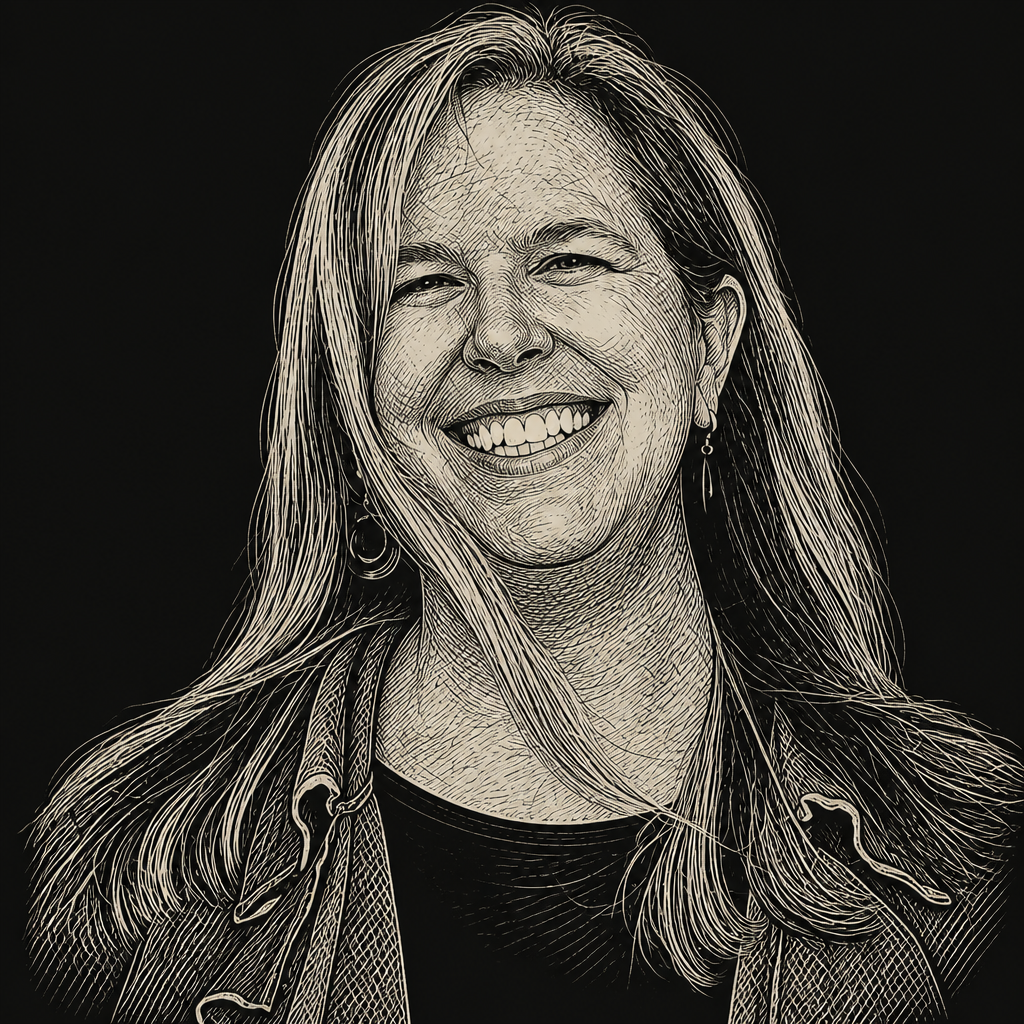
She gave two examples of what that means in practice. One was a pizza-shop transition in Silicon Valley that Project Equity helped move into a worker cooperative in 2017. According to Abell, roughly 30 employee owners at that business have since shared $1 million in profits. For those workers, she said, that has meant doing things they may not have expected to do: saving for retirement, taking a vacation, or working a little less to pursue music.
The other example was an employee named Doug on a factory floor, discussed earlier in the forum, who had long felt that engineers did not want to hear his ideas but eventually spoke up at a company meeting because an ownership culture had taken hold. Abell tied that story to the federal statute authorizing her work: the WORK Act does not only speak about employee ownership; it also speaks about employee involvement and participation.
Her national assessment was careful. Employee ownership has grown over the past decade, and the Department of Labor submitted a report to Congress in January discussing growth trends across different forms of ownership. But Abell said it has not grown as much as many people in the field expected over the past few decades. Government, in her view, can help scale ideas that have already been proven by the private sector, nonprofit sector, local efforts, or states.
The Department of Labor has created a term for state-supported employee-ownership efforts: state employee ownership programs. Abell apologized for “yet another acronym with EO in it,” but explained that the term is meant to cover programs funded in some way by a state, even when the support is infrastructure through a public university rather than a dedicated office.
As of the forum, she said, nine states had such programs. Those programs vary, but three structural patterns recur:
| Structure | How Abell described it |
|---|---|
| State office | An office with a state employee working on employee ownership |
| University-based center | A center housed in or supported by a public university |
| Third-party nonprofit funding | State funding for a nonprofit, often one already focused on employee ownership |
The program activities also follow recognizable categories. Outreach and education appear to be common across all state programs. Technical assistance may happen directly or through funding to providers. Some states use tax credits, grants, or reimbursements to support feasibility work or other technical help. Colorado, Abell said, has gone further by supporting post-transaction work, including tax credits that can help companies finance ownership-culture building, financial education, or open-book management.
One gap stood out: training for employee owners. The WORK Act names it, and Abell called it “incredibly important,” but she said very few state programs are working at that level so far. Most programs are concentrated at the front end: getting more companies to become employee-owned.
Abell was also explicit about the limits of federal certainty. The Employee Benefits Security Administration, where her division sits, has long done ESOP enforcement because it oversees health and retirement plans. But an initiative that promotes employee ownership is new for EBSA and distinct from enforcement or regulation. Abell emphasized that she sits in the Office of Outreach, Education, and Assistance, not the Enforcement Office.
That institutional context shaped her answer to Rosenbloom’s question about the right mix of state policy tools. The Department’s position, as she described it, is that it does not yet know the best mix. The opportunity is that states are combining tools differently, allowing for learning, comparison, and evaluation over time.
The WORK Act gives the Department of Labor a mandate, but the grant program is starting small
The federal role is being built under the WORK provisions of the SECURE 2.0 Act of 2022, which Abell described as major retirement legislation. She said the WORK Act had been proposed many times and, as she understands it, was first written in the 1980s before eventually passing in 2022 as part of SECURE 2.0.
The Department of Labor’s mandate has several parts. One is the Employee Ownership Initiative itself, which has been established through Abell’s division. Another is a regulation concerning adequate consideration in the valuation of ESOP stock; Abell noted that this work is not in her division and she did not know when it might arrive. A third is a grant program authorized as a five-year, $50 million program.
The authorization, however, did not immediately come with full funding. Abell said that for her first year and a half in the role, the Department did not know whether it would be able to start a grant program because there had been no appropriation. A February appropriation of $2 million provided a starting point.
- 2022The WORK provisions pass as part of the SECURE 2.0 Act, creating the statutory basis for the Department of Labor’s Employee Ownership Initiative.
- January 2026The Department of Labor submits a report to Congress discussing growth trends in different types of employee ownership.
- February 2026Congress provides a $2 million appropriation, giving the Department a small start toward the grant program.
- Fall 2026Abell says the Department hopes to release a request for proposals, while cautioning that timelines are hard to control.
- End of fiscal 2027The appropriated money does not have to be obligated until this deadline.
Abell described the grant-program development as a collaboration between EBSA and the Employment and Training Administration, a large DOL agency with grant, training, and workforce-development experience. The agencies have collaborated before on education for dislocated workers, but developing this program together is new enough to take time.
The Department hopes to release a request for proposals in the fall, though Abell cautioned that timelines are hard to control. The money does not have to be obligated until the end of fiscal 2027. She acknowledged that some people may find that disappointing if they hoped funds would move quickly in fiscal 2026, but said she is grateful for the time because agencies are stretched and the program must clear internal hurdles.
The mission Abell described has two parts: promoting employee ownership to create financial security for workers, and promoting employee participation in the workplace. From EBSA’s perspective, the financial-security element is central. Whether the model is an ESOP, cooperative, or another form of employee ownership, the Department is focused on whether it has a strong financial foundation for employee owners.
The statutory mandate is also state-facing: support existing programs and help foster new ones. Abell said she would like eventually to see all 50 states have programs. At the time she spoke, the current count was small: nine programs, with Washington’s discontinued after a brief startup and Tennessee newly entering the group.
Legislators want different things from Washington
When Rosenbloom asked what state legislators need most from the federal government, Lundgren and Zwicker answered differently.
Shannon Lundgren started from the employee-owner rather than the program. “These are employee-owned companies,” she said. The first concern must be the employee who owns stock in the company. Grants, seed money, and technical support can help, but ownership still requires employees to do the work needed for the company to succeed.
Her emphasis was education and responsibility. Employees need to understand the commitment they are making, the value of their ownership, and the relationship between their work and their retirement outcome. She framed that ownership as part of the American dream: people want to own something, whether a house, a business, a car, or part of their company.
Andrew Zwicker’s answer was more direct: predominantly money. That could take the form of direct grants, matching grants, education funding, feasibility funding, or gap financing. For a state trying to get a program off the ground, any missing piece of the capital stack can matter.
Hilary Abell, describing what excites her nationally, pointed to Michigan as an example of a state program moving quickly. The Michigan pilot, begun in 2025, is a collaboration between the state’s Department of Labor and Economic Opportunity and the Michigan Center for Employee Ownership. It had $500,000 in funding, including $350,000 to help pay for technical assistance. Abell said 61 businesses applied, 12 were selected, and the program expected four to six to complete transitions into one of the three common forms of employee ownership discussed in the field. She cautioned that transitions can take longer than expected, so she was not assuming all those marks would necessarily be hit within the calendar year, but called the uptake encouraging.
| Michigan pilot detail | Figure Abell cited |
|---|---|
| Total pilot funding | $500,000 |
| Technical-assistance funds | $350,000 |
| Business applicants | 61 |
| Businesses selected | 12 |
| Expected completed transitions | 4 to 6 |
Lundgren, meanwhile, urged the Department of Labor not to impose a single model. She described the states as “50 children,” each territorial and different, with distinct legislatures, districts, cities, and political cultures. A one-size-fits-all approach from DOL would not work, she said. But the federal government could play a convening role: bring states together to compare best practices, learn from one another, and improve.
Taken together, the answers pointed to several possible federal roles: money for state programs, convening among states, analysis of what works, and guardrails to protect employee owners.
Employee ownership is being positioned as a possible response to succession and technological disruption
The immediate policy problem is business transition: owners retire, sell, or seek liquidity, and states can help make employee ownership a viable option. In rural Iowa, Shannon Lundgren’s Mi-T-M example centered on an aging owner who chose not to sell to a large equity firm. In New Jersey, the proposed revolving fund is meant to make financing available when otherwise the numbers may not work.
Andrew Zwicker added another pressure: artificial intelligence and employee displacement. He said employee ownership is a kitchen-table issue in part because of concerns about the “massive unknown disruption” of AI. He did not claim to know what will happen. He framed the uncertainty starkly: some people say the sky is falling; others say the economy always adapts. “Nobody really knows,” he said.
His question was whether ESOPs, cooperatives, or other employee-ownership models might smooth that disruption. He pointed to research discussed elsewhere at the forum showing greater retention in ESOPs and asked whether that retention advantage might matter during an AI transformation. He presented that as a hypothesis, not a proven conclusion: if employee-owned companies retain workers more effectively, perhaps they can help buffer disruption as technology changes work.
Julien Rosenbloom responded that many in the room would agree employee ownership needs to be part of that puzzle. But the substance of Zwicker’s point was less about certainty than timing. If significant disruption is coming, he argued, now is the moment to build state capacity for employee ownership in New Jersey, Iowa, Washington, and elsewhere.
Advocacy begins with getting legislators inside employee-owned businesses
The practical advice to advocates was direct: invite legislators in.
Shannon Lundgren said employee-owned organizations should get to know their state legislators, ask them to tour businesses, and explain what support is needed. In Iowa, she said, there are 100 state representatives and 50 senators, each representing tens of thousands of people. Legislators come from different careers and see issues through different lenses; they learn best when constituents invite them into the business and show them what is happening.
Her point was also a correction to how people often imagine state policymaking. Legislators do not, in her telling, sit at the capitol inventing policies “on a whim” to make life harder. Ideas come from districts, businesses, constituents, and sometimes national political debates. If employee-ownership advocates want better policy, they need to supply legislators with concrete needs and examples.
She also warned that legislative design has to be precise. A law can be too detailed or too vague. If it leaves too much room for administrative interpretation, legislators may have to return later to fix what a department did with the authority it was given. That concern echoed Zwicker’s earlier point about writing a revolving-loan statute broad enough to accept multiple funding sources but clear enough to avoid drift.
Hilary Abell agreed that exposure is powerful. There is, she said, “nothing like” seeing an employee-owned company up close and hearing from employee owners. But she added that advocates should think not only about policy, but also about government programs that already exist.
Her example was the State Small Business Credit Initiative. In its first version, employee-ownership transitions could not be funded. In the post-COVID version, she said, employee-ownership transitions can be funded through state capital programs using federal dollars, and a number of transitions have been funded. The lesson was that some progress comes not from passing a new employee-ownership law, but from making sure existing capital programs understand and allow these transactions.
Abell closed by naming Tennessee as a newly launched but not yet officially announced state employee-ownership program. The Tennessee Center for Employee Ownership, she said, is using funds from the Tennessee Department of Economic and Community Development to provide education, resources, and tools to help businesses convert to the employee-ownership models that fit them. She framed Tennessee’s entrance as an economic-development move and welcomed it into the emerging group of state employee-ownership programs.