ESOP Valuation Safe Harbor Bill Awaits Final House Action

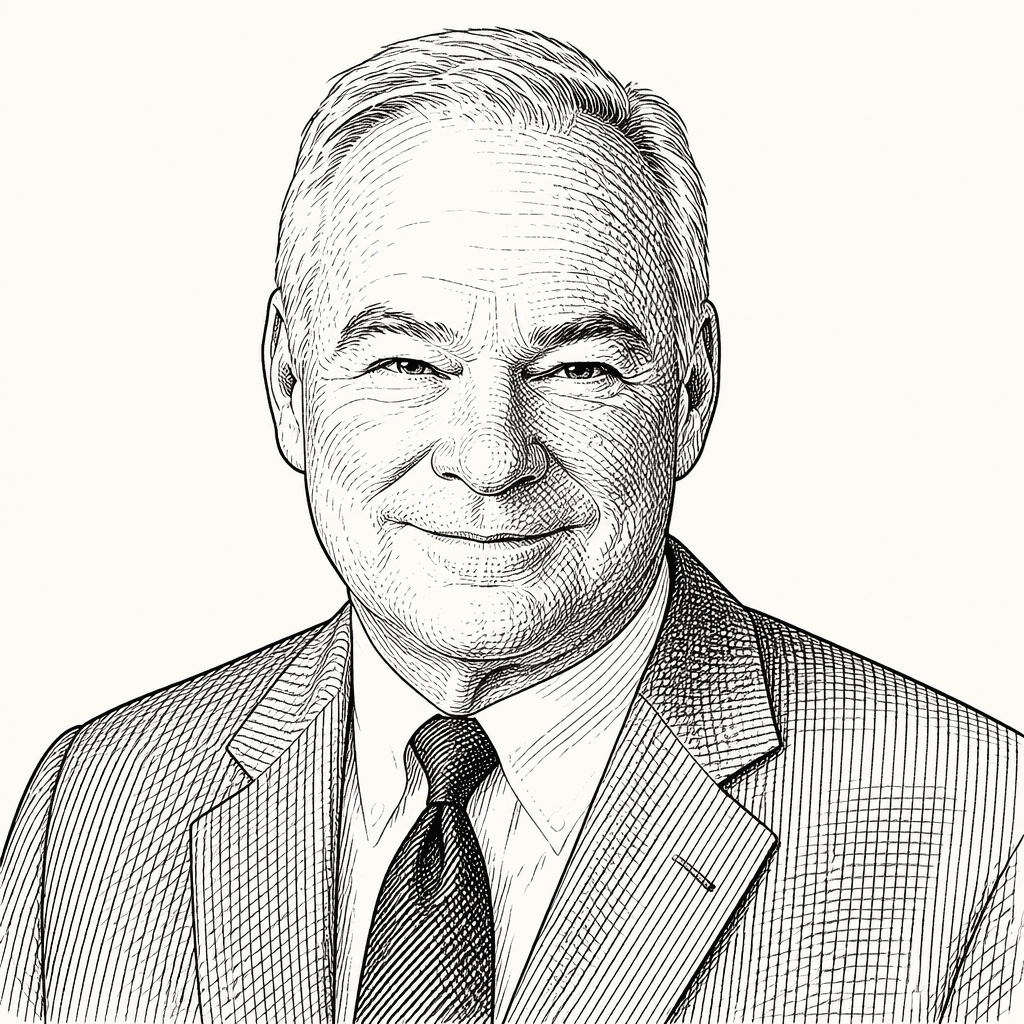
Sen. Tim Kaine used his keynote at the 2026 Employee Ownership Ideas Forum to press the House to pass the Retire Through Ownership Act, a bipartisan ESOP bill he said would reduce uncertainty around company valuations. Kaine argued the measure would create a safe harbor for sellers who use existing IRS rules when selling to an employee stock ownership plan, protecting legitimate transactions from later challenges over whether workers were left carrying excessive debt.
The bill offers a safe harbor, not a new valuation formula
The Retire Through Ownership Act, as Tim Kaine described it, would not create a new federal formula for valuing employee stock ownership plan transactions. It would protect sellers who use existing IRS rules for valuing small or closely held businesses when they sell a company to an ESOP. If the seller follows those rules, Kaine said, no one could later come back and claim that the company was overvalued and that too much debt had been placed on employees.

That safe harbor is the practical change Kaine asked the House to finish. It gives owners confidence that they can sell to employees, receive fair market value for what they built, and let the company move forward without the risk that the transaction will be challenged two, five, or ten years later.
The bill has already moved farther than most measures with labor and ownership implications. Kaine said it passed the Senate Health, Education, Labor, and Pensions Committee unanimously, passed the Senate floor unanimously, and passed the House Education and Labor Committee unanimously. Adria Scharf separately introduced the measure as a bill Kaine co-sponsored with Senator Marshall, designed to reduce regulatory uncertainty around ESOP valuations, and said it had passed the full Senate by unanimous consent while awaiting House action.


The valuation problem is the unresolved core of ESOP transfers
The policy problem begins with a basic tension in an ESOP sale. A business owner who has built up the value of a company and wants employees to own it should receive fair market value. But if the sale is to employees, Kaine said, the owner should not receive “a huge premium” that leaves worker-buyers carrying excessive debt. An inflated valuation can threaten both the employees’ wealth and the future viability of the company.
The unresolved question is how to determine fair value with enough clarity that sellers and employees can proceed without fear that the transaction will be challenged years later. When ESOP statutes were enacted, Kaine said, the expectation was that the Department of Labor would issue regulations defining fair market valuation. That did not happen. Referring to an earlier remark at the forum, he said ESOP supporters had been waiting for an answer “since the Carter administration,” while tentative Department of Labor efforts never produced durable rules.
The Retire Through Ownership Act addresses that gap by relying on valuation rules that already exist elsewhere in government. Kaine said the IRS has long had rules for determining the fair market value of small or closely held businesses. Under the bill’s safe harbor, a seller who uses those IRS rules in an ESOP transaction would gain protection against later claims that the seller overvalued the company and loaded too much debt onto employees.
The proposal would not prevent the Department of Labor from issuing valuation regulations in the future. But Kaine raised the practical question of whether such rules would still be necessary if the IRS framework can provide the needed clarity.
Kaine’s support for ESOPs starts with talent over capital
Tim Kaine framed ESOPs as more than a succession tool. He said he has sometimes been accused of being a capitalist, but rejected that label because he does not think capital should sit “at the top of the pyramid” or be the thing everything else serves. ESOPs, in his view, better match the right structure of business formation: a worker can be told on the first day that their labor, innovation, and intuition will be rewarded over time through a stake in the enterprise.
I think talent should be at the top of the pyramid, and that capital and everything else should serve talent.
Kaine tied that view to his own early exposure to employee ownership while working in his father’s union-organized ironworking shop and in the stockyards of Kansas City. He described Kansas City as “a bit of a hub of ESOPs,” especially among construction and engineering firms, and said the model is increasingly common in Virginia.
Kaine described the participant figure — not necessarily a count of current employees — as “a very, very significant portion” of the employed population in a state of roughly 8.5 million people “from birth to death.”
The remaining House bottleneck is procedural, but not automatic
Tim Kaine credited Senator Marshall, HELP Committee Chair Bill Cassidy, and ranking member Bernie Sanders for moving the bill forward. He called its path unusual because three difficult venues — the HELP Committee, the Senate floor, and the House Education and Labor Committee — had all embraced the measure unanimously.
The immediate obstacle is the House floor. Kaine described the delay as the result of a “quirky procedural rule.” Some measures can be brought to the House floor through the suspension calendar, which he compared to the Senate’s unanimous-consent process. But bills with a price tag above a certain threshold cannot use that route.
Kaine said he was not sure whether the price tag assigned to the bill was accurate, and argued that it should not bar passage. It does mean, however, that the House has to do “a little bit more work on the floor” to get the bill over the line rather than moving it through the simplest fast-track procedure.
His request to the forum audience was direct: when speaking with House members, ask them to pass the Retire Through Ownership Act. He described it as “great for the economy,” a meaningful accomplishment for both chambers, and a bill he believed President Trump would be “thrilled to sign.”
Kaine also framed the measure as politically durable. He said Cassidy and Sanders spoke about the value of ESOPs in committee in terms that did not reveal their party affiliation, which is why he told supporters they could discuss the bill with candidates or House members of either party. For Kaine, final passage would show that Democrats and Republicans can still enact “progressive and reasonable policy” in a difficult political environment. After that, he said, supporters can turn to the next employee-ownership measures.