Employee Ownership Should Advance Through Tax Simplification, Not New Carve-Outs

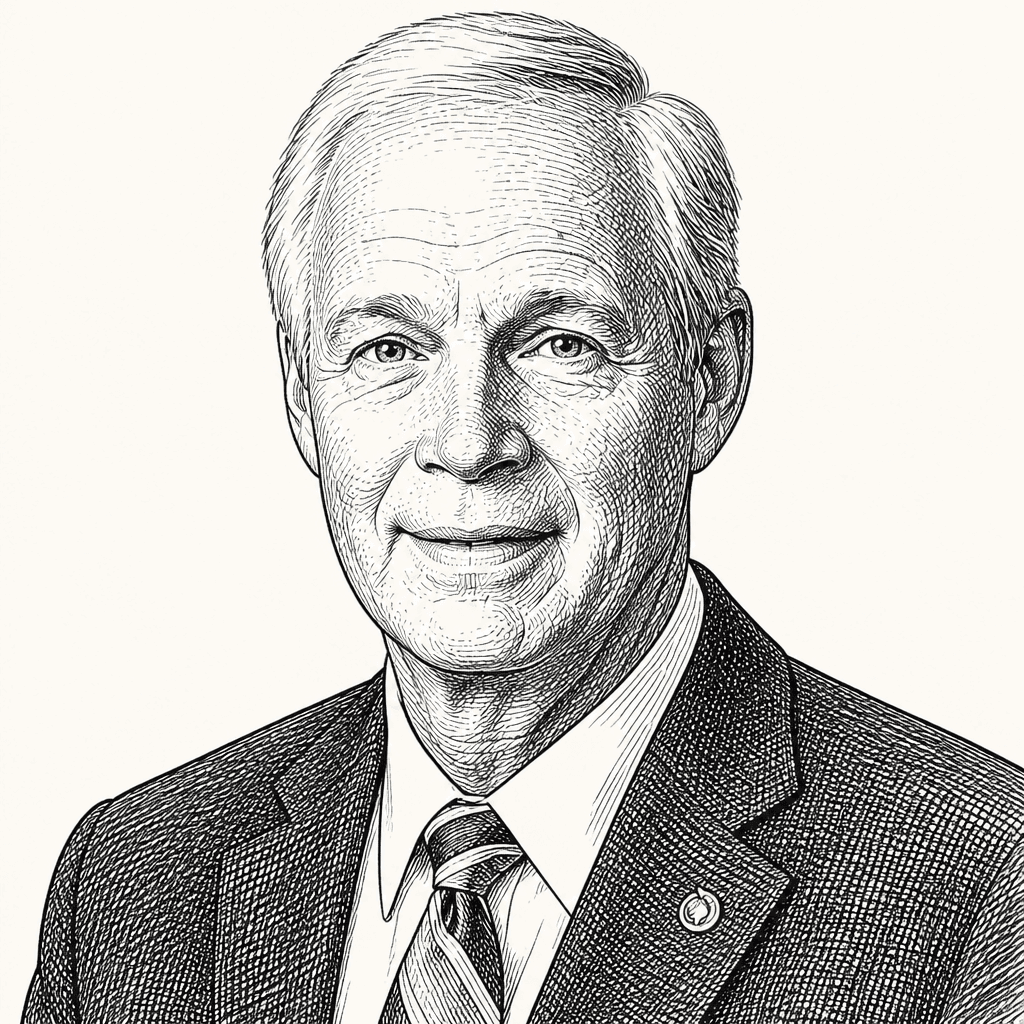
US Senator Ron Johnson used a keynote at the 2026 Employee Ownership Ideas Forum to argue that employee ownership belongs inside a broader effort to reduce capital concentration and put more productive assets in the hands of ordinary Americans. Johnson supported ESOPs when they reward workers who helped build a business, but warned against treating them as another narrow tax carve-out. His larger case was for a simpler tax code that taxes business income at the ownership level, preserves “wherewithal to pay,” and makes employee succession a more viable alternative to consolidation or private-equity sales.
Employee ownership as part of a wider fight over capital concentration
Ron Johnson used a keynote at the Employee Ownership Ideas Forum to connect employee ownership to a larger concern: the widening distance between “the uber-wealthy and normal Americans,” the accumulation of capital inside large corporations, and a tax code he said distorts both business formation and ownership.
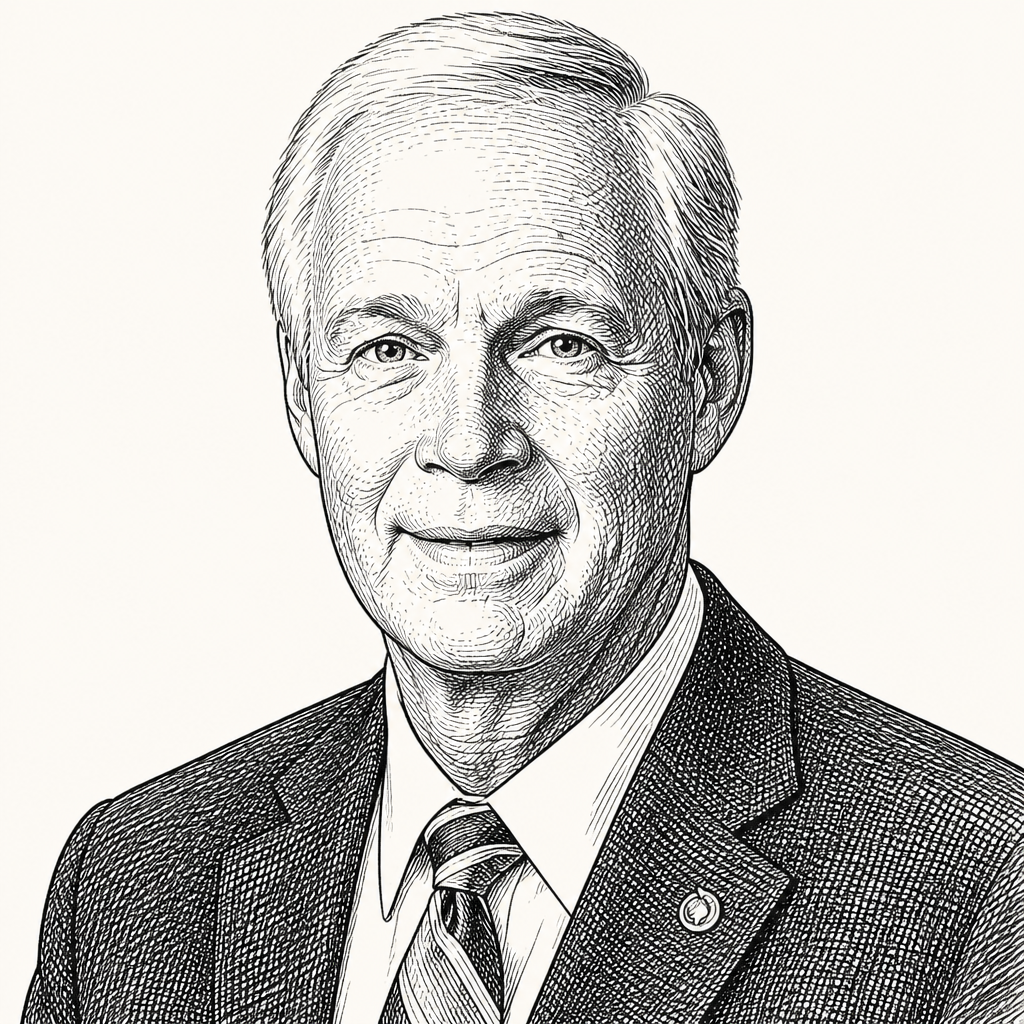
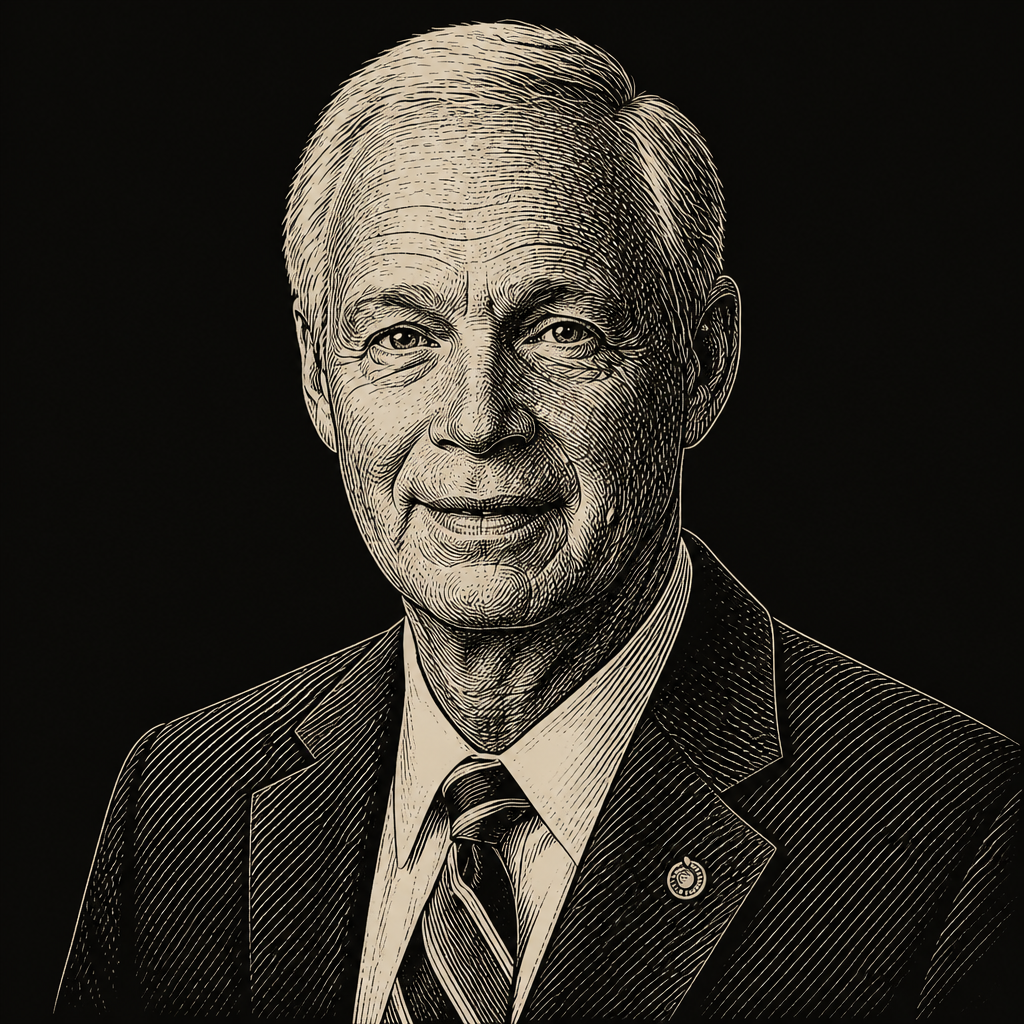
Johnson was careful at the outset to correct how he had sometimes been described in event materials. He said he had owned a business, and was therefore “the employee that owned it,” but that this was “not the exact same thing as an ESOP.” He also described working during college at National School Studios, later Lifetouch, where his mother had worked as a printer. Johnson said the owner, whom he identified as having no heirs, had set up the company for the benefit of the company or the people connected to it. He did not describe that example as a formal ESOP.
That distinction shaped his view of ESOPs. He endorsed employee ownership when it is designed for the benefit of people who have helped build a business over many years. But he also warned that ESOPs can be used in ways that place a business under financial strain. In his telling, an owner may take the tax benefit, drive up debt, and leave “that small, little wonderful company” in distress.
The policy premise he returned to was not a narrow ESOP subsidy. It was ownership. Johnson said employee ownership should be encouraged “as much as possible,” because a healthier economy would put more ownership in the hands of ordinary Americans. He linked that to small-business formation, family succession, and employee succession: people should be able to start firms, pass them to children, or pass them to employees, rather than build with the default expectation of selling to private equity after a few years.
We've got to figure out a way to re-democratize our economy. And get more ownership in the hands of ordinary Americans.
Jack Moriarty introduced Johnson as a former manufacturing-business owner from Oshkosh, Wisconsin, elected to the Senate in 2010. Moriarty also noted Johnson’s 2020 proposal during COVID: a Temporary Federal Grant Program intended to help recapitalize businesses as they resumed operations by helping them establish or expand an ESOP. Moriarty described the bill, which was not enacted, as an “innovative and bipartisan example” of integrating employee ownership with broader industrial policy objectives.


Johnson did not dwell on that bill. Instead, he treated employee ownership as one part of a broader question: how to structure the economy so capital is not locked up, decision-making is not concentrated, and small ideas can flourish.
Johnson’s tax argument starts with one sentence: income is income
Johnson’s central policy argument was that the United States should “simplify and rationalize” the tax code rather than keep adding targeted provisions. He resisted the language of reform for its own sake, saying that “all change is not progress, all movement is not forward, all reform is not good.” The standard he proposed was simpler: income should be treated as income, without separate systems and preferential categories that produce complexity and distortion.
That point mattered for employee ownership because Johnson sees ownership structure and tax structure as linked. He framed the tax divide between C corporations and pass-through businesses as a central distortion. Johnson said that in 2017, congressional Republicans initially proposed a tax bill that would have cut taxes only for C corporations, which he described as the top 5% of American businesses. The remaining 95%, pass-through entities, would have been “completely left out,” he said, and he argued that he had to “dig my heels in” to make sure pass-throughs also received a tax break.
His preferred model would go further: tax business profits at the ownership level. He argued that 95% of American businesses are already taxed that way. In his view, all business income should be taxed annually to owners, rather than allowing C corporations to retain earnings under a separate regime. He said the current structure allows very wealthy people to accumulate “literally trillions of dollars of wealth locked up in these C Corps,” reducing the efficient allocation of capital.
Johnson also rejected the present treatment of capital gains as insufficiently rational. He said he does not object to taxing a gain on ownership of an asset, but objects to taxing the inflationary component of that gain. In his view, a more rational approach would be to index the gain to inflation, remove the inflationary portion, and then tax the real gain at the same rate as income. The broader point was not lower taxation in every instance; he said he does not object to progressive taxation and believes wealthy people can pay “a somewhat larger percent share” of income. But he argued that different forms of income should not be subject to different tax structures.
Johnson said the complexity itself is costly. He cited an estimate of roughly $400 billion in tax compliance costs and said that number is “probably low.” Beyond compliance, he emphasized what he sees as economic distortions created when the code treats different income differently.
He also connected tax simplification to federal deficits. Johnson warned that the country cannot continue running deficits above $2 trillion. He described projections of $2.6 trillion annual deficits over the next 10 years, debt rising from about $39 trillion to about $62 trillion, and added pressure as the Social Security Trust Fund runs out and must be replenished from the general fund. In characteristic language, he told the Washington audience they were in “an alternate universe,” where policymakers and citizens alike were “whistling by the graveyard.”
‘Wherewithal to pay’ is the line Johnson draws around taxable income
When an audience member asked at what point Johnson would define income, he answered with a principle from tax accounting: “wherewithal to pay.” If a person has not received something in the form of cash or a comparable ability to pay tax, Johnson said, then they do not yet have income for tax purposes.
That principle led him to favor cash income as the basis for taxation. He distinguished tax accounting from accrual accounting: accrual methods may be necessary to understand whether a company is making or losing money, but for tax purposes he argued the standard should be cash.
His example was capital expenditure. Johnson called it “grotesque” that a business cannot simply deduct a capital expenditure when the money leaves the business. If a small business buys a $2 million piece of equipment, he argued, that cash is gone. The tax system should not force the business to borrow money to pay what he called a “fictional tax” on funds it no longer has.
The same principle explains his opposition to taxing unrealized capital gains. Later, in response to a question about bipartisan support for cooperative policy, Johnson said Senator Ron Wyden had been chairman of the Finance Committee and was now ranking member. Johnson said Wyden wants to tax unrealized capital gains. Johnson called that idea “insane” because it violates wherewithal to pay, but he also said he understands the problem Wyden is trying to address: the buildup of untaxed or partially taxed wealth.
Johnson’s alternative was to convert all businesses into pass-through entities. Under that model, business income would be allocated annually to owners, and taxes would be withheld by the business on shareholders’ behalf, similar to payroll withholding. He said this approach has been scored as potentially raising between $100 billion and $400 billion in additional revenue by converting C corporations into pass-throughs.
| Policy idea | Johnson’s stated rationale | Revenue effect he cited |
|---|---|---|
| Tax profits at the ownership level | Equalize treatment between C corporations and pass-throughs; prevent income from building up inside C corporations | $100B to $400B in additional revenue from converting C corporations into pass-throughs, according to Johnson |
| Index capital gains to inflation | Avoid taxing inflationary gains, then tax the real gain like ordinary income | No revenue estimate given |
| Use cash income for tax purposes | Tax only when the taxpayer has wherewithal to pay | No revenue estimate given |
Johnson described how withholding might work for a small shareholder. A “little old lady in Oshkosh” with a 10% marginal tax rate might be allocated $100 of income, while the company withholds $25 on her behalf. If her actual rate is lower than the withholding rate, she would receive a refund for the difference. A wealthy shareholder facing a 37% rate, by contrast, would owe more and might pressure corporations to pay dividends. Johnson saw that pressure as useful because it would move capital out of large corporate balance sheets and into wider circulation.
For Johnson, this was not a technical detour from employee ownership. It was part of the same policy problem: if more Americans are going to own productive assets, the tax system should not privilege one corporate form, lock capital inside large incumbents, or tax people before they have the cash to pay.
The critique of C corporations is also a critique of the M&A market
Johnson’s tax argument became an argument about market structure. He said capital retained inside large C corporations distorts mergers and acquisitions, because large companies can buy small businesses rather than compete with them or develop equivalent products internally.
His example was personal. Johnson said his son once had the opportunity to buy into a company that made a four-ingredient energy bar, potentially acquiring a quarter of the business for about $1 million. The family tasted the bar, decided it did not taste very good, and passed. Not many years later, Johnson said, Kellogg’s bought the same business for $600 million. He argued that a company like Kellogg’s should have been able to create a comparable four-ingredient bar, likely better-tasting, without spending $600 million to acquire it.
For Johnson, the point was not the missed investment opportunity. It was what the acquisition illustrated. Large corporations with capital locked up inside them can dominate markets by purchasing emerging companies. That concentrates decision-making in a small number of corporate and private-equity actors, rather than allowing many smaller firms and ideas to compete.
He described the alternative in explicitly decentralized terms: “the free flow of capital,” “a flourishing of ideas,” and Adam Smith’s invisible hand operating across billions of transactions instead of through “a few power brokers.” In that frame, ESOPs fit into his broader preference for wider ownership and more decentralized economic decision-making.
Johnson said he sees the opposite trend across the economy. Healthcare, farms, small companies, and other sectors are consolidating. “Everything keeps consolidating up,” he said. He mourned small companies selling out and small farms selling to large agricultural interests, calling it “not good for America.”
That is where his support for employee ownership sits: as part of an effort to resist concentration by encouraging ownership among “normal Americans” and making succession to employees one real path for business owners.
Bipartisanship exists, but Johnson does not want another carve-out
An audience member from the cooperative community asked what bipartisan support looks like on Capitol Hill, particularly in an environment that often does not feel bipartisan. Johnson answered first from temperament and professional background. He said he entered politics after a private-sector career and learned in business that people do not accomplish much by arguing all the time. They find areas of agreement: one side has a product, the other wants to buy it, and then they negotiate over price.
He said Congress is more collegial than outsiders may assume. Members are not “fighting like cats and dogs,” he said, and “even like each other sometimes.” His discussions with Wyden over taxing unrealized gains were his example of disagreement that can still begin from a shared problem. Johnson rejects Wyden’s preferred tool, but said he has offered him a different way to reach the underlying goal of reducing the buildup of wealth inside corporations.
When another audience member asked whether Johnson had encountered broad-based employee-ownership policy ideas with both political agreement and the political will to pass, Johnson pivoted to his objection to the usual legislative method. He said he does not want “another little carve-out complexity.”
He returned to a metaphor he uses for government: the ship of state. Over decades and centuries, he said, barnacles have built up on the hull, slowing the ship down. The obvious solution would be to scrape the barnacles off. But in Washington, he said, the answer is usually to add another barnacle to the front.
I don't want to add a barnacle to the ship of state. I want to scrape the hull and start with a clean piece of paper.
In employee-ownership policy terms, that means Johnson is skeptical of narrowly targeted incentives, even if they are aimed at a goal he supports. He would rather redesign the broader system around lower rates, simpler rules, cash income, and neutral treatment of business forms. He said that if the goal is a fair and economically efficient tax system, it would be “simple as hell,” and that simplicity would also make it fairer.
But he was not optimistic about enactment. He said he tried to push this approach during debate over the “one big beautiful bill” and that it “didn’t stand a chance.” The reason, in his account, is that Washington is full of rent seekers protecting existing carve-outs. Each group wants to preserve its own provision, and few are willing to step back to the larger structure.
Healthcare is Johnson’s warning about incentives and complexity
Johnson’s final answer broadened beyond tax and employee ownership into healthcare, but the example served the same governing argument about incentives, simplicity, and competition.
He said that in healthcare, every player in the market has an incentive to increase cost and no player has an incentive to decrease it. He cited a hearing held by Senator Scott with a surgeon from Oklahoma who had started a cash-based surgical center. According to Johnson, doctors there were “sick of the system” and decided to determine directly what they would charge. Johnson said that after roughly 10 years, the surgical center’s prices were about 10% of the cost of hospital surgeries.
He used the example to argue that small-scale competition and simple pricing can produce dramatically lower costs, but that incumbent players have little interest in moving to such a model. The point echoed his tax argument: when systems become complex and intermediated, their incentives can move away from lower costs and broader participation.
The healthcare example also clarified his broader view of regulation. He said he is not arguing for no regulation. Rules of the road, such as the UCC code, are necessary to create certainty. But he argued that the United States has created so much complexity that it has lost certainty — and certainty, from his manufacturing experience, is essential.
Johnson described his former company as a specialty niche manufacturer without volatile commodity pricing. The lesson he drew from more than 30 years in manufacturing was that “stability is everything.” Government, he said, is “the exact opposite of stability.” That business lesson fed back into his tax and ownership argument: a simpler tax code, lower rates, lower regulation, and predictable rules would, in his view, do more to support broad-based ownership and small-business vitality than another targeted policy layered onto the existing system.