Tulsa Youth Leader Says Schools Measure Students More Than Support Them
Komari Crisp presents Tulsa’s Black history, especially Greenwood and Black Wall Street, as a source of identity and power for young people. But she says her school experience often made students feel like numbers, valued most visibly when standardized test scores were at stake rather than consistently supported as people. Crisp points to Tulsa Changemakers and her own Youth Action Coalition as a different model: sustained support that trusts young people to speak, lead, and take part in decisions affecting them.
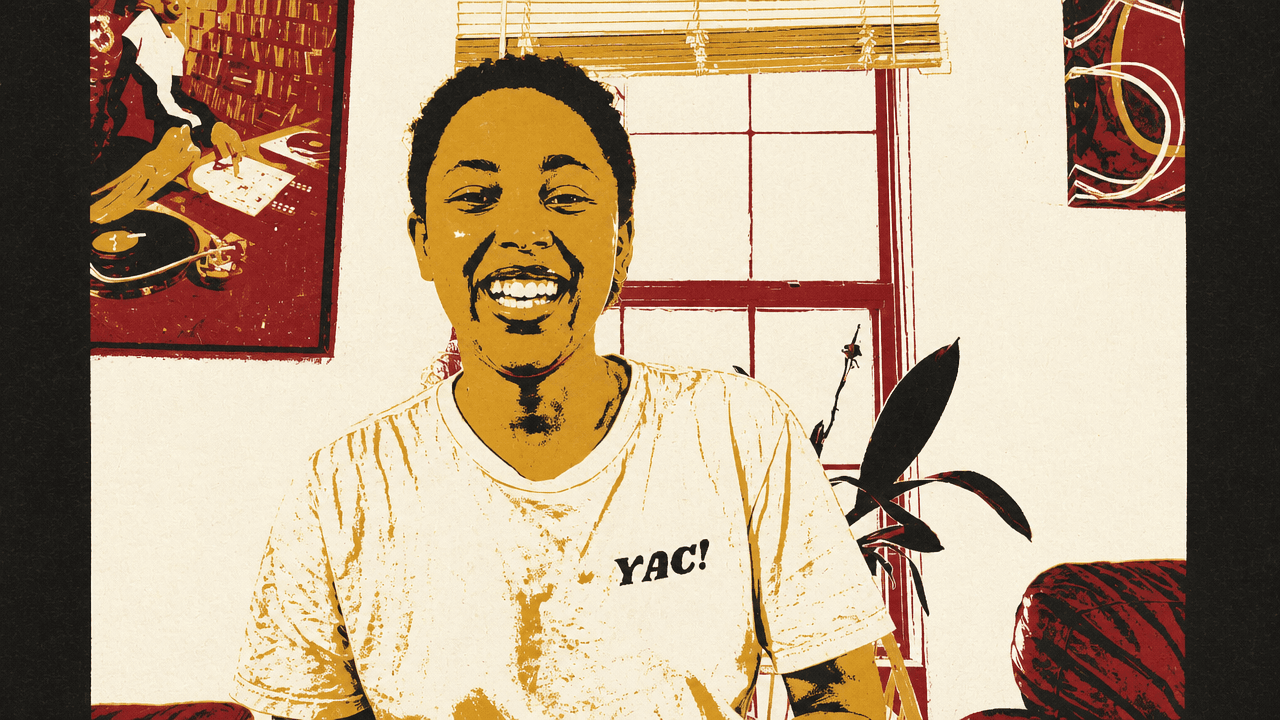
Tulsa’s history is not a backdrop; it is a source of identity
Kamari Crisp describes being “rooted in Tulsa” through the history of Greenwood and Black Wall Street. What makes the community unique, she says, is not simply that it has a painful history, but that the history is being recognized rather than “weaponized.” Tulsa’s story contains destruction, rebuilding, and a claim to excellence that Crisp treats as a living inheritance.
She points directly to the Tulsa race massacre of 1921, when the community was “burned completely to the ground” and then rebuilt. The rebuilding matters to her because it was not only recovery but evidence of collective capacity: she says the community rebuilt “in record time of five years.” That speed becomes part of the story she carries about Tulsa — a place that endured catastrophic violence and still rebuilt itself.
Crisp also emphasizes Greenwood’s economic strength. She says that when Greenwood was functioning “at their peak,” dollars circulated there more times than anywhere else in the nation at the time, and that it was “the richest Black community.” She does not treat that as a distant historical fact. She treats it as a source of belonging and pride: nowhere else, she says, can claim that history or allow people to walk the same streets once filled with Black-owned businesses, cars, and people “that looked like me.”
I walk as if I am a member of Black Wall Street.
Greenwood is not an abstraction for Crisp. It is a place she can name as home: “I can say I live on Greenwood.” Her sense of what young people can become is bound up with a local history of Black excellence, self-determination, and rebuilding after devastation.
School felt built to measure students, not raise them
When Kamari Crisp turns to school, the pride in community history gives way to frustration with institutional experience. School in her community, she says, “felt stagnant.” More sharply, it felt “like a system that I was never meant to rise above.”
The problem she identifies is not that students were ignored altogether. It is that attention arrived most visibly when the system needed performance data. Achievements went unnoticed, she says, “until it came to standardized testing.” At that point, the entire school environment changed: parents, administrators, and school staff showed up with motivational posters, snacks, lunch, and visible efforts to keep students happy and performing well.
Crisp’s critique is about the contrast. During testing, students were treated as worth motivating, feeding, and encouraging. Once testing ended, she says, they were “thrown into the deep end” to splash, float, or survive. The care that appeared around assessments did not translate into sustained support.
Students were expected “to do the impossible” without the resources needed to reach those goals. Crisp says the system made students feel like “numbers, statistics, percentages and grades.” That is the center of her complaint: the school could mobilize encouragement when scores were at stake, but students did not feel consistently seen for their achievements, needs, or potential.
The tension in her account is stark. Tulsa’s history teaches her that her community can rebuild, thrive, and embody Black excellence. School, by contrast, often felt like a place where young people were managed through measurement rather than equipped to rise.
Youth leadership begins where young people are trusted to speak
For Kamari Crisp, the clearest example of support for young people is Tulsa Changemakers. She describes the organization as one that “genuinely shows up and empowers young people,” and says it has been both an inspiration in her life and a push toward understanding what she could become and where she needed to start.
Her relationship to the organization moved from participation to leadership. Crisp says she has completed many programs with Tulsa Changemakers and is now both an alumna and a facilitator. She has also started her own Youth Action Coalition, which she calls YAC, and identifies that work as part of her own effort to show up for young people.
What she wants young people to know is direct: there are other young people who want them to succeed, go far, and “do so much within themselves.” She insists that young people already have capacity within them, and that their voices matter because decisions are being made “without them, for them.”
Their voice matters because decisions are being made without them, for them.
That is the sharpest part of her claim about youth empowerment. The problem is not only that young people fail to be heard. It is that decisions affecting them are made while excluding them from the process. Crisp connects that exclusion to a familiar disciplinary message: young people are told they should be “seen and not heard,” or that they should speak only when spoken to.
She describes internalizing that message. If a young person has something important to bring to light, the obvious question becomes: where can they take it? Her answer is to keep building momentum around the opposite premise — that youth have a voice, and it matters.
Support has to outlast the moment when performance is being measured
Kamari Crisp draws a practical line between support that appears for a moment and support that changes what young people can do. Test-time encouragement — posters, snacks, lunch, adults rallying students to perform — may make students feel temporarily attended to. But in her account, it does not answer the deeper problem of being asked to achieve without resources, recognition, or a meaningful say in decisions.
Tulsa Changemakers and YAC represent a different model in her telling. They are not framed as motivational gestures around a narrow outcome. They are places where a young person can participate, become an alumna, facilitate for others, organize peers, and begin building something of her own.
That distinction matters across Crisp’s remarks. She is not asking only for more encouragement around school performance. She is pointing to support that lets young people move from being spoken about to speaking, from being measured to leading, and from being treated as potential to exercising voice in their own communities.