Tulsa Youth Organizing Targets the High-School-to-College Gap
In a Rooted + Rising welcome video, Tulsa youth journalist Kamari Crisp frames her work around the transition from high school to college, a gap she says led her to start the Youth Action Coalition. Crisp argues that youth and education in Tulsa cannot be separated from race, culture, inequity and local history, including her own experience at Booker T. Washington High School. She says her reporting will also look for positive stories in the city, holding injustice and local possibility in the same frame.
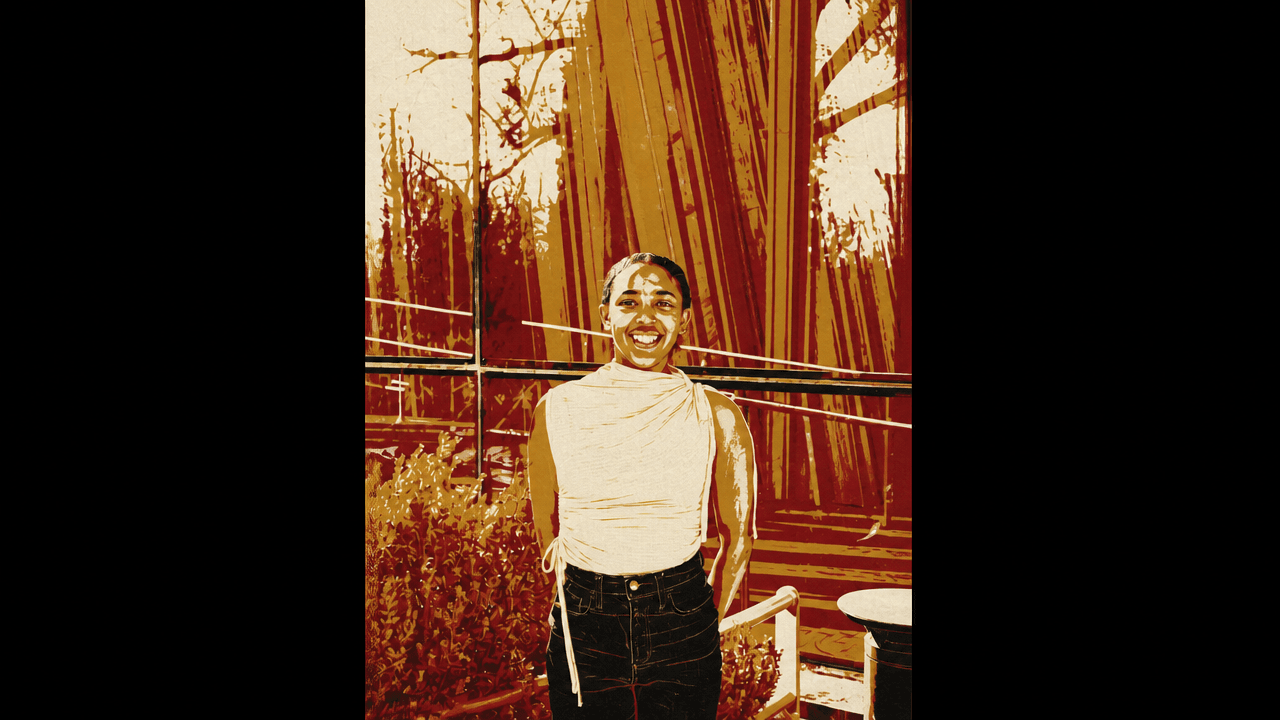
Youth Action Coalition starts from the high-school-to-college gap
Kamari Crisp grounds her Rooted + Rising work in Tulsa, Oklahoma, where she says she has lived for most of her life. She was born in California, moved back to Tulsa with her family, and has been there ever since. The most consequential detail in that local biography is the nonprofit she started there: the Youth Action Coalition, which Crisp says was created to serve high school students navigating what she calls “this sort of weird gap in between high school and college.”
I started my own nonprofit organization called the Youth Action Coalition here in Tulsa, to better serve the high school students and this sort of weird gap in between high school and college that I felt like wasn't being fit.
That gap gives her education focus a specific shape. Crisp is not speaking about young people only as a broad category; she is naming a transition point where students may need more support and visibility as they move from high school toward college.
Her own schooling is part of that Tulsa frame. Crisp attended Booker T. Washington High School, which she identifies as a historically Black high school with “a lot of history.” She does not elaborate on that history here, but she names the school as part of the formation she brings to work on youth, education, race, and culture in the city.
The work is meant to hold injustice and local possibility together
Kamari Crisp says she is excited to join the Rooted + Rising journalist cohort because the work fits what she already likes to do: write, talk, and be “out and about in the community.” Her account of the role is grounded in presence — the moments she gets to hear, the moments she gets to have, and the stories she can surface from Tulsa.
The subjects she hopes to highlight are direct: youth and education, race and culture, and inequities and injustice that she sees. Those priorities connect to the civic base she describes: a historically Black high school, a Tulsa youth nonprofit, and concern for students moving through an under-addressed transition after high school.
Crisp also repeats another aim: she wants to highlight the positive. She places that desire against “all of the craziness going on in the world,” but not as an alternative to naming inequity or injustice. In her framing, positive stories from Tulsa belong alongside the harder ones.
I really want to highlight the positive in my city.
The result is a body of intended work that is neither purely celebratory nor narrowly problem-focused. Crisp wants to write and speak from within the community, with attention to youth, education, race, culture, injustice, and the local examples that show possibility.
Rooted + Rising’s place-based frame becomes specific in Tulsa
The Rooted + Rising series was developed to center young people as experts of place, documenting what they see, experience, and imagine for the future of rural education in their communities. Its stated concerns include trust, relationships, opportunity, systems that work or fall short, belonging, leadership, and community connection.
Crisp’s Tulsa account gives that frame concrete terms. She names the city where she has spent most of her life, the high school that shaped her, the nonprofit she started, and the stories she wants to pursue. Her emphasis is not only on observing systems from a distance. It is on what she hears and experiences while being “out and about in the community.”
That matters because her intended subjects are not detached beats. Youth and education are tied to the high-school-to-college gap she identified through her nonprofit work. Race and culture are tied to her naming of Booker T. Washington High School as a historically Black institution. Inequity and injustice are tied to what she says she sees. The positive stories she wants to highlight are tied to a city she calls her own.