UN Members Must Organize Around the Charter When Veto Powers Fail
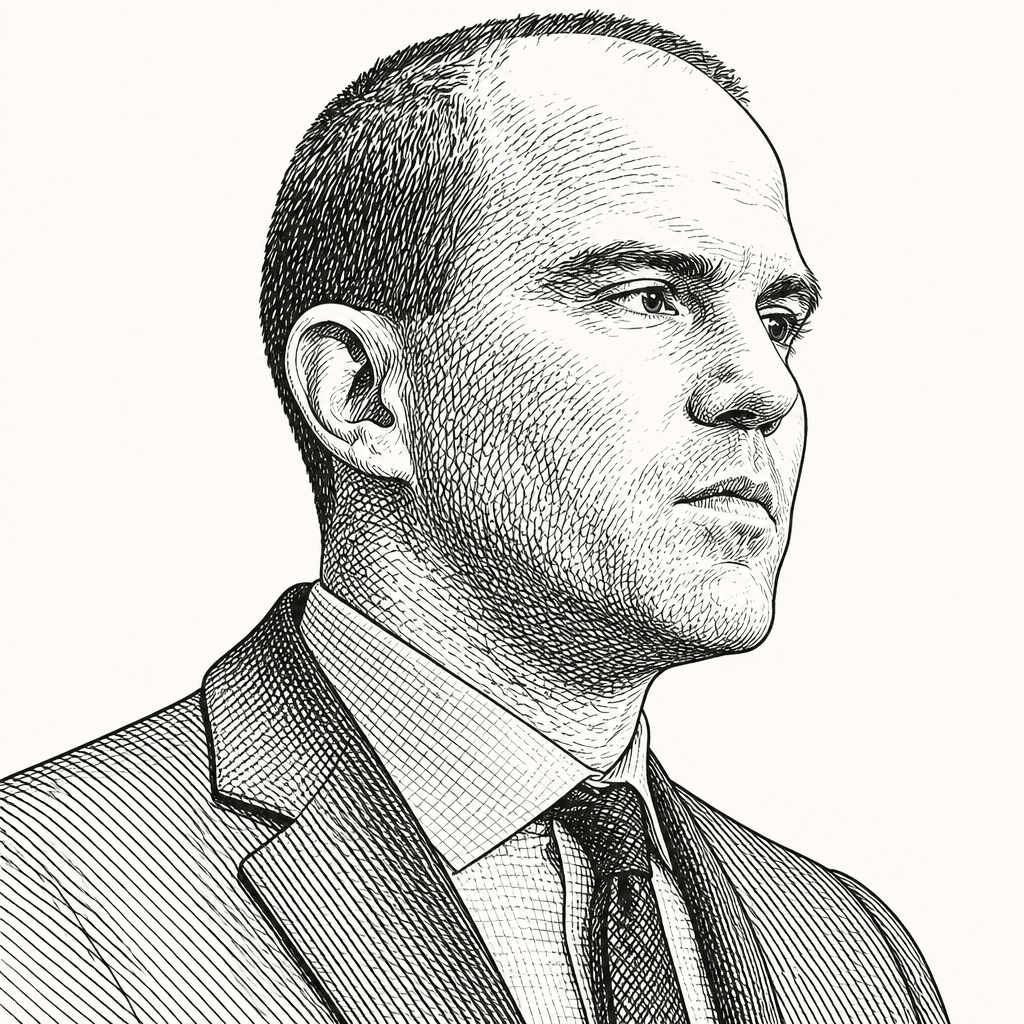
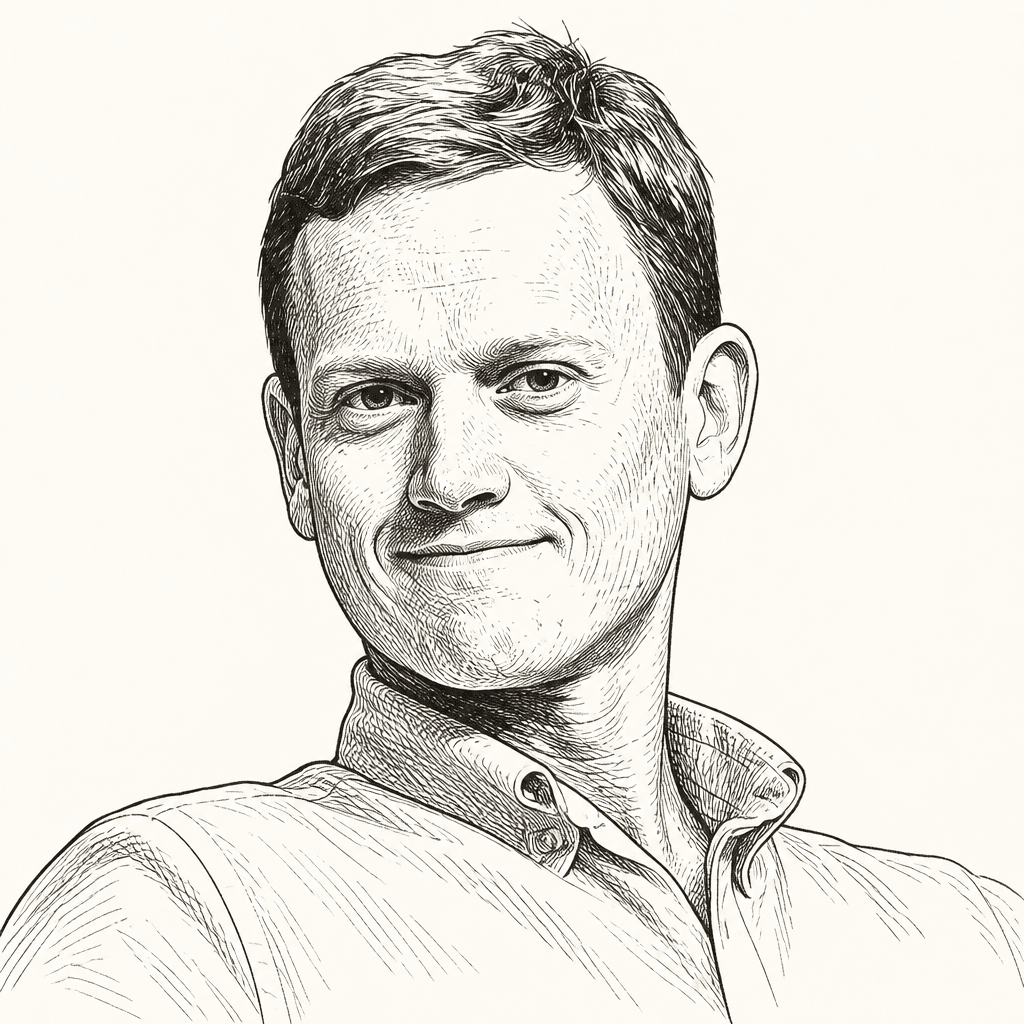
Annalena Baerbock, president of the UN General Assembly and Germany’s former foreign minister, argues that the UN’s authority depends less on overcoming great-power vetoes than on its wider membership using the institutions and political leverage it already has. General Assembly votes cannot end wars or replace implementation, she says, but states that share an interest in the UN Charter can set common positions, resist attempts to bypass the system, and press for reforms in representation and management.

The UN’s usable power lies with members willing to act together
? annalena-baerbock does not claim that the United Nations can simply overcome wars involving its most powerful members. When veto-wielding states are themselves challenging—or, in her view, attacking—the UN Charter, a system built on 193 member states and a Security Council with five permanent veto holders cannot resolve every crisis. That limitation is structural, not a reason to pretend the institution is functioning normally.
Her practical proposition is narrower: the UN’s political force lies in the wider membership acting through institutions that already exist. Baerbock rejects the description of the present as a merely polarized world. It is “multipolarized,” she says, but a two-thirds majority of states still supports the foundations of collective order: the Sustainable Development Goals, action on climate, governance for AI, and principles of peace and security.
For those states, the Charter is not an abstraction. It is “life insurance,” in Baerbock’s formulation. A system in which might makes right would endanger smaller countries most directly, but she argues that even militarily strong states cannot insulate themselves from its consequences. She pointed to the Strait of Hormuz as an example: military force alone cannot settle such a crisis without effects on a country’s own economy.
The question is whether a broad majority of states will publicly organize around the Charter and create political pressure for its principles. Baerbock acknowledges that some major crises remain beyond reach when states with decisive power refuse to permit collective action. But she treats silence by the broader membership as a separate failure. On Gaza, the proposed Board of Peace, and the Strait of Hormuz, the recurring question is whether governments that share an interest in the Charter will say so and act together.
This is our house, this is our house of humanity, and we can do something if we do something together.
That is why she places unusual weight on “front runners” and coalitions of states prepared to take concrete positions. She avoids the older language of a “coalition of the willing,” but argues for coalitions of countries that believe they can accomplish something together without waiting for universal agreement.
Gaza showed what a General Assembly majority can—and cannot—do
? annalena-baerbock pointed to a two-state-solution conference organized by Saudi Arabia and France before the UN’s high-level week. The United States opposed the conference and did not participate, she said. Yet 142 member states adopted a resolution that she described as a detailed plan for ending the Gaza war.
Its elements, in her account, included Hamas’s disarmament, the withdrawal of the Israeli army from Gaza, humanitarian access, and steps toward governance by Palestinians themselves. The vote did not itself implement those steps. Its importance, for Baerbock, was that member states established a detailed common position despite divisions among major powers—and showed that states outside the Security Council’s permanent-member bloc could shape the political environment around later decisions.
The same distinction frames her view of the Board of Peace. Tommy Vietor described it as an initiative ostensibly intended to manage Gaza’s long-term reconstruction but one that appeared to displace core UN functions. He said most pledged funding had not materialized and that the International Security Force then being assembled had only four members.
Baerbock argued that the Board’s early experience had reinforced rather than weakened the case for the existing system. A new institution, she said, “can never ever replace the United Nations.” The UN has specialized agencies for needs such as health and education, and structures capable of operating in Gaza. Collecting money for a conflict zone does not reproduce that capacity.
The funding gap made the point concrete. Gaza reconstruction requires billions, she said, while roughly $23 million had been collected so far.
Her larger concern is not that the UN must be treated as infallible. It is that governments increasingly treat it as optional. Iran illustrates the difference in her telling. Critics may say the UN failed to address the issue, but the matter was not even brought to the Security Council. During the Iraq war, by contrast, the Council was a site of intense argument. Governments could disagree over the merits, but they had an institutional forum in which to state their case.
“If we are just sort of bypassing an institution,” Baerbock said, “obviously it cannot act.” The institution might still fail once a question is placed before it, but bypassing it removes both the forum for collective deliberation and the machinery that can carry out a response.
Reform cannot wait for a solution to the veto
Ben Rhodes pressed the institutional problem directly: what can the UN reform when the United States, Russia, and China are at odds? ? annalena-baerbock separated changes that states can make through political action now from structural reforms that remain necessary but far more difficult.
The veto is the obvious case. Baerbock does not dispute that it can block peace or that Security Council reform is needed. But she considers it nearly impossible, under present conditions, to take away the veto rights of permanent members. She is equally skeptical of proposals to abandon the existing system and build something entirely new. In her account, the Board of Peace did not eliminate veto politics; it concentrated it, creating a structure in which one person held an individual veto.
That is not an argument against institutional reform. Baerbock pointed to African representation on the Security Council as an immediate credibility issue. Additional African representation would not abolish the veto, but it could make the institution more just and legitimate.
A second agenda is less visible but, in her view, indispensable: internal management. Baerbock said UN inefficiency surprised her even as a German accustomed to bureaucracy. The organization is overloaded, and she argued that it needs to reduce unnecessary layers and senior positions.
That is difficult precisely because staffing is political. Under-secretary-general and assistant-secretary-general posts are not merely boxes on an organizational chart; they are distributed among member states. Eliminating what appears redundant therefore becomes a geopolitical negotiation. The UN also lacks the kind of internal checks and balances that might otherwise force efficiency, she said.
Procedure, staffing, representation, and institutional overload may not attract public attention, but Baerbock regards them as necessary to the organization’s survival. The Security Council’s fundamental defect may not be fixable soon. The UN, she argued, still has to reform from within if it is to withstand pressure from outside.
Democracy is tested when compromise becomes costly
Baerbock treats multilateralism and domestic democracy as parallel systems: both depend on people participating in shared institutions, accepting imperfect compromises, and defending common rules when those rules become politically inconvenient.
? annalena-baerbock connects that problem to the rise of the Alternative for Germany, or AfD. Asked about the party’s growing support, she said she did not have an answer and called it her biggest fear.
She struggles with the claim that everything is falling apart in democracies such as Germany, where people have broad access to basic services including health care. But she does not regard the danger as theoretical. In the immediate German context, democratic parties must maintain the firewall against the AfD.
Baerbock distinguished at least a core part of the party from far-right parties elsewhere in Europe that entered government and moderated some anti-European positions. The AfD core, she said, is anti-constitutional. Germany’s Verfassungsschutz exists because of the country’s history, she said, and has produced reports about the party.
The response cannot rest only on denunciation. A party that comes first still needs a governing majority, Baerbock noted. If it cannot reach 50 percent on its own, other parties may have to form coalitions to keep it from power. That may be unpleasant—she had served in a three-party coalition that ended early—but it is a democratic obligation in difficult circumstances.
Democracy is easy in easy times, but it’s tested in challenging times, and this is when you really see if you are a true democratic leader.
Her longer-term answer is to build more globally minded citizens. Every student, she suggested, should be able to spend half a year abroad at age 16, not only to learn another culture but to understand what it means to be a foreigner navigating unfamiliar systems and depending on others.
Baerbock recalled being in the United States at 16 and feeling intimidated when she needed to see a doctor because she did not understand the system or know what to say. She also became friends with another German whom she would hardly have spoken to at home but who understood her difficulties abroad. Those experiences, she argued, alter how people hear complaints that immigrants should simply speak the local language.
She resisted reducing the rise of the right to corruption or opaque decision-making. Poor or corrupt leadership damages trust, she said, but people can also follow leaders who spread falsehoods. Citizens therefore have responsibilities of their own. Democracy depends on active citizenship, not on finding a party that satisfies every preference.
Her washing-powder analogy made the point in ordinary terms: no option will meet every demand, but people still have to choose. Democracy requires accepting a compromise and then revising that choice at the next election if it fails.
The next Secretary-General will test the membership’s political will
? annalena-baerbock treats the selection of the next Secretary-General as an immediate test of whether the UN’s broader membership will use its voice. She described an upcoming General Assembly town hall for candidates, to be broadcast by a major television outlet, as a step toward a more visible process.
The wider question, she said, is who the world’s 8 billion people want to lead the organization. Two years earlier, the broader membership had made clear that after 80 years without a woman Secretary-General, the time had come for one. At the time of the discussion, Baerbock said, there were four women candidates with experience as presidents, foreign ministers, or other national leaders, alongside two men.
Her case is partly about representation but principally about credibility. If member states called for a woman by consensus and then selected a man on the explanation that no qualified woman could be found, the institution would struggle to defend its legitimacy. With roughly 4 billion women in the world, that justification would be particularly difficult to sustain.
The Security Council’s permanent members retain immense influence over the nomination process. But Baerbock emphasized that the General Assembly has the final say “in theory,” and that broader membership can establish political expectations before a choice reaches that stage. She cited Kofi Annan’s appointment, when the African group made clear that it would not support a non-African candidate because it considered the post Africa’s turn.
That is the kind of collective soft power she wants states to use now. The membership, she argued, should not support a candidate who does not uphold the Charter’s prohibition on unlawful invasion, denies climate change, or questions the Sustainable Development Goals that she links to peace and security.
No Secretary-General will be perfect. The eventual selection will necessarily be a compromise among states with different interests. But Baerbock’s minimum standard is direct: the next leader must stand “with both of her feet on the charter of the United Nations.”