Election Doubt and Unchecked War Policy Erode Institutional Trust
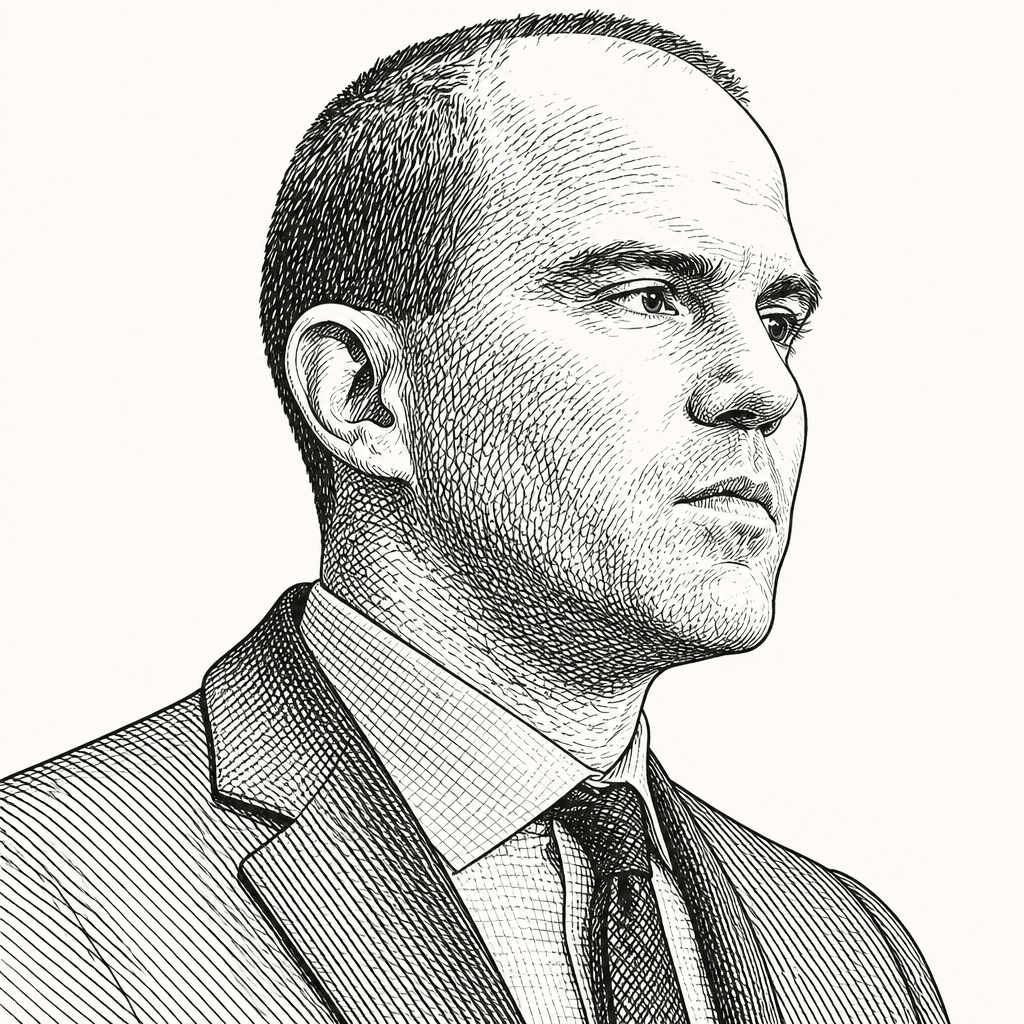


Ben Rhodes and Tommy Vietor argue that public distrust of institutions follows when officials invoke threats to elections or national security without accepting accountability for evidence, consequences, or failure. They distinguish foreign influence campaigns from vote manipulation, warning that unproven election claims can still furnish a pretext to challenge democratic outcomes. In foreign policy, they contend that Congress, public opinion, and stronger diplomatic institutions must constrain a Washington culture that too readily defaults to war, sanctions, and arms transfers.

Distrust grows when institutions claim authority without accepting accountability
Ben Rhodes and Tommy Vietor tie claims of election interference and the conduct of U.S. foreign policy to a common political failure. In their account, election allegations can spread doubt without establishing that votes were changed, while foreign-policy institutions can repeatedly favor war, sanctions, and other coercive measures without fully reckoning with failure. The harder work—acknowledging error, accepting public constraint, or explaining a policy’s human and political costs—often goes undone.
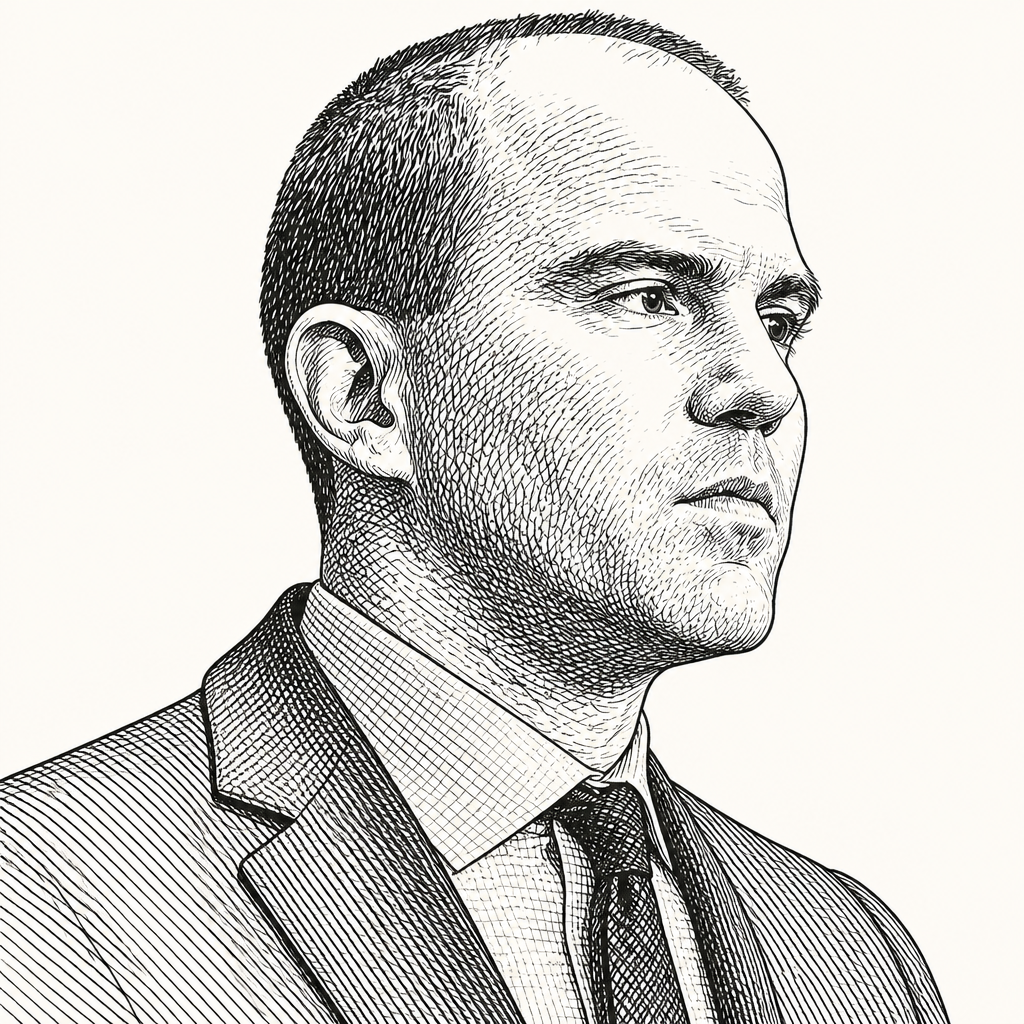
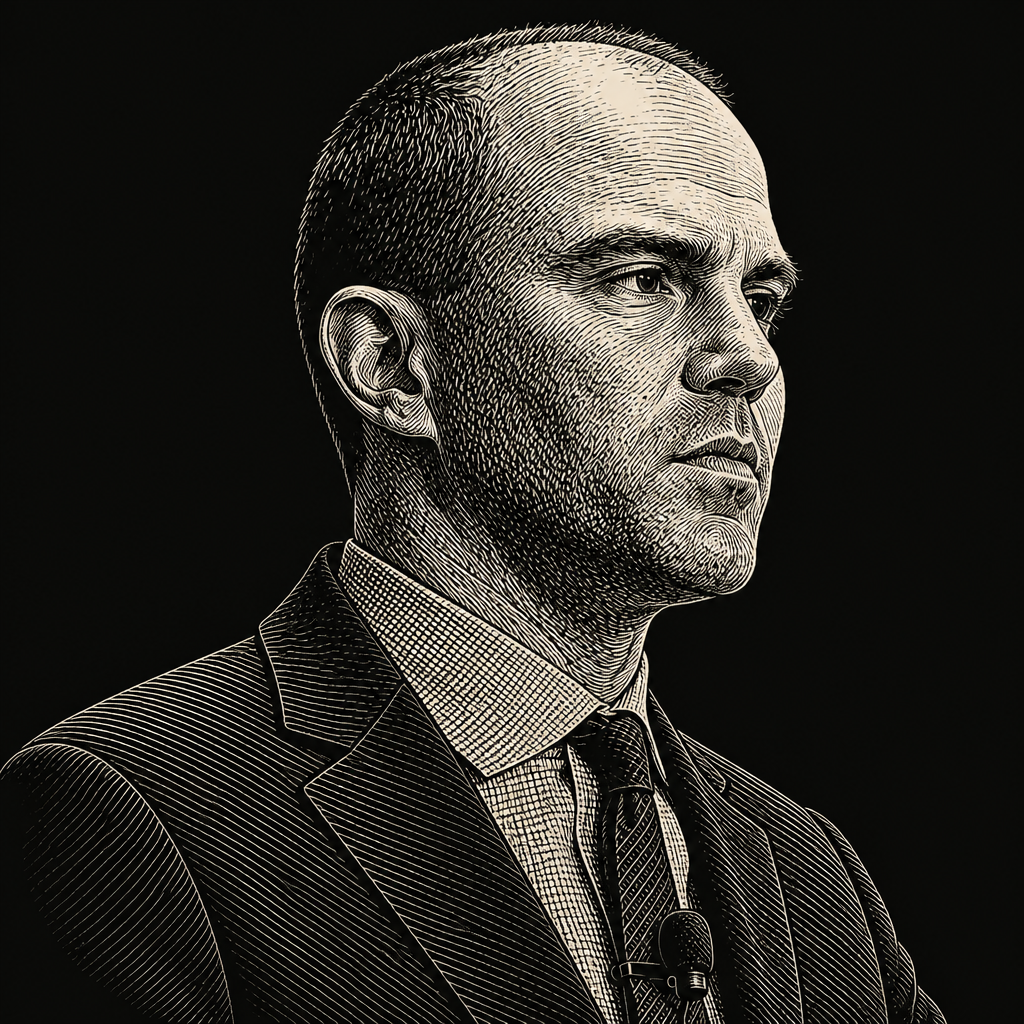
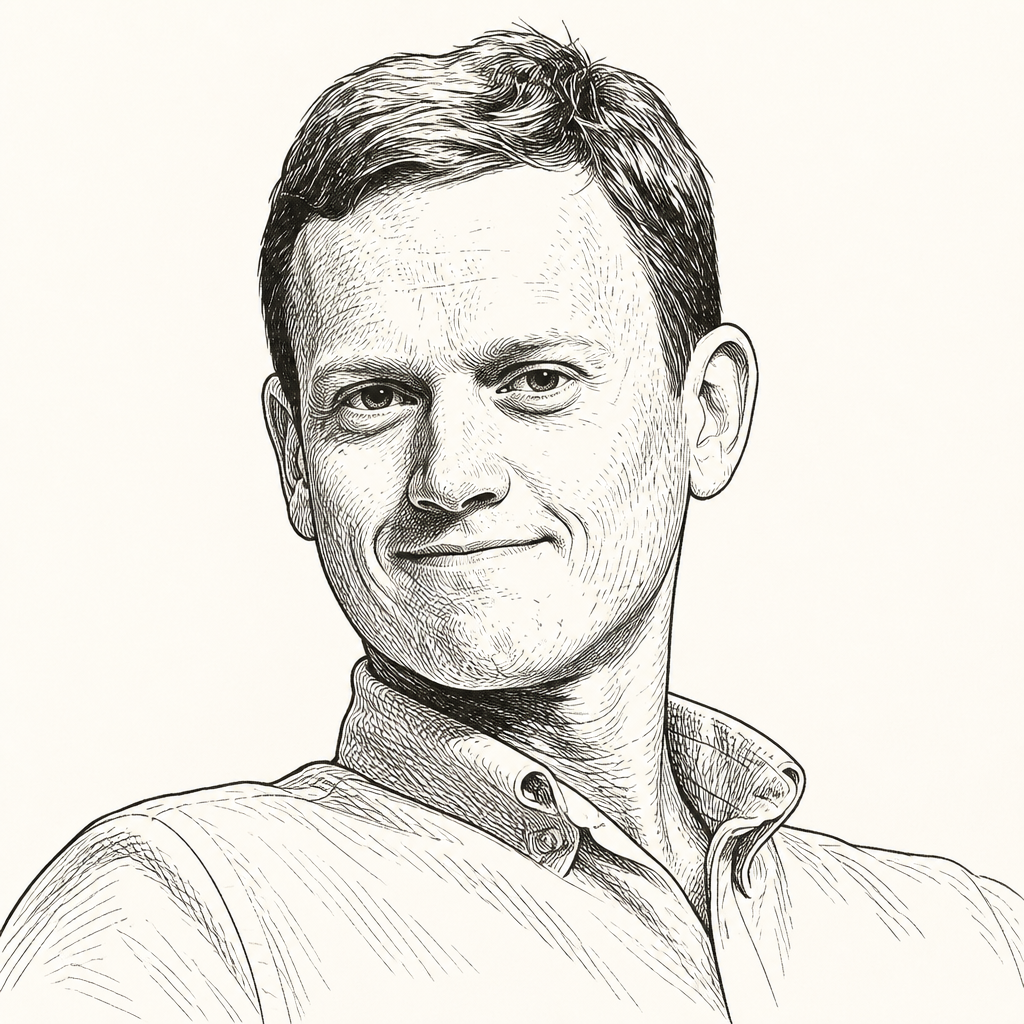

Rhodes used “the Blob” to describe a groupthink tendency within the foreign-policy apparatus: a bias toward military intervention and sanctions, an inclination to defend previous choices rather than reckon with mistakes, and a recurring failure to recognize how those habits alienate the public. He said he had participated in that mentality at times while serving in government.
The phrase emerged from the fight over the Iran nuclear agreement, or JCPOA, when Rhodes was arguing with its opponents. The revealing asymmetry, he said, was that it could be harder to secure a negotiated nuclear agreement through Congress than to take the country to war. Diplomacy attracted heightened suspicion while coercion repeatedly appeared to be the default posture of seriousness.
Vietor’s account of the Iraq war supplied the central example. He called it a catastrophic failure that killed hundreds of thousands of Iraqis and thousands of U.S. service members, consumed trillions of dollars, and nevertheless left many of its architects with professional standing as foreign-policy authorities. Congressional opponents of the war and journalists who challenged the administration’s claims, including reporters at Knight Ridder, received little comparable recognition, he said.
The public has repeatedly demanded accountability through presidential politics, Rhodes said. Barack Obama’s opposition to Iraq distinguished him from Hillary Clinton in the 2008 Democratic primary, while Donald Trump gained traction in 2016 by attacking Jeb Bush and the Iraq-war legacy. Those campaigns reflected a durable electoral message: voters wanted someone to answer for wars and interventions that failed.
Rhodes’s own example was the Obama administration’s intervention in Libya, which he supported. It achieved a near-term objective—preventing Muammar Qaddafi from massacring civilians—but he now considers it the wrong decision because its regime-change effects destabilized North Africa and the Sahel. Admitting such error is not merely retrospective moral accounting, he said. It is part of restoring credibility: people may grant leaders some grace if they reckon with mistakes rather than defend every decision indefinitely.
Instead of questioning whether we can do it better, we need to be questioning why we continue to try to engage in regime change wars in the first place.
Rhodes grouped Afghanistan, Iraq, Libya, and what he called the attempted regime-change war in Iran as cases that did not work. The recurring response, he said, is often to fault intelligence, execution, or insufficient troop levels rather than revisit the premise of regime change. Vietor made the same point more bluntly: the problem with Iraq was not only faulty intelligence about weapons of mass destruction; it was the decision to undertake the war.
They cited individual figures and contemporary debates as evidence of a stubborn institutional reflex. Vietor objected to comments by Condoleezza Rice at the forum that, in his view, echoed Iraq-era arguments about acting before an Iranian threat became imminent and dismissed the possibility of a nuclear agreement with Iran. He argued that allowing Iran to “stew” in a weak economy also meant accepting suffering among its population. Rhodes pointed to Bob Menendez as an example of a hawkish Democrat who retained substantial foreign-policy authority despite prior controversies. In their view, policy failure too rarely changes who is empowered to make the next decision.
Election claims need not prove fraud to weaken democratic restraint
Ben Rhodes read Donald Trump’s primetime address about election interference not as a persuasive account of what happened in 2020, but as an effort to prepare the ground for disputes over future elections. Trump does not need a conclusive finding that votes were altered, Rhodes said. He needs to create enough doubt about election administration that allegations of fraud, foreign interference, and insecurity can circulate among supporters and make exceptional responses appear justified.
Rhodes asserted that Trump had dismantled government capabilities intended to detect, disrupt, and report foreign interference, while now complaining about the resulting lack of capacity. He also cited what he described as Tulsi Gabbard’s participation, as director of national intelligence, in the seizure of ballot boxes in Fulton County. His larger concern was that intelligence and security institutions could be drawn into creating pretexts for intervention before votes are counted.
He doesn't actually need to have some smoking gun. He just needs to create enough of an appearance of discrediting the electoral system, of some semblance of a scandal, that can then ricochet around his media ecosystem.
Tommy Vietor said Trump’s address was meant in part to build support for the SAVE Act, which he described as stalled in the Senate. Its election-security section combined ordinary concerns about voting technology with criticism of Trump’s former intelligence officials, calls for investigations and indictments, declassified material about electronic-voting vulnerabilities, and claims involving voter-registration groups and noncitizen voting.
Vietor said he approached the released documents with an open mind but found mostly old information: raw reporting and declassified emails that did not alter the publicly disclosed intelligence assessments. As he summarized the key 2021 National Intelligence Council report, foreign governments had run influence operations favoring or opposing candidates, but none had tried to alter voter registration, vote counting, or vote reporting in a way that would materially change the result. Later-released material, including disagreement within the intelligence community about low-level Chinese exploratory activity, did not challenge that central assessment, he said.
The distinction between influence and vote manipulation is the analytical hinge for both hosts. Rhodes said foreign governments regularly try to shape other countries’ politics through misinformation, disinformation, and overt messaging, particularly because social media makes such efforts inexpensive and easy. Russia’s efforts to hurt Biden, Iran’s efforts to hurt Trump, and China’s interest in undermining confidence in institutions were, in his telling, examples of foreign powers pursuing recognizable interests. But the available material did not show a successful—or seriously concerted—effort to change vote tabulation or the functioning of the electoral system.
Rhodes considered 2016 distinct in one respect: hacking and releasing private emails added criminal activity to an influence operation. Still, he said, the Obama administration did not determine that Russia had materially affected the vote count. The absence of evidence that ballots were changed does not eliminate the present danger, in his view. It clarifies it: the aim need not be to establish fraud, but to create a smokescreen that makes challenges to democratic outcomes seem more legitimate.
That concern parallels their critique of foreign policy. In both areas, they describe political arguments that can create support for coercive or extraordinary action even where the underlying evidence is thin: allegations that may justify federal involvement in elections, or threat claims that may make bombing, sanctions, or war appear necessary.
Democratic control means making war and arms policy answerable to Congress
Ben Rhodes rejects the idea that foreign policy can or should be insulated from politics. Officials may say that “politics has no place” in the Situation Room to distinguish national-security judgment from short-term electoral calculation, Vietor said, but politics is unavoidably present. The people in the room hold power because elected leaders won elections, and the decisions they make bind a democratic public.
The danger is not politics itself, but a foreign-policy culture that treats public opinion as an intrusion. Alliances, overseas commitments, foreign assistance, and a credible intelligence community all depend on maintaining public trust, Rhodes said. Trying to defend those institutions by “pull[ing] up the drawbridge” from public opinion has instead left them distant enough for populists to attack.
Tommy Vietor pointed to Gaza as an example of the costs of that distance inside the Democratic Party. Rhodes said that, during late 2023 and 2024, many Democratic voters could see their tax dollars financing weapons for an Israeli government that the Biden administration publicly said it was struggling to influence. Those statements of dissatisfaction did not resolve the credibility problem, he argued, because the visible policy remained the continued provision of military support while civilians in Gaza were being destroyed.
Public opinion can be more than a constraint; it can provide political room to change course. If voters are demanding a break with a partner government or an end to a policy, that demand can give an administration a basis for action that officials might otherwise regard as politically difficult.
The clearest institutional mechanism is Congress. Rhodes argued that explicit congressional authorization would make many wars less likely, including a war with Iran, because members have strong incentives to avoid taking responsibility for one after the political damage caused by Iraq. He sees that not as congressional obstruction but as the constitutional design: Congress should decide whether the country goes to war.
Vietor’s proposals follow from the same principle. He called for repealing the post-9/11 Authorizations for Use of Military Force, strengthening and clarifying the War Powers Act, and requiring greater scrutiny of major arms packages. Rather than allow large arms sales to proceed with limited attention, he argued, Congress should vote directly on them. The objective is to make military commitments visibly political decisions—ones elected officials must defend—rather than defaults made by the executive branch and national-security bureaucracy.
Reform requires capacity for diplomacy and permission for restraint
Tommy Vietor argued that accountability cannot rest solely on congressional votes. Who gets recruited into foreign policy, what institutions are resourced, and which positions are regarded as professionally serious all shape the choices available before a president confronts a crisis.
He called for generational change in the foreign-policy staff class, more diverse voices, and greater transparency and oversight of Washington think tanks. He criticized the revolving door between policy institutions and government, and proposed stronger lobbying bans, disclosure rules, enforcement of the Foreign Agents Registration Act, and campaign-finance reform. Rhodes added that the establishment is not only older but also disproportionately white; changing recruitment pipelines and bringing different perspectives into policymaking would produce different outcomes, he said.
A less interventionist policy also requires civilian institutions capable of doing more than watching the military take on every problem. Vietor called for a larger State Department and a rebuilt, modernized USAID, alongside a reconsideration and reduction of the U.S. military footprint and spending. Rhodes included permanent sanctions regimes in the same critique of accumulation: sanctions are imposed, layered on top of one another, and seldom lifted. He warned that endlessly extending coercive tools could carry broader economic consequences.
The most basic cultural shift is to stop treating advocacy for force as inherently realistic and advocacy for restraint as naïve. Vietor argued that establishment media and Washington institutions often grant credibility to people who favor intervention while treating antiwar and pro-peace voices as fringe. He contrasted the normality of a Department of War with the ridicule directed at Dennis Kucinich’s proposal for a Department of Peace, whose stated purposes included making peace an organizing principle of foreign policy and promoting conflict prevention through diplomacy.
Rhodes described the intellectual pattern as a hammer-and-nail problem. If intervention is always presented as the answer to a government doing something objectionable, then bombing, invasion, and sanctions become proof that a policymaker is offering a solution. A person urging restraint can be made to seem passive, even when the interventionist prescription has repeatedly failed.
He said progressives have historically ceded much of the Democratic Party’s foreign-policy terrain to hawkish members, particularly in committee leadership. That has begun to change, he argued, but it needs to go further: more progressive lawmakers should develop substantial foreign-policy profiles, receive relevant committee assignments, and gain the institutional permission to contest conventional national-security assumptions.
Public opinion keeps telling us you will be rewarded for doing this. Don't be afraid to have fights on these issues.
Rhodes’s claim is that the politics of restraint are not necessarily a liability. Leaders are often more afraid of being called weak on national security than they are of supporting sanctions or military action, he said, even when public opinion favors a more skeptical approach. Vietor agreed that open fights over these issues are useful precisely because they force choices that might otherwise remain hidden inside elite consensus.
The reforms fit together: Congress must have a real role in authorizing war and scrutinizing arms sales; diplomatic and development institutions need resources to provide alternatives to force; recruitment and oversight must broaden who shapes policy; and political leaders must be willing to treat restraint as a substantive, defensible choice. Trust cannot be restored by asking the public to defer more readily, Rhodes and Vietor contend. It has to be earned by making coercive power harder to deploy without democratic accountability.