Russia’s Proxy Network Raises Risks as the Regime Weakens

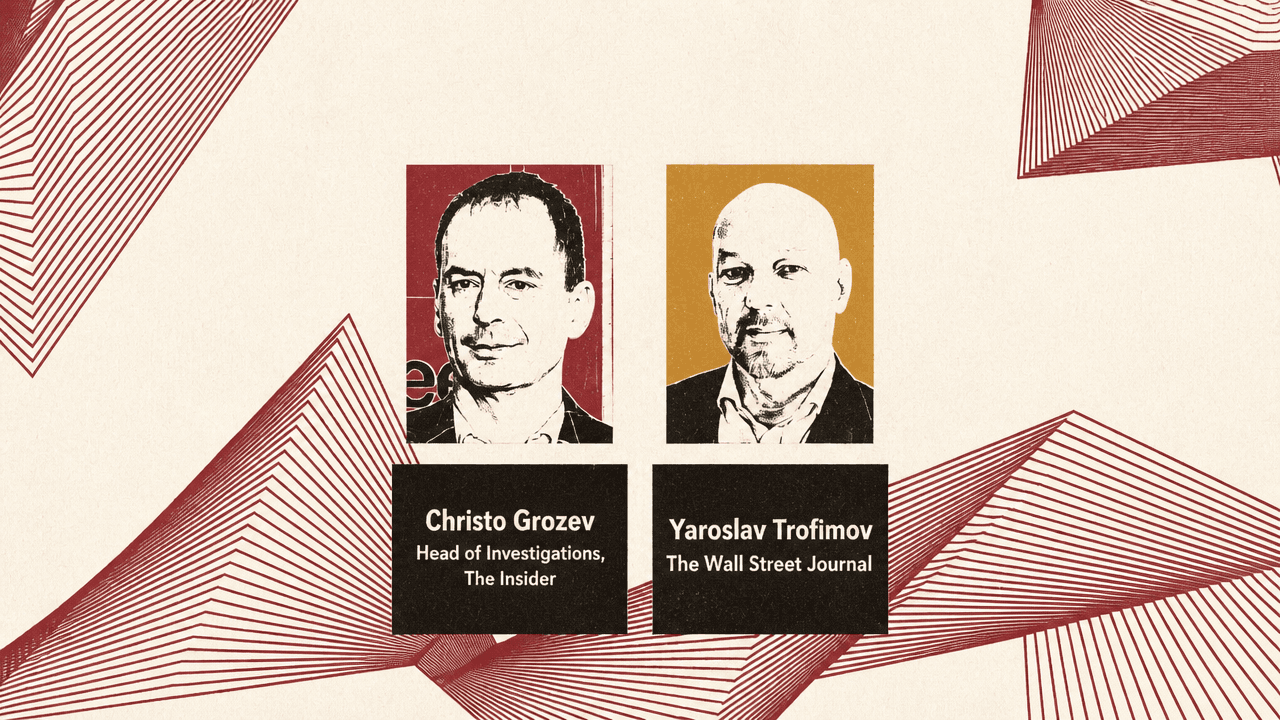
Investigative journalist Christo Grozev argues that Russia’s growing use of private forces, proxies and hired operatives has made its foreign operations less predictable and harder for Western governments to deter. Speaking with The Wall Street Journal’s Yaroslav Trofimov after a screening of Antidote, Grozev said Moscow treats its confrontation with the West as an active war while relying on a dispersed network whose violence may exceed the control or competence of any single command structure. He also contends that corruption, economic strain and elite self-interest are eroding the system behind that threat, though a post-Putin Russia would not necessarily become democratic.
Russia’s operations are becoming harder to deter—and its system harder to sustain
? christo-grozev argues that the central danger is not simply a more assertive Russian intelligence apparatus. It is a system operating under what he calls a wartime logic while dispersing coercive work across a growing market of proxies, private forces, and hired operatives. That can make Russian activity abroad less disciplined and more dangerous even as the political economy behind it becomes increasingly brittle.
Grozev’s starting point is that informal constraints which once shaped confrontation between Soviet and Western intelligence services are no longer reliable. In his account, the Cold War-era understanding was not that the two sides refrained from hostile activity, but that they avoided assassinations on each other’s soil. Operations could be conducted in third countries and against third-country nationals, he said; directly crossing that line was different. He argued that even this distinction can no longer be safely assumed.
He said there had been increasing indications in the preceding year of Russian assassins entering the United States through Mexico. Grozev did not claim to know their intended targets or operations, but said he saw no innocent explanation for their presence.
His broader interpretation rests on a document that he said his investigators obtained and attributed to the FSB and SVR, Russia’s domestic and foreign intelligence services. The document, in his description, was a policy plan for a new hybrid war. Its authors accepted that Russia had lost any ability to present itself internationally as a benign actor. The goal of information operations, Grozev said, was therefore no longer to rehabilitate Russia’s image but to create chaos in Western societies, undermine Ukraine, and intensify divisions, including those between Ukraine and Poland.
The document’s second premise was more consequential: Russia considers itself already at war with the West, Grozev said, while Western governments still describe the contest as cold or hybrid. Under that premise, older moral and ethical benchmarks become liabilities rather than restraints.
They treat it as a real hot war and we still treat it as a hybrid war.
Grozev called the resulting mismatch Russia’s “escalation dominance.” The claim is not that Western states are unaware of the threat. He credited Britain, France, Poland, the Nordic countries, and the Baltic states with recognizing the nature of the challenge and increasing intelligence and counterintelligence efforts. But he described the contest as structurally asymmetrical: states are trying to identify and disrupt a large, shifting set of actors rather than deter a single disciplined chain of command.
A marketplace of proxies turns incompetence into a risk
? christo-grozev describes Russian external operations not as uniformly capable officers carrying out centrally managed missions, but as a market for “malign intelligence operators.” Oligarchs may deploy private armies; Gazprom has four private armies, he said; and Grozev said his organization had recently reported that Kalashnikov, the arms manufacturer, maintains a secret assassination unit. Former businessmen with offshore money can also finance violence.
The result, in his view, is a proliferation of cells that may be loosely coordinated, inadequately trained, or not centrally controlled at all. Those traits do not make them harmless. They can make them less predictable.
Grozev described the operation directed against him as an example. Six people were ultimately arrested; five were initially identified, while his daughter noticed a sixth person who was later arrested, he said. The group appeared incompetent, but that incompetence created a particular danger. After watching people leave Grozev’s apartment, its members broke in believing it was empty. They had failed to notice that his son was still inside, playing a computer game.
The point was not merely personal. Untrained hired operatives may lack the judgment or de-escalation instincts that limit collateral harm. Grozev placed arson-for-hire in the same ecosystem: people paid a few thousand dollars to set shopping malls on fire, acting for the payment rather than with concern for wider consequences. His conclusion was that arresting individual operatives is necessary but insufficient. The operational “address,” he said, is the Kremlin, where the incentives and resources originate.
It’s a market, and it results in this huge number of cells that are not necessarily centrally controlled, they’re not necessarily well-prepared.
Yaroslav Trofimov noted that some people recruited for operations in Europe may not know they are working for Russian interests. Grozev cited young Ukrainians jailed after attempting to set fire to a former prime minister’s house. He said they neither knew who the target was nor understood that Russia stood behind the assignment. The people targeting him, by contrast, had three years to understand whom they were serving and became, in his description, ideologically committed to Putin and to killing him.
The disposition of that case deepened his concern. Two of the six convicted participants had been released after serving about half their sentences and deported to Bulgaria under a British policy of removing foreign nationals with criminal records, Grozev said. The shortest sentence was five years; the man he described as running the wider operation received eight years and had roughly a year and a half remaining at the time of the discussion. Grozev argued that releasing such operatives at the halfway point, without continuing oversight, risks making the country a more attractive venue for malign operations.
Corruption supplies the network—and may be eroding the regime
Yaroslav Trofimov observed that Russia is often understood abroad as a sealed and all-seeing intelligence state. ? christo-grozev maintained that pervasive corruption creates a market in databases, surveillance footage, and other information that can expose people who thought themselves protected by the system.
He cited Marsalek as an illustration of both Russia’s coercive capacity and its internal predation. In Grozev’s account, Marsalek—once a wealthy international figure with access to political leaders—is now living in Moscow under a newly created Russian identity. Grozev said Russian security services had taken Marsalek’s money and put it toward their own operations, while restricting his ability to leave because he may disclose what he knows.
Information available through Russia’s corrupt and pervasive surveillance system, Grozev said, allowed his investigators to follow Marsalek’s movements, including through security-camera footage. He further claimed that Marsalek had been mobilized under his new identity and sent to the front for three months. Grozev speculated that Russian authorities could send him again because, in his view, they cannot afford to allow him to leave Russia.
More broadly, elite corruption is a sign that people inside the system are beginning to price in its possible end, Grozev argued. He alleged that Nikolai Patrushev was investing in Middle Eastern logistics ports under the stated rationale that they would support Russia’s shadow fleet, while the actual purpose, in Grozev’s account, was a commercial venture for Patrushev and his associates. In an intercepted message, Grozev said, Patrushev urged people at senior levels who had previously not participated in corruption to make money before it was too late.
Grozev also said that, on the day of the discussion, his investigators had identified 6,500 additional SVR foreign-intelligence operatives. Many, though not all, had been placed around the world through companies, he said, and the information would be made public.
The intended effect, Grozev said, is to make it harder for Russian intelligence-linked actors and elites to hide or move their resources. But he stressed that this should not be left principally to journalists. When Trofimov asked whether European governments and the United States had done enough to pressure jurisdictions where Russian intelligence-linked elites park or make money, Grozev’s answer was no: governments should be doing more, even if investigators will continue to publish what they can.
A crisis may bring a successor, not necessarily a democratic Russia
? christo-grozev paired Russia’s external aggression with a prediction of internal strain. He said elites had been net losers from the war from its first day, but faced a collective-action problem: many may have money, security-service relationships, and the capacity to act, yet none wants to be the first to suggest moving against Putin. Several oligarchs acting together with their FSB connections could potentially topple him, Grozev argued; fear prevents coordination.
He said intelligence sources inside Russia and analysts had suggested that worsening economic conditions could produce a turning point in the year’s third or fourth quarter. The war in Iran had briefly given Putin additional room through oil prices, Grozev said, but he believed that effect was reversing. If those economic assessments proved correct, he expected a major crisis in Moscow.
There is no scenario that foresees Putin in the long run.
Putin cannot afford to end the war, Grozev argued, but also does not know how to win it. That position is unacceptable, he said, to nationalist hard-liners with guns and money who believe he has mismanaged the war and to wealthy elites and FSB figures who want an end on terms that allow Russia to resume a more acceptable international posture.
He outlined two potential succession paths. A military or nationalist coup could bring six to 12 months of increased escalation and threats to the outside world, he said, but would eventually fail because it could not repair the economy or run the state. Grozev regarded that as the less likely scenario.
The likelier outcome, in his view, would be an arrangement led by FSB and oligarchic interests: a mafia-state successor seeking an acceptable public face and a less threatening relationship with the outside world. It would not be a full democracy, Grozev said, but neither did he expect a rogue state comparable to the instability of the early 1990s.
He also doubted that Russia could sustain an attempt to turn itself into a giant North Korea. Putin’s domestic bargain depended on political disengagement in exchange for material comfort, particularly in major cities, Grozev said. He pointed to high-quality e-government, fast internet, and other conveniences that had been part of that bargain. As those conveniences deteriorate—and as even gas shortages return—the bargain weakens. Trofimov noted that Putin’s legitimacy had rested substantially on the claim that he replaced the deprivation of the 1990s with prosperity.
Nuclear use is unlikely, Grozev says, but other escalation remains possible
? christo-grozev separated a firm personal judgment about nuclear use from more conditional concerns about Russia’s response to failure in Ukraine. He put the chance of Russian nuclear use at “zero,” arguing that Putin fears a major escalation that could expose his weakness. Pro-war critics have accused Putin of excessive caution, including for not striking directly at Kyiv’s leadership, Grozev said. But a failed direct attack on the president’s office would be such an unmistakable signal of failure that Putin is afraid to try it.
That confidence did not extend to every form of escalation. Grozev said Russia could try to compensate for failure in Ukraine by lashing out at another country, as a diversion. He described that as a fear already internalized by Poland and the Baltic states, not as a forecast that such an attack would occur.
His more specific speculation was that Moscow might instead seek a cosmetic victory: a constitutional incorporation of territory it already fully controls, such as South Ossetia. If that happened before year’s end, he said, it would indicate a search for symbolic gains rather than the willingness to launch a larger war. He regarded that outcome, however damaging for Georgia and South Ossetia, as less likely to cost lives than an attack on another country.
Yaroslav Trofimov added that Putin’s behavior suggests concern for his personal safety, including his disappearance from public view during the Prigozhin uprising. Trofimov argued that Putin has avoided attempting to assassinate President Zelensky because he expects retaliation. Grozev agreed that Ukraine’s ability to recruit freelance operatives in Moscow has unsettled Russian military and security elites. He cited an attack that reached General Alexeyev of the GRU, whom Grozev characterized as one of Russia’s most effective commanders.
The implication is not that reciprocal vulnerability makes the conflict safe. It is that a regime capable of sponsoring decentralized violence abroad is also increasingly worried about the insecurity of its own elite.