Trust-Building Awards Draw $800 Million in Requests for $5 Million Pool
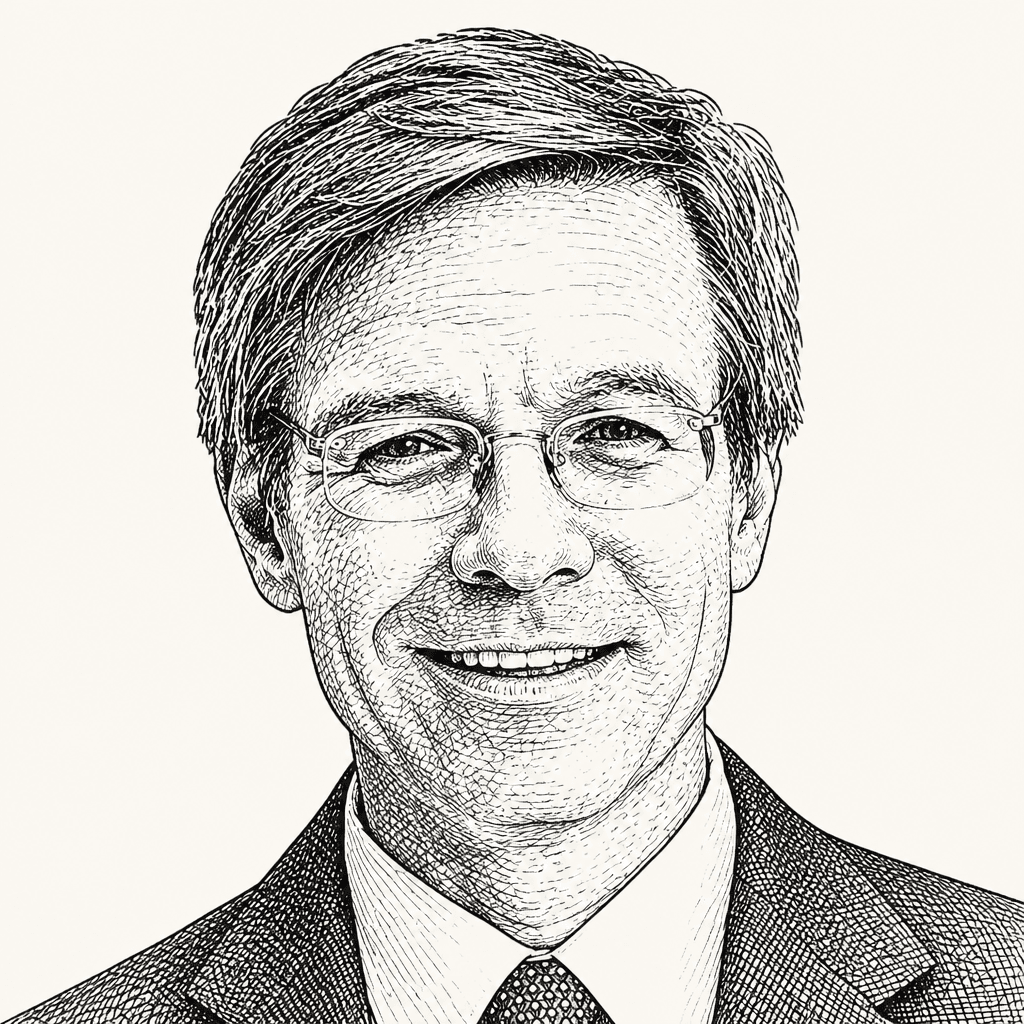
Allstate chief executive Tom Wilson used the 2026 Trust in Practice Summit in Chicago to argue that social trust should be treated as civic infrastructure that can be deliberately built, not as a vague cultural sentiment in decline. Announcing the inaugural Trust in Practice Awardees, Wilson said more than 1,600 proposals sought $800mn from a $5mn pool, evidence that community organizations are already trying to repair trust at scale but lack resources. The awards, he said, are intended to support and learn from local efforts that build trust through repeated action, shared purpose and relationships.

Trust is treated as infrastructure, not sentiment
Tom Wilson framed social trust as a condition for institutions, relationships, citizenship, and freedom. Speaking at the Trust in Practice Summit in Chicago, he described declining trust as a force “shaking the foundations” of society in the United States and around the world. The problem, as he defined it, is not merely interpersonal frustration. Trust is the foundation that lets people act together, try new things, and believe a better future is possible.
His language was deliberately expansive. Trust, he said, “powers our institutions” and “encourages citizenship.” At a more basic level, he argued, it is necessary for freedom because it functions “like oxygen to the brain”: when trust falls, people think less clearly, anxiety overtakes logic, and belief gives way to paralysis.
With less trust, we think less clearly. Anxiety takes over logic.
The summit’s premise was that trust can be improved through practice rather than merely lamented as a cultural loss. The work ahead, as Wilson put it, was to celebrate and learn from efforts already underway, hear data on the state of trust, and use positive examples to draw more people into the work. He emphasized that trust does not have to sit apart from other civic or community activity. Trust can be “designed into community engagement” and embedded in work organizations are already doing.
That distinction mattered to his broader claim. Trust was not an abstract value to be endorsed; it was something that can be built through repeated listening, shared action, public space, cross-community contact, and local leadership.
The award demand exposed a large resource gap
Tom Wilson said he had worried that the inaugural Trust in Practice Awards might not attract enough applicants. The funding pool had been increased to $5 million, and organizers were unsure whether the application window and the premise would generate sufficient response.
The response, he said, was far larger than expected: more than 1,600 proposals, involving 3,000 organizations, collectively requesting $800 million.
That made the resource gap unusually clear: a $5 million awards pool was met by $800 million in requests. Wilson treated the oversubscription as evidence that demand to improve trust already exists at scale. “Clearly, there’s demand to improve trust,” he said. The task for the awards, then, was not to invent interest but to select a portfolio of efforts that could help the Alliance for Social Trust and its partners learn, share, and scale practical approaches.
The awardee announcement reinforced that portfolio approach. Wilson’s spoken remarks supplied the broader categories of work: healing-focused play spaces in Uvalde, Texas; cross-neighborhood leadership and intergenerational storytelling in New Orleans; flood recovery and long-term resilience in Central Appalachia; cultural-trauma healing with Indigenous populations along the Mississippi River corridor; shared-space revitalization in Baltimore, New Jersey, and Cleveland; intergenerational healing connected to incarceration in Los Angeles; refugee and longtime-resident connection through food and conversation in New York City; and youth peacebuilding in Chicago.
The on-screen awardee video then defined “trust in practice” through a sequence of actions: listening, talking, sharing, working together, and taking action “again and again” until trust “takes root” and spreads. It named awardees across three funding tiers.
| Funding tier | Awardees | Locations |
|---|---|---|
| $100K | Legal Prep Charter Academies; New Neighbors Partnership; Miles Heights Development Corporation; Be Loud Studios; The CARE Center of New Jersey | Chicago, IL; New York City, NY; Cleveland, OH; New Orleans, LA; Rockaway, NJ |
| $500K | Common Ground USA; Homeboy Industries; Red Wing Arts; Loyola University Maryland | New Orleans, LA; Los Angeles, CA; Minnesota; Baltimore, MD |
| $1M | West Virginia Community Development Hub; KABOOM! | Charleston, WV; Uvalde, TX |
The selection functioned less as a prize list than as a learning portfolio. Wilson told the awardees that the organizers would support them and amplify their success so “the movement expands and scales.”
Leadership depends on sustaining energy through purpose and relationships
For Tom Wilson, the practical burden of trust-building falls on people and organizations already working in communities. He called the audience “leaders of a movement which America needs,” while stressing the cost of that role. Movement leadership includes setbacks, mistakes, naysayers, scarce resources, and the need to continually renew one’s own energy.
His advice was specific and behavioral. Attendees should commit to one or two things they will do differently when they return home. They should introduce themselves to someone new, then follow up after the meeting to see whether they can help each other. Relationships and celebration were not soft additions to the work; he treated them as sources of stamina.
Wilson also pushed attendees to connect their trust-building work to personal purpose. He asked them to reflect on why they are “on this earth” and part of their communities, which relationships matter to them, what gives them joy, and what impact they want to have. The point was not to converge on a shared statement of purpose. “Whatever your purpose is, it’s right for you,” he said. “It’s yours.”
He recommended writing that purpose down, even in two or three sentences, because writing forces specificity and makes it harder to rely on the “little lies” people may tell themselves internally. Sharing that purpose publicly, he argued, increases commitment and invites others to help.
If you share your purpose, people will rally around and then that will create more energy for you, it will create more energy for them because they'll feel like they're helping you and you'll be helping them.
The logic mirrored his account of trust as reciprocal. Giving trust can lead others to give it back. Sharing purpose can create energy for both the person naming it and the people who decide to help.
The call to act was grounded in belief and urgency
Tom Wilson closed by asking attendees to believe that their joint efforts to improve trust can make the world better, that their voices can draw others in, and that they themselves have the talent, experience, and relationships to make a difference. He did not present the work as easy or fully resourced. People would have bad moments and bad days, and they may lack resources or other forms of help.
His answer to that constraint was passion, energy, and a repeated act of belief: “I believe. I believe I can make a difference.”
The urgency came from his assertion that no outside actor is waiting to solve the problem. “It’s just us,” he said, referring to the organizations and leaders in the room. Success, in his closing definition, would be measured not by institutional recognition but by “the amount of difference we made for others,” including smiles created and opportunity provided.