Verification and Disclosure Become Journalism’s Test as Distribution Decentralizes
 Jerusalem DemsasSanar RaouzerJelani CobbAaron Parnas
 Katie CouricThe Aspen InstituteTuesday, June 30, 202618 min read
At the Aspen Ideas Festival, Katie Couric, Aaron Parnas, Jerusalem Demsas and Jelani Cobb argued that journalism’s future cannot be understood as a simple contest between legacy outlets and new media. Their debate centered on a harder problem: distribution has moved to platforms, creators and AI systems faster than verification, disclosure and accountability have adapted. The speakers disagreed over whether institutional journalism or decentralized media has done more damage when it fails, but treated trust, standards and local-news collapse as democratic questions rather than industry housekeeping.
The old divide between legacy and new media no longer explains the field
Katie Couric described herself as the panel’s “avatar for legacy media,” but her account of the industry was not nostalgic. The central change, in her view, is that even the institutions once understood as legacy outlets are now operating inside a new-media environment. Audiences are not primarily gathering around linear television news or print products. They are consuming news on smartphones, with network evening-news audiences skewing much older than the audiences most media companies need to reach.
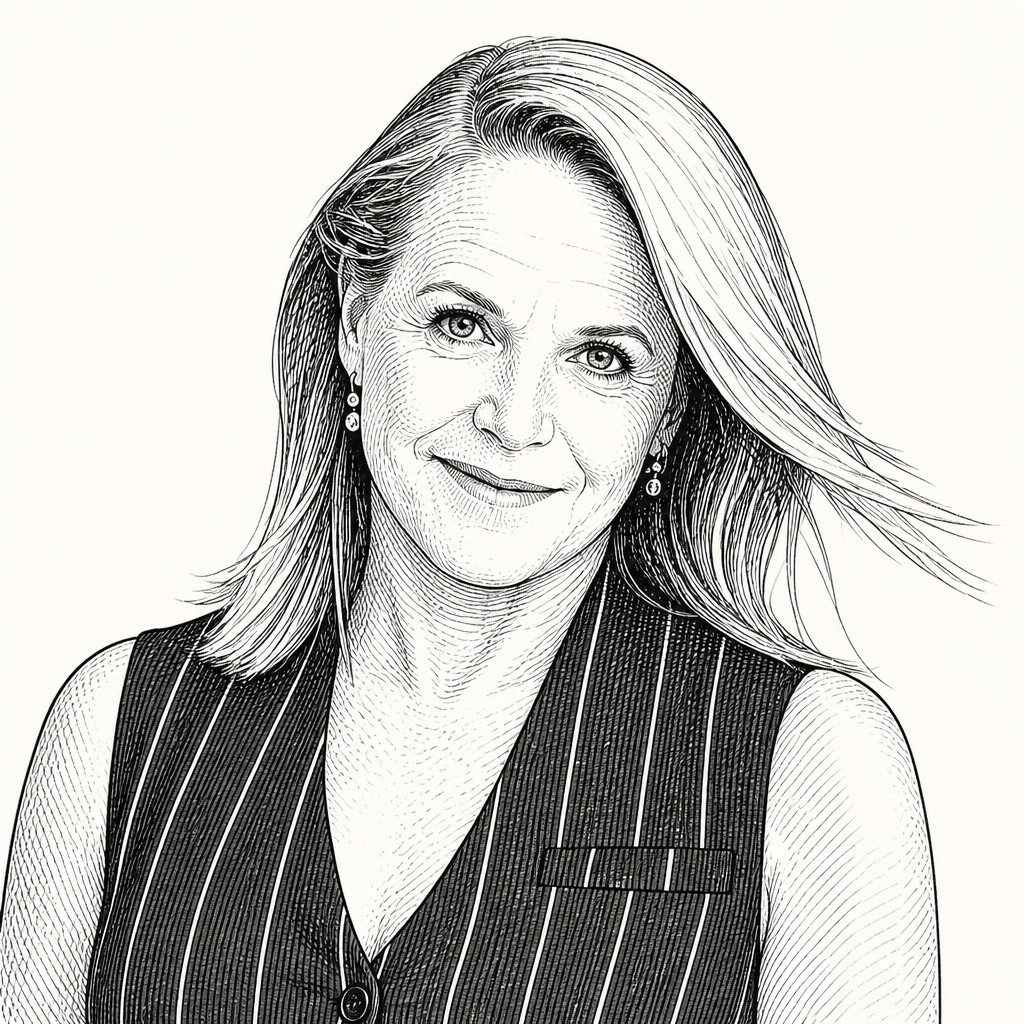
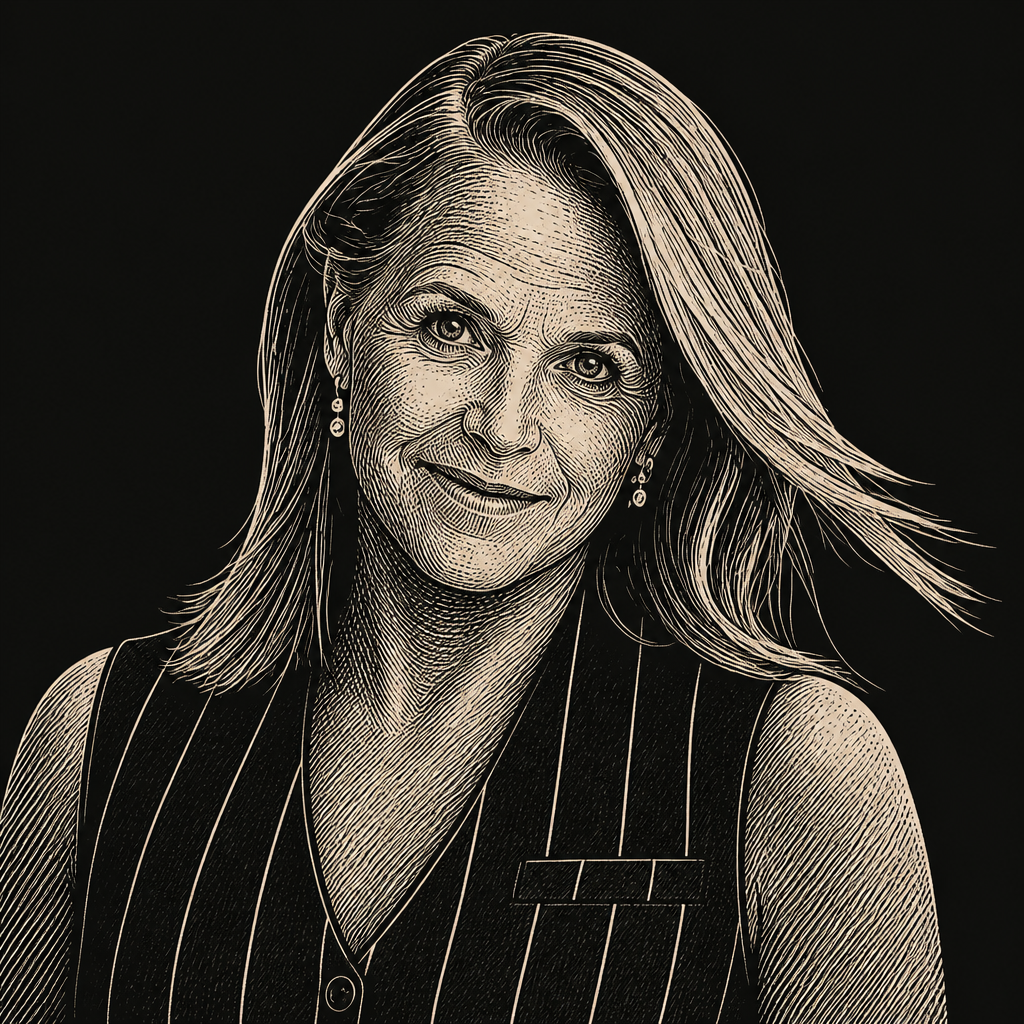
Couric’s own career arc was offered as evidence of that shift. After decades in network television, she went to Yahoo around 2014 because she saw “this merging of content and technology” and believed a major digital platform could become a news force. That did not happen, she said, because Yahoo “was a true tech company” and not deeply interested in content. She later built Katie Couric Media around newsletters, podcasts, video, documentaries, social platforms, and Substack — not because journalism itself had changed beyond recognition, but because distribution had.
Aaron Parnas pushed harder against the distinction. He said he does not think there is a meaningful divide between “legacy media” and “new media.” There is just media, evolving through successive technologies: speech, print, radio, television, the internet, social media. Social platforms, streaming, and creator-driven formats are not a different category so much as the next stage in how information circulates.
That position carried a warning for older organizations. Parnas argued that the “old guard” cannot keep its grip on the field if it wants to thrive. The strongest institutions may survive — he singled out The New York Times as a company likely to exist “in perpetuity” because of its scale — but he said many other legacy media companies will fail if they do not adapt. He pointed to the practical behavior already visible across the industry: legacy outlets hiring younger staff, producing explainers for TikTok, investing in social teams, and trying to make reported stories travel in the formats audiences now use.
Couric agreed with the adaptation argument and gave a concrete example from her time at CBS News. She said she saw linear television declining and urged executives to lean into digital: continue convention coverage online when the broadcast had to break for local news, cover primaries more fully online, and meet audiences where they were already consuming information. One senior executive, she recalled, told her it was “beneath the anchor of the CBS Evening News to be on the Twitter.” Couric’s conclusion was blunt: “we are in such trouble here.”
The generational divide was equally practical for Parnas. At 27, he said he has no cable subscription and most of his friends never had one. They do not think in terms of a DirecTV dish or a print newspaper. They may read The New York Times, but they read it online, on a phone. A media company that wants to reach that audience cannot simply preserve the old product and expect habit to do the work.
Jerusalem Demsas argued that the relationship between insurgent and established outlets is more symbiotic than the combat rhetoric suggests. Digital creators and social-media commentators often riff on facts first reported by legacy institutions, or on ideas first developed by writers in digital media. A provocative argument that would not fit the tone or conventions of a New York Times opinion page may appear in a newer publication and then become the object of a Times column. Both forms depend on each other more than their antagonists admit.
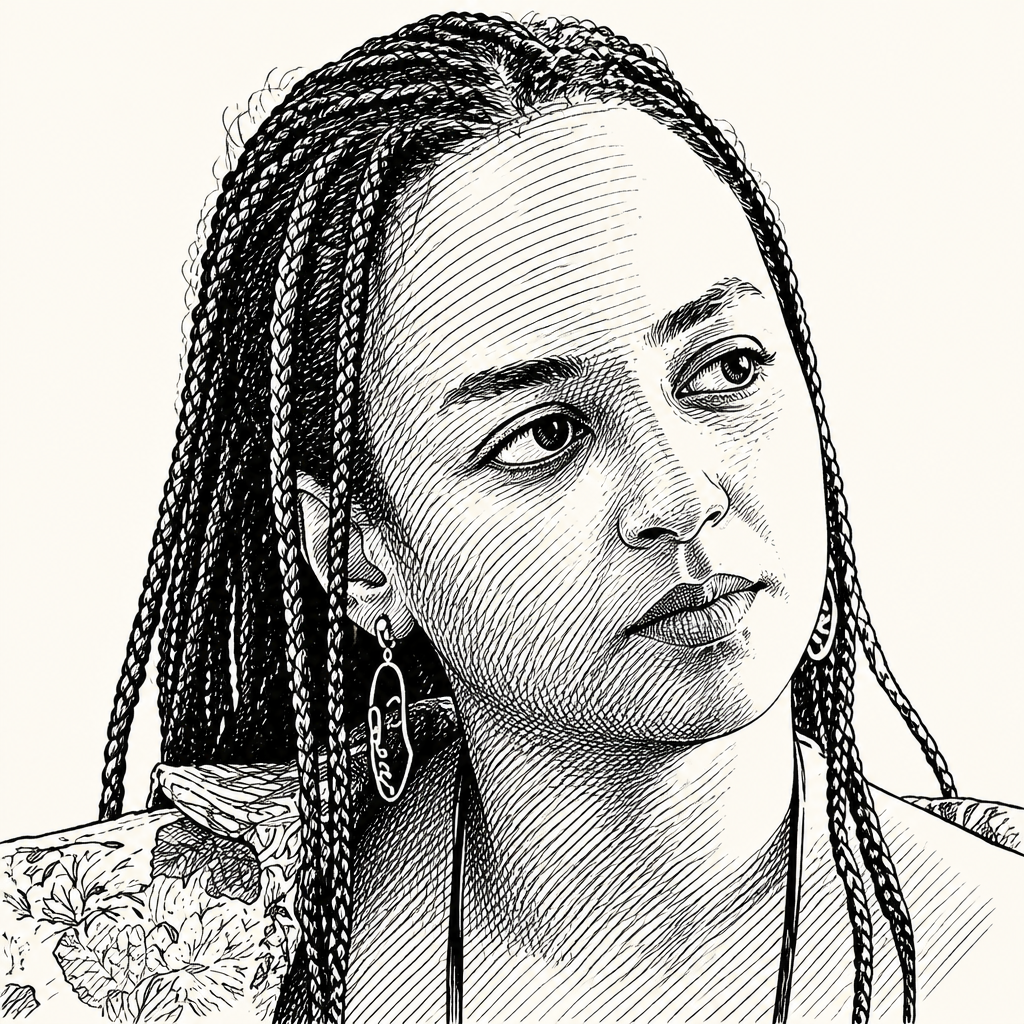
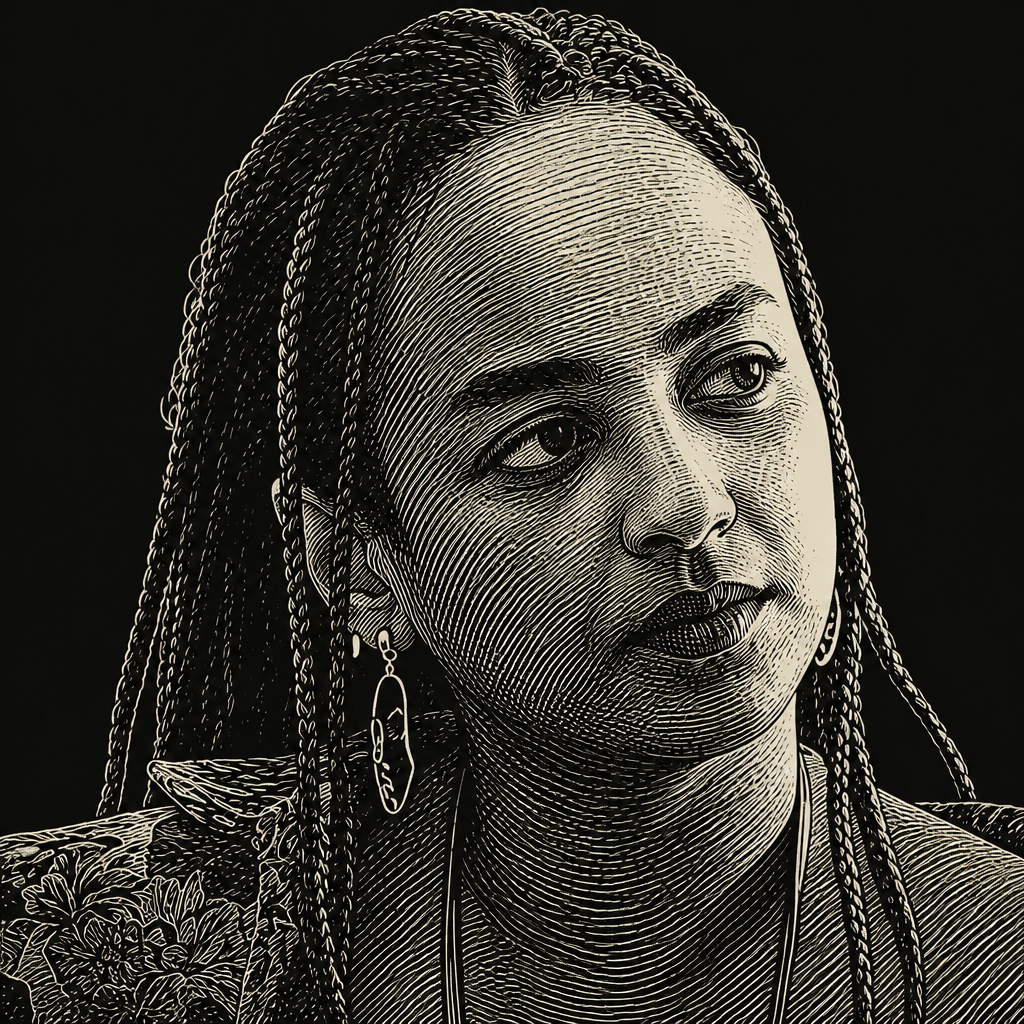
Her example was Vox. Vox helped popularize the explainer model, which later became so common that nearly every major news organization now runs explainers. Once that format becomes standard, newer institutions have to develop the next thing. Demsas framed this as a healthy competitive cycle: small, entrepreneurial outlets put pressure on large institutions; large institutions absorb successful forms; the ecosystem is forced not to ossify.
She also noted that the combat itself has business value. The story of a writer leaving an established outlet because “they wouldn’t let me say my truth,” then making large sums on Substack, is attractive to audiences and useful for subscription conversion. But behind that theatrical antagonism, Demsas said, talent, ideas, formats, and reporting move continually between new and old institutions.
Distribution has been democratized, but verification has not
Jelani Cobb resisted the idea that only the tools have changed. He drew attention to the original meaning of “broadcast” as an agricultural term: to cast seed broadly. Broadcast media took that metaphor into technology: one source sending a signal outward to many receivers. Social media changed that geometry. People now cast information in all directions, and real-time response — a video reacting to another video, a post reacting to another post — has become central to the form.
That democratization, in Cobb’s account, creates a structural difference between the old and new models. But Couric pressed the other side of the trade-off: editors and fact-checkers exist for a reason. A person with a phone can publish factual errors, misinformation, conspiracy theories, or unsupported claims at scale. Couric said she herself sometimes posts quickly about a news story but worries, “is this right?” She has a team to help verify material, but she argued that many participants in the creator economy do not.
Demsas offered a broader framework: media technologies produce both decentralizing and centralizing forces. The printing press is often remembered as decentralizing because it made more books and pamphlets possible, but it also centralized production in places where presses existed and helped standardize language. Broadcast media was centralizing because it was expensive to operate and required large institutions.
Social media, by contrast, is a decentralizing force. It allows anyone to become a producer or author for strangers at scale. Demsas emphasized how historically new that is: ordinary people could always talk to friends, but publishing opinions for mass consumption by people with no context is a different social fact. The public is now hearing from someone next door and someone in Singapore in the same feed, often without a shared frame for evaluating either.
The next technological shift, she argued, may move in the opposite direction. Artificial intelligence could become a centralizing force because training the most-used models is expensive and consumer attention appears to concentrate around a few systems. Demsas pointed to users on X asking Grok whether claims are true. She said she tracked a number of these exchanges over several weeks and randomly fact-checked them; in the examples she checked, she did not find an error. Her concern was not that every answer was wrong, but that the power to arbitrate truth could become concentrated in the hands of AI companies.
Parnas agreed that AI raises urgent concerns, but challenged any reassuring account of current systems. He said Grok may provide good information in some cases, but also “produces child sexual abuse material regularly” and fake information. He described asking Grok for a “factual image” of Donald Trump in North Korea and receiving an image he said was not factual. He also described seeing AI-generated videos in which he appeared to speak Spanish, though he does not speak Spanish, and another in which he appeared as a doctor giving medical advice, though he is not a doctor.
For Parnas, the answer begins earlier than platform regulation. Young people, he argued, are not systematically taught civics, ethics, or media literacy. Without that foundation, misinformation, disinformation, and manipulated AI content will continue to find audiences. He did not present misinformation as a solvable problem in the sense of elimination. “It’s a rolling train,” he said. The better aim is to flood the environment with accurate information and teach audiences how to assess where information comes from.
The argument over misinformation turned on which failures count most
The sharpest tension concerned whether legacy institutions have earned the right to lecture new media about misinformation. Cobb framed the problem through the American founding: the founders feared centralized authority, but they also feared excessive decentralization and “governance by mob.” In journalism, he connected that to ethical constraint. Columbia Journalism School students begin with journalism ethics, he noted; the question is what happens in an environment where publishing power is widely distributed and ethical norms are uneven.
Demsas rejected a simplified picture of digital media as lone creators operating without standards. New institutions, she argued, are already forming. The Bulwark is a sizable media company with editors, copy editors, and fact-checkers. At The Argument, one of her first hires was a fact-checker. Many new organizations, she said, are not repudiating inherited journalistic norms; they are retaining the norms they believe are valuable while challenging legacy institutions’ limits on argument, tone, platforming, and ideological range.
She described The Argument as “self-consciously classically liberal” and said its goal is to revitalize American liberalism. In her view, many new media institutions are openly ideological — libertarian, right-wing, post-liberal, liberal — in ways that older institutions have often been less direct about. That does not mean they reject facts. Demsas argued that people who work in news- or politics-adjacent creator spaces are often deeply embarrassed to be wrong. Her phrasing was pointed: the secret of journalism is that reporters are most embarrassed when they are “found out to be idiots.”
Couric pushed on the idea of shared facts by invoking Kellyanne Conway’s phrase “alternative facts.” The problem, she said, is that people increasingly disagree over what is accurate, true, or factual. Demsas responded that institutions have also laundered lies. She cited the reporting around weapons of mass destruction before the Iraq War as an institutional failure in which journalists and editors were too close to government sources and took their claims at face value.
Cobb partly agreed but resisted making institutional failure the default. He called the failures around Iraq “obscene,” and also cited failures in coverage of the 2016 election. But he argued that American journalism has undergone a century-long professionalization that generally holds people accountable for egregious failures. That accountability is not the same, he said, as “just kind of going live and saying stuff.”
Demsas’s reply was that different media forms have different failure modes. Institutional media can be captured by sources. Individual media can spread unverified claims. The question is not whether each can fail, but what kinds of harms those failures produce. She said she “chafe[s]” when legacy media figures warn new media about misinformation after institutional failures contributed to the Iraq War.
Cobb pointed to Covid as an example of misinformation from decentralized media causing real harm: claims that vaccines would make people magnetic, or that the vaccine was more dangerous than the virus, helped create a cloud of suspicion. Demsas challenged the causal claim. There have always been people saying “insane things,” she argued, from pamphlets to radio to other media forms. The question is their causal impact. Most people still received Covid vaccines, she said, and countries with more centralized media also had significant vaccine refusal. She did not deny that false claims circulated; she questioned whether less digital media would necessarily have produced higher vaccination.
Parnas returned to ethics from a different professional background. He said he approaches journalism first as a lawyer. In court, lying to a judge can get a lawyer disbarred. On TikTok, he said, “no one will care” because the news cycle moves too quickly. He reports, he said, as if he were appearing before a judge, and holds himself to a strict standard because there is no licensing mechanism equivalent to law.
Cobb joked that as dean he could revoke a journalism degree for lying, but Parnas’s larger point remained: the creator environment has fewer formal sanctions. That makes reputation and self-discipline central. Parnas said he takes everything he sees while scrolling TikTok “with a grain of salt,” while he trusts Couric’s work because she has built a reputation for factual reporting over many years. The distinction, in his account, is not platform but source.
Independence is being used for different purposes
The three journalists gave different accounts of why they built independent or newer institutions, and those accounts clarified what independence is now for.
Couric said she had done the major jobs available to her in legacy media: the Today show, the CBS Evening News, a daytime talk show, Yahoo. She still loved interviewing, asking probing questions, and distilling complicated subjects, but she did not see a place for herself in network media that would let her keep working in the way she wanted. She also believed early that appointment viewing was weakening. Even during her talk-show period in 2011 and 2012, she saw people consuming information when they wanted, not when a network scheduled it.
The early mechanics of independent media felt humbling. Couric described doing Instagram Lives with a ring light and her phone on a desk and thinking, “how the mighty have fallen.” But the directness became part of the appeal. She found the work immediate, freer, and less dependent on executives deciding what subjects were worth covering. She said she no longer had to defer to “some guy in a suit” who might reject a three-part series on dating violence after Yeardley Love was murdered at the University of Virginia by her ex-boyfriend.
That independence did not mean abandoning standards. Couric emphasized that she still wants facts checked and has people help verify her work. But she said the freedom to choose subjects, speak directly, and operate across newsletters, social media, Substack, podcasts, documentaries, and other formats has given her “a new sort of second life journalistically” that she would not have had if she had stayed in network television.
Demsas’s reason for leaving The Atlantic was ideological and institutional, not a story of being silenced. She explicitly rejected the profitable independent-media script in which a writer claims to have been suppressed by a previous employer. The Atlantic, she said, was a good place to work. She left because she saw a moment in American politics and wanted a specific role in the ideological fight.
Her claim is that American liberalism produced much of what Americans now value: economic growth, rights, pluralism, and the ability of a diverse society to share civic space. But liberal institutions are under attack from populist forces and are also failing in some of their own missions. The New York Times and universities are liberal institutions in this sense, she said, and revitalizing liberalism requires both internal reform and external pressure. The Argument was created to provide some of that outside pressure: fast, multimedia, combative, and organized around a classically liberal institutional voice.
Parnas’s account began with storytelling. As a lawyer, he said, he told stories to a jury of 12; now he tells stories to a jury of millions. The first story was personal: his six-year-old cousin sleeping under a mattress in a bathtub in Kyiv during the first days of Russia’s invasion of Ukraine. Parnas believed traditional American media was not telling that story enough or properly, so he told it himself. He connected that origin to his more recent work with Epstein survivors, describing the process of combing through hundreds of thousands of documents with them and telling their stories in the hope that they receive justice.
The common thread was not that independence produces one kind of journalism. For Couric, it allowed an established journalist to keep reporting and speaking without network constraints. For Demsas, it allowed a publication to make an explicit ideological argument and apply pressure to liberal institutions. For Parnas, it allowed a personal story and later survivor-centered reporting to bypass what he saw as gaps in traditional coverage.
Local news is treated as a democratic problem, but the demand side remains unresolved
A question from the audience shifted the discussion from accuracy to access: what happens when communities lose local news altogether? The questioner tied the issue to media consolidation, defunding of public media, and news deserts.
Couric had prepared figures that morning. She said that since 2005, 3,300 local newspapers have closed, and that one in seven Americans lives in a news desert. The democratic implication, in her account, is direct: people with a strong relationship to a local news organization are more likely to vote; people without one are more likely to rely on partisan national news. She also cited a rapid pace of closures, with Cobb interjecting that the rate is roughly two local newspapers per week.
Couric described the situation as “really horrible” and pointed to attempts to fill the gap: nonprofits, digital startups, Courier News, Axios Local, Politico’s local operations, and other organizations moving from national focus into local markets. But she said the new efforts have not yet kept up with the scale of newspaper closures.
Parnas did not claim expertise on local news deserts. His answer was narrower: when his own work grows enough to hire, he thinks about hiring people leaving defunded local newsrooms or unable to find jobs because those newsrooms are shrinking. He did not offer that as a systemic answer.
Demsas framed local news as partly a demand problem. Many people, she said, do not want to read local news enough to make the economics work, even though a smaller group deeply needs and values that information. That is the argument for public support: society sometimes funds things it considers valuable when the market does not provide them adequately, such as broadband access in rural areas, water, or sewage infrastructure.
But Demsas also argued that public media’s political problem cannot be dismissed entirely as bad-faith attack. She said public media has increasingly been seen as partisan. Some of that, in her view, is an unfair charge from the right, especially when issues like climate change are politicized. But she also argued that public media institutions often have not included the voices of the communities they cover. If a newsroom covers a 90 percent Republican area without Republicans in the newsroom helping shape coverage, she asked, how can it expect continued funding and trust?
Cobb pushed back against turning newsroom composition into a one-to-one mirror of community politics. Journalism professionalism, he argued, is supposed to allow a Democrat to cover the Republican National Convention well, or a Republican to cover a socialist politician well. He said journalism schools and newsrooms should not run ideological “purity tests.” The disagreement was not over whether trust matters, but over how much ideological representation inside a newsroom should be treated as a condition of legitimate coverage.
The hardest platform problems sit between speech, money, and disclosure
Audience questions also brought the discussion to propaganda and paid influence on social platforms.
One questioner asked about social posts after the October 7 attacks in Israel that framed the attacks as deserved or as a response to oppression, and asked what consumers can do about that kind of propaganda, especially for children. Parnas’s answer began with the First Amendment. Propaganda, he said, is protected speech. Nearly all speech on TikTok is protected unless it crosses into categories such as defamatory lies. He warned that once speech restrictions move down a slippery slope, legitimate speech can be restricted too. He described himself as believing in as absolute a First Amendment as possible.
Couric’s answer returned to media literacy. People need to consider the source, ask who is saying what, and look beyond headlines. She also noted that propaganda can exist on more than one side of a conflict. The task is not simply to suppress a view but to understand where information comes from, why a person is saying it, and what counts as a trusted source.
A later question from a corporate communications professional raised a different problem: standards and practices. When pitching a legacy outlet, the questioner said, both sides operate within known norms. A journalist has editors, publishers, and lawyers above them. A source or communications professional also risks reputation if they renege on an agreement. Creators do not always operate within the same structure. The questioner asked about pay-for-play: creators who sometimes take money for coverage but present the resulting content as news.
Parnas put primary responsibility on regulators, especially in politics. He said paid political content is often undisclosed because the Federal Election Commission does not require the relevant disclosures. He does not take candidate money, PAC money, or similar payments, he said, and he treats pitches like press releases: he may use the material or not, but he does not take a check for it.
His criticism was aimed at the asymmetry created by weak rules. If disclosure is not required, he said, many creators will take money because they want to make money. He said many political posts on social media are paid for, with talking points and substantial money behind them, but no paid-content disclosure. He also argued that undisclosed foreign money can flow to one side while another creator is publicly attacked for a much smaller disclosed or discoverable payment from a progressive nonprofit. That disparity, he said, is difficult to accept.
Cobb agreed regulation is necessary but said ethical responsibility cannot sit only with regulators. He sees many creators who care about accuracy and want to be distinguished from people who are “just saying stuff.” A self-imposed disclosure norm — “by the way I got a check from these people” — would help create that distinction. Parnas agreed in principle, while maintaining that his own standard is simpler: he does not take the check.
The institutional answer is not preservation, but principles under pressure
The final question came from Sanar Raouzer, a Columbia Journalism School graduate, who asked Cobb how he is leading the institution in a way that protects or preserves the art of journalism. Cobb’s answer did not frame preservation as standing still. Columbia Journalism School, he said, is trying to do what it has always done: innovate and provide an education that gives students the strongest possible standing when they graduate.
But he also described the school as operating in a turbulent period, both socially and within the profession itself. Columbia, he said, has faced anger from outside and inside. His governing principle was not to defend the title of dean as a source of personal identity. When he took the job, he thought not only about the terms under which he would accept it, but also the terms under which he would leave. The school, he said, would “live and die by our principles.”
Raouzer also asked Couric what risks she is taking with her platform. Couric’s answer was that her risk is tied to freedom. She is more liberated to speak about issues she thinks need attention, and she has far more editorial independence than she did inside a network. At the same time, she described that freedom as grounded in “journalistic chops” from years in traditional media. She can diversify across newsletters, social media, Substack, and other platforms, but the credibility comes from habits formed in the older system: preparation, fairness, verification, and experience.
That combination captured much of the broader argument. The future of journalism, as the speakers described it, is not a clean replacement of legacy media by creators, or a restoration of institutional authority after a period of chaos. It is a field in which distribution is decentralized, audiences are fragmented, AI may recentralize truth-seeking in new hands, and institutions old and new are trying to decide which standards are portable.