Youth Sports Have Proven ACL Prevention Tools but Rarely Use Them
Aspen Institute moderator Vince Minjares and sports-medicine physicians Cindy Chang and Ryan Lingor argue that youth sports already have proven tools to reduce many ACL injuries, but schools, clubs and leagues are not using them consistently. Drawing on the National ACL Injury Coalition’s work with Hospital for Special Surgery, they frame the problem as an implementation failure: neuromuscular training, strength work and better movement development need to be built into ordinary practice, especially for girls in cutting and landing sports.
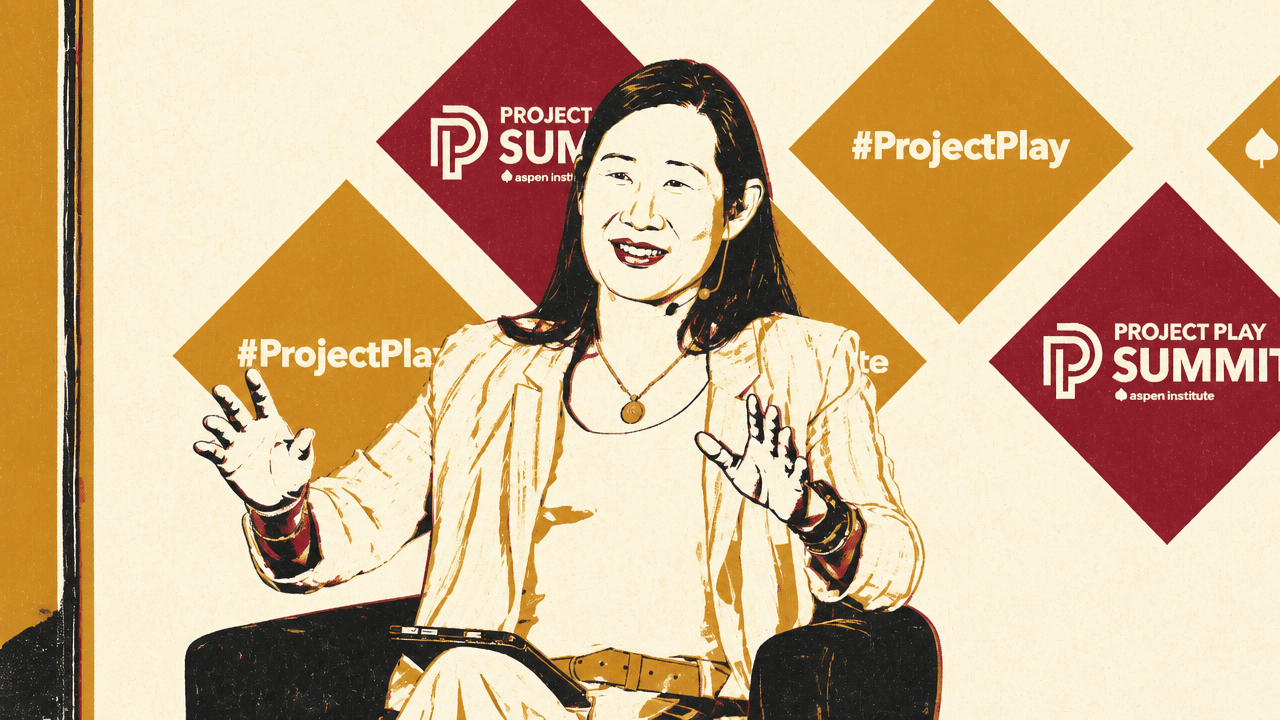
Youth sports already have an ACL prevention tool. They are not using it enough.
Youth sports already know how to reduce many ACL injuries. The harder problem is that schools, clubs, leagues, and coaches often do not consistently do the training that research has shown can help.
? vince-minjares described the issue as one the Aspen Institute and Hospital for Special Surgery have been working on for the past two to three years through the National ACL Injury Coalition. The coalition’s work has focused on awareness and education around a rising injury trend, but Minjares said the important shift now is that organizations are beginning to act.
The injury rate is still moving in the wrong direction. Minjares cited data from Datalys and the High School RIO project showing a 26% increase in the annual average incidence rate of ACL injuries since 2007. Among girls, he said, the increase is 32%. In sports such as lacrosse and volleyball, he put the increase at 80%. Female athletes in cutting and landing sports remain most at risk.
The prevention science is not new. Minjares described three decades of research on neuromuscular training — training that improves lower-body strength and control — showing large reductions in ACL injury risk in controlled studies, often in the range of 50% to 80%. Yet adoption remains thin: studies of coaches show that about one in five implement injury-prevention programs, and roughly one in 10 implement them as designed.
? ryan-lingor described the situation bluntly: “The ACL injury epidemic isn’t a mystery. It’s more of a training deficit.” Looking at a sequence of images of Robert Griffin III landing from a jump at the NFL combine, Lingor asked the audience what was wrong. Someone called out the knees. Lingor pointed to the inward collapse: knee valgus, one of the movement patterns commonly seen in non-contact ACL injuries.
He named three recurring patterns: knees buckling inward during landing, a relative hamstring muscle deficit, and over-reliance on the quadriceps when landing or pivoting at high speed. These, he said, are trainable variables. The field has known that for 25 years. The deficit is not understanding; it is implementation.
? cindy-chang added that even physicians can get lost in the possible causes. People hear explanations involving hormones or Q angle, and the result can be paralysis: if the problem is hormones, are we going to put every girl on oral contraceptives to regulate them? If it is Q angle, what exactly is the practical response? Chang’s answer was to focus on what coaches, leagues, schools, and families can control: training.
The HSS “ACL Injury: At a Glance” slide compressed the practical frame: ACL injuries have increased since 2007; female athletes in cutting sports are at risk; the solution begins with lower-body strength and control; recovery can take 1.5 to two years; costs can reach $10,000 to $25,000; and athletes face a sevenfold chance of knee arthritis.
| Slide element | Claim shown |
|---|---|
| Cause | 26% increase since 2007 |
| Risk | Female athletes in cutting sports |
| Solution | Start with lower-body strength and control |
| Recovery | 1.5 to 2 years |
| Cost | $10,000 to $25,000 |
| Long-term risk | 7x chance of knee arthritis |
The stakes are larger than missing a season
? vince-minjares pushed against the idea that an ACL tear is merely a nine- to 12-month surgical recovery. He described the more realistic burden as often closer to two years, including the psychological toll and the financial cost of treatment and physical therapy. For many families, he said, the cost of physical therapy can become a burden; he described the burden as affecting “somewhere between three and five families,” though the exact denominator was not specified in the transcript.
Minjares also emphasized the long-term consequences. The HSS slide shown earlier said athletes face a “7x chance of knee arthritis.” Separately, Minjares said an ACL injury carries a seven-times-greater likelihood of needing a knee replacement. Both claims were used to make the same point: the injury can follow an athlete long after the season in which it occurs.
That framing matters because ACL prevention was treated by the speakers as more than a narrow performance intervention. ? ryan-lingor said that by the time an athlete arrives in his office with an ACL tear, the prevention model has already failed. His concern then shifts to the long-term path of that person’s activity, not just the surgical repair.
By the time that I see somebody in the office and they have an ACL tear, the prevention models have already failed them.
Girls, Lingor said, are less likely than boys to return to the same sport after an ACL tear. They are also less likely to participate in other sports and physical activities as adults, which can contribute to downstream complications including osteoarthritis and obesity. Lingor called this “truly a public health crisis” and told the room that the people in it had power to help.
? cindy-chang made the urgency concrete through the changing youth-sports landscape. More girls are playing flag football, and flag football is a cutting and pivoting sport. She said ACL injuries are already being seen there. The same logic applies to ultimate frisbee, soccer, basketball, and other sports built around cutting, landing, and pivoting. But she also widened the frame: even people who identify with non-pivoting sports, or adults picking up recreational games such as pickleball, are at risk if they are not strong enough and do not have the mechanics required to play safely.
Her response to new organizational action was direct: “It’s about damn time.” The injury, in her view, is not confined to elite athletes or to a small number of sports. It sits at the intersection of childhood movement, strength, coaching, gendered resource access, and whether sports systems treat injury prevention as part of development rather than an optional add-on.
Rules and programs are beginning to move
? vince-minjares pointed to several examples of institutions beginning to act. USA Lacrosse has developed a national ACL injury prevention program. U.S. Soccer has made ACL injury education a requirement from the D license and above, which Minjares called “a big win for this field.” AYSO and Cedars-Sinai have developed an age- and stage-based neuromuscular training program for children that begins in elementary school and progresses upward.
California has introduced a resolution calling on the state departments of education and others to explore implementation of neuromuscular training across the state and in youth sports. Minjares described that as the first state action the coalition has seen on ACL injury. He also pointed to Project ACL, a collaboration involving the NWSL, Nike, and others to explore further research, and referenced related work from the Women’s Health and Sports Performance group.
For ? ryan-lingor, professional and national organizations matter because they send signals down the system. When a professional league such as the NWSL and an initiative such as Project ACL focus on the issue, lower levels listen. When AYSO and Cedars-Sinai create standard prevention protocols, he said, the reach can extend to millions of athletes. Lingor described that kind of scale as a public-health intervention and a proof of concept that other leagues and organizations should be able to follow.
Still, the practical work remains local. The recommendation was not for every organization to design something new. Minjares emphasized that free programs already exist. He singled out the 11+, which he said is the most studied sports-medicine intervention in history, has been around for 15 years, is free, and is linked through the National ACL Injury Coalition website. The issue, in his telling, is less availability than consistent use.
The core training ask was specific. Lingor said organizations should prioritize 30 to 60 minutes per week, divided across sessions, focused on gluteal muscle recruitment and hamstring strength, with the goal of changing mechanics in high-demand sports. That does not require a separate, elaborate infrastructure if it is built into practice, warmups, and training routines.
? cindy-chang said implementation depends on bringing the right people into the decision. Athletic trainers, athletic directors, coaches, parents, and other stakeholders need to be part of deciding how the program fits into a school, club, university, or league. If the people affected by the decision participate in the design, she said, they are more likely to be invested in carrying it out.
Chang also suggested that some neuromuscular work can be assigned as home practice, much like skill homework. If a child can be told to go home and juggle a soccer ball 100 times, she said, they can also be given movement work that supports strength, control, and safer mechanics.
Prevention starts before the weight room
The phrase on the slide — “Let your kid jump off that tree” — captured a broader point about movement development. ? vince-minjares used it to connect formal neuromuscular training with free play and childhood physical literacy. The argument was not for reckless risk. ? cindy-chang later qualified the phrase with “reasonable height of a tree.” The point was that children need varied movement experiences before they are asked to perform specialized, high-speed sport movements.
? ryan-lingor said athletes who specialize in one sport before age 14 can develop a limited “movement vocabulary.” Without that functional literacy, they enter high-demand sports situations with a narrower range of movement options and greater vulnerability, not only to ACL tears but to injuries more broadly. That risk is tied to the way modern sports systems can narrow children’s physical development at precisely the age when they should be building broad coordination, balance, strength, and control.
Minjares summarized the goal as developing “good movers”: children who can land under control, stay balanced, and move well. That outcome comes from multiple sources, including neuromuscular training, strength development, varied childhood movement, and athletic environments that do not reduce development to early specialization.
Chang extended the point into physical education. In California, she said, PE classes are being pushed aside by AP classes and academic pressure. At the elementary level, she argued, PE should not be centered on competitive sport modules where children are judged by whether they can hit a baseball or execute a specific sport skill. Those models can exclude children who already feel uncoordinated and make them less willing to participate. Instead, she called for elementary PE modules built around functional movement patterns.
Her example was circus arts at an elementary school in Berkeley, which she described as “fabulous.” The significance was the type of movement environment it represented: varied, physical, skill-building, and not organized around early sport sorting.
Girls need equal access to the prevention infrastructure
ACL prevention is also a question of gendered access to resources. ? vince-minjares raised the issue directly: girls’ ability to develop safely depends partly on access to weight rooms, strength training, athletic trainers, and quality coaching — resources that have often been more available to boys.
? cindy-chang said the situation is improving, but she pointed to disparities that remain familiar. She referenced the image from the NCAA women’s basketball tournament comparing the women’s weight room with the men’s. She also said she had discussed with Ryan Lingor the differences between the resources available to WNBA players in the “Wubble” and what NBA players had. Her view was that change is happening because people are demanding it, but the work is not done.
The problem is not only facilities. Chang described a broader pattern in which women’s and girls’ sports are treated as stepping stones: covering women’s sports as a path toward covering men’s sports, or coaching girls’ teams as a path toward coaching boys’ teams. Against that, she argued for equal access across genders to facilities and quality resources, from strength and conditioning coaches to athletic trainers.
Athletic trainers are a particular concern. Chang said that in many schools and leagues, ATs are usually focused on American football and not on all the other sports. If girls in cutting and landing sports are among those most at risk for ACL injury, then prevention depends on whether those teams receive time, facilities, trained staff, coaching attention, and sustained follow-through.
The practical ask is modest, but it has to be designed into the system
The panel’s practical ask was concrete: make neuromuscular training a priority, use existing programs, involve the people who have to carry them out, build movement literacy before early specialization narrows it, and resource girls’ teams equitably.
? vince-minjares pointed attendees to the National ACL Injury Coalition’s pledge and said the goal was to build recognition around the issue, not to spam signatories. He also noted a planned webinar on May 26 to go deeper. But the core intervention did not depend on a future event. The programs, he said, already exist, and some are free.
The minimum operational version starts with the time Lingor named: 30 to 60 minutes a week, broken across sessions, targeting gluteal recruitment, hamstring strength, and mechanics in high-demand movements. Organizations do not have to treat that as a standalone class. It can be built into warmups, practice plans, homework, strength work, and age-appropriate development.
The implementation process matters. Chang’s guidance was to involve athletic trainers, coaches, athletic directors, parents, and other stakeholders before deciding how the program will fit. The people who have to protect the training time, teach the movements, reinforce the habits, and support the athlete after injury need to be part of the design.
What we can control is we can control the training.
That was the lever the speakers kept returning to. ACL injury has multiple explanations and serious consequences, but the available action is specific: train strength and control, create better movers, and make prevention part of how youth sports are run rather than an optional warmup that disappears when practice gets crowded.