Liberal Democracy’s Crisis Is Capacity, Not a Superior Rival
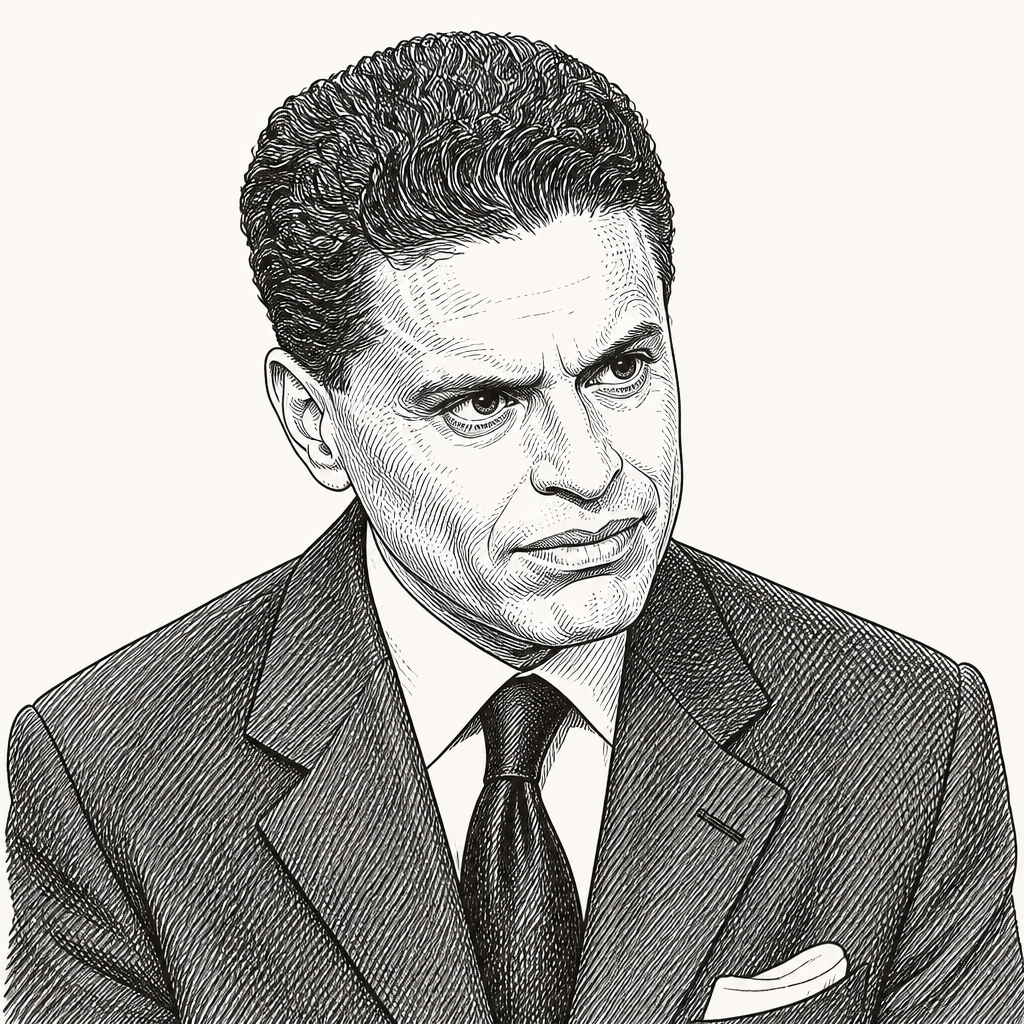
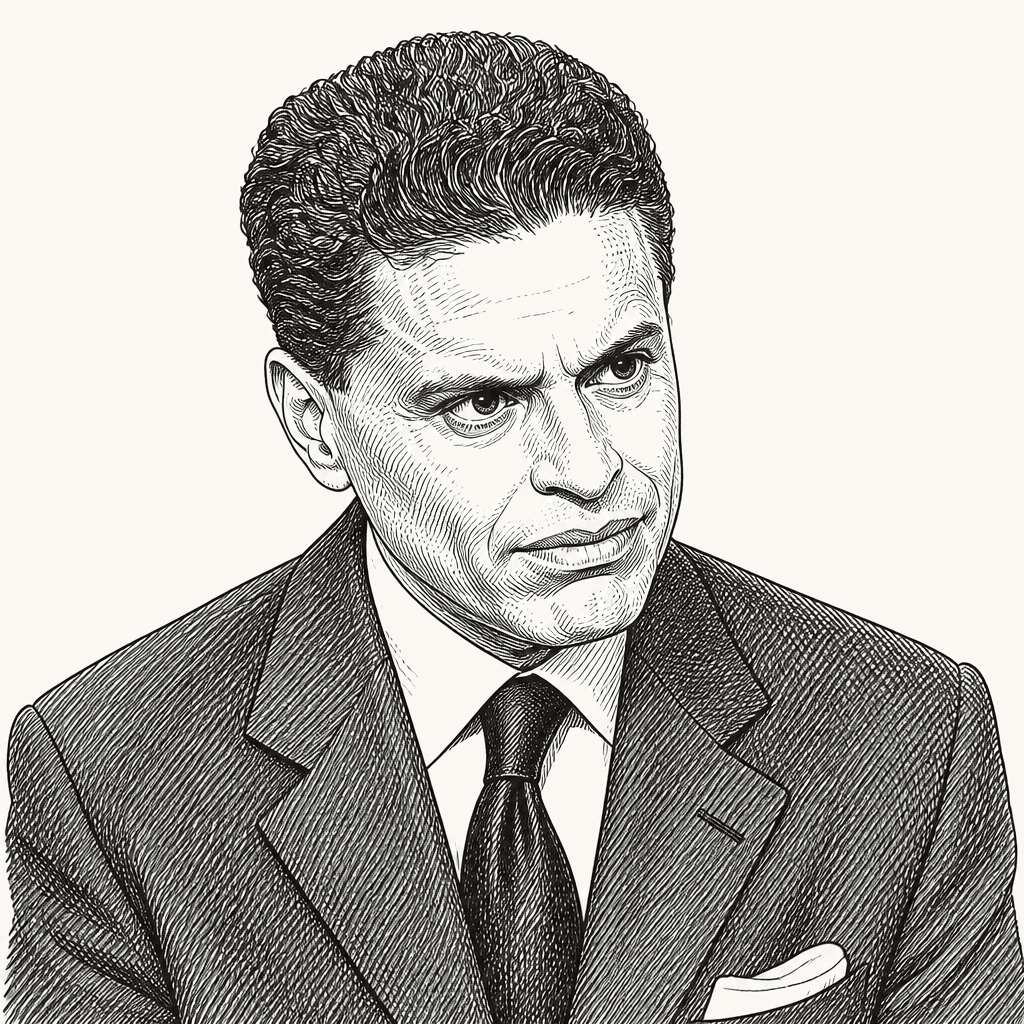 Fareed Zakaria
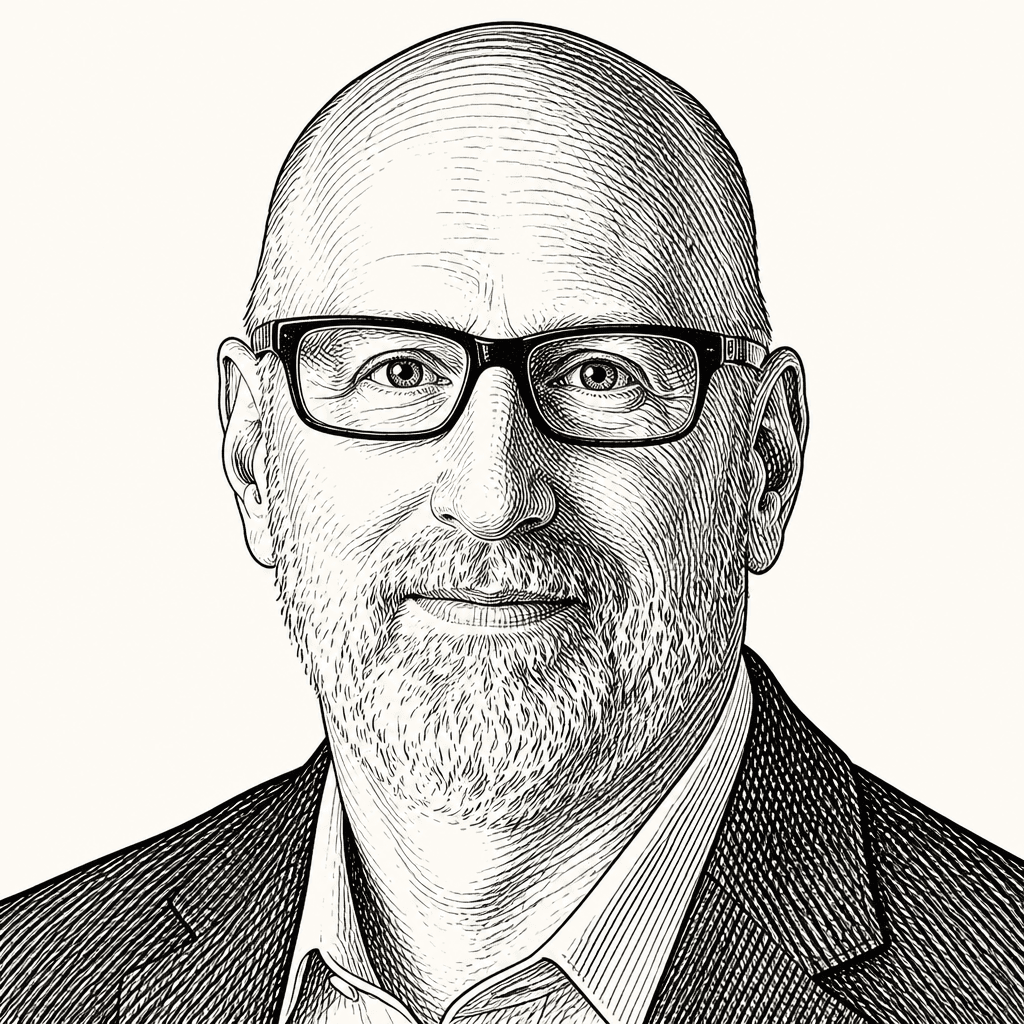 David French
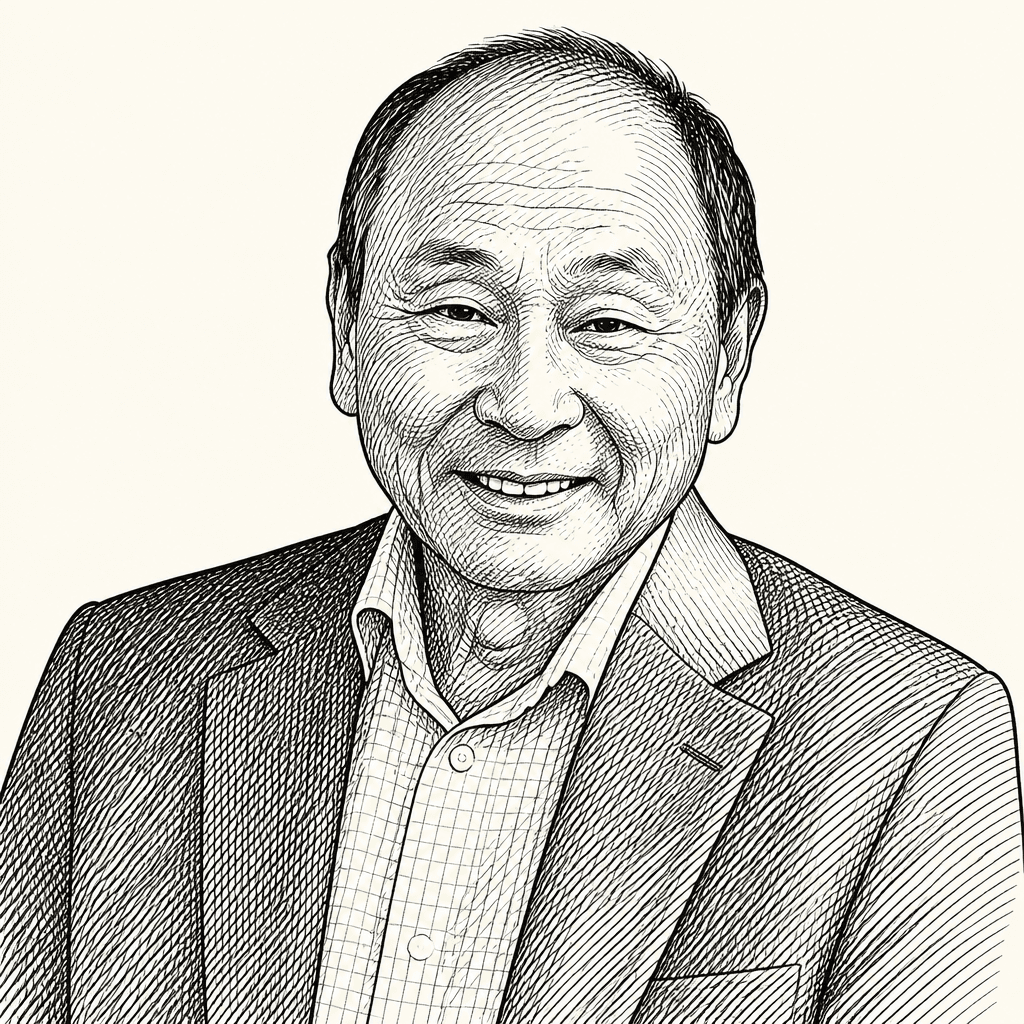 Francis Fukuyama
 Sonia Kapadia
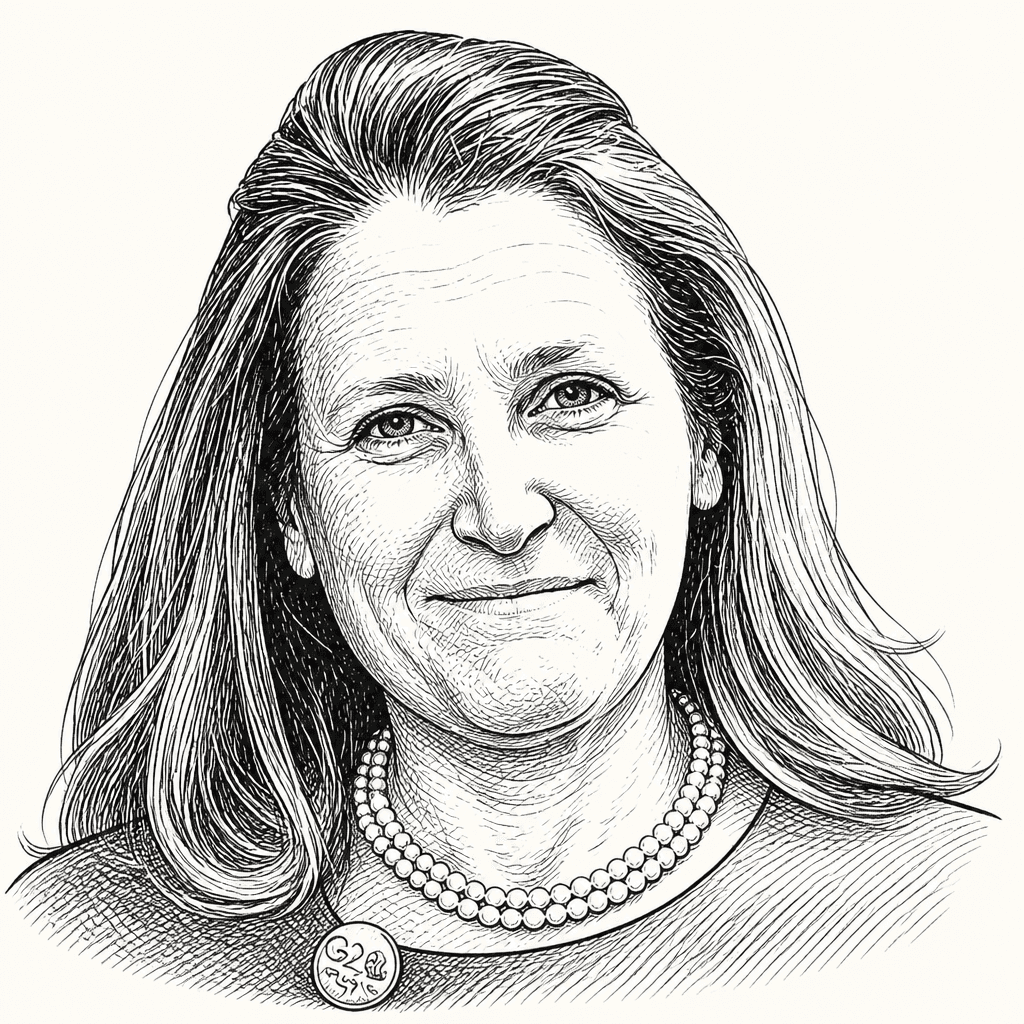 Chrystia Freeland
 Hamed AhmadiThe Aspen InstituteTuesday, June 30, 202619 min read
At the Aspen Ideas Festival, Francis Fukuyama, Chrystia Freeland, David French and Fareed Zakaria argued that liberal democracy is in a serious internal crisis but has not been displaced by a more viable political model. Fukuyama said no universal successor to liberal democracy has emerged; Freeland pointed to Ukraine as evidence that decentralized democratic societies can still mobilize effectively; and French warned that liberalism’s critics often identify real social failures before turning to authoritarian remedies. Their shared concern was that democracies will keep feeding strongman politics unless they can deliver purpose, competence, representation and trust.
Liberal democracy is under pressure, but Fukuyama does not see a universal successor
Francis Fukuyama framed the current crisis as real backsliding, not as proof that liberal democracy has been superseded by a higher form of political order. His “end of history” argument, as he restated it, was never that wars, crises, or power politics would disappear. It was about “what kind of society is likely to emerge at the end of a millennia-long modernization process.” Marxism had once claimed to be that higher stage. By 1989, Fukuyama said, it was clear that this was not happening.
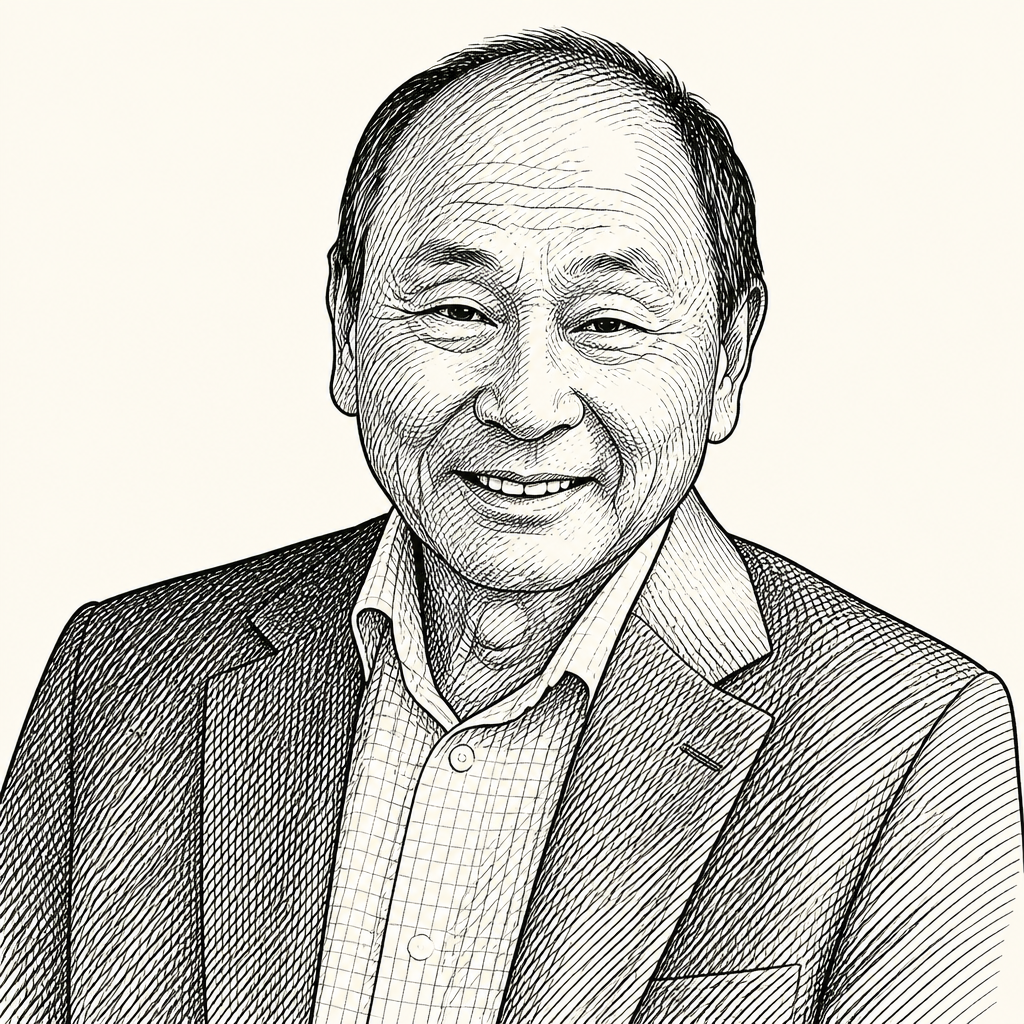
The question now is whether there is “actually an idea of a superior form of social and political, economic organization” than liberalism and liberal democracy. Fukuyama acknowledged competitors: a Chinese model and an Iranian model, among others. But he said he has not seen one likely to become universalized as a substitute for liberal democracy or as a higher stage of human development.
That does not make the liberal-democratic order healthy. Fukuyama described a long reversal after what Samuel Huntington called the third wave of democratization, beginning in the 1970s in Spain, Portugal, Turkey, and elsewhere. The number of democracies, he said, rose from roughly 35 in the early 1970s to more than 100 by the early 21st century. Since then, the movement has gone backward. Russia and China have consolidated authoritarian systems. More surprisingly, populist movements have grown inside established democracies, “above all in the United States,” and have rejected institutional features such as the rule of law in a country that helped establish rule-of-law constitutional government as a norm.
His case for restraint was historical. Democracy has seen major setbacks before: fascism and Stalinism in the 1930s and 1940s, and the doubts that followed the oil crises of the 1970s. Fukuyama’s view was not that the present crisis is minor, but that “the game is not over.” Liberal democracy, he said, remains durable and sustainable in ways authoritarian government is not, and he saw early signs of a turnaround after 20 years of democratic backsliding.
David French approached the same moment from inside the American right. He described the populist right, the MAGA right, and the post-liberal right as overlapping camps hostile to liberal democracy in different degrees. They dislike the idea that America is a “creedal country,” he said, and some prefer language of “blood and soil and heritage,” including the phrase “heritage American.”
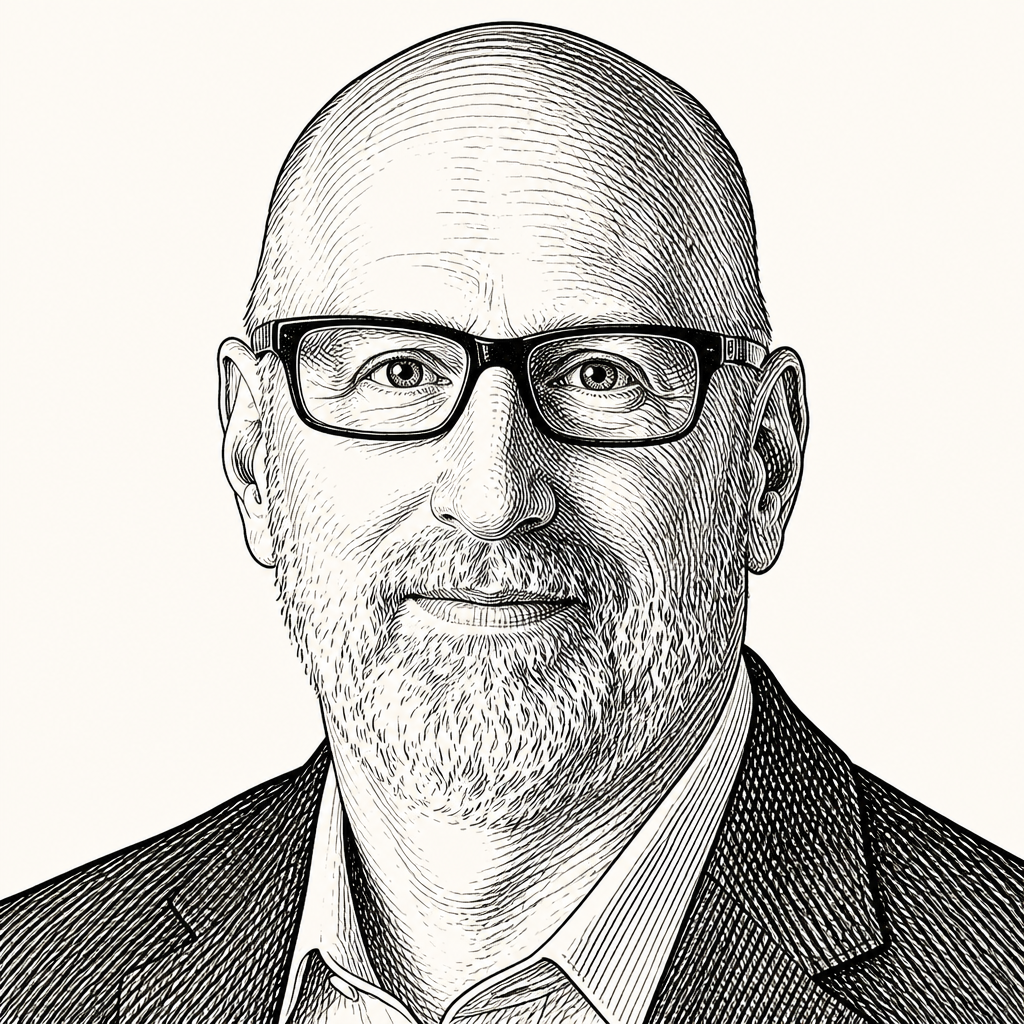
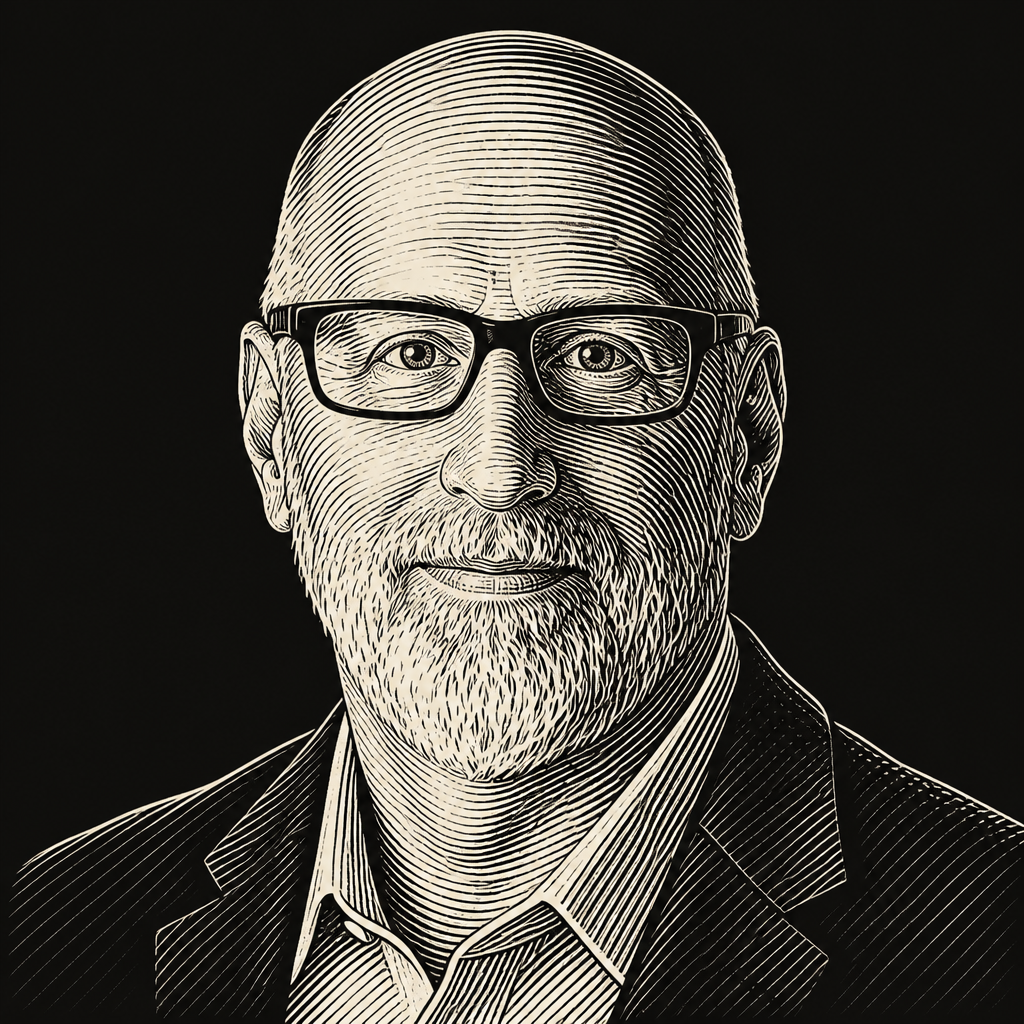
French did not dismiss all of the critique. He summarized one common right-wing slogan as a cyclical theory of strength and decay: “strong men make good times; good times make weak men; weak men make hard times; strong men need to come back.” He also took seriously the charge that liberalism’s emphasis on individualism has weakened pre-liberal institutions: the family, the church, civic associations, and other bonds. Broken families, declining church attendance, and Robert Putnam’s “Bowling Alone” phenomenon give the critique some force.
But for French, the diagnosis collapses when it becomes a prescription. The “now what” offered by parts of the post-liberal right leads through what he called a “museum of wretched ideas”: renewed interest in fascism among some young people on the right, affection for communism among some young Americans, tariffs presented as if they were novel, rising antisemitism, and a land war in Europe. The alternatives being revived, in his account, are not new ideological inventions, but “ancient hatreds and authoritarianisms.”
A critic of liberalism is able to identify some legitimate problems that do exist. And then everything starts to fall apart as they start to pivot to, okay, now what?
French’s optimism was limited but explicit. He suggested that the high-water mark of the current authoritarian wave may be seen in retrospect as having occurred around November 2024, the moment of the populist right’s triumph in the United States, with Viktor Orbán still in power in Hungary and Vladimir Putin pressing westward in Ukraine. Since then, he said, two things have helped turn the tide: people seeing “more fully how bankrupt this new right is,” and defenders of liberal democracy showing courage “in the battlefield in Ukraine” and “in the streets and the courtrooms across the United States.”
Freeland’s answer to strongman politics was Ukraine’s democratic mobilization
Chrystia Freeland made the most concrete argument that liberal democracy is beginning to fight back. She offered a prediction she called falsifiable: “we’re gonna look back on the spring of 2026 as the turning point, when liberal democracy around the world started to fight back and successfully win.”
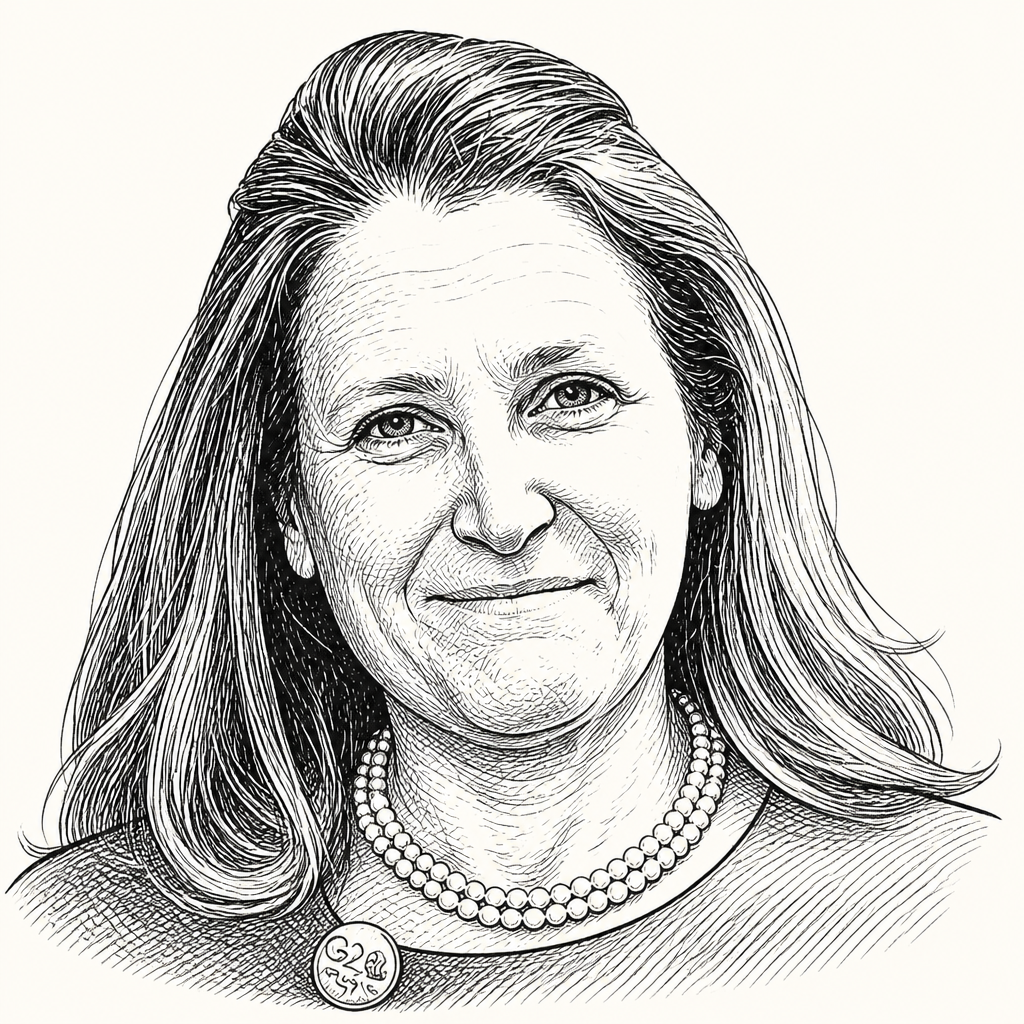
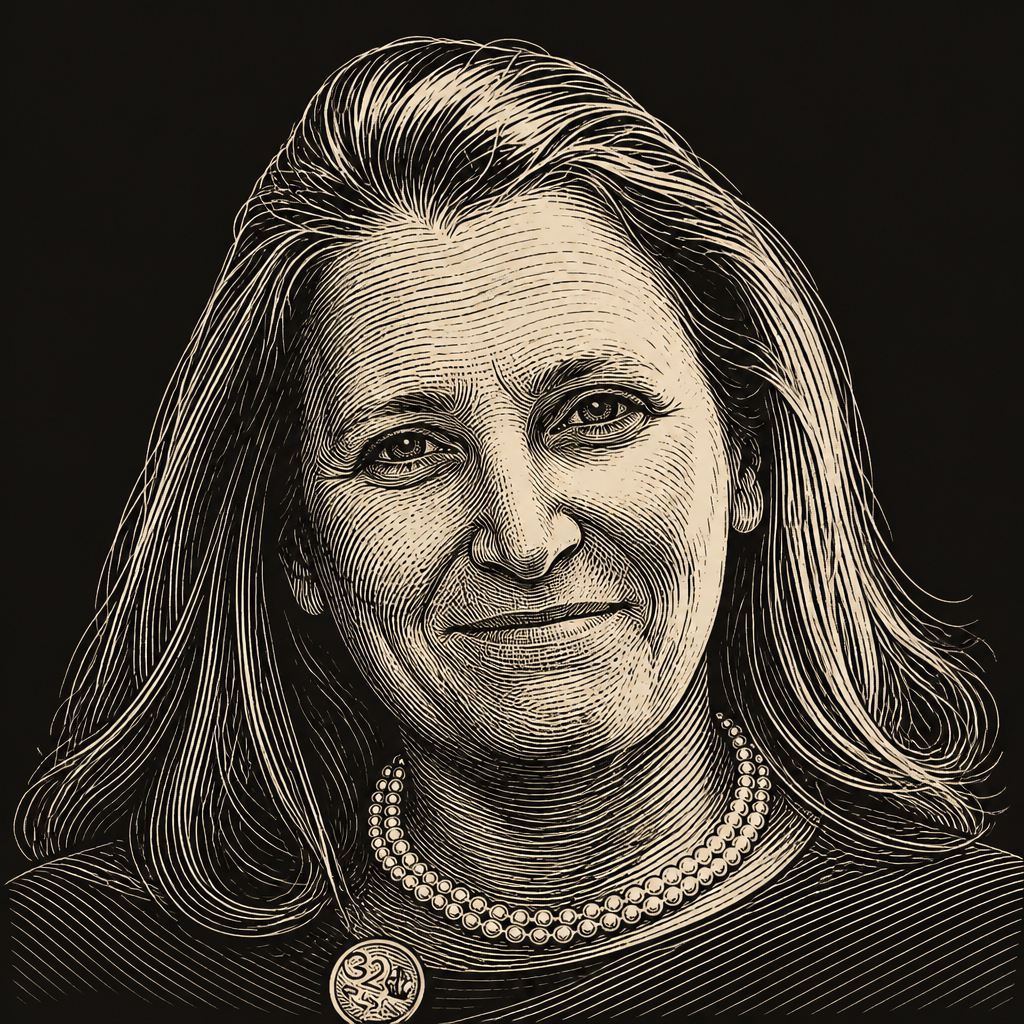
Her evidence was not mainly rhetorical. She cited Minneapolis, what she described as Orbán’s defeat in Hungary, and above all Ukraine. Freeland disclosed that she serves as an unpaid formal economic adviser to President Volodymyr Zelensky and said plainly that she had “picked a side.” But her case for Ukraine was about institutional performance under the hardest possible conditions. In Ukraine, she said, the fight between authoritarianism and liberal democracy is not about memes or talking points. It is “about who lives and who dies and who wins and who loses.”
Freeland’s central claim was that Ukraine is winning because it is “a multicultural, decentralized feminist democracy.” She stressed that the phrase was not ornamental. She contrasted Ukraine’s war effort with the image of a white Christian male warrior and “lethality” associated with Pete Hegseth and with Putin’s projected model of power. In her account, the reality of war has favored a different kind of organization.
Freeland said Ukraine’s military technology has benefited from decentralized procurement and production at the battalion level, with communities organizing to make drones. She cited Firepoint, which she described as a Ukrainian military technology company producing Flamingo missiles used for deep strikes into Russia, and emphasized that its CEO is a woman in her 30s and a mother of two. She also recounted an anecdote about the CEO of Rheinmetall, the German arms company, saying Ukrainian weapons were being made by “housewives in their kitchens with 3D printers.” According to Freeland, the Firepoint CEO now introduces herself on panels by saying, “Hi, I’m a housewife who makes drones.”
The story carried Freeland’s larger argument: the decentralized habits of democracy can become operational strengths. She said Ukraine has 70,000 women fighting in combat positions, which she described as the greatest number of women actually in combat positions. For Ukrainians, she said, this is not a culture-war posture. It is what happens when a democracy mobilizes everyone who can contribute.
The comparison to Minneapolis mattered because Freeland saw both as examples of self-organization. Liberal democracies have been inundated, she argued, by the mythology that strength comes from strong men who rescue societies from hard times. Ukraine offers the counterexample: people who want to be free, trust their neighbors, organize locally, and fight back.
What actually works is democracy and people who want to be free, who trust their neighbors getting together, being smart and ingenious and fighting back.
Fareed Zakaria added a related point: Ukrainians are effective because they deeply believe in what they are fighting for. If one wants to understand why liberal democracy is worth preserving, he said, look at those willing to die for it. When people are deprived of it, they recognize its value. When they already have it, it becomes easier to forget.
Liberalism can fail to supply the purpose its critics exploit
Fareed Zakaria pressed Fukuyama on a vulnerability inside liberal democracy itself. In The End of History and the Last Man, he noted, Fukuyama warned that the end of history could be boring because human beings have a desire for something larger than themselves — an irrational, tribal, or thymotic impulse. Liberal democracy does not prescribe the meaning of life. It tells individuals to decide for themselves what a good life is and how to pursue happiness. Zakaria suggested that this freedom unnerves many people. They may prefer tradition, scripture, God, or country to make those decisions for them. The right has preyed on that need, he said, with language used by figures such as J.D. Vance and Viktor Orbán.
Francis Fukuyama accepted that this is “the problem of the last man,” borrowing Nietzsche’s term for the creature that emerges at the end of history: content with peace, prosperity, and security, but without higher ideals, striving, or anything worth dying for. Contemporary society often does not ask people for sacrifice, even though many want transcendence beyond day-to-day life and want to be seen as noble or as participating in something great.
That hunger for meaning, in Fukuyama’s view, helps explain extremism. He pointed to encampments on university campuses after October 7, including at Stanford. Why would students sit in tents for six months? His answer was not a detailed account of the Israel-Palestine conflict, but a theory of purpose: for many students, the only striving they had done was to get into Stanford. They wanted to sacrifice for what they saw as a noble cause, such as social justice. The tents supplied something missing.
He applied the same logic to January 6. The “cosplay guys” dressed in camouflage, he said, wanted to be like founding fathers sacrificing their sacred honor to preserve the country. The difference, in his telling, was that “there was no country that needed preserving at that point.”
David French developed the point as a problem of memory. He invoked Winston Churchill’s line that democracy is the worst form of government except for all the others. Younger Americans, especially older millennials and younger, have grown up with direct exposure to the worst features of democracy but not to the practical horrors of the alternatives. Soviet domination and fascist authoritarianism are in history books “that they did not read,” he said. They experience democracy’s flaws without memory of the systems democracy defeated or avoided.
That produces a challenge for democracy’s defenders. French argued they cannot simply ask people to accept a flawed status quo. Many concerns are legitimate, and a bad vision must be replaced by a better one. The founders, in his telling, understood that democracy ran against parts of human nature: the will to power, to dominate, to control. The democratic project therefore requires a personal struggle toward virtue.
French used George Washington’s repeated citation of Micah 4:4 — “every man shall sit under his own vine and own fig tree and no one shall make him afraid” — to describe what he sees as the republic’s moral aim: extending a sphere of security and liberty. Young people should not be deprived of purpose, he argued. They need to be shown “what virtuous purpose looks like.”
His own religious and political identity supplied the example. French described himself as a white Southern conservative evangelical, theologically and politically conservative, and until recently living in a neighborhood that was 85% MAGA. He said he has heard the case for Trump “ad infinitum,” including the claim that liberal democracy is inherently hostile to traditional faith. French rejected that directly. He called himself “a walking, living, breathing traditional expression of faith,” and argued that the best place in the world for a theologically conservative person is a liberal democracy.
The reason was both principled and practical. Outside liberal democracy, he said, “you better be running the place,” because otherwise you are in real trouble. Since there are not enough people like him to run any place, he defends liberty for others as an expression of loving his neighbor and because he wants the same liberty for himself. Liberal democracy, in this telling, is not a hollow proceduralism. It is the political order that lets moral minorities live without needing to dominate.
Freeland warned that U.S. allies are planning around American unreliability
Chrystia Freeland gave a blunt explanation for Canada’s recent resistance to right-wing populism: Donald Trump. Canadians, she said, are acutely sensitive to American tremors, invoking Pierre Trudeau’s line that living next to the United States is like sleeping with an elephant: even a well-behaved elephant makes every tremor and wiggle felt. Trump’s reelection in 2024, she argued, made Canadians “absolutely believers in liberal democracy” and made them see the issue as existential. They had to be united, and in her telling they united behind her party, the Liberal Party.
She located that reaction in Canadian history. Canada, she said, exists partly as a response to U.S. Manifest Destiny. After the American Civil War, the victorious Union Army was the biggest army in the world. The British provinces to the north, not yet a country, looked south and saw a possible threat. That helped bring them together in Confederation.
But Freeland’s point was less celebratory than cautionary. She said people in Canada and among traditional U.S. allies — NATO allies, Australia, New Zealand, Japan, South Korea — are beginning to give up on the United States. They are planning for a world in which America is not committed to liberal democracy and cannot be relied on as an ally or partner. She called that planning prudent, but also “a really, really suboptimal outcome.”
Her plea to Americans was to think beyond domestic democratic renewal. If liberal democracy is to fight back, she said, America must restore its role as leader of the global alliance of liberal democracies. That is better for U.S. allies, but also better for the United States. And it will be harder than Americans may think, because among traditional allies there is latent anti-Americanism, which she said the United States has fed.
Her example was local and tangible. In Ontario, Freeland said, the Liquor Control Board of Ontario — the province’s main alcohol seller — does not sell American alcohol, and signs on the doors say: “for love of Canada, we will not sell any American products here.” That was her example of how people are feeling.
The strategic risk, in Freeland’s view, is not that MAGA becomes the world’s successful governing model. She said she does not think it works well economically. The more serious challenge is China. If America is not a strong liberal democracy at home and a strong, generous ally abroad, she argued, the remaining liberal democracies will be forced into a balancing act with China. China will become stronger and make more inroads into their countries. One day, she warned, people may conclude that history did end — but with Chinese state capitalism as the winner.
Please get your house in order, American neighbors.
Democracies feed strongman demand when they cannot build or deliver
Francis Fukuyama saw one common weakness across Western democracies not as cultural decadence but as government incapacity. Britain, France, Germany, and the United States each have specific explanations for their current dysfunctions, he said. Britain’s condition, for example, would likely be different had it not left the European Union. But many liberal democracies share an inability “to get things done, to build things.”
The cause, in his account, is intrinsic to liberalism. Liberalism is about the rule of law. But many liberal countries now have too many laws. Fukuyama used a deliberately mundane example: a U.S. government agency buying an office desk under the Federal Acquisition Regulations, with thousands of pages governing procurement. Centrist politicians repeatedly fail to deliver because they cannot get through the mountain of rules. That failure then creates demand for strongmen who promise to abolish constraints and act.
Fukuyama did not endorse that response. Liberal democracies must stay within the rule of law while dramatically simplifying how common decisions are made. He spoke as a resident of California, where he sees the burden of rules everywhere. He cited high-speed rail, which California voted for in the mid-1990s, saying only about 10 miles of track had been built “in Fresno or someplace.” He also cited Stuttgart 21, a German rail project intended to make Stuttgart a high-speed terminal for a trans-European line from Paris to Vienna. Planning began before German unification, he said, and the project is still not complete.
His term for this condition was “vetocracy”: rule by veto. In many countries, too many players can stop action, and authority is not delegated in ways that allow infrastructure to be built. The housing crisis in blue cities, he said, is one consequence. It is simply too hard to build because of accumulated rules.
Chrystia Freeland accepted the critique and grounded it in governing experience. As Canada’s finance minister in a center-left Liberal government, she said, she was responsible for getting a pipeline built to British Columbia and the West Coast. She remains proud of that because it diversified Canada’s energy exports and reduced dependence on the United States — a benefit that seemed especially valuable after the U.S. election in 2024. But the project also showed her the burden of rules. At one point, a bird’s nest in a field the pipeline crossed caused a delay that increased costs by tens of millions of dollars.
Her caution was that the rules were not put in place for no reason. Often each had a good reason: protecting birds, preserving historic neighborhoods, respecting concerns associated with figures such as Jane Jacobs. The problem is the accretion of individually defensible rules into a system that prevents democracies from acting quickly enough.
Fareed Zakaria sharpened the criticism of the left: many of the rules are defended by groups, institutions, and unions that form part of the center-left coalition. It is easy to declare an abundance agenda in the abstract, but removing regulations produces “howls of outrage,” lost endorsements, and political costs. Freeland agreed that liberal politicians often have less room to maneuver than right-wing populists. Their own constituencies give them less leeway. If citizens want liberal leaders to deliver, she said, they need to give them “a little bit of a runway.”
David French added that solutions can come from politically uncomfortable places. He distinguished sharply between the national Republican Party, which he sees as trapped in “the solar eclipse of Donald Trump,” and state Republican parties, some of which are doing innovative things. He cited the “Mississippi miracle” in reading as something every state should examine, but said many people will not because it is Mississippi, a red state, and therefore “MAGA coded.”
He called this the “Fox News fallacy”: if something appears on Fox News, it must be wrong. The result, he said, is that center-left Americans sometimes miss real problems. Many people on the center-left became aware of problems at the border too late, he said, because critiques came from the right. The same reflex can lead them to reject solutions because they come from Republicans. Democracies, he argued, have to remain open to useful ideas from people with whom they disagree.
French argued that American democracy lacks enough real competition
David French argued that American democracy does not have enough democracy. The United States may look closely divided at the national level, but most voters do not experience meaningful competition. He said that, according to the Cook Political Report, less than 10% of House races are competitive heading into a potential wave election season.
The problem, as French described it, is an “exhausted majority” that often sees itself as outside the system, while two highly motivated wings capture the parties and engineer rules to preserve their power, especially through gerrymandering. He said 80% of Americans live in one-party states: roughly 39% in blue trifecta states and 41% in red trifecta states. Of the remaining roughly 19%, most live in single-party districts. His conclusion was stark: America should not be thought of as having a two-party system anymore. It has “two one-party systems.”
| Measure | French’s description |
|---|---|
| Competitive House races | Less than 10% |
| Population in blue trifecta states | About 39% |
| Population in red trifecta states | About 41% |
| Population outside trifecta states | About 19%, with most still in single-party districts |
One-party systems, French said, are “almost always” deeply flawed. The United States is getting few of the benefits of a two-party system and many of the maladies of one-party rule, channeled through two polarized regions and parties.
French supported open primaries and expressed interest in ranked-choice voting as ways to diminish the power of party wings. His favored reform was to expand the House of Representatives. He proposed tripling the size of the House to restore roughly the same ratio of citizens to representatives that existed when the House was last expanded about a century ago. Under his model, the same districts could have three representatives each, with the top three vote-getters elected. That, he argued, would make it impossible to produce extreme outcomes such as Tennessee being gerrymandered 9-0 in a state he described as 60-40.
The broader reform argument was not only about election mechanics. French said Americans should be thinking creatively about constitutional amendments while also holding onto the constitutional republic “by our fingernails.” He compared the need for reform to moments after past crises, including the “second founding” after the Civil War and legal reforms after Watergate. Among his proposed amendments were making the Constitution easier to amend and imposing 18-year Supreme Court terms, with justices selected in the first and third year of every president’s term to create predictability and a stronger sense of democratic participation.
Chrystia Freeland described Canada’s Supreme Court system as less partisan. Canadian justices must retire at 75, and appointments are shaped by a body that recommends candidates to the prime minister. She noted that Canada’s chief justice was appointed to that role by Justin Trudeau after having first been appointed as a justice by Stephen Harper. Canada, she said, does not really have the same idea of conservative and liberal judges, and it is “really too bad” that the United States does.
Fareed Zakaria added his own preferred reform: abolishing the presidential pardon, which he called a royal prerogative that allows a president to remove people from the consequences of justice on a whim. On campaign finance, Francis Fukuyama called Buckley v. Valeo and Citizens United “total disasters,” rejecting the idea that money is speech in an era when, in his example, one individual could be worth a trillion dollars and have speech treated as equal to every other citizen’s. Almost every other liberal democracy limits campaign finance, he said, and he saw no reason the U.S. Constitution should prohibit it.
The institutional thread across these proposals was French’s: democratic legitimacy depends on citizens believing they can compete, rotate power, and amend institutions that no longer work. Without that, he argued, democracy remains formally intact while voters experience it as remote, locked up, and unresponsive.
Fukuyama said U.S. democracy promotion has been abandoned, but social change can still create openings
Hamed Ahmadi identified himself as Hamed, covering foreign policy for Notice, and asked whether people in the Middle East or Afghanistan could still hope to establish liberal democracy. Afghanistan, he said, had “a taste of democracy” during the 20 years after the United States arrived, and then it “fell apart in a day.” Had America given up on establishing democracy in that region?
Francis Fukuyama answered first at the level of U.S. policy: “we’ve given up on creating democracy around the world period.” Democracy promotion is not part of the current administration’s agenda, he said. As someone who served for 18 years on the board of the National Endowment for Democracy, he called that “a terrible turn in policy.”
On the Middle East specifically, he rejected both poles of an older debate from the Iraq War era. One side argued that democracy could not be established in Muslim-majority countries because of culture. The other, represented in his example by Condoleezza Rice, argued that there were no cultural constraints. Fukuyama said the truth lies between those positions. It would be absurd to say culture makes no difference in creating democracy; Eastern Europe, for example, did not have the equivalent of radical Islamist parties contesting elections. But it is also possible to give culture too much weight, because culture changes over time and demands for participation can arise within societies.
His basis for optimism was social, especially educational. Across parts of the Gulf and in Iran, he said, more women than men are being educated at universities; the ratio of women to men in universities in Saudi Arabia, the UAE, Iran, and elsewhere is over 50%. He did not include Afghanistan in that pattern. But for the broader region, he said he does not see how societies educating that many women can remain as patriarchal and authoritarian as they have been.
Zakaria named the hopeful implication plainly: women may save us.