Young Researchers Target Diagnostic and Modeling Bottlenecks in Pediatric Health
At Aspen Ideas: Health, Francis Collins moderated three teenage researchers whose work targets gaps between biological evidence and clinical care. Maya Hammoud described an organoid model linking ASXL3 loss to neuron deficits in neurodevelopmental disorders; Claire Jiang presented a cell model intended to make juvenile idiopathic arthritis easier to study; and Edward Kang argued that AI analysis of retinal images could help refer children for autism or ADHD evaluation earlier, without replacing behavioral diagnosis.

The missing step between biology and care
Three young researchers described health innovation as a problem of bottlenecks: neurodevelopmental diagnoses that are still heavily behavioral and often late; juvenile idiopathic arthritis research constrained by the lack of a usable cell model; and screening pathways that may miss children during the period when intervention can matter most.
? francis-collins framed the session around young talent in STEM, but the substance was less about age than about where each project intervenes in the research pipeline. Maya Hammoud focused on molecular mechanisms in neurodevelopmental disorders and a possible route to restoring lost neurons in an organoid model. Claire Jiang built a cell model for juvenile idiopathic arthritis after finding that the literature offered little for researchers studying joint cells in the disease. ? edward-kang developed an AI-enabled retinal-image screening approach for autism and ADHD, while also trying to understand why the retina would carry diagnostically relevant signals for brain development in the first place.

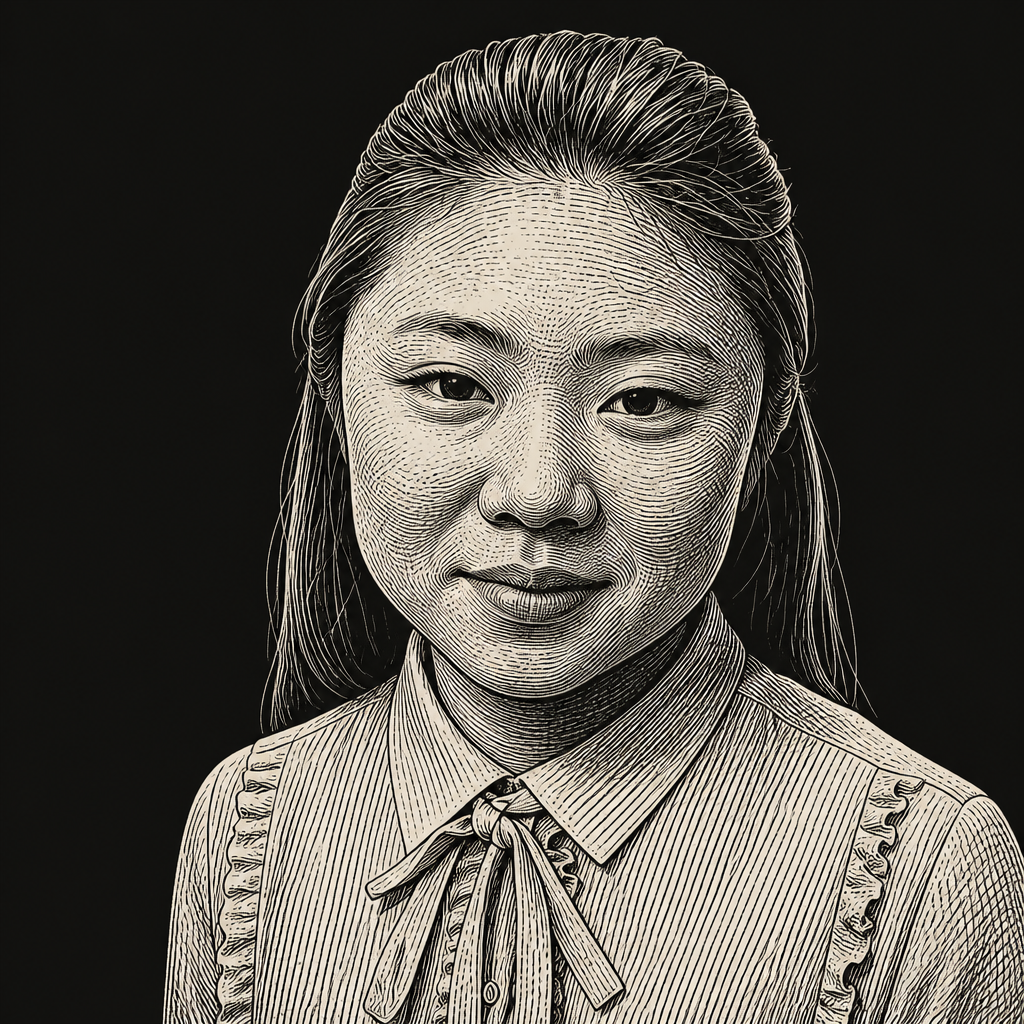
The projects differed technically, but each began with the same practical dissatisfaction: the path from biological change to diagnosis or therapy is either too indirect, too late, or too underdeveloped. Hammoud wanted a more objective biological basis for neurodevelopmental disorder diagnosis. Jiang wanted a model that would let researchers test mechanisms and potential therapies for children with JIA. Kang wanted a fast screening tool that could identify children who should be referred for formal behavioral diagnosis before months or years of clinical time are lost.
Collins repeatedly pushed the presenters toward the translational edge of their work: why this gene, whether the proposed mechanism could become a therapy, whether eye-tracking and retinal imaging might combine, and how research constraints affect young scientists. The answers were careful rather than overclaimed. FGF as a therapy for restored neurons was described by Hammoud as a long way from clinical use and FDA approval. Jiang described BMP4 as a pathway and marker worth investigating, not as an established drug target. Kang emphasized that retinal screening is not meant to replace psychiatrist diagnosis, because autism and ADHD remain behaviorally defined conditions.
Hammoud’s autism work links ASXL3, Wnt signaling, and layer-five neuron loss
Maya Hammoud began from a personal and organizational origin story: she and her twin sister Lara started what became the Perception Foundation after meeting their best friend with autism in public school and building a sensory room for him at his house when they were seven. The foundation, Hammoud said, now operates in more than 76 countries and territories, has more than 247 youth branches, and has reached more than 600,000 people worldwide. Its better-known work is advocacy and support for neurodevelopmental disorders and mental health, including United Nations delegate work and addressing the US Senate. Less visible, she said, is its neuroscience research.
The research question came from dissatisfaction with diagnosis. Hammoud said autism and other neurodevelopmental disorders such as ADHD are often diagnosed through behavioral assessments or guidelines, which can make the process feel subjective and can delay diagnosis until later in life. Her team wanted to know whether a genetic basis could help explain neurodevelopmental disorder phenotypes.
The gene they chose was ASXL3. When ? francis-collins asked why that gene out of roughly 20,000 in the genome, Hammoud said it came from a prior project that tried to identify the top 200 genes linked with autism and neurodevelopmental disorders. ASXL3 emerged as the number one gene, with literature linking it to Bohring-Opitz syndrome and other neurodevelopmental disorders. The project then asked what ASXL3 actually does.
Hammoud’s team used CRISPR-Cas9, which she described as “almost like scissors for the DNA,” to alter immature stem cell lines. Because DNA has two copies of each gene, they created three conditions: both ASXL3 copies removed, one copy removed, and neither copy removed. The stem cells were then matured over a 32-day process into brain organoids. Hammoud described the endpoint, in simplified terms, as “a brain on a dish” that has different regions of the brain and “pretty much functions as a brain.”
The key mechanism she presented was a chain from ASXL3 loss to chromatin accessibility, Wnt pathway regulation, layer-five neuron formation, and neurodevelopmental phenotype in the organoid model. In the full ASXL3 knockout, where both gene copies were removed, Hammoud said the team saw “a lot of ubiquitin,” which she described as “almost like a lock on the DNA.” That made the DNA inaccessible to RNA polymerase, which she described as the reader and protein-builder. The result, in her account, was no ASXL3 protein. Downstream, both Wnt pathways were severely downregulated.
Layer five mattered because, in Hammoud’s explanation, it is involved in fine motor skills, sensory skills, and communication skills. In the full knockout condition, the organoid showed a very thin layer five. Hammoud connected that loss of layer-five neurons to the most severe phenotype in her slide framework, using the slide’s language of “low functioning” or very severe neurodevelopmental disorder, and giving non-verbal autism as an example of how people often describe that severity.
In the heterozygous condition, with one ASXL3 copy removed and one present, the model still produced some ASXL3 protein. Hammoud said one Wnt pathway showed activation, but not both. The organoid produced some layer-five neurons, but not the full amount. In her pathway analysis, broad motor and broad brain skills remained functional, while fine motor and social interactive skills were downregulated. She connected that intermediate condition to the slide’s “high functioning” or less severe autism-trait category.
In the control condition, with both ASXL3 copies present, Hammoud said the model showed normal ASXL3 protein levels, activation of both Wnt pathways, and full layer-five neuron formation. Her slide labeled that state “neurotypical.”
The therapeutic question followed directly: if neurodevelopmental disorder phenotypes in this model involve loss of layer-five neurons, could those neurons be restored? Hammoud tested fibroblast growth factors, or FGF, because they are known to stimulate Bcl11b and activate layer-five neuron formation. Her team tested 10, 20, and 30 nanogram concentrations. The 30 nanogram concentration was most effective, according to the chart she showed.
She then tested timing across organoid development. Because early organoid growth can represent premature development and later points can represent later brain maturation, the team introduced FGF at day three, day 12, and day 21. Hammoud said the treatment remained highly effective across those time points. The slide reported 95% at day three, 97% at day 12, and 94% at day 21, with p<.0001 for efficiency in restoring neuronal loss in ASXL3 -/- cells relative to ASXL3 +/+ controls.
| FGF timing | Efficiency shown |
|---|---|
| Day 3 | 95% |
| Day 12 | 97% |
| Day 21 | 94% |
Hammoud’s interpretation was hopeful but bounded. The results suggested to her that lost neurons can be restored in this model and that FGF could potentially be used as a therapy to restore them. But she explicitly said therapies and treatments remain “a very long time in the future” and would require substantial regulatory work. In the meantime, she situated the research alongside the foundation’s other support efforts, including cost-effective sensory rooms and education.
The questions after Hammoud’s presentation clarified two things about the work: its communication demands and its distance from organism-level validation. A physician scientist praised her ability to explain complex biology clearly and asked how she developed that skill. Hammoud attributed it to science fairs, where pitching mattered, and to United Nations work, where diplomats may understand policy but not the details of science. Those experiences, she said, helped her present science accurately but digestibly.
On translation, the limitation was more concrete. Asked whether the phenotype had been tested in vivo, such as in mouse models, Hammoud said her team wants to attempt mouse models, including testing FGF or other therapeutics, but that student researchers face additional paperwork and clearance barriers.
Jiang’s JIA model is an answer to a missing research tool
Claire Jiang used her own diagnosis to define the research problem. Juvenile idiopathic arthritis, or JIA, is a chronic illness that can cause severe joint inflammation, pain, rash, and, if untreated, lifelong disability. Jiang was diagnosed in third grade and has seen her pediatric rheumatologist, Dr. Suzanne Li at Hackensack Meridian Health in New Jersey, since childhood. She described severe inflammation in her fingers that did not resolve after weeks of Motrin and recalled reading pamphlets in the doctor’s office and realizing there were no targeted treatments for children with JIA.
Her conclusion as a child was not limited to wanting to become a doctor. She said she knew that whatever she eventually did — medicine, venture capital, or something else — she wanted to help children diagnosed with JIA and potentially find treatments for them.
The scientific obstacle emerged when she searched PubMed in high school. Jiang said she typed in “juvenile idiopathic arthritis joint cells” and got fewer than 20 results. That was disheartening, but it clarified the bottleneck: JIA did not have an accessible cell model for the specific joint cells she wanted to study. Without a model, she argued, research becomes inaccessible. Labs cannot contribute to the literature if they do not have a system to work with.
Jiang’s project centered on fibroblast-like synoviocytes, the cells lining the joint synovium. She simplified them as “joint cells.” She said recent studies suggest these cells act as gatekeepers of the joint and, during disease progression, “get angry.” Her goal was to find a novel model for those cells in JIA.
The model used a cell line called SW982 treated with BMP4, which Jiang called a JIA-linked protein. She stressed that this treatment of the cell line had not been reported in the literature before, so she was working in uncharted territory. Because there was no established framework, she had to define what would count as a JIA model. She created three characteristics she wanted the model to show and concluded that the treated cell line did display JIA qualities.
Her work did not stop at individual markers. Jiang said she realized she needed to move from narrow gene-by-gene or protein-by-protein assessment to a broader view. She described the shift as sequencing the model more broadly, which she said allowed her to understand it in the context of the greater literature and introduce concepts that had not previously been reported. Her metaphor was that she moved “from a magnifying glass to a wide-angle lens.”
The pathway slide showed BMP4 interacting with BMP4 receptor 1 and receptor 2, signaling through SMAD1, SMAD5, SMAD8, and SMAD4, and connecting to markers including VEGFA, ALP, SOX9, and hypertrophic chondrocytes. Another slide simplified the sequence as SW982 to BMP4 to increased proliferation to markers of chondrocyte hypertrophy and endochondral bone formation. The point of the visuals was to show BMP4 not merely as an input to the model, but as a possible route into disease-relevant pathways.
| Model element | Role Jiang described or showed |
|---|---|
| SW982 | Cell line used as the basis for the model |
| BMP4 | JIA-linked protein used to treat the cell line |
| SMAD signaling | Pathway elements shown downstream of BMP4 receptors |
| VEGFA, ALP, SOX9 | Markers shown on the BMP4 pathway slide |
| Hypertrophic chondrocytes and endochondral bone formation | Disease-relevant outputs shown in Jiang’s pathway framing |
Jiang’s claim was that the model can make JIA research more tractable. If researchers can identify mechanisms contributing to JIA, she said, they can look for targeted therapies for children diagnosed with the disease. The model, in her framing, is not the therapy; it is the tool that could make therapy discovery possible.
Every patient tells a story.
Jiang deliberately returned to a photo of herself as a child with Dr. Li to explain why the work mattered. Research, she said, is not about the numbers or the graph but about the patient. Every outcome, setback, success, and talk matters because there are people like her waiting for answers.
? francis-collins pushed on the therapeutic implications of BMP4. If BMP4 can convince a cell to “get angry,” as may happen in inflamed joints, he asked whether BMP4 itself becomes a target — perhaps through antibodies or receptor blockade. Jiang answered that the BMP4 pathway could be a mechanism in disease progression and that BMP4 is a marker the field should investigate. She explained that she used BMP4 because it is a growth factor with the potential to change characteristics of cell lines, including the one she studied.
The discussion also made Jiang’s process relevant beyond JIA. Asked whether her way of working in underdeveloped territory could transfer to other diseases, she said many diseases, including autoimmune diseases, are difficult to study because they are systems. Her own strategy focused on a targeted cell line in the joint, and she thought similar thinking could help other autoimmune diseases. She also emphasized communication with the scientific community. She had cold-emailed labs, including the Nemours Translational Rheumatology Lab, to learn about primary cell culture work that was not necessarily captured in the published literature.
Collins highlighted the point that important work may not yet be in PubMed. For Jiang, access to that informal and emerging knowledge was part of how a missing model became a tractable research problem.
Kang’s retinal-screening work treats the eye as a fast route to referral, not a replacement diagnosis
? edward-kang was careful to distinguish his motivation from Hammoud’s and Jiang’s. His project did not begin from the same personal disease experience. He traced his path instead to being born in 2008, growing up with Lego sets that integrated sensors, motors, and programmable bricks, and watching science YouTube in what he called a golden age for online scientific content. Vsauce, especially Michael Stevens’ videos on topics like countable and uncountable infinities and the continuum hypothesis, gave him an early taste for problems that did not yet make sense to him.
That curiosity later met a research problem: early diagnosis in autism and ADHD. Kang described autism and ADHD as neurodevelopmental disorders affecting how the brain develops in children. The clinical premise of his project was that treatment should begin as early as possible. Earlier treatment, he argued, has more opportunity to influence developmental trajectory, whether through behavioral therapy or pharmaceuticals, and can lead to better prognosis and symptom reduction.
The problem is the diagnostic pathway. A treatment requires a diagnosis, and diagnosis often requires a child psychiatrist and a multi-hour behavioral evaluation. That process can be complicated and inaccessible. More fundamentally, Kang said, parents may not know their children need evaluation in the first place because early behavioral symptoms can be subtle, especially in very young children and especially for caregivers without medical knowledge. When early warning signs are missed, months or years of clinical time can be lost.
Kang’s proposed role for retinal imaging is screening. He imagined a tool integrated into a yearly doctor’s visit: a retinal image captured in seconds, analyzed by a model in seconds to minutes, and used to generate an actionable prediction that directs children who need it toward formal diagnosis.
The unintuitive premise came from a 2020 paper by Maria Lai and colleagues that Kang said used retinal imaging and AI models to try to predict whether children have autism. He said the idea was mind-blowing because autism seemed to be “a thing happening in the brain” while the retina is in the eye. The unexpected connection made the problem compelling.
His work had two objectives. First, he developed the diagnostic tool: input retinal image, automatic feature extraction, automatic representation, and a classifier predicting normal, ADHD, or ASD. The slide showed both direct retinal measurements — including artery/vein ratio, total vessel length, and macular thickness — and a larger automatic representation of 2,048 values. Kang said he tested algorithms and AI models to extract retinal features and produce diagnoses. His best models diagnosed autism or ADHD accurately around 89% of the time.
Second, Kang tried to understand why the tool works biologically. Around late 2024 or early 2025, he said, he realized he might be getting ahead of himself: if patients with autism have retinal differences, what causes those differences? Without an answer, the model would be an ungrounded tool. His more recent work therefore used retinal cell lines and wet-lab methods to identify genes altered in an autism model. A slide described control retinal cell lines and valproic-acid-treated autism-model cell lines undergoing RNA sequencing to identify candidate retinal genes disrupted in the autism model, including genes grouped under vasculature, optic disc, and fovea categories.
Kang’s causal frame was: genetic differences in autism patients may produce retinal differences; the model detects those retinal phenotypes; the phenotype supports a screening prediction. That is the “full circle” he wants to establish between biology and model performance.
The clinical slide set the timing problem against current average diagnoses. It showed a child born at 0 years, behavioral symptoms gradually appearing around one year, retinal screening near the end of neural screening, psychiatrist diagnosis after a delay, average ASD diagnosis at 4.5 years, a “critical age” for treatment success at 5 years, and average ADHD diagnosis at 7 years. Kang’s point was not that retinal screening gives a definitive label at infancy, but that faster triage could move children toward clinicians sooner.
| Milestone shown | Age or timing shown |
|---|---|
| Behavioral symptoms gradually appear | ~1 year |
| Average ASD diagnosis | 4.5 years |
| “Critical age” for treatment success | 5 years |
| Average ADHD diagnosis | 7 years |
A clinical psychologist pressed Kang on whether he was combining autism and ADHD too freely, and whether retinal scans show specific differences between the two populations. Kang answered that the differences are “incredibly different,” and said he combined the conditions because his model attempts to separate them. He added that simply distinguishing disorder from no disorder is not sufficiently useful clinically; a screening tool has to distinguish among disorders.
His results, he said, suggest autism patients have more severe retinal alterations than ADHD patients, though there is substantial feature overlap. Simpler models based on measures such as blood vessel density or retinal thickness were not fine-grained enough to separate autism and ADHD and failed at that task. More complicated models, although harder to interpret, were more performant because they captured microscopic differences humans cannot understand directly. That separation remains an area needing more work.
? francis-collins raised eye movement differences in autism and asked whether retinal features and eye-tracking could be combined in one exam. Kang agreed that multimodal approaches could improve performance, naming eye-tracking, fundus photography, optical coherence tomography, electroretinograms, MRI, and CT as possible tools studied in related contexts. But he returned to the constraint that defines his project: screening must be quick and accessible. Fundus photography — pointing a camera into the eye and taking a photo — struck him as elegant and practical for that purpose.
Kang made the boundary explicit.
This isn't supposed to replace physician diagnoses. These are behaviorally defined conditions, they should be diagnosed behaviorally.
The intended value is not to eliminate specialists. It is to get children to the psychiatrist who can make the behavioral diagnosis faster.
Mentorship and access were part of the research infrastructure
When ? francis-collins asked each presenter about mentors, the answers described mentorship as infrastructure for doing science under uncertainty: access to labs, feedback when experiments fail, introductions to communities whose knowledge is not yet in the literature, and enough trust to let a young researcher work on a difficult question.
Maya Hammoud said mentors were essential both in the nonprofit and scientific parts of her work. Starting young in brain science can be overwhelming, especially because there are not many young people in that space. She credited her lab mentor, Dr. Vlis, as well as nonprofit partners, ABA clinics, and autism nonprofits that helped the Perception Foundation get started.
? edward-kang named his parents as his earliest mentors because they bought the Lego sets that helped spark his curiosity. He then credited teachers and school mentors, including his biology teacher and a research consultant, for feedback and wet-lab training. But his most revealing example was a problem no mentor solved. While starting in vitro work, he cultured cells that would grow, become relatively confluent, and then lift off from the center of the flask. He and several teachers huddled around a microscope and could not determine the cause. The problem resolved itself over the next two weeks and never reappeared.
Kang’s lesson was that mentors do not always have answers. Sometimes they help by struggling alongside the student and modeling persistence, tolerance for ambiguity, and the possibility that biology contains luck as well as method. Collins added that not knowing what is going on can be the first clue to an exciting finding because it was unexpected.
Claire Jiang drew especially on the scientific community. She said there was a point when she almost did not pursue JIA research because of limitations and restrictions. Cold-emailing changed that. Megan Simons at the Nemours Translational Rheumatology Lab responded to Jiang when she was a ninth grader interested in JIA research, and that became an important mentorship relationship. Jiang said mentors inside and outside school shared a goal of advancing science, and working with people who truly believe in that changed her life.
The mentorship thread also explained how the students navigated thin literature and limited resources. Hammoud’s work required access to brain organoid methods and neurodevelopmental expertise. Jiang needed to learn from people doing primary cell culture work not yet visible in PubMed. Kang relied on a public high school biology research program with unusual resources — cell lines, assays, and even an electron microscope, though he later noted the microscope was broken.
The common pattern was not that young scientists succeed by being left alone. It was that they were given enough access, trust, and expert companionship to work on problems whose answers were not already available.
Basic science funding was treated as the fragile foundation
A question about the All of Us research program shifted the discussion from individual talent to institutional support. The questioner noted that several projects depended on access — to cell lines, scientific communities, and information — and asked whether All of Us had become the kind of repository where rising scientists can find resources from a broad cohort.
? francis-collins described All of Us as having enrolled 880,000 Americans in a prospective longitudinal cohort study. Most participants, he said, have had their complete genomes sequenced; biosamples have been obtained; medical records are accessible in anonymized form; and about 20,000 researchers have access through a workbench.
But the answer immediately turned to vulnerability. All of Us, Collins said, was in a tough spot because its budget had been cut by 74% compared with two years earlier. He placed that example inside a broader warning: biomedical research in the United States is facing budget cuts, staff cuts, and political decisions that have ended support for some things that used to be funded.
The presenters described the impact unevenly. Maya Hammoud said budget cuts appear in many grant categories: wet-lab scientific research, broader scientific research, and nonprofit disability funding. Some specialized government funding for disabilities, she said, has gone away. That makes the work more challenging but also forces more creativity in seeking funding.
Claire Jiang connected funding to public expectations. She said the situation is precarious and partly driven by public perception: people may think a two-year investment should produce visible results. But basic science, including the work she used, takes years and years of funding. Her point was that the time horizon for foundational research is long, and underfunding it because results are not immediate misunderstands how therapies emerge.
? edward-kang was more insulated. He said he had not really felt the funding crisis directly because his school’s research program had steady funding. Still, he described constraints familiar to any lab: an electron microscope that exists but is broken, assays that are not available, experiments that cannot be done, cell lines that cannot be ordered or used because of lab limitations. Designing experiments meant balancing scientific validity with feasibility.
Collins’s broader warning was that US leadership in biomedical research has depended on an ecosystem: public support for basic science that would not attract commercial investment; discoveries that later feed biotechnology, pharmaceuticals, devices, and engineering; and downstream products that have supported the economy since World War II. That foundational layer, he said, is now precarious. He was especially concerned for graduate students and postdocs wondering whether the academic career path they expected remains achievable.
AI was useful only after the biological problem was defined
An audience member noted that “the magic words AI” had not yet been discussed explicitly, despite projects involving long development timelines, translation, and optimization. The answers resisted treating AI as either magic or irrelevant.
? edward-kang had the most direct AI component, since his retinal-screening project depends on models that extract features and classify images. But he still described AI as a tool that helps some tasks move faster, not as an agent that could have produced the projects on its own. He said none of the projects discussed could have been done by AI, and that doing the work oneself remains valuable. Even while developing AI tools, he said AI requires caution.
Claire Jiang said her project was centered on rigorous basic science and developing a novel cell model. AI, in her view, may become useful farther down the line. JIA has multiple subtypes, and she pointed to recent literature in which one lab has been trying to determine which cell types relate to which subtypes. She imagined AI being used to detect genes and proteins associated with those subtypes, but framed that as future work rather than central to her current project.
Maya Hammoud said much of her work has been grassroots or physical cell culture, so AI had not played a major role. She described AI as a tool shaped by how people use it: capable of creating success and opportunities, but also carrying detriments like anything else.
The AI discussion mattered because it clarified how these researchers see technology in relation to biology. Kang’s model performance depends on machine learning, but he became more concerned over time with biological grounding: why the retina differs in autism, what genes are altered, and what phenotypes the model sees. Jiang and Hammoud focused on systems that first require experimental models and wet-lab manipulation. Across the answers, AI was not rejected. It was placed after the work of defining the biological problem and generating reliable data.
Earlier screening creates a communication burden as well as a clinical opportunity
The final audience question pressed on the human consequences of earlier screening. A former elementary school teacher and parent asked Kang to think beyond therapists and scientists. If a one-year checkup could tell parents their child might have ADHD or autism, the result might enable earlier therapy, but it could also overwhelm parents who thought they were there to discuss teeth, walking, or vegetables. What happens after the screening result, in communication with families, caregivers, and educators?
? edward-kang acknowledged that he has had uncomfortable conversations with parents whose perspectives are more personal than his own. His answer was that neurodevelopmental disorders should not be treated as something to fear. Autism and ADHD bring challenges, but they should not be seen simply as burdens or as things to avoid knowing about. He gave the example of one of his best friends at school, who has autism and is, in Kang’s words, possibly the greatest piano player he has ever heard.
His view was that autism and ADHD can lead not only to typical lives but to extraordinary ones, if the right support and guidance are present. That support may differ from what most children need, which is precisely why earlier knowledge can matter. For Kang, the benefit of knowing earlier outweighed the fear of uncertainty, because earlier knowledge can lead to better support and better outcomes.
The answer brought the screening project back to its clinical limits. Kang is not proposing that a retinal image should define a child. He is proposing that a fast, accessible biological signal may help identify which children should receive expert behavioral evaluation sooner. The communication challenge is therefore inseparable from the technology: a screening result must be framed as a route to support, not as a verdict on a child’s future.