Rwanda Ties Congo Settlement to FDLR Neutralization

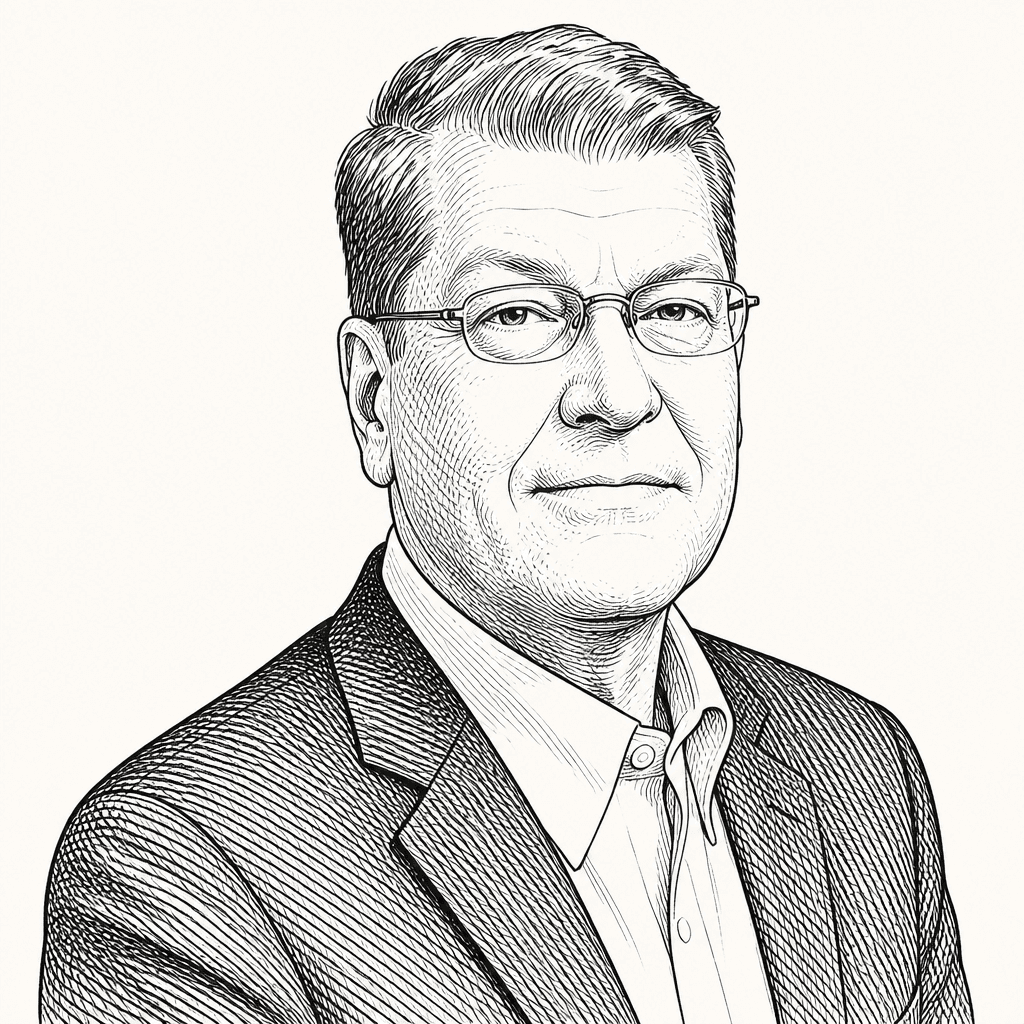
Rwandan Interior Minister Vincent Biruta argues that the Washington peace accord will not hold unless the Democratic Republic of the Congo neutralizes the FDLR, which Kigali describes as the enduring security threat behind its defensive measures in eastern Congo. He says Rwanda has met its obligations and wants the United States to pressure both sides more evenly, while rejecting claims that Rwanda is pursuing Congolese territory or directing M23. Biruta presents the dispute as one over security and Congolese governance, rather than a border conflict.

Rwanda treats the FDLR as the unresolved condition of a Congo settlement
Vincent Biruta calls the Washington Accords for Peace and Prosperity a sound agreement because, in his account, they address the security priorities of both Rwanda and the Democratic Republic of the Congo while creating an opening for regional economic development. Rwanda is committed to implementing it, he says. But Kigali’s position is that a durable settlement depends on resolving what it considers the conflict’s underlying security problem: the FDLR in eastern Congo.
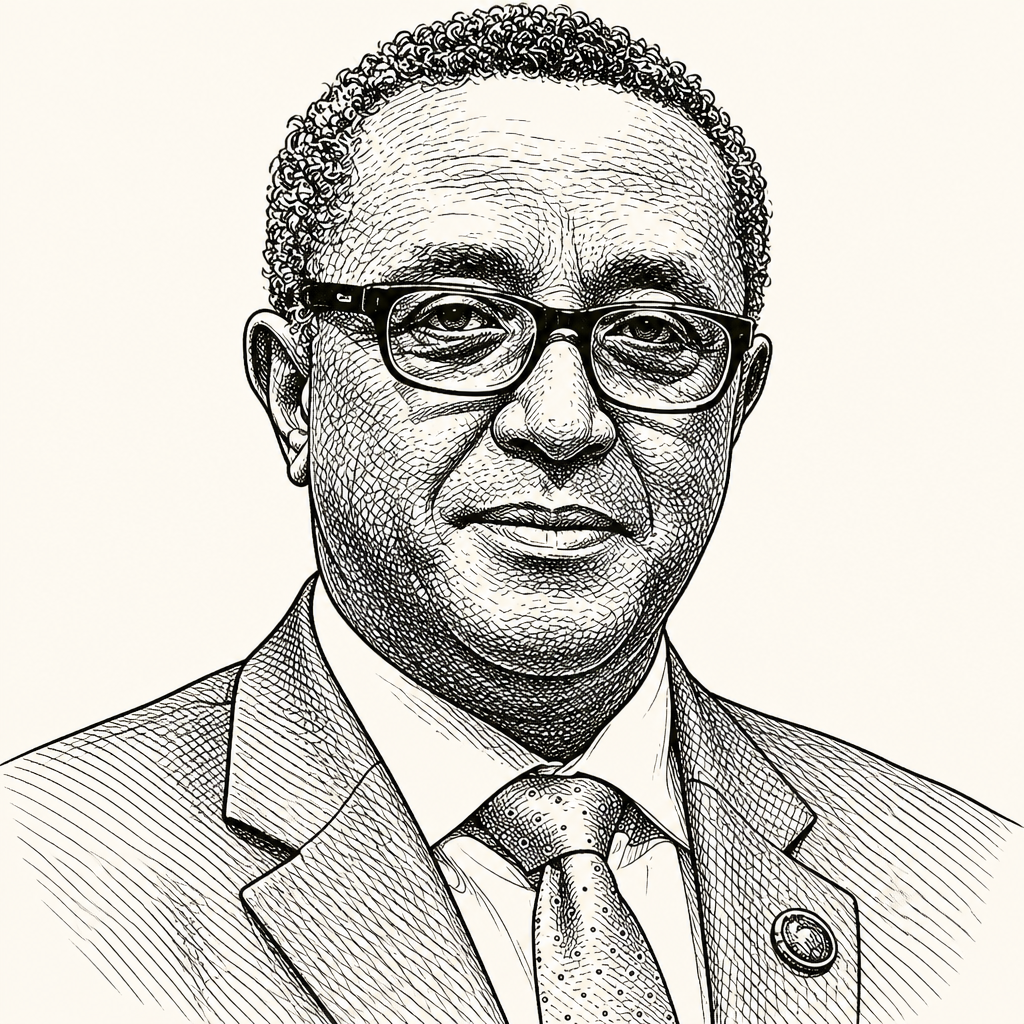
Biruta characterizes the FDLR as an armed group formed by people who committed the 1994 genocide against the Tutsis in Rwanda. After their defeat by the Rwandan Patriotic Front, he says, they crossed into the DRC with weapons and a genocidal ideology, reorganized there, and sought to destabilize Rwanda. He says the group has conducted attacks on Rwandan territory and targeted Congolese people it associates with Tutsis.
That history is Biruta’s explanation for Rwanda’s “defensive measures.” Rwanda agreed under the Washington agreement to lift them, while the DRC committed to neutralize the FDLR. Seven months after the agreement’s signing, Biruta says, implementation is uneven: Rwanda has met its obligations and offered a de-escalation plan that would lift its measures without waiting for the DRC to complete its commitment. Yet, he says, the United States has imposed sanctions on Rwanda while the Congolese government has not acted against the FDLR.
We are committed to the agreement and we expect the US government, the mediation, to have a more balanced posture for us to be able to have that agreement fully implemented.
Biruta’s complaint is not that Washington lacks a role in the process, but that its mediation should apply pressure more evenly between the parties. The United States remains, he says, an important Rwandan partner in health, energy, and mining. The disagreement is over how the security bargain at the center of the accord is being enforced.
Steve Clemons put to Biruta the accusation frequently made against Rwanda: that Kigali drives, funds, arms, or guides M23, the Congolese armed group often cited in connection with sanctions. Biruta’s answer was that M23 members may share language and historical background with Rwandans, but they are Congolese citizens fighting over rights in their own country.
He says M23 began as a self-defense force for communities facing FDLR attacks, then developed into an armed group in a part of eastern Congo where state authority is weak. Biruta puts the wider problem in terms of governance and communal protection: there are, he says, more than 200 armed groups in eastern DRC, and communities associated with Tutsis have been targeted for extermination.
There is no border issue between DRC and Rwanda. There is no claim over the territory of DRC by Rwanda.
For Biruta, a settlement requires both action against the FDLR and conditions in which all Congolese communities can exercise their rights. That is an internal governance problem for the DRC, he maintains, rather than a territorial dispute between the two states.
He is similarly dismissive of the UN peacekeeping mission. Peacekeepers have been present for roughly two decades, he says, at a cost of billions of dollars, yet the situation has deteriorated. If the mission had achieved its purpose, he argues, the region would not remain in its current condition.
Nuclear cooperation is part of an industrial-development strategy
Vincent Biruta frames Rwanda’s civil nuclear plans not as a bid to become Africa’s leading nuclear power, but as an effort to generate the energy needed for industrialization. He links that requirement to manufacturing, mining and processing, digital infrastructure, and the advanced health-care system Rwanda wants to build.
The work, he says, is broader than acquiring reactor technology. It includes regulation, safety standards, technical skills, and workforce development. Rwanda is looking at small modular reactor technologies and has signed a nuclear agreement with the United States.
Biruta rejects the premise that this cooperation must be exclusive. Rwanda also works with Russia, which he identifies alongside the United States as having advanced nuclear capabilities. Different partners, he says, can contribute to different parts of the larger project. Rwanda did not have a nuclear arrangement with China at the time of the discussion, though he added, “not yet.”
Rwanda distinguishes U.S. removals from the UK integration programme
Vincent Biruta draws a sharp distinction between Rwanda’s former agreement with the United Kingdom and its current arrangement with the United States. The UK-Rwanda Migration and Economic Development Partnership, he says, was intended as a comprehensive integration program for people who had failed to secure migrant status in Britain. It included education, skills development, socioeconomic integration, and what Biruta described as a second chance at a dignified and productive life.
The U.S. arrangement is narrower. Biruta describes it as the removal of people from the United States to Rwanda, with U.S. contributions toward costs associated with that exercise. He does not describe it as carrying the same broad integration commitment as the UK program.
Biruta rejects the characterization of Rwanda as a destination for countries seeking simply to dispose of migrants. Rwanda’s role, he says, is an attempt to help address a global problem, informed partly by a national history in which most Rwandans have, at some point, lived as refugees outside the country.
He points to the Emergency Transit Mechanism as evidence that Rwanda had assumed such a role before its agreements with Britain or the United States. Established with the UNHCR and African Union after migrants and asylum seekers were stranded in Libya in 2018, the mechanism brought people to Rwanda for transit and protection. Biruta says many were subsequently accepted as refugees by other countries.
Biruta says the United States has received 325 people through that mechanism. Rwanda also has more than 100,000 refugees integrated into the country, he says. Its proposals may need to be adjusted, he argues, but critics should offer better options for managing migration at scale.
Rwanda’s argument for open civic space begins with a limit on hate speech
Steve Clemons asked whether Rwanda’s experience of genocide and its current security concerns have narrowed political and civic space. The question was whether fears about genocidal ideology lead the government to suppress speech or constrain wider political debate.
Biruta’s answer begins with an absolute claim about hate speech. Rwanda’s genocide, he says, began with hate speech, and similar rhetoric remains present in the region, especially in eastern Congo. Any discussion of political or civil space must therefore distinguish, in his view, between legitimate debate and expression that crosses into hate.
Hate speech should not be tolerated in Rwanda, it should not be tolerated in the US, it should not be tolerated in any other place in the world.
He maintains that Rwanda has an open political and civic space, many media houses, and a vibrant civil society contributing to national development. But he also insists that some forms of speech must not be accepted, and that Rwanda’s history makes it particularly sensitive to them.
The unresolved issue is where the government draws the boundary between prohibited hate speech and protected political expression. Biruta treats that boundary as necessary protection against a recurrence of genocidal ideology; Clemons’s question reflects the concern, also raised by wider critics, that it may limit opposition speech and wider civil debate.
Tourism revenue is meant to make conservation a local interest
Vincent Biruta describes Kwita Izina, Rwanda’s annual gorilla-naming ceremony, as an expression of local ownership of conservation policy rather than a marketing exercise. The event adapts a cultural practice of naming a newborn, applying it to baby gorillas in Volcanoes National Park and inviting participants to symbolically adopt them.
The more consequential feature, in Biruta’s account, is how tourism income is distributed. He says 10% of Rwanda’s tourism revenue goes back to local communities, which choose the projects they consider priorities, including water supply and health centers.
The mechanism is designed to connect environmental protection and tourism to visible local benefits. Communities, Biruta says, determine how their share is used, giving residents a practical stake in conserving endangered gorillas and sustaining the tourism activity around them.