Sustaining School Communities Is Ukraine’s Defense Against a Lost Generation
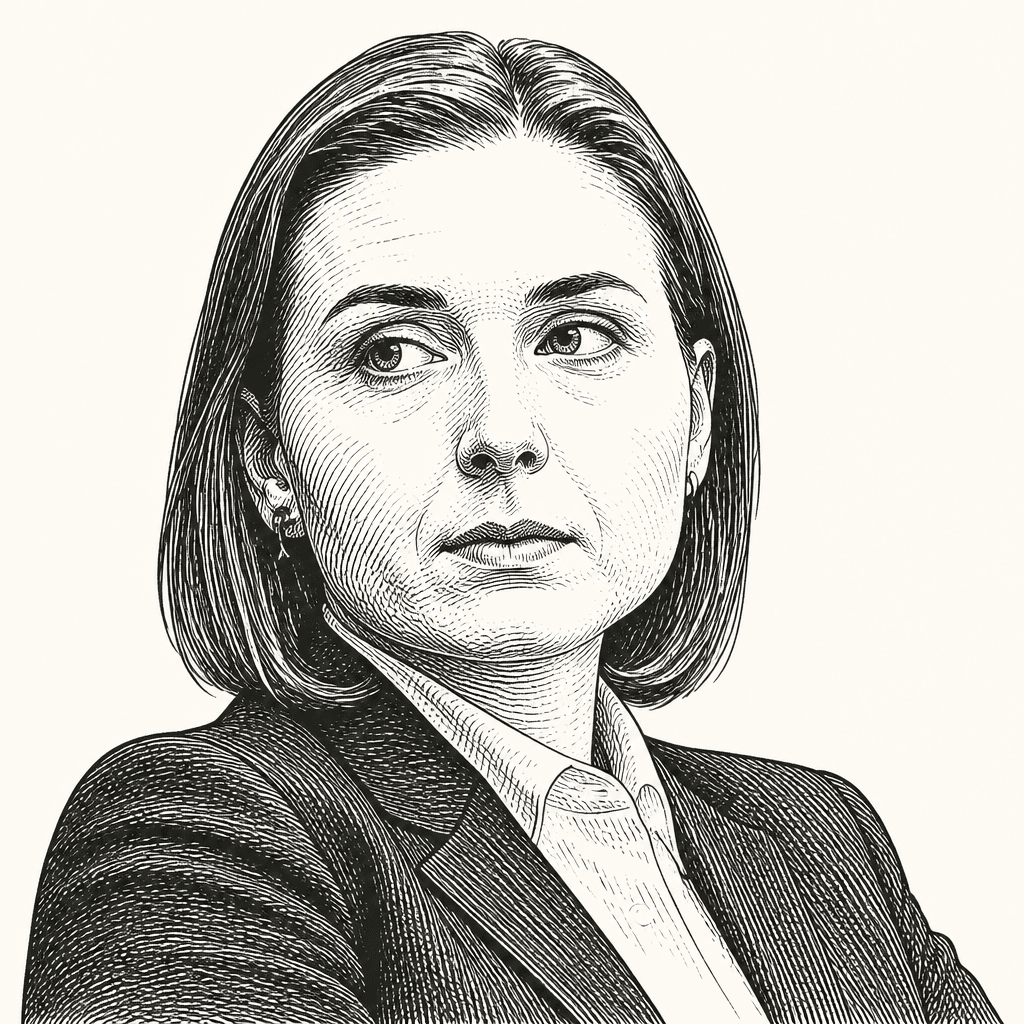
Anna Novosad, co-founder of savED, argues that Russia’s war on Ukraine targets not just school buildings but the social and educational conditions that sustain a generation’s connection to the country. With reconstruction unsafe across much of the frontline, savED has built more than 160 underground learning centers where children can study with teachers, reconnect with peers, and retain a place in their communities. Novosad’s case is that keeping education operational during war is necessary both to resist isolation and disinformation now and to preserve Ukraine’s capacity to rebuild later.

The target is not only school buildings, but the conditions for a generation to belong
Anna Novosad describes Russia’s war against Ukraine as an effort to erase the country as a nation: its identity, culture, language, and education. Schools are deliberately targeted, she says; in occupied territories, Ukrainian teachers are immediately replaced by Russian ones. She also points to the removal of Ukrainian children to what she calls “so-called re-education camps” inside Russia.
The physical destruction is stark. Since February 2022, Novosad says, Russia has damaged or completely destroyed every seventh school in Ukraine. More than 4,000 educational facilities, including kindergartens, have been targeted since the full-scale invasion began, she says. Yet the damage that concerns her most is less visible: isolation, learning loss, and the weakening of the everyday habit of being with other people.
Nearly half of Ukraine’s population, Novosad says, has been “online exclusively” for five consecutive years because of constant drone and missile threats. For school-age children, that can mean a teacher on a screen but no classroom, friends, or reliable place to gather. She asks the audience to recall the disruption of COVID-era schooling, then multiply it by five and add war.
That prolonged isolation has political as well as educational consequences in her account. A frightened and anxious teenager without school or community, Novosad argues, is especially exposed to Russian propaganda and disinformation. The risk is not simply missed coursework. It is the loss of a generation of creative, educated people able to rebuild Ukraine and resist efforts to undermine it.
As Novosad puts it, Russia is trying “to make us lose a generation.” Education, in this framing, sustains national continuity because it gives children knowledge, relationships, and a lived connection to Ukrainian society while the surrounding conditions are designed to fracture all three.
Underground schools make learning possible without waiting for safety
savED’s practical problem begins with the air-raid siren: when it sounds, children and teachers have to go to bomb shelters. The organization’s response is the “EduHive,” an underground learning space where children can study, play, and spend time together as safely as circumstances permit.
Novosad’s premise is that a functioning school is more than its building. “You do not necessarily have to rebuild a building called ‘school,’” she says. “But if you restore the educational environment, you make a very important place for a community gathering together.”
A map of savED’s network shows centers across eight frontline regions, underscoring that the work is a distributed frontline network rather than a single-site reconstruction project. Most centers operate in bomb shelters. Where conditions allow—farther from the frontline and with adequate anti-missile protection—savED can instead arrange modular schools.
The model depends on local teachers. savED recruits them to work in the centers, trains them, pays them, and provides teaching materials and programs. Its support has three distinct parts: structured extracurricular programs; catch-up learning for core subjects disrupted by war; and community-service programs for teenagers. The last is intended to give young people something concrete to do for their own towns and villages, rather than leaving belonging as an abstraction.
Valentyna, a savED teacher, describes the stakes from one community where a rocket struck the local school during heavy shelling. “There was nothing left,” she says. The school had been “the heart of the village, the community, the whole region.” After savED arrived, she says, it built a left wing and a right wing—six large rooms in total—and supplied materials for children to study.
Valentyna frames the work as preparation for a future that remains contested: teachers are raising children and fighting for education and life, she says, “so that smart kids will rebuild Ukraine.”
The immediate task is to sustain education, not reconstruct it
Anna Novosad does not cast underground centers as a replacement for rebuilding Ukraine’s schools. Under present conditions, she says, reconstruction is “close to impossible.” Even if the money, capacity, and desire were available, the security situation would not permit it.
That distinction shapes savED’s strategy. It is not trying to restore a prewar physical school system while attacks continue. It is trying to keep an education system operational enough that children retain teachers, learning routines, peer contact, and a stake in the places where they live. Underground rooms and modular buildings are therefore temporary infrastructure, but they carry a longer-term purpose: preventing wartime disruption from becoming a permanent educational and social rupture.
Novosad links that purpose to Ukraine’s democratic future. The education system, she says, is grounded in democratic values, and Ukraine’s ability to resist over years and decades will depend on people who are smart and creative. Catch-up instruction matters, but so does preserving the capacity to participate in a society that Russia is trying to erase.
While other people are helping Ukraine to win the war, these educational programs are also helping Ukraine to win the peace.
savED says it has restored access to education for more than 250,000 students since 2022. That figure measures the scale of an intervention built around a constraint Novosad does not minimize: schools cannot yet be rebuilt safely in many places. What can be sustained, she argues, is the educational environment itself—enough for children to continue learning and for local life to remain organized around something other than war.