Fourth of July Speeches Cast the Declaration as an Unfinished Obligation
 Chloe Bird
 Andrea Lloreda
 Maria TogliaAbiyomi
 David Strathairn
 Michael Potts
 Jinhee Kim
 Paula Crown
 Kathleen Chalfant
 Bryan DoerriesThe Aspen InstituteWednesday, July 1, 202620 min read
Bryan Doerries’s Aspen closing session used Fourth of July speeches by Frederick Douglass, Abraham Lincoln and the women’s-rights leaders of 1876 to argue that America’s founding language remains an obligation rather than a settled inheritance. Framed through Theater of War’s town-hall model, the session treated the Declaration of Independence as promise, evidence and indictment: a vocabulary repeatedly invoked by people excluded from its protections to demand that the republic enforce the principles it celebrates.
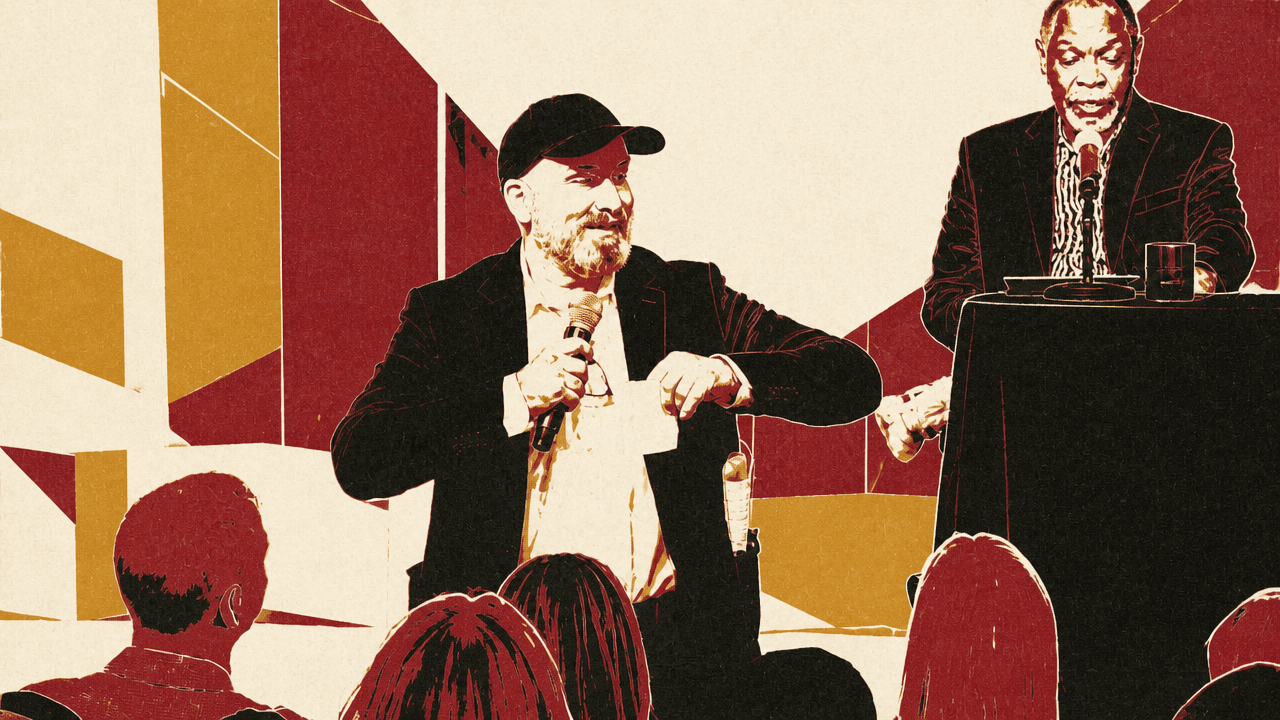
The Fourth of July speeches performed at Aspen were not treated as patriotic artifacts. Bryan Doerries framed them as tests of the republic’s own language: what happens when “life, liberty, and the pursuit of happiness” are read by people whom the country has enslaved, excluded, governed, or denied political power.
Ahead of the country’s 250th anniversary, the three nineteenth-century texts made one question unavoidable: whether the Declaration of Independence functions as a settled inheritance or as an unfinished obligation. Frederick Douglass, Abraham Lincoln, and the suffragists behind the 1876 Declaration of Rights all work from the same founding vocabulary. None treats that vocabulary as sufficient by itself. Each asks who has been kept outside its protection, and what a nation does to itself when it celebrates principles it will not enforce.
The Fourth of July is treated as a test of the republic, not a ritual of agreement
Bryan Doerries framed the session around a civic wager: that American democracy depends on public reckoning, and that old texts can still force a present-tense argument. Theater of War Productions, he said, does not treat the audience as passive recipients of a performance. “In our model, the audience is the main character,” he said. The work is successful, by his definition, “when the least powerful person in the room is speaking.”


The texts chosen for that exercise were three nineteenth-century Fourth of July orations: Frederick Douglass’s 1852 “What to the Slave Is the Fourth of July?,” Abraham Lincoln’s 1858 “Electric Cord” speech, and the 1876 “Declaration of Rights of the Women of the United States.” Doerries introduced the last as an “incredible speech” by Matilda Joslyn Gage, Elizabeth Cady Stanton, and Susan B. Anthony, and described Anthony as the person who stormed the stage and delivered the indictment at Independence Hall; the on-screen graphic attributed the text to Anthony. Doerries described all three texts as part of a lineage of “reckoning and repair” around the American experiment and the pursuit of happiness.
| Performed text | Speaker or attribution in the session | Date shown or stated |
|---|---|---|
| “What to the Slave Is the Fourth of July?” | Frederick Douglass | July 5, 1852 |
| “Electric Cord Speech” | Abraham Lincoln | July 10, 1858 |
| “Declaration of Rights of the Women of the United States” | Introduced as by Matilda Joslyn Gage, Elizabeth Cady Stanton, and Susan B. Anthony; on-screen graphic attributed it to Susan B. Anthony | July 4, 1876 |
Doerries located Theater of War’s method in the democratic tradition of the town hall. He invoked Alexis de Tocqueville’s account of town meetings as the “primary school” in which citizens learn participation, then asked where contemporary culture still makes room for contentious, emotional, engaged public discourse. The tent, for this session, was meant to become such a space.
The three speeches made the holiday unstable. Each accepts the Declaration of Independence as morally powerful, but none allows celebration to remain self-congratulation. Douglass uses the Fourth to indict slavery as a living contradiction. Lincoln uses it to argue that the Declaration supplies a non-blood basis for political belonging, while warning that exceptions to equality can unravel the republic. The suffragists use the centennial to accuse the country of denying women citizenship in law, family, work, courts, property, and political representation.
The shared structure matters. These are not anti-founding speeches in the sense of discarding the Declaration. They are arguments over ownership, application, and consequence. Douglass honors the Declaration and then asks what its celebration means to someone enslaved. Lincoln says the Declaration links those who cannot claim descent from the founders and then warns that exclusion corrodes the link. The 1876 women’s-rights text adopts the language of constitutional accusation to say that half the people have been placed outside the rights citizenship is supposed to secure.
Douglass turns celebration into evidence against the country
Michael Potts performed Douglass’s speech as an argument that begins in respect and becomes accusation. Douglass does not reject the Declaration of Independence. He calls it “the ringbolt to the chain of your nation’s destiny” and says its principles are “saving principles.” He honors the founders as brave men, statesmen, patriots, and heroes who loved their country more than their private interests.
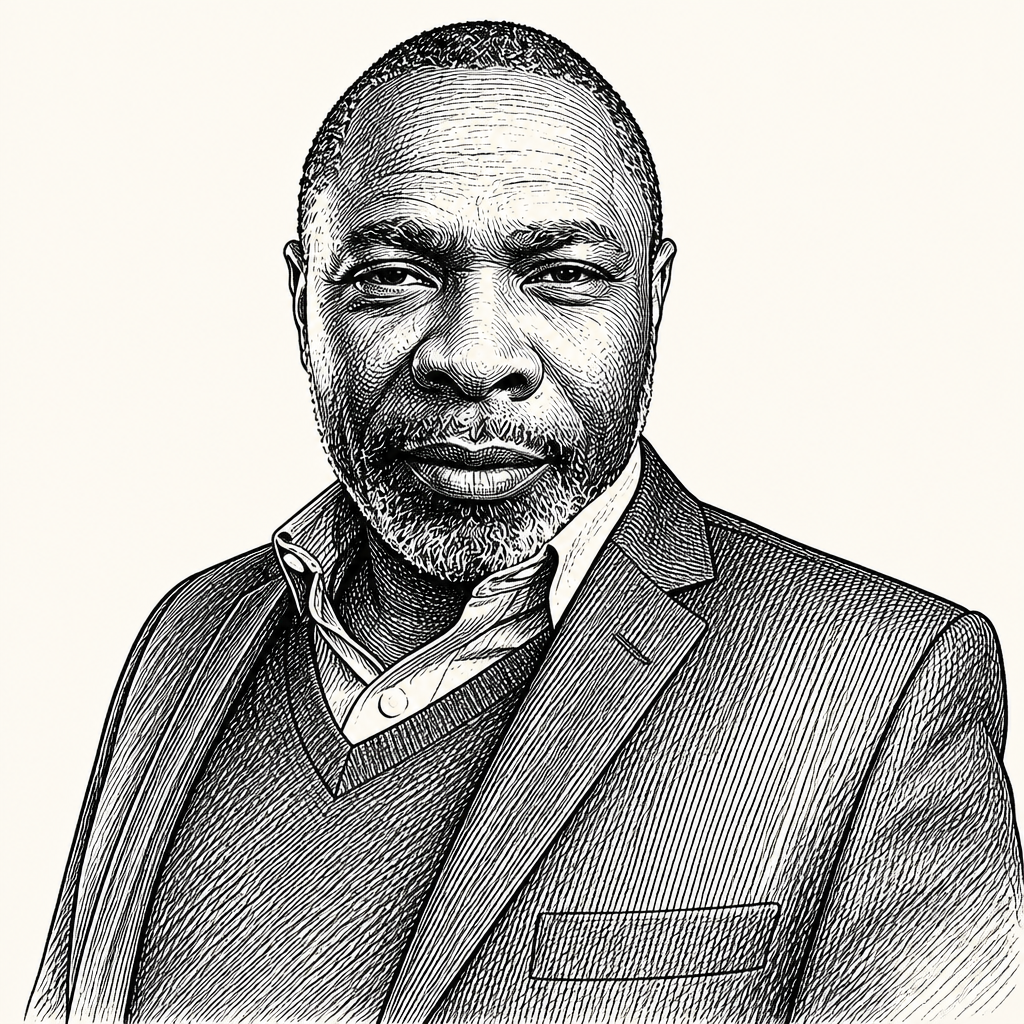
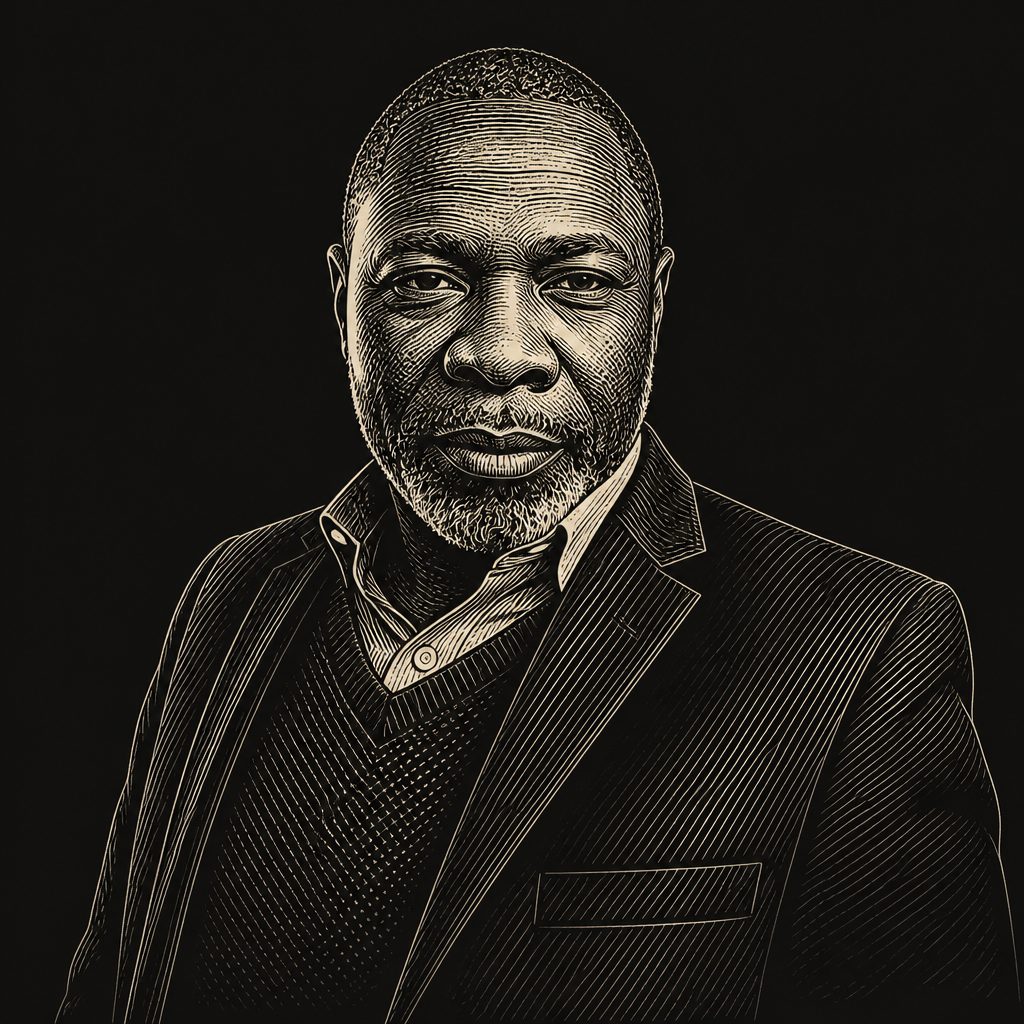
That praise is not a softening device. It intensifies the indictment that follows. Douglass says he is compelled to view the founders from a less favorable point because his subject is American slavery. From the enslaved person’s point of view, the Fourth of July does not reveal national greatness. It reveals “gross injustice and cruelty” more than any other day of the year.
What to the American slave is your Fourth of July? I answer. A day that reveals to him, more than all other days in the year, the gross injustice and cruelty to which he is the constant victim.
The speech’s force comes from its refusal to treat hypocrisy as an abstract defect. Douglass names the celebration itself as a performance covering violence: “your boasted liberty” becomes “an unholy license”; “your national greatness” becomes “swelling vanity”; “your shouts of liberty and equality” become “hollow mockery.” Religious language receives the same treatment. Prayers, hymns, sermons, thanksgivings, and public solemnity are described as “bombast, fraud, deception, impiety, and hypocrisy” when used to veil slavery.
His central demonstration is the domestic slave trade. Douglass points to a business “especially prosperous” in his time, carried on in towns and cities in one half of the confederacy, enriching dealers and states. He asks listeners to behold “the practical application” of the trade sustained by American politics and American religion. The description moves from institution to road, from policy to bodies: men and women “reared like swine for the market,” a “man drover” armed with pistol, whip, and bowie knife, and a company of men, women, and children driven from the Potomac to New Orleans.
The most damaging evidence is not statistical but sensory. Douglass asks the audience to see an old man, a young mother under the sun with a baby in her arms, and a thirteen-year-old girl torn from her mother. Then he asks them to hear the crack of the whip, the fetters, the chains, and the scream of the woman whose pace faltered under the weight of her child and her bondage.
That scene makes the Fourth of July an accountability mechanism. The holiday’s claims do not disappear; they become the standard by which the country is judged. Douglass says American republican politics and American republican religion are “flagrantly inconsistent.” The nation professes that all people are of one blood and declares all men created equal, while holding “a seventh part” of the population in bondage. Slavery, he says, brands republicanism as a sham, humanity as a pretense, Christianity as a lie. It destroys moral power abroad, corrupts politicians at home, saps religion, endangers the Union, fetters progress, and shelters crime.
Yet the performed selection does not end in despair. Douglass says he does “not despair of this country.” He sees forces already operating toward the downfall of slavery and takes encouragement from the Declaration, from the “genius of American institutions,” and from the youth of the nation. Seventy-six years, he says, is old for a person but young for a country. That youth is grounds for hope precisely because the picture he has drawn is so dark.
The hope is not reassurance. It follows an instruction: “Be warned.” Slavery is imagined as a “horrible reptile” coiled in the nation’s bosom, nursing at the breast of the youthful republic. It must be torn away and destroyed. Douglass’s version of patriotic hope is therefore conditional: a young nation may still survive, but only if it destroys the institution that most thoroughly exposes its lie.
Lincoln makes equality the bond for people with no blood tie to the founders
David Strathairn’s performance of Lincoln’s 1858 speech began from the famous proposition that “a house divided against itself cannot stand.” In the selection, Lincoln argues that the United States cannot endure permanently half slave and half free. He does not predict immediate dissolution. He says the house will not fall, but it will cease to be divided: slavery will either be placed on a path toward ultimate extinction, or its advocates will push it until it becomes lawful everywhere.


Lincoln’s argument depends on a claim about public expectation. The government, he says, had endured for eighty-two years half slave and half free because the public mind believed slavery was in the course of ultimate extinction. The Constitution’s adoption and early measures against the spread and supply of slavery are presented as evidence that the framers intended and expected that outcome. Lincoln says that when opponents of slavery seek to arrest its spread, they aim to place it where the founders originally placed it.
The speech is not abolitionist in the same register as Douglass’s. Lincoln says he has “always hated slavery” as much as any abolitionist, but also says he has no inclination to enter slave states and interfere with slavery there. The emphasis is on stopping expansion and restoring the public expectation that the institution is on a path to extinction.
The “electric cord” passage shifts from slavery’s political future to the meaning of national belonging. Lincoln asks why Americans gather around the Fourth of July. Such meetings, he says, remind the country of the prosperity that followed from earlier struggles and create attachment among people who see themselves as descended from the founding generation.
But blood descent cannot explain the attachment of everyone in the country. Lincoln names German, Irish, French, and Scandinavian immigrants, or their descendants, who cannot trace themselves by blood to the founders. Their connection comes through the Declaration’s claim that all men are created equal. That moral sentiment, he says, lets them claim the founding as if they were “blood of the blood” and “flesh of the flesh” of the men who wrote it.
That is the electric cord in that Declaration that links the hearts of patriotic and liberty-loving men together, that will link those patriotic hearts as long as the love of freedom exists in the minds of men throughout the world.
The line matters because it offers a civic rather than genealogical account of America. The Declaration is not merely a document from the past. It is the cord by which those without ancestral claim become politically kin. Lincoln’s concern is that arguments for racial exception will rub out the sentiment of liberty itself.
He attacks the logic of paternal domination: the claim that an “inferior race” should receive only as much allowance as it is capable of enjoying. Such arguments, Lincoln says, are the same arguments kings have always made for enslaving people. They present domination as benevolence: “you work and I eat,” “you toil and I will enjoy the fruits of it.” Whether spoken by a king over his subjects or by one race over another, Lincoln calls it “the same old serpent.”
The danger is not limited to Black Americans. If the Declaration’s equality principle can be qualified by saying it does not include one group, Lincoln asks where the exceptions stop. If one man says it does not mean “a Negro,” why may another not say it excludes someone else? If the Declaration is false, he says, tear it from the statute book. If it is true, discard the quibbling over this race or that race being inferior and unite around the proposition that all men are created equal.
Lincoln’s speech, as performed here, makes the Declaration both expansive and fragile. Its words bind immigrants and descendants, but only if the country refuses to let exceptions become doctrine. The “lamps of liberty” can burn only if equality is not treated as a phrase whose beneficiaries can be edited at will.
The suffragists’ centennial indictment treats women’s disfranchisement as a constitutional failure
Kathleen Chalfant performed the 1876 “Declaration of Rights of the Women of the United States” as an arraignment of the republic at its hundredth anniversary. The opening note is deliberately discordant. While the nation is “buoyant with patriotism,” the suffragists come “with sorrow” to strike “the one discordant note.” Like Douglass and Lincoln, the speech affirms the broad principles of human rights proclaimed in 1776. Its charge is that the nation has violated those principles by excluding women from full citizenship.


The speech’s form is legal and prosecutorial. The suffragists “arraign our rulers” and present “articles of impeachment.” The indictment begins with the insertion of the word “male” into state constitutions, denying women suffrage and making sex a political disability. It then moves through legal protections and civil status: habeas corpus, trial by jury, marriage, property, wages, morals policing, state-by-state inconsistency, representation, and the judiciary.
The point is not simply that women lack the vote. The speech argues that political exclusion spreads through ordinary legal life. Constitutional protections become inoperative for married women when the husband’s marital rights are treated as primary and the woman’s rights secondary. The right to a jury of one’s peers is denied to women, who are tried by men alone. The performed text notes young girls accused of infanticide, tried, convicted, and hanged without any woman’s voice heard in their defense. In some cases, women are denied jury trial altogether.
The economic indictment is equally direct. Women are “held by law a perpetual minor,” deemed incapable of self-protection, and denied equality in the industries of the world. Pay and position are determined not by the quantity or quality of work, but by sex. The consequence, the speech says, is that thousands of fatherless girls are compelled to choose “between a life of shame and starvation.”
The suffragists also accuse the law of creating two moral codes. Women are fined and imprisoned if found alone in streets or public places at certain hours. Police march women from disreputable houses to prison while the men involved “go free.” The law presents itself as regulating public morals, but in the speech’s telling it punishes women while protecting male vice.
Marriage and property appear as another map of unequal power. In some states, married women may hold property and transact business in their own names; in others, their earnings belong to their husbands. In some, a woman may testify against her husband or sue and be sued; in others, she has no redress for damage to person, property, or character. In divorce for the husband’s adultery, the innocent wife is said to have no right to children or property unless by special decree of the court. In no state, the speech says, does a wife have a right in her own person or to any part of joint earnings during her husband’s life.
The political argument is that “universal manhood suffrage” creates “an aristocracy of sex.” That aristocracy is described as more absolute and cruel than monarchy because every woman finds a political master in father, husband, brother, or son. Unlike old-world aristocracies based on birth, wealth, education, nobility, or chivalric deeds, this one rests on sex alone, “exalting brute force above moral power,” “vice above virtue,” “ignorance above education,” and “the son above the mother who bore him.”
The judiciary is not spared. The speech says the courts have echoed the party in power. In its account, when slave power was dominant, the Supreme Court decided that a Black man was not a citizen because he did not have the right to vote; after the Constitution was amended to make all persons citizens, the same tribunal decided that a woman, though a citizen, did not have the right to vote. Such interpretations, the speech says, unsettle faith in judicial authority and undermine the liberties of the whole people.
The closing demand rejects special treatment. Women ask for “no special favors, no special privileges, no special legislation.” They ask for justice, equality, and all civil and political rights belonging to citizens of the United States to be guaranteed to them and their daughters forever. The speech insists that women were made first for their own happiness, with an absolute right to themselves and to the opportunities required for full development. It denies the old doctrine that woman was made for man and that her best interests must be sacrificed to his will.
We ask justice. We ask equality. We ask that all the civil and political rights that belong to citizens of the United States be guaranteed to us and our daughters forever.
The performed text makes the centennial a legal reckoning. The country has had one hundred years to live up to its stated principles. The suffragists’ case is that denying rights to half the people is not a marginal inconsistency; it is, in their words, “the weak point in our institutions today” and a warning that if the rights of human nature are ignored for half the people, the nation is “preparing for its downfall.”
The same founding language becomes promise, evidence, and indictment
The three historical texts share a structure, but they do not make identical arguments. Their differences are important because they show how the same founding language can be used in several registers at once.
Douglass treats the Declaration as morally true and politically betrayed. He can call its principles “saving principles” because the problem, in his argument, is not that the ideals are too large. The problem is that the country claims them while protecting slavery. His speech presses the gap between national language and national practice until the celebration itself becomes evidence. The Fourth of July is not merely incomplete for the enslaved; it sharpens the insult because it displays liberty while withholding it.
Lincoln treats the Declaration as the source of civic membership. The central question is not only slavery’s cruelty, though he says he hates slavery. It is whether the public meaning of equality can survive the spread of arguments that make exceptions to it. If equality can be narrowed by race, then the same method can be used against others. His “electric cord” is therefore both inclusive and defensive: it binds people to the republic, and it must be protected from doctrines that turn the Declaration into a sectional or hereditary possession.
The women’s-rights text treats the Declaration and the Constitution as standards by which the nation’s rulers can be arraigned. The centennial indictment is less a plea for sympathy than a bill of particulars. It catalogs the ways disfranchisement appears in courtrooms, marriage law, wages, property rights, policing, and representation. It treats the Fourth of July not as an occasion for gratitude alone, but as a deadline missed.
Taken together, the speeches make patriotism accountable to its exclusions. Douglass shows what celebration sounds like from inside bondage. Lincoln shows why equality must not become a phrase with hidden exceptions. The suffragists show how a republic can preserve the language of rights while organizing law around subordination. The Declaration is promise, evidence, and indictment at once.
The live exchange moved the indictment into present-tense disputes
Doerries said the premise of the exercise was that American democracy and the promise of the pursuit of happiness rest on reckoning with past harm, imagining repair, and moving toward a more perfect union. The invited and audience responses did not try to resolve the nineteenth-century texts. They used them as instruments for naming unfinished exclusions.
One respondent discussed Indigenous rights, treaty obligations, and a tribal treaty. The speaker referred to the Declaration’s language about “Savage Indians” and argued that it failed to recognize that Western settlements had no right to be there under international law, colonial law, or what became American law. The same respondent said their tribe received a treaty with the United States in June 1855 that called for mutual defense: “We will defend you and you will defend us.” On that basis, the speaker said their family had continued military service out of obligation to protect their own people, American citizens, and the Constitution.
That respondent described democracy as “a contact sport.” The three speeches, in that view, all show the contact required to preserve democracy: speaking, correcting wrongs, and forcing injustice into public view. The examples named included women’s suffrage, the civil rights struggles of Black, brown, and other people, and the passage of the Americans with Disabilities Act in 1990. The question to the room was direct: what is each person doing to contribute to that discourse and keep democracy alive?
Maria Toglia connected Douglass’s emphasis on literacy and freedom to contemporary reading failure among American children. She recalled Douglass’s line that when one learns to read, one is “forever free,” then noted that at the time it was illegal to teach a Black person to read. Her claim was that the country’s current literacy outcomes create a modern exclusion from education, democracy, and the economy.


Toglia said the vast majority of children in the United States do not read on grade level, and that 85% of children of color, specifically Black children in her formulation, are reading below or far below grade expectations. These children, she argued, cannot fully benefit from public education, contribute to the economy, or escape the low-wage conditions that perpetuate generational inequality and poverty. The “real crime,” she said, is that the country knows how to teach children to read, but the issue has become political and is often discussed only in education or literacy settings. She quoted a colleague’s stark assessment: if someone ignorant of American laws looked only at reading data, they might think it was still illegal to teach Black children to read.
Abiyomi answered from the perspective of a 16-year-old who had personally struggled with low reading scores in elementary school. Abiyomi’s response complicated the despair in the literacy data without dismissing it. “Look at me now,” Abiyomi said, arguing that early doubt should not define young people’s futures. “We are the future.” At the same time, Abiyomi identified a leadership problem in education, describing teachers encountered in earlier years who seemed mainly interested in a paycheck and did not care about students. The issue, Abiyomi said, was not only about Black students but about children from many backgrounds and the morals and values adults bring into classrooms.
Chloe Bird heard the three speeches through contemporary struggles over women’s bodily autonomy and health care. A professor of medicine at Tufts whose work addresses women’s health, Bird said she entered the session thinking about women’s rights over their own bodies being “handed back to states.” Douglass’s speech made her think: “This doesn’t happen to men.” Rights such as life, liberty, and the pursuit of happiness, she argued, should not be placed at the state level in that way.

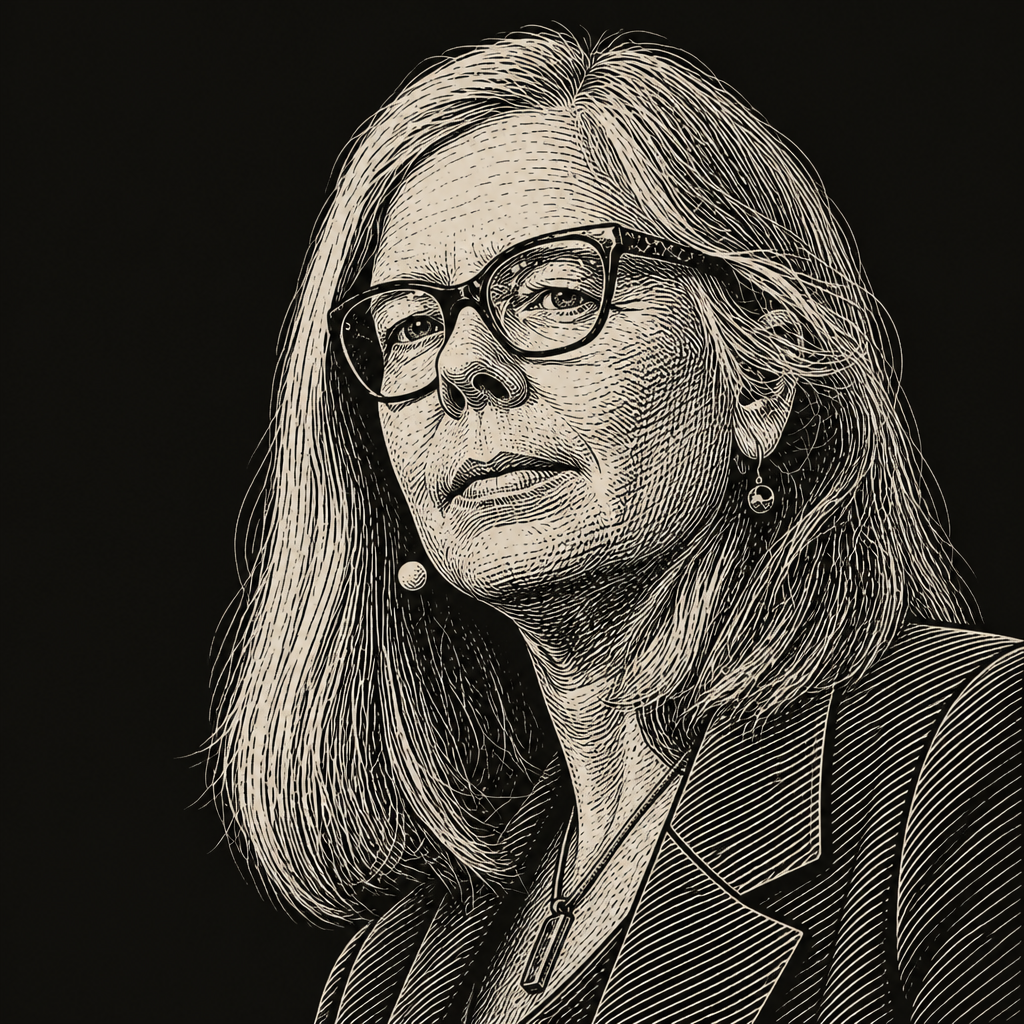
Bird connected the historical subordination in the 1876 text to present cases of women dying because they lack access to care, being required to go into sepsis before treatment, or being charged after miscarriage. She was especially struck by the idea that women can be put not only below sons or a fetus, but, in attacks on pharmaceutical abortion, below a fertilized egg. “That can’t happen,” she said. For Bird, the nineteenth-century speech was not distant; it was “very timely.”
Andrea Lloreda brought Lincoln’s “all men are created equal” into the question of migration. Lloreda, from Colombia and an Aspen Colombian Institute fellow, said she had studied for a master’s in law at Georgetown through a Fulbright scholarship and knew “the greatness of this country” and its inspiration for progress elsewhere. Her question was whether the statement “all men are created equal” includes migrants and their children. Doerries did not answer it; he said the question itself was powerful and would linger.

Paula Crown identified hidden information as the thread running through all three speeches. When citizens stop asking questions, she said, they avoid understanding the true meaning of things. Crown asked the audience to look at the base of the Statue of Liberty, which she described as “about abolition.” She said many immigrants, or people whose relatives were brought to the United States, never thought the statue was for them, “but it is.” In Crown’s interpretation, the broken chains and shackles at the base should remind people that all immigrants are equal.


The final audience respondent turned the historical indictments back on the present by asking what future generations will find morally incomprehensible about 2026. Looking back at times when slavery was tolerated, women’s suffrage was denied, and civil rights were unavailable, the speaker asked: “What the hell were they thinking?” The question, projected forward fifty or one hundred years, becomes a discipline for the present: what laws, practices, and behaviors will later generations judge the same way?
The contemporary responses revealed the point and the limit of the format. Doerries had introduced the event by saying Theater of War knows the work is functioning when people beyond the stage become the center of meaning. That is what happened, but it also meant the session produced more questions than answers. Literacy became a civil-rights question. Women’s health became a question of whether fundamental liberties can be fragmented by state lines. Migration became a test of whether Lincoln’s civic reading of the Declaration still extends beyond descent. Indigenous rights and treaty obligations complicated any easy story of national inclusion. Civic memory itself became contested: which symbols, laws, histories, and omissions are citizens responsible for interrogating?
Doerries leaves the country between comfort and affliction
Bryan Doerries closed by returning to Theater of War’s motto: to “comfort the afflicted and to afflict the comfortable.” He said the phrase had been offered years earlier by a U.S. Army general in response to his question about why ancient writers wrote their texts. He acknowledged that the saying is often treated as an old newspaper adage, with uncertain etymology, but said it had become the company’s motto.
The comfort, in Doerries’s account, comes from gathering across disparate human experiences and finding connection through a shared story and performance. The affliction comes from recognizing how much work remains to realize the vision of the founding documents for those represented in the room and those not represented in the conversation.
He refused to present the session as resolved. Earlier, he had said the goal was not to place “a punctuation mark” at the end of the festival but to leave people talking, thinking, engaging, arguing, and debating about the 250th anniversary, the process of American democracy, and its promise. The closing kept that tension intact: celebrate what has been achieved, acknowledge setbacks, reckon with past harms, heal, and move forward.
Comfort and affliction, celebration and interrogation, and our collective pursuit of life, liberty, and the pursuit of happiness.
The session’s most durable claim is that democracy is not preserved by agreement around patriotic language. It is preserved by the recurring willingness to ask whom that language still excludes, and what repair would require.