Affordable Capital Can Move Informal Entrepreneurs Into the Formal Economy

Rudy Espinoza, president and CEO of Inclusive Action for the City, argues that an economy that works for more people must bring informal entrepreneurs into formal systems, offer affordable capital to owners excluded from conventional lending, and protect businesses from displacement. His organization has deployed more than $10 million in loans and grants to support recovery and create paths to ownership, while challenging financial and property systems that, he says, deny many workers and small-business owners the chance to build lasting security.

Formalisation, affordable capital, and a path to ownership
Rudy Espinoza describes a basic mismatch in the economy: small businesses, micro-entrepreneurs, and workers power their communities, but many are shut out of the capital and opportunity needed to grow. Inclusive Action for the City works with entrepreneurs operating outside formal systems, provides low-interest loans and grants, and helps longstanding businesses remain rooted in their communities.
The organization works with street vendors, restaurateurs, yoga-studio operators, and barbershop owners seeking capital. Espinoza calls its role one of moving entrepreneurs “out of the shadows” into the formal economy. That formalisation work is distinct from financing: it helps people participate as recognized businesses, while affordable capital gives them resources to invest or survive a crisis. Its anti-displacement work addresses a third problem—whether businesses that have already built a place in a neighborhood can remain there.
Espinoza says many prospective borrowers have no formal history as business owners, no credit, and no collateral—conditions that make conventional low-interest loans hard to obtain. The alternative available to some owners, he says, is predatory financing at interest rates of 300% to 400%.
His argument is not that entrepreneurs lack ambition or willingness to contribute. “People just want to work,” he says. “They want to contribute.” Excluding them from financial systems means missing potential job creators and taxpayers, as well as the possibility of an economy that works for everyone.
The systems were designed to keep the poor poor. They were designed that way.
Espinoza connects exclusion to unequal starting resources. He says Latino and Black people hold 1% of the wealth of their white counterparts, leaving many entrepreneurs without the personal capital or networks that can help others secure financing. An on-screen citation describes U.S. wealth concentration as being at a 60-year high, citing the U.S. Bank Economics Research Group.
Capital can restart a business or keep it in its neighborhood
Inclusive Action uses capital both to help businesses recover from immediate disruption and to help longstanding tenants resist displacement. After the Altadena fires, the immediate issue for Michael Linares was recovery. For Rosanna Esparza Ahrens, whose business had occupied its space for 14 years, the issue was whether a longtime tenant could stay when the building went up for sale.
Michael Linares runs Linares Landscaping. When the fires hit, he says, he had to let go of his employees. The business faced “no income, no housing,” and FEMA could not help. Inclusive Action helped the company get back on its feet, he says; it is now back in business and helping rebuild Altadena.
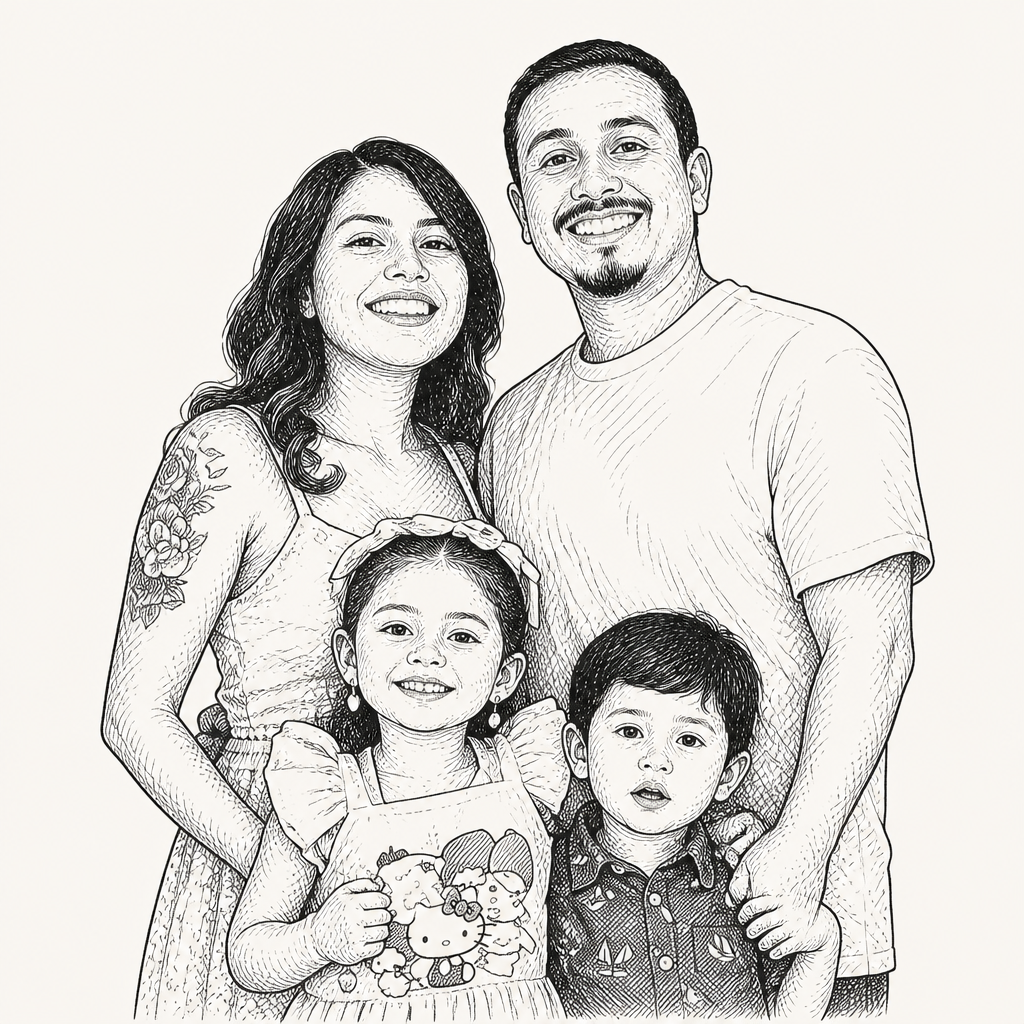

The Tonalli Studio case concerns ownership as a response to displacement. Rosanna Ahrens says her studio had become a community landmark over 14 years when a new landlord put the building up for sale at a price beyond the business’s ability to buy it. Inclusive Action told her it could help the business acquire the building—an offer she says left her “kind of speechless.”
Espinoza describes this work as an effort to save businesses facing displacement after their owners have invested decades in a community. If those businesses have a chance to stay, he says, they will invest more in their communities—and that investment will be driven by the businesses themselves rather than by others. In Linares’s case, capital supported recovery after a crisis; in Ahrens’s, it created a possible route to retain control of the place where the business had already put down roots.
Urgency is the answer to the search for a right time
Espinoza’s governing principle is that action on lending, street vending, and displacement cannot wait for a politically comfortable moment. Inclusive Action takes on difficult projects, he says, and the relevant question is not when conditions will become ideal but whether communities can afford further delay.
There’s never going to be a right time to do the right thing.
Espinoza’s response is that these issues require urgency “today, not tomorrow.” An on-screen impact statement says Inclusive Action has deployed more than $10 million in loans and grants, helped communities fight displacement, and passed landmark legislation to unlock economic opportunity. The organization’s approach, as Espinoza describes it, reaches beyond emergency support without treating structural change as a reason to postpone help.
Speaking in Aspen, Espinoza pointed to the county’s extreme concentration of wealth alongside the materially different circumstances of the entrepreneurs and workers his organization serves. Those workers and entrepreneurs have the same dreams and ambitions as Aspen residents, he says. His challenge to people with influence was to turn ideas into urgent action, even where that requires relinquishing power and privilege.
His closing standard comes from his mother, who came to the United States from Zacatecas, Mexico with a third-grade education and told him he could “find a way.” Espinoza applies that lesson collectively: claims that a different future is impossible or that there is no alternative should not end the work. The work, he says, is to find a way together toward economic justice.