Health Work Requires Contact Across Disciplines and Institutions
In its 2026 closing video, Aspen Ideas: Health presents the gathering as a case for health work that crosses disciplines, institutions, and assumptions. The Aspen Institute frames the June event not as a forum built around one profession or answer, but as a community whose value comes from participants meeting unfamiliar people, testing ideas outside their usual settings, and carrying new connections back to patients, research, teams, and communities.
Aspen frames health as work that has to cross boundaries
Aspen Ideas: Health closes with a simple emphasis: health is not the possession of one field, institution, or answer. The narrator says it directly: health is “not a single discipline, not a single answer.” It is “all of it” and “all of us,” a phrase that turns the gathering’s value toward contact across roles and assumptions rather than toward any single session or expert.
Health is not a single discipline, not a single answer. It’s all of it. All of us. Together.
The event description places that claim in a specific setting: from June 22 to 25, 2026, leaders, innovators, and advocates gathered on the Aspen Institute’s Rocky Mountain campus to explore ideas shaping the future of health, medicine, and science. That context helps explain why the closing message stresses breadth. A meeting built around health, medicine, and science is not framed around one profession alone, but around a community expected to connect different kinds of work and experience.
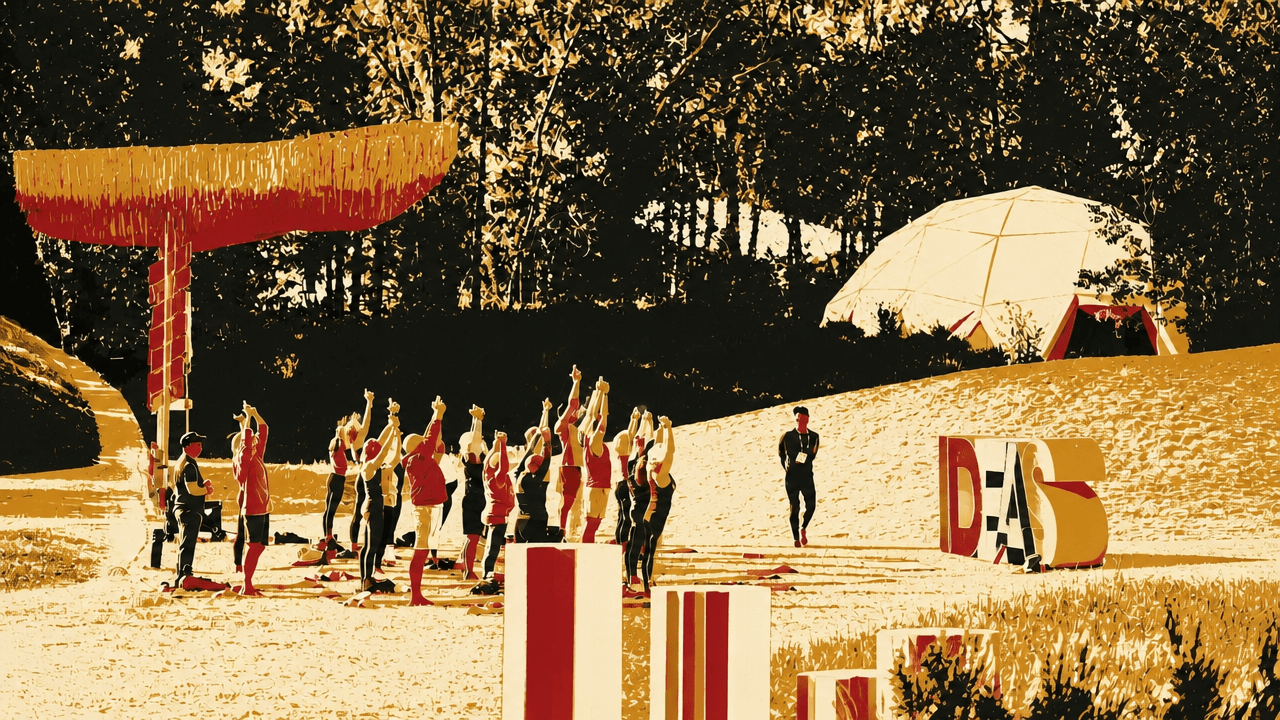
The narrator praises participants for getting “outside your inbox, outside your institution, outside your assumptions” and into something larger. The examples are deliberately mixed: early morning yoga, a trail that looked too steep, a session outside a participant’s usual “wheelhouse,” a researcher someone had been meaning to find, a thinker who finally gave words to something long felt, a signed book, and a new friend. The closing message does not claim that these encounters solve health’s problems. It claims that the week mattered because participants entered a wider community and allowed themselves to be changed by it.
The attendee is treated as a contributor, not just an audience member
The closing message gives weight to participation that could otherwise sound incidental. Saying yes to an unfamiliar session, meeting a researcher, finding language from a thinker, or making a friend are not presented as side benefits around the “real” program. They are part of what made the week matter.
The sharpest version of that claim is the narrator’s line: “And they were shaped by you, too.” The attendee is not framed only as someone who received insight from speakers, peers, or the institution. Their presence changed the gathering for others as well. Aspen Ideas: Health is presented not simply as something delivered to participants, but as something made by them.
That reciprocal framing matters because the closing message is addressed to people returning to different kinds of health work. Some are imagined in direct relation to patients. Others are returning to research, teams, or communities. The video’s language does not collapse those roles into one professional identity. It treats the audience as a mixed group whose contribution lies partly in showing up, listening, meeting, and carrying ideas beyond the week itself.
The message also avoids reducing the value of the gathering to formal expertise alone. Researchers and thinkers are named, but so are friendship, physical presence, shared experience, and the act of finding words for something long felt but unnamed. Those examples broaden the idea of what a health gathering can produce: not only information, but language, relationships, energy, and a stronger sense of shared work.
The measure is what participants carry home
The final charge is practical: take the week “back to your patients, your research, your teams, your communities.” That list gives the closing message its range. The audience is imagined as returning to care settings, scientific work, organizational responsibilities, and community settings. The point of the gathering is not to remain in Aspen, but to leave with something that can travel.
What participants are asked to carry back is deliberately modest: “new energy, new connections, and ideas that are going to keep growing long after you leave this valley.” The message does not present the week as an endpoint or a finished solution. It presents it as a starting point for relationships and ideas that may continue elsewhere.
The closing thank-you reinforces that responsibility. “This week mattered. You made it matter.” In that framing, the significance of Aspen Ideas: Health depends on what participants did with the setting: showing up, entering unfamiliar spaces, meeting people, and returning home with connections and ideas that can continue in the places where health work actually happens.