Agency Neglect Risks Turning Public Ownership Into a Case for Selloffs
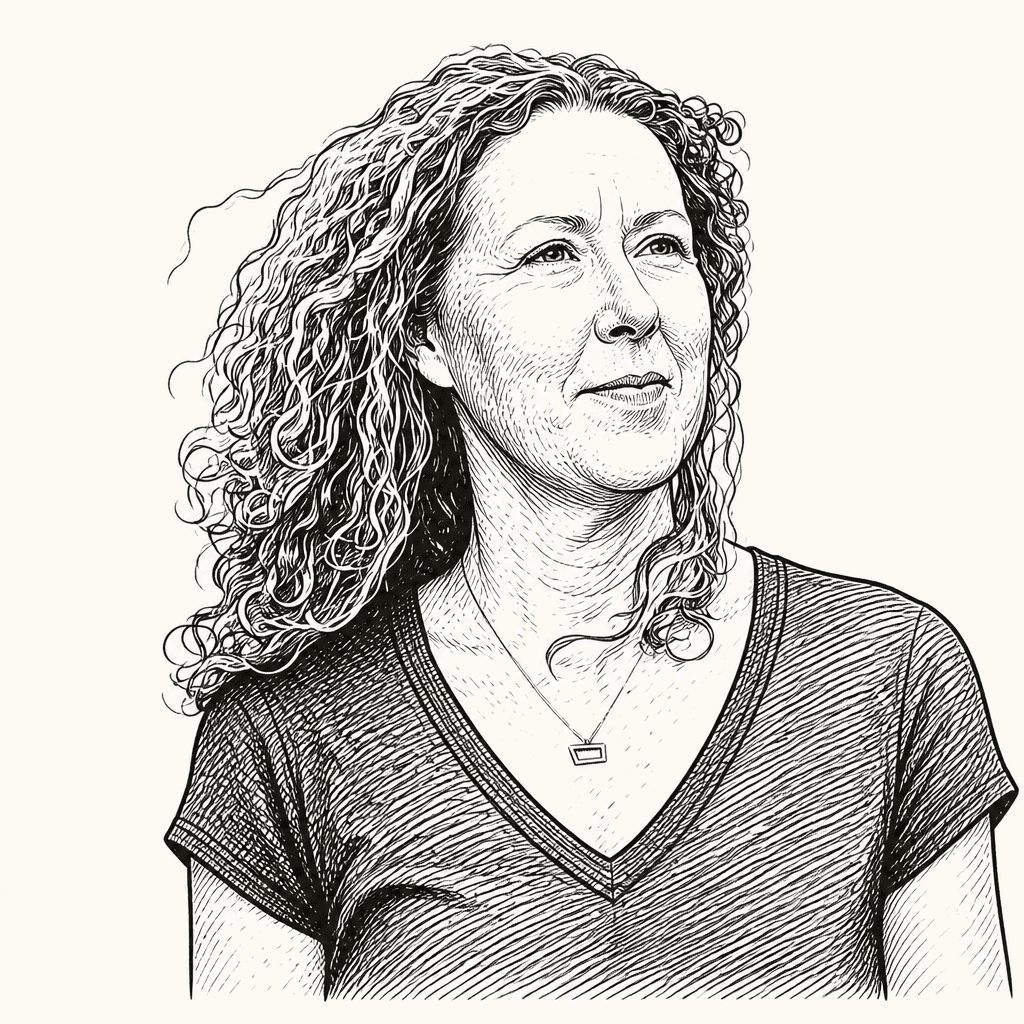 Tracy Stone-Manning
 Benji Backer
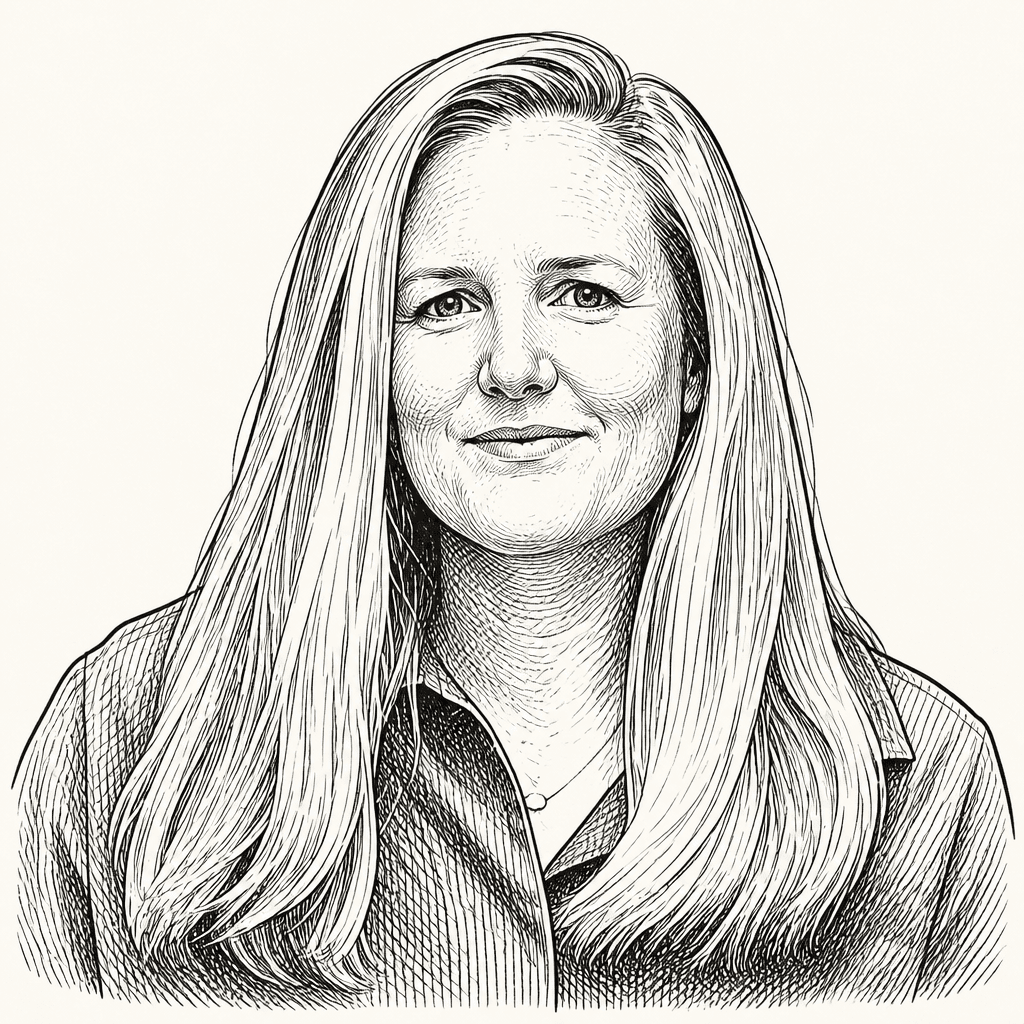 Corley Kenna
 Kirk SieglerThe Aspen InstituteFriday, July 31, 202612 min read
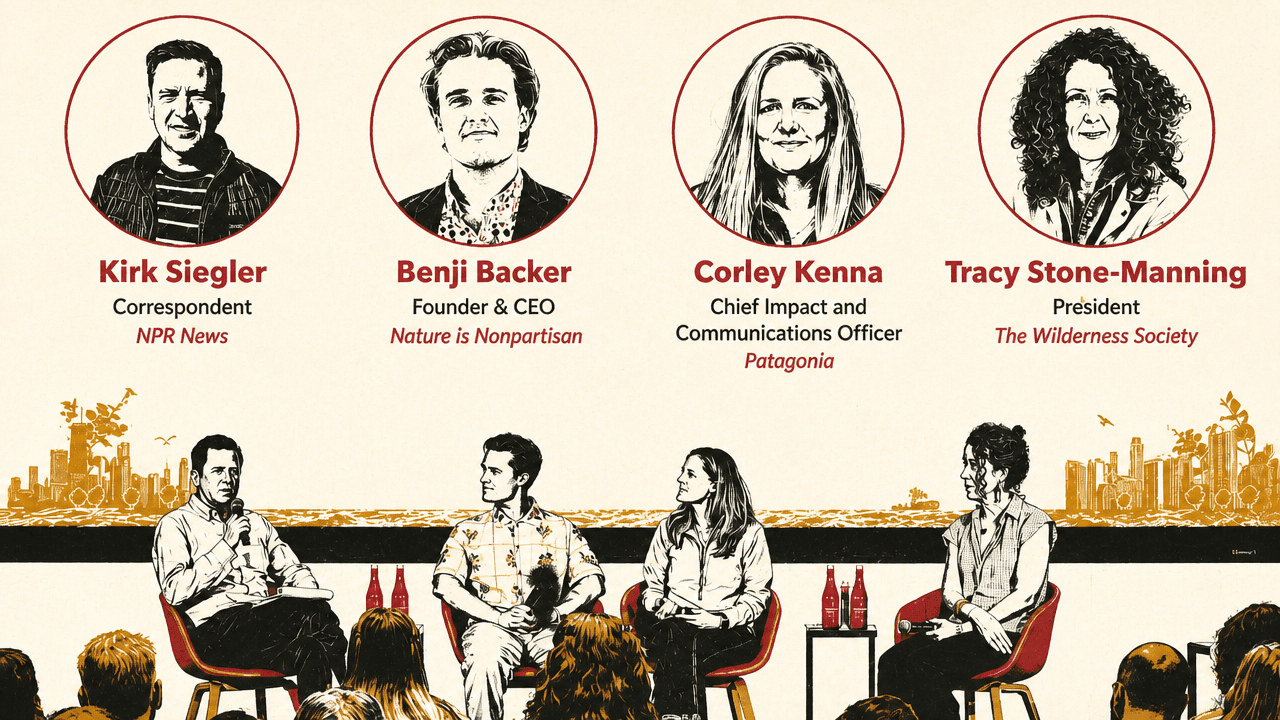
Former Bureau of Land Management director Tracy Stone-Manning argues that public lands will become vulnerable to privatization or transfer if federal agencies are too depleted to manage them effectively. Joined by Patagonia’s Corley Kenna and conservation advocate Benji Backer, she makes the case that stewardship must pair federal capacity with local participation, Indigenous co-management, and a broader coalition built around the places where people experience climate and environmental change firsthand.
Austerity can make public ownership look unworkable
Public lands are a common asset on a scale that is easy to state and hard to absorb: they comprise roughly one-third of the country, according to moderator Kirk Siegler. They provide recreation and resource-based jobs, habitat, clean water, and clean air. But the panel’s central institutional warning was that public ownership becomes politically vulnerable when the agencies charged with managing it cannot perform ordinary public-facing work.
Tracy Stone-Manning described that dynamic through her experience leading the Bureau of Land Management. When she left the agency, she said, it had nearly 10,000 employees to manage 10% of the country. At the time of the discussion, she said its workforce had fallen to about 5,200.
The consequence is not only slower administration in Washington. It is that ranchers, permit holders, local officials, recreation users, and communities encounter an agency that cannot answer calls, process permits, work on restoration, or manage the demands placed on public land. Stone-Manning’s concern is that this failure can be made to serve an argument for dismantling the public system rather than rebuilding it.
You strip down resources to manage our public lands, and people throw up their hands and say, the federal government can't manage it, therefore we need to give it to the states, therefore we need to sell them off.
That argument matters because public lands, as Stone-Manning describes them, embody an unusually egalitarian premise: ownership and access do not depend on income, appearance, or residence. At the same time, they are not a single-purpose preserve. They are expected to support wildlife, water, recreation, grazing, wood, mineral development, and energy production across a changing climate.
The BLM’s recreation role illustrates the mismatch between expectations and capacity. Stone-Manning said the bureau had become a recreation agency “and nobody noticed,” so it was never funded as one. Its recreation budget for managing 10% of the country, she said, was about the same as the recreation budget for Idaho.
The legal and administrative framework also predates present conditions. Stone-Manning said public-land laws written 50, 70, or 100 years ago did not anticipate climate change or the roughly 500 million annual public-land visits she cited. Reimagining public lands therefore cannot mean merely restoring a previous headcount. It requires deciding what these agencies should be capable of doing when visitation is high, landscapes are changing, and competing uses must be managed rather than wished away.
Corley Kenna agrees that federal funding remains indispensable, even if the federal government need not be the only source of money. Local communities may take on a larger role, she said, and alternative funding structures are worth exploring. But public lands still require federal investment in both the places and the people who protect them. In Patagonia’s experience, cuts affecting land-management staff have been especially mobilizing because people know and trust park rangers.
Benji Backer frames the same question as a fiscal priority. He argues that conservation should not be dismissed as unaffordable when the country is already spending trillions on natural disasters and ecosystem failure. Spending hundreds of millions or billions on conservation, in his view, is modest beside those costs and could command support from people who identify as fiscally conservative or fiscally liberal.


Stone-Manning does not offer a finished blueprint for the BLM, Forest Service, National Park Service, or other agencies. She calls it a question of form following function: first establish what healthy and resilient public lands must deliver 50 years from now, then build institutions able to deliver it. However those institutions are organized, she says, the country will need robust federal agencies to steward public land.
Climate becomes actionable when it is experienced as place
The panel’s route from public lands to climate policy begins with a practical observation: climate change is more politically tangible when it appears in a place someone knows. Smoke, reduced snow, invasive species, damaged rangeland, stressed watersheds, and declining wildlife are not abstractions about atmospheric concentration. They are changes people can see in forests, farms, rivers, and communities.
Backer calls public lands a climate solution because they are places where people come to care about the environment and where climate impacts are already visible. In his account, environmental advocacy has too often led with a global problem that feels distant from ordinary life. The better starting point is what an individual already values.
He described returning to northern Wisconsin and being shocked by the number of dead trees along roads he had not driven since high school. The damage from invasive species, he said, was personally unsettling. An Uber driver whom Backer understood to be a Trump voter kept returning to the same concern and said he would do whatever he could in his own life to fight it. That driver did not need to enter the issue through a universal climate vocabulary, Backer argued; concern for the woods around him was already an entry point.
We don't need him to fight global climate change. I think our movement has failed to, A, make public lands and our physical environment part of the climate dialogue enough, because it absolutely is central to it, but we've also failed to tap people in based on what they actually care about.
The point is not that invasive species, farming, smoke, local water, and global emissions are interchangeable problems. It is that people can join environmental work through different motives. Someone who wants to protect native species in northern Wisconsin may not describe themselves as part of a decarbonization movement, but they can still support ecological protection in a place undergoing climate-related stress.
Stone-Manning puts a governing dimension behind that place-based approach. Citing a Wilderness Society report, she said public lands and waters are responsible for 25% of U.S. emissions. What the government permits on those lands is therefore itself an emissions decision. She said the current administration was shutting down active wind and solar projects while opening the door more widely to fossil-fuel development.
For Stone-Manning, the physical evidence of climate change and the policy choices governing public land cannot be separated. Dead trees from invasive beetles or communities choking on smoke can create public demand for action; land-use decisions determine whether the government is helping reduce emissions or expanding them.
Kenna sees a related issue of agency. Climate can feel too large for an individual to influence and is often presented as a list of sacrifices. A threatened river, trail, park, or local landscape offers a more direct proposition: people know the place, can identify the threat, and can imagine what action looks like.
That makes public lands a route into climate action, not a substitute for broader climate policy. Kenna argues that farmers, ranchers, and others closest to the land can help make landscapes more resilient and better able to store carbon. Bringing them into that work is more productive than treating them solely as audiences for a polarizing national argument. She sees the possibility of a “Teddy Roosevelt style” conservation effort that could put thousands of people to work restoring public land.
A broader coalition requires fewer political purity tests
Public-land protection can attract support from people who disagree sharply about national politics. Siegler described meeting a man on a rural New Mexico road whose vehicle carried both a “Don’t Tread on Me” sticker and a “Keep Public Lands in Public Hands” sticker. Backer sees that combination as unsurprising rather than contradictory.
He says 90% of Americans want clean air, clean water, and stronger protection for public lands, and he points to resistance against Senator Mike Lee’s proposed public-land selloff as evidence that conservative and liberal Americans can mobilize together when access and ownership appear directly threatened. In Backer’s view, national leaders have made the divide appear deeper and more fixed than public opinion warrants.
Climate itself, however, has lost priority among many younger voters. Backer, who identifies as an older member of Gen Z, said climate had fallen from a top-two-or-three issue to outside the top ten for his generation in the last election. He does not interpret that shift as indifference to the environment. Housing, inflation, debt, health care, and wider political instability have become more immediate concerns.
He contrasted the current atmosphere with the period when he testified before Congress with Greta Thunberg as the Republican-selected witness. At that time, he said, conservative climate caucuses, a large bipartisan House climate caucus, and bipartisan climate bills existed. He does not think the same conditions would readily produce comparable legislation now.
Backer’s response is to reject party identity as the test of whether someone can be a conservation ally. He said environmental advocates attacked him when he tried to work with the president on an environmental executive order called “Make America Beautiful Again.” He disliked the title, but argued that seeking action from the president in office did not amount to endorsing that administration’s entire agenda.
We have to stop doing the purity tests of who did you vote for or who did you not, because we've got a lot of allies out there that might vote differently than us, and we need them.
That applies to voters who supported Trump for reasons unrelated to public land but oppose land sales, care about wildlife, or want a local watershed protected. It also applies to communities whose environmental concerns begin not with recreation but with pollution, drinking water, and air quality. Backer cited rural communities in Kentucky and Alabama with different demographics but similar concerns about local environmental harm. Those communities, he said, should be brought into the discourse and should lead in shaping solutions.
Businesses are one possible vehicle for such a coalition. Kenna said Patagonia began paying an “earth tax” in 1985, directing 1% of sales to local organizations working to protect land and rivers. That amounts to about $15 million a year, she said. In 2022, Patagonia’s founder also committed profits not reinvested in the business to the planet; Kenna said that commitment had directed about $175 million to date, mostly toward land and water protection.
Kenna’s larger point is that a company’s role is not limited to grants. Patagonia uses stories about public lands to involve employees, customers, and supported groups in advocacy, and she said the company has seen unusually high engagement despite what she called a broader sea of bad environmental news.
She also challenged the assumption that Patagonia is alone. About 200 companies belong to Brands for Public Lands, a coalition convened by the Conservation Alliance at the beginning of the current administration, according to Kenna. About 100 joined almost immediately, and she said roughly two-thirds actively engage customers and employees when major issues arise. A small fly shop in rural Montana cannot monitor Washington as Patagonia or REI can, she acknowledged, while tariffs, trade, and supply-chain disruption compete for corporate attention. Still, the coalition suggests that the constituency for public lands can extend beyond companies already known for environmental activism.
Durable stewardship is built locally and shared more widely
The panel distinguished between national political spectacle and the slower work of governing particular landscapes. Congressional hearings and social-media conflict reward short confrontations. Long-term land management requires people with conflicting interests to work over maps, identify what their communities need, and negotiate tradeoffs that can endure.
Stone-Manning said she has seen people from opposite ends of the political spectrum “bleed on the maps” and “sweat on the maps,” then agree on how acres should be managed for decades. The work succeeds, she said, when people discuss what matters to their children, communities, economies, and local futures. Her challenge is whether lawmakers will listen to such agreements rather than prioritize the “gotcha” moments that generate political attention.
Kenna said conservation advocates should have spent more of the past decade doing this work, particularly in Utah, where relationships to federal land and the federal government differ from those in other parts of the country. Durable conservation, she argued, requires local communities to feel invested in and proud of protected places.
She also argued for telling more stories of recovery. After dams were removed from the Klamath, she said, tens of thousands of salmon returned quickly. Kenna treats that as both a conservation and climate story: removing a reservoir reduces methane emissions, while a free-flowing river can support recovering wetlands and forest lands. Such outcomes may not command the attention of a viral confrontation, but they demonstrate what restoration can produce.
The question of who has authority over public land is inseparable from that work. An audience member noted that many public lands were created through the displacement of Indigenous people and asked how a 21st-century model could avoid repeating that history.
Stone-Manning answered through Bears Ears National Monument. As BLM director in 2022, she sat with five tribes whose ancestral homelands include Bears Ears to sign a memorandum of understanding for co-management. She remembered thinking that it was extraordinary for tribal representatives to enter another agreement with the federal government. Her concern about the agreement’s durability, she said, proved justified when President Trump terminated it.
Still, she regards co-management as the future of public-land stewardship.
That co-management using indigenous knowledge and using thousands of years of understanding is the way of the future, bar none.
In Stone-Manning’s account, Indigenous knowledge is not a ceremonial addition to conventional management. It is practical knowledge developed over thousands of years on particular lands. Co-management can also make people whose ancestral homelands are now protected into the keepers and tellers of those places’ stories.
A second audience question pressed the broader problem of representation, arguing that people of color can be excluded from national-park stories and outdoor spaces even as the country changes demographically. Backer agreed that environmental dialogue and activism lack representation. Recruiting more spokespeople matters, he said, but it is not enough. Communities closest to pollution and environmental harm need to bring their own knowledge into the work and lead solutions.
Kenna said the private sector should do more to address barriers that keep different groups from outdoor places. The work, she argued, must extend beyond the West: people who go outside and defend public land should look like the country.
The test is whether public lands remain public, capable, and shared
When Stone-Manning asks people what they want public lands to look like in 50 years, she says the answers tend to converge. The lands should remain public. They should be healthy, resilient, and thriving. And they should be as natural as possible while still serving national needs, including wood, grazing, and minerals.
Kenna would add one more objective: more public lands, rather than a debate confined to which existing holdings can be cut, transferred, or sold. But she cautioned against treating the present as rock bottom.
We will hit rock bottom when people don't see them as theirs, and they don't see the promise of them.
Backer imagines expanded public lands, wildlife corridors, native-species restoration, and another Conservation Corps operating through local, state, and federal institutions. He pointed to state-level action as evidence that progress need not wait for a more favorable national moment: Oklahoma created its largest state park in history, Georgia passed a major bipartisan wildlife law, and Texas created a large new state park, he said.
He also argued that lasting support requires more routine contact with nature. Record visitation alone is not enough if outdoor time is confined to vacations. Young people need relationships with nearby trees, birds, city parks, lakeshores, and small neighborhood spaces. Without that attachment, Backer warned, the next generation may not see a reason to defend nature politically.
| Decision test | Source-specific stake |
|---|---|
| Can agencies meet ordinary public needs? | Stone-Manning said BLM staffing fell from nearly 10,000 employees to about 5,200, leaving fewer people to answer calls, work with permittees, and manage 10% of the country. |
| Is capacity keeping pace with public use? | The laws governing public lands did not anticipate the roughly 500 million annual visits Stone-Manning cited; BLM's recreation budget, she said, was about the same as Idaho's despite its national footprint. |
| Will management connect climate policy to local conditions? | Land-use permits shape emissions, while smoke, invasive species, damaged forests, and stressed watersheds make climate impacts personally legible. |
| Will local agreements outlast national spectacle? | Stone-Manning's model is sustained work over maps among communities with conflicting interests, rather than congressional or social-media confrontation. |
| Who shares authority and tells the story of protected land? | The Bears Ears co-management memorandum with five tribes offered a model grounded in Indigenous knowledge, though Stone-Manning said the agreement was later terminated. |
| Will the public see these places as an investment? | The panel's case for conservation rests on retaining public ownership while funding the staff, restoration, recreation, and resilience needed to make it credible. |