Adobe and Robotics Recast Ancient Craft as Future Infrastructure
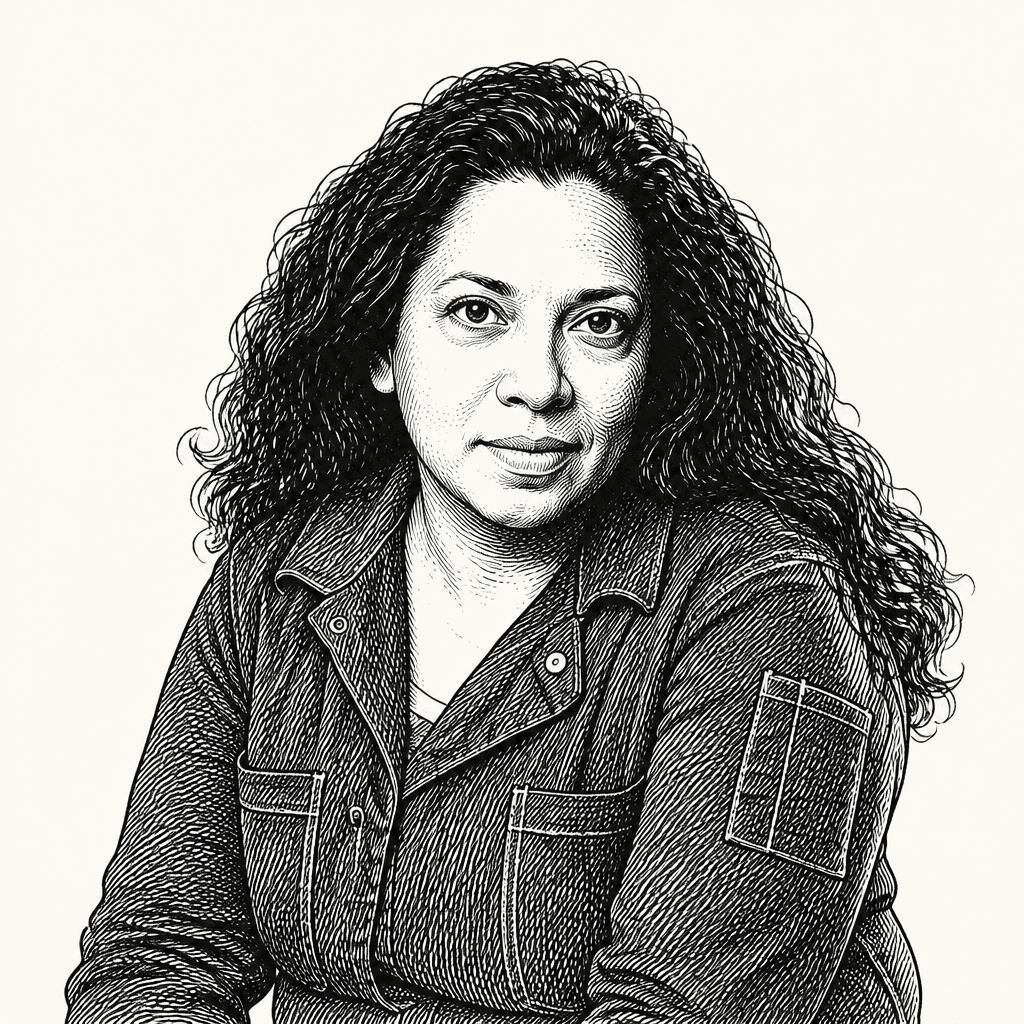
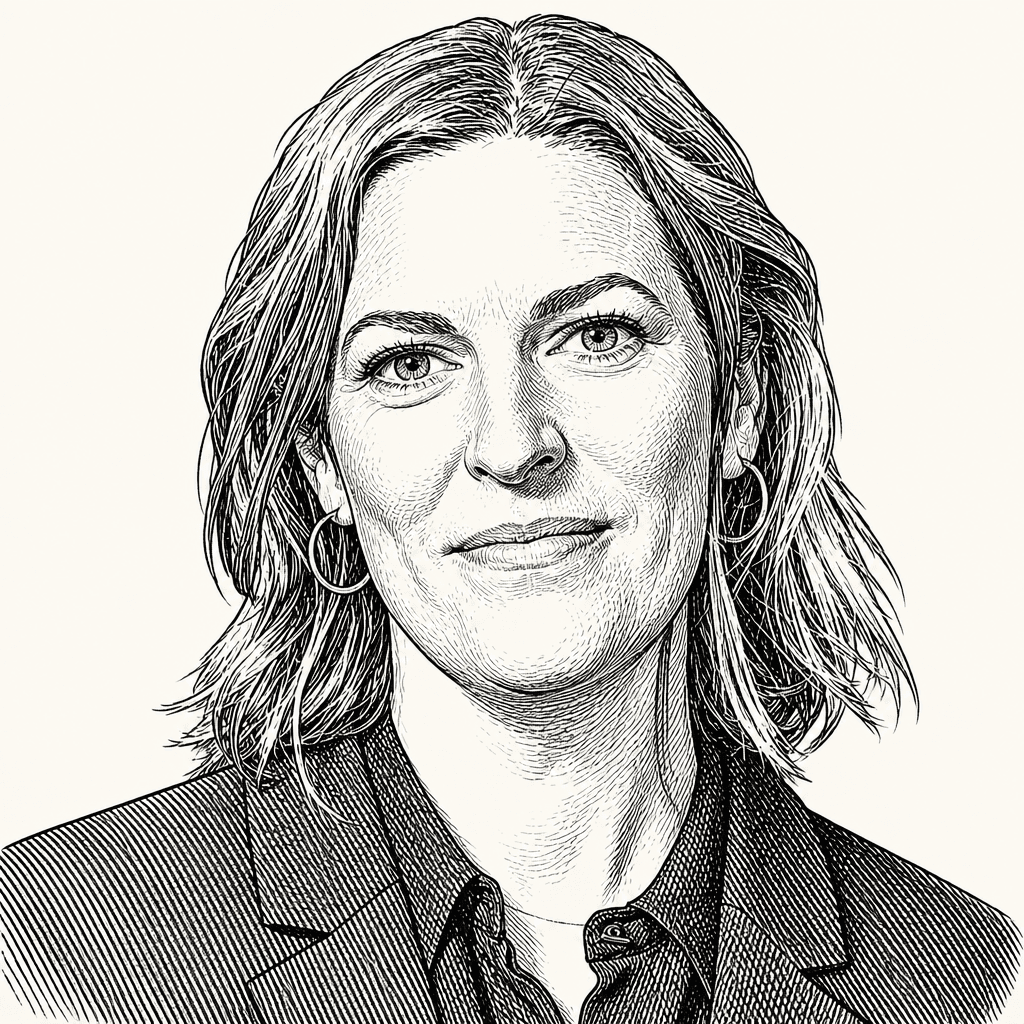
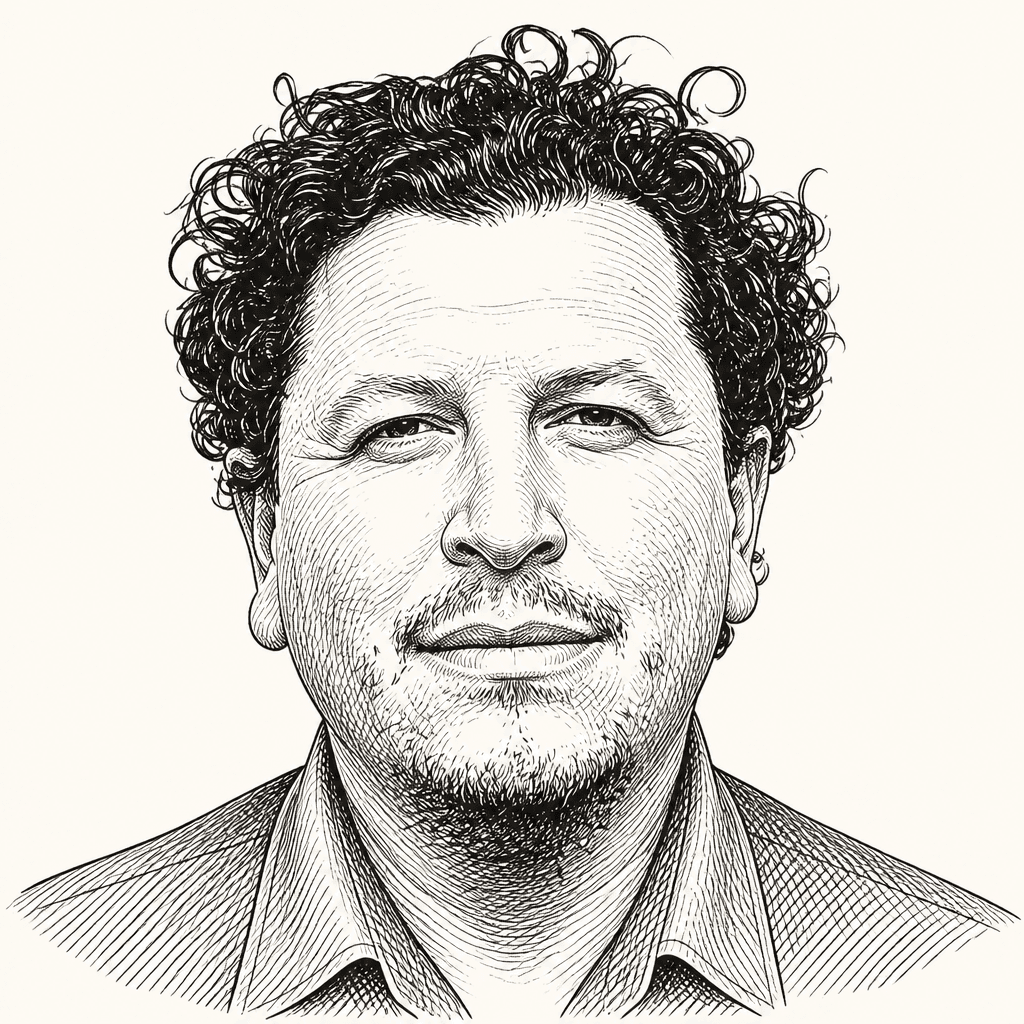
At the Aspen Ideas Festival, artists Beatriz Cortez and Ronald Rael argue that ancient technologies should be treated not as primitive artifacts but as active systems of intelligence. Through Cortez’s work with migration, steel, plants, and Indigenous temporalities, and Rael’s experiments with adobe, robotics, and the U.S.-Mexico borderlands, they make the case that innovation depends less on leaving ancestral knowledge behind than on bringing it into contact with contemporary tools.
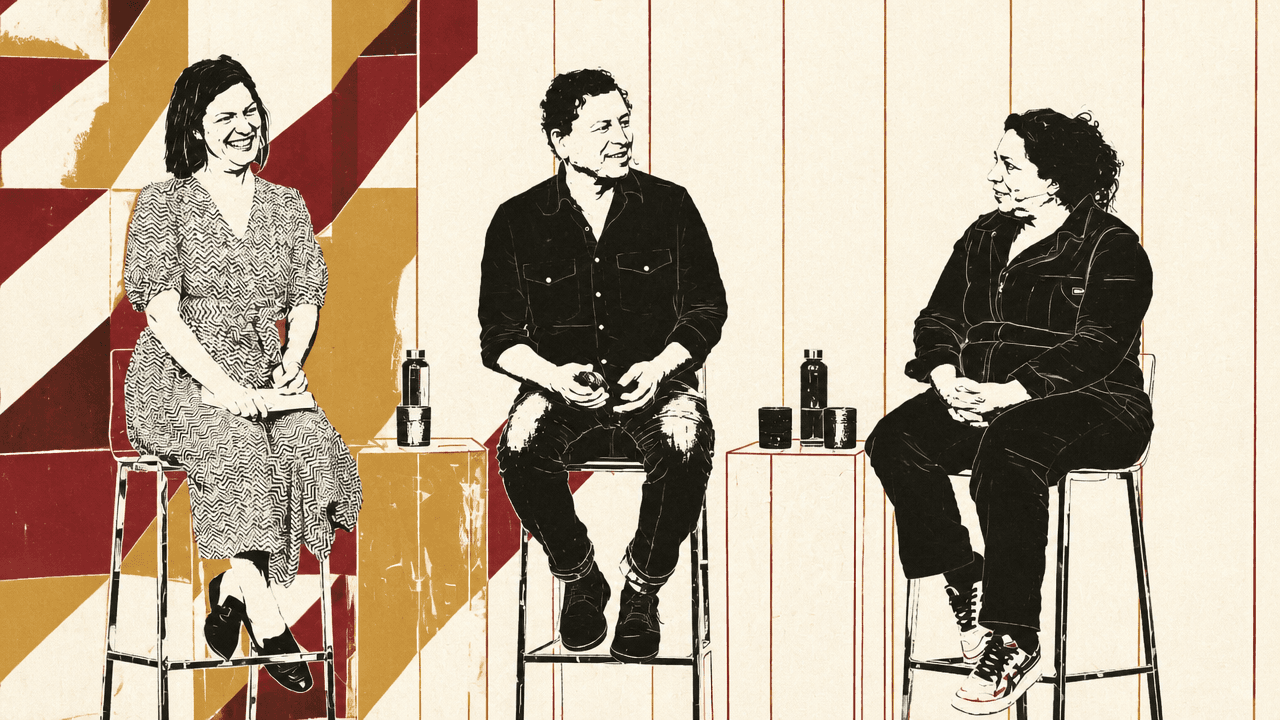
Ancient technology is not behind modern technology
Beatriz Cortez and Ronald Rael both work against a familiar ranking of tools: ancient materials as primitive, contemporary machinery as advanced, and innovation as the process of leaving the former behind. Cortez challenges that ranking through sculpture, migration, Indigenous temporalities, and matter that is alive or self-organizing. Rael challenges it through architecture, adobe, robotics, and the borderlands as a place where things meet rather than merely divide.
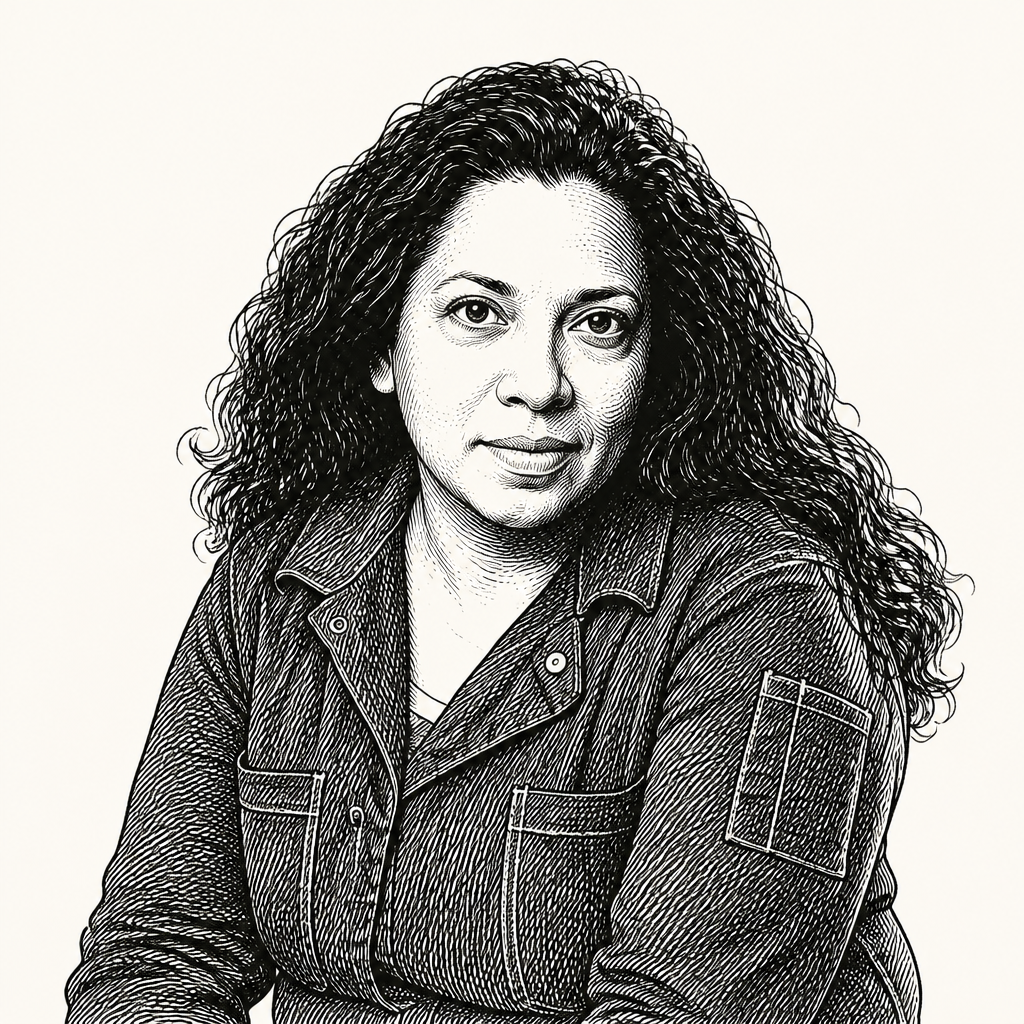
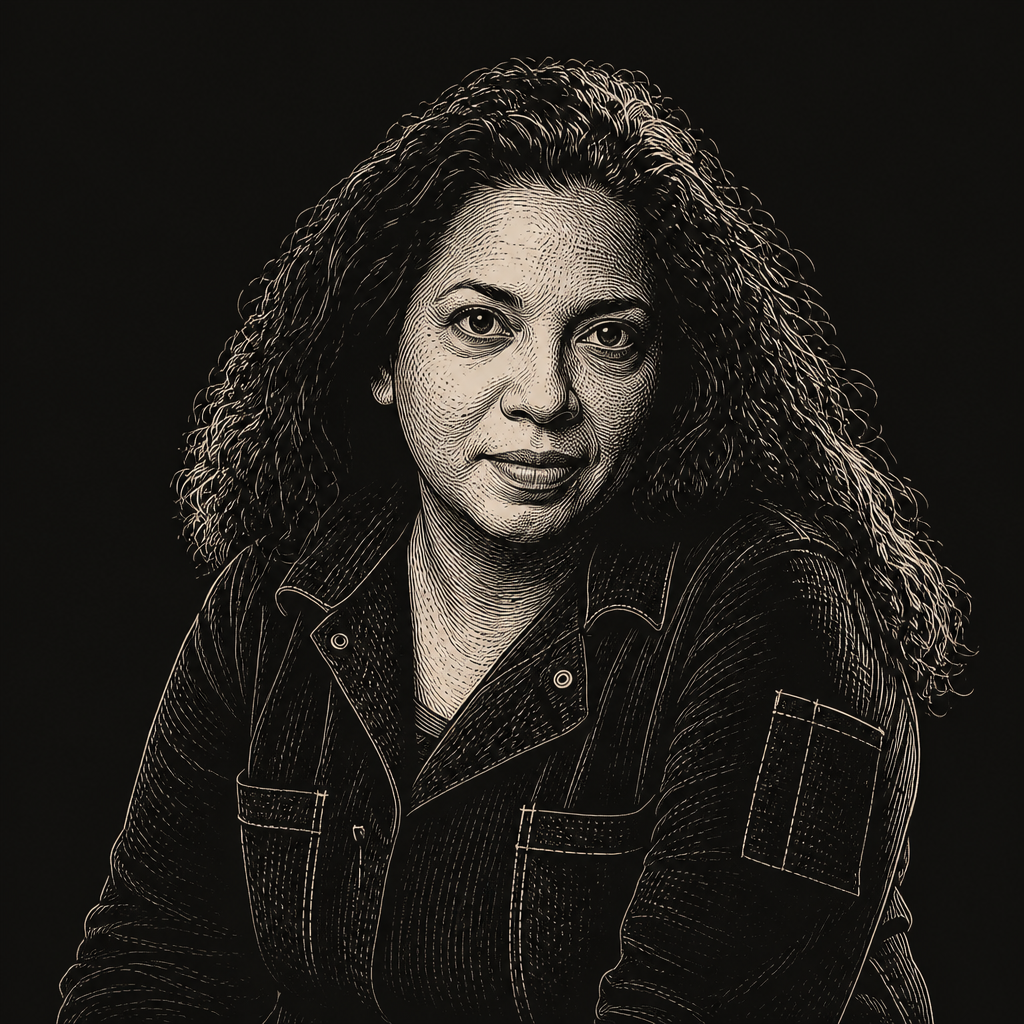
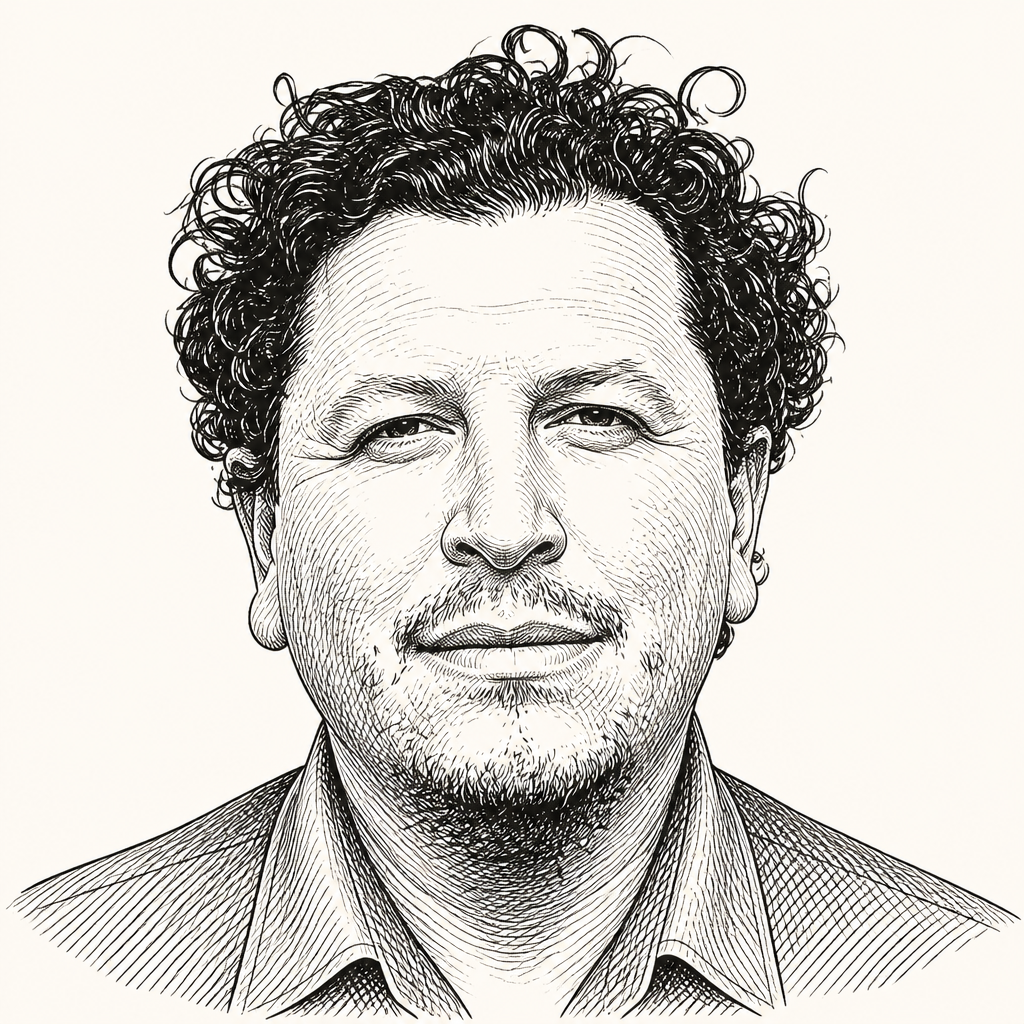
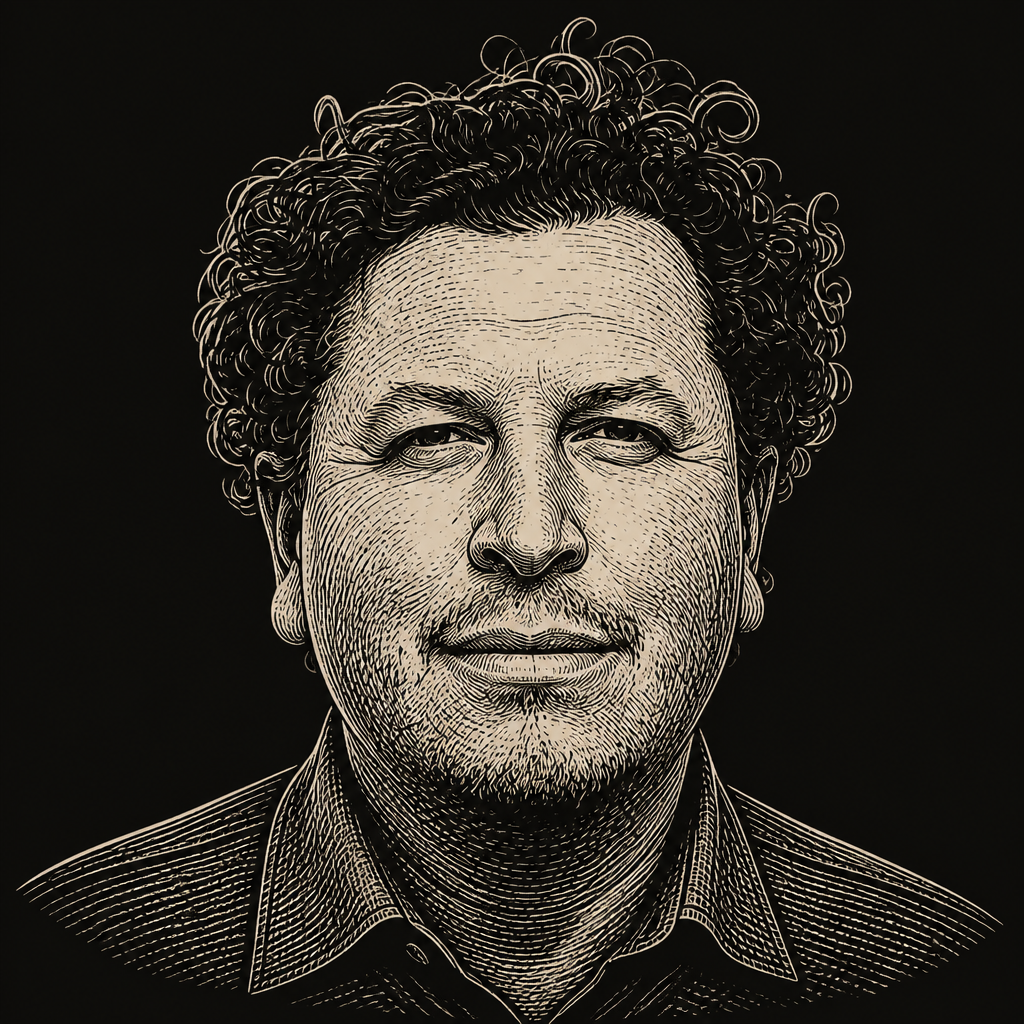
Rael said audiences often describe his work as combining “the most primitive technology with the most advanced technology.” His reply reverses the premise: adobe is the advanced technology, developed by humans over 10,000 years, while the robots are “really clunky” and unreliable. For him, the useful question is not where a material sits on a linear timeline of progress, but what happens when technologies from different times are brought together.
I'm taking the most advanced technology, which is earthen materials which we've developed for 10,000 years as humans, and mixing them with this like really clunky robots that don't work so well.
Cortez’s starting point is similar but broader. She described her work as an effort to step away from the idea that time is linear. Linear time, in her account, carries with it progress narratives, acceleration, and ultimately planetary destruction. It also carries what she called a Darwinian understanding of who people are and who Indigenous peoples are. Her work imagines futures in which Indigenous peoples survive and thrive because ancestral technologies are recognized and attended to, not treated as relics.
For Cortez, the past does not arrive as a completed inheritance arranged in sequence. It arrives as “gifts of generosity” from ancestors, appearing in circular, multiple, and simultaneous temporalities. A spaceship, a house, a glacial erratic, an iceberg, or a seed capsule can all be future-facing while being filled with knowledge from the past. She described the world as full of buried treasures that do not come to us in a straight line; the artist’s work is to notice them and share them.
The idea that time is linear takes us towards the idea of progress and acceleration and the destruction of the planet at the end.
Nora Lawrence sharpened the stakes of that position. If linear time is assumed to lead automatically to progress, she observed, there is less perceived need for intervention: the optimistic story says things will simply turn out fine. Cortez’s argument asks that those assumed outcomes be questioned continuously rather than accepted as the natural destination of history.
Rael’s adobe work gives the same refusal a material form. Adobe, he said, is made only of earth, straw, water, sun, and wind. It is often imagined as a poor person’s material or as belonging to certain countries, but he emphasized that it exists on every continent except the frozen one and appears across rural, urban, wealthy, and working-class contexts. Its engineering is understood; earthen construction appears in building codes; and multi-story earthen buildings have lasted for hundreds or thousands of years. He pointed to Taos Pueblo, a five-story, thousand-year-old adobe structure still inhabited, as evidence that scale and durability are not the problem.
The problem, in Rael’s view, is partly economic, partly bureaucratic, and partly cultural. Modernity has taught people not to trust ancient technologies. Cortez offered a concrete example from Marfa: she said Donald Judd built a large wall using adobe bricks but placed cement between them because he did not trust the adobe. In her telling, the cement held water in place instead of letting it drain, and the adobe eroded away, leaving what she described as a lace-like absence. The other adobe houses, she said, were fine. Her point was not a general engineering audit of the wall, but a critique of the reflex that treats concrete and steel as more powerful than older material systems.
Mud and robots are a response to ecological harm
Ronald Rael’s most direct experiment in combining ancestral material intelligence with contemporary machinery is his seven-year exploration of 3D-printed earthen architecture. He described it as bringing together two unexpected things: robots and mud. The ambition is not to make earthen buildings look futuristic as a matter of style, but to reimagine adobe as a serious architecture for the 21st century.
The works he showed made that material argument explicit: large, cylindrical 3D-printed mud structures in an arid landscape; a view upward from inside one cylinder, with a circular opening framing the sky; curved 3D-printed mud seating and a dome-shaped horno beside an adobe building in Taos; and an aerial view of a labyrinthine earthen structure in the desert. The images showed mud behaving as structure, enclosure, surface, seating, oven, and public space.
His examples range from 15-foot-tall earthen silos in Center, Colorado, to a recent project in Taos, New Mexico, with curved 3D-printed mud seating, shade, and what he described as the first 3D-printed horno. An horno is a mud oven; Rael said the project is activated with the community through cooking bread and food. He also presented a Desert X project he called the largest 3D-printed earthen structure in the world, an “Adobe Oasis” made through robotic extrusion in a desert landscape.
The material recipe matters. During the audience questions, someone asked whether the mud included stabilizers, cement, plastics, or epoxies. Rael’s answer was categorical: no cements, no plastics, no epoxies. The material is earth, straw, and water. “Just ancestral intelligence,” he said. “That’s the AI that’s employed there.”
No cements, no plastics, no epoxies, nothing. Just ancestral intelligence.
Rael connected the work to ecological crisis and toxicity, especially in the aftermath of fire. He noted that Cortez had lost her house in the Los Angeles fires the previous year and said those fires left toxins in the air, land, water, and bodies. Architecture, he argued, has been complicit in ecological crisis and toxicity for at least 200 years. Returning to earth as a building material is, for him, one possible response.
His relationship with the robot is not the fantasy of automation replacing craft with clean abstraction. In the video he showed, he described working with the machine as “a delicate dance.” He touches the mud, feels the hose, controls the robot, and moves around it while hoping the process works. The robotic arm extrudes mud, but the architect’s body remains close to the process, managing weight, flow, texture, and risk.
At the same time, Rael refused to romanticize manual labor. Asked what happens when the intimate dance with technology is lost and automation removes the human element, he answered by distinguishing creativity from bodily strain. He has done labor himself, he said, and has seen people do far more of it; he does not romanticize the body-damaging work of mixing mud, lifting heavy materials, and pushing loads. If a machine can save the body so that humans can do something else, he said, “let it.”
That answer connected the robotics to the history of building labor. Architecture with a capital A, he said, has long been made by slaves or by people not treated fairly in building. His optimistic future is one in which labor is transformed rather than simply exploited: humans guide machines and retain agency, while machines relieve the body of some brutal work.
Beatriz Cortez answered the same automation question from a different studio practice. She said her own process cannot be outsourced to software because she does not draw the work in a way that someone else could fabricate. She improvises, welds everything herself, looks at each piece, and decides how it should move. The welder becomes an extension of her body. She also rejected a clean division between human and machine, noting that people already live with contacts and other technologies in their bodies: “We are this hybrid of the world we live in.” What matters is not a pure human touch untouched by tools, but the relation to materials and the improvisation with them.
Rael added that tools can become part of an iterative creative process. He recalled early 3D-printing workshops with clay, including at Anderson Ranch in Snowmass, where some artists saw the printer as the sound of their obsolescence. He compared that anxiety to an earlier moment in pottery when the wheel must have threatened pinch pots and coils. His view is that the tool should expand creativity rather than replace it.
Borders are laboratories, not only barriers
Ronald Rael is best known, he said, for the 2019 project in which he and his team inserted three pink teeter-totters into the U.S.-Mexico border wall, allowing people on both sides to play together. The image he showed was direct: a tall metal border wall running through an arid landscape, three bright pink teeter-totters passing through it, people playing on both sides. The project treated the wall not only as a line of separation but as a structure that could be temporarily turned into a shared instrument.
For Rael, the borderlands are not reducible to division. He described borders as places where things come together: countries, languages, food, beliefs, cultural and religious practices. He and Cortez speak in Spanglish; borderland foods combine ingredients from different parts of the world into new flavors. In that sense, the borderlands become a productive design laboratory, a space for asking what happens when two things meet.
The teeter-totter project made that idea literal. Rael said the same material that stands vertically to keep people away can be turned 90 degrees and made to connect people. The act is playful, but not light in its implications. He called his projects acts of culture jamming, rebellion, and resistance.
After President Biden stopped border wall construction, Rael said hundreds of thousands of pounds of steel were left fallow along the U.S.-Mexico border. His team “smuggled” 10,000 pounds of that steel into a museum and made House United, or Casa Unida. The steel, once used for the wall, became the top and bottom rungs of a house-like installation whose vertical pieces opened into light and space.
Beatriz Cortez saw in that work a fan, or abanico, and noted how perforations in the material became lace and light. She said one would never suspect, in that future form, what the border once was.
Nora Lawrence connected Rael’s moving-border framework to Cortez’s work with volcanic ash. The U.S.-Mexico border itself has moved: Rael noted that his studio is in Colorado and that, as the crow flies, 30 miles south from Aspen lies the former historic U.S.-Mexico border along the Arkansas River. What is often treated as fixed is historically contingent. Lawrence observed that Cortez’s volcanic ash, like nonhuman beings more broadly, passes across invented human lines more readily than many humans can.
Cortez’s Ilopango sculpture deepens that point. The volcano refers to an eruption in the year 536, before El Salvador was El Salvador. Cortez said particles from that eruption covered the sun, darkened it for about 18 months, cooled the Earth, and landed across the planet. She later traveled to the Arctic in search of particles from that eruption. Ilopango appeared as a dark metallic volcano installed in a green field at Storm King, and later as a sculpture carried by boat along the Hudson River from Storm King to EMPAC at RPI. Wherever Cortez goes, including Aspen, she said, particles of the underworld sacred to her ancestors may be underfoot. That realization made migration “warmer and more important.”
Rael’s work on the border wall also uses play to make violence approachable without softening it. Lawrence mentioned his snow globes of border wall imagery and his research into the absurd and brutal histories of wall testing and construction. Rael said his book Borderwall as Architecture treats the wall as an architecture of violence and as a designed structure with spatial effects on people and animals. The snow globes function as architectural models of those stories.
One model contains a wall, graves on both sides, and a cat on top. At first glance, the scene reads as cute. That cuteness is strategic: it helps viewers stay with a story they might otherwise avoid. The story, Rael said, is that the federal government bulldozed through a Native American burial ground to build a border wall. Play becomes a way into the unbearable, not a way around it.
Migration is not only human
Beatriz Cortez repeatedly displaces migration from the human body alone. Glacial Erratic imagines a boulder moved thousands of miles from one landscape to another, arriving where nothing around it is familiar. The movement is geological and climatic: ice melts, landscapes change, and a rock becomes a migrant. The work appeared as a large welded metal form resembling a boulder in an arid landscape. Chultún El Semillero imagines a space capsule not for humans or rocks, but for seeds; the work consists of paired black spherical structures, one skeletal and one closed like a capsule, with purple light inside.
Her capsules and domes carry multiple architectural histories at once. An early space capsule drew from Los Angeles industry, the rockwork of Dan Montelongo, colonial architecture, and Craftsman architecture. It included a trunk where Cortez could fit, a stairway, a tent, a bookshelf, a desk, and a fireplace. To build worlds where “we could all fit together,” she said, required incorporating multiple ways of understanding home.
That multiplicity began for Cortez in Los Angeles vernacular architecture. She spoke about her former next-door neighbor’s porch in San Fernando, built by Dan Montelongo, an Apache Mescalero builder who made distinctive porches in La Cañada, La Crescenta, Pasadena, and San Fernando. The rocks were huge and protuberant; Cortez said they immediately made her feel that an Indigenous builder had been there. That presence mattered because the neighborhood’s architectural narrative often erased multiple temporalities.
The porch also carried a more intimate historical-poetic meaning. Cortez’s neighbor Connie is Lakota and lived in a house whose porch had been built by an Apache Mescalero builder. It took about 100 years from the time Montelongo made the porch to the time Connie owned the house. For Cortez, that timing said something about immigrants in Los Angeles: the immigrants who clean gardens, clean houses, and raise children may, 100 years from now, live in those houses.
Migration also appears in Cortez’s research on plants. She described U.S. agricultural explorer programs in which people were sent to other places to bring back plants and crops. She named palm trees, oranges, dates, and avocados, and said these movements were tied to monocrops and profit. Avocados, she noted, come from Guatemala and El Salvador but are now called California avocados.
Cortez linked that history to eugenics, white supremacy, and market extraction, while also describing intimate migrant practices of home-making. People carry seeds in socks or suitcases, hiding plants that represent home and growing them in new backyards. Plants, in her account, write histories of profit, empire, migration, memory, and ancestral instruction all at once. They create worlds while carrying the record of human relationships to them.
Her Arctic work extends the same interest to nonhuman scales and nonhuman architectures. She traveled to Svalbard looking for volcanic particles but found icebergs and landscapes whose architectures were not made for humans. A jagged blue iceberg floating in dark water became the basis for Adrift in a Mirrored Sea, a steel work made in homage to an iceberg she witnessed. She described circular patterns in the land, with small and large pebbles sorted into forms as if sand had been thrown over a speaker. She also described looking at ice and water under a microscope and finding zooplankton invisible to the naked eye. Those creatures stayed with her because they forced a shift in scale: she has been trying to make them at different sizes so that human scale does not define them.
A forthcoming work for a triennial in Japan connects the Pacific Ocean, Acajutla in El Salvador, a cave, Spanish conquest, and later infrastructure tied to world markets. Cortez referred to Pedro de Alvarado, whom she described as a cruel conqueror, being hit by an arrow in Acajutla and writing that Indigenous people seemed to be ahead of him and behind him in ways he could not understand. She also said the Japanese came to El Salvador and built a port there to create a dry canal. At the center of the work is a cave that can be entered at low tide and exited again six hours later, while offering safety at high tide. Knowing the land, in that story, is how ancestors survived.
Matter carries archive, intelligence, and spirit
Beatriz Cortez works largely with steel and plants, and she linked steel, seeds, plants, and adobe back to the earth. Steel may read as industrial, but she described hammering it as a way of removing industrialization from it, returning it to rocks, boulders, glacial erratics, icebergs, and earth. She beats metal on sandbags; the process itself keeps the steel in relation to earth.
Ronald Rael similarly treats adobe bricks as archives. In old adobes, he said, one can find bone fragments, pottery, glass, plastic shards, and other traces of the life around them. Adobe records what was in the earth and what moved through it. Cortez extended that idea by saying adobe is filled with life, seeds, and potentiality.
Rael’s project Exhuming Home makes that archival role explicit. He is a steward of the home of Lafayette Head, the first lieutenant governor of Colorado, who later became Indian Agent to the Tabeguache Ute tribe. Two-fifths of the building no longer exists. Rael described re-excavating it to remake adobes and display artifacts found while looking for home in the building. The site is historically charged: he said it was the space where the Indian Agent documented all enslaved Native Americans in Conejos and Costilla counties after the Civil War, people he identified as ancestors of his community.
Because the site had been bulldozed and disturbed, Rael took archaeologists there to ask whether the material demanded a particular kind of preservation. They told him the archive had been so mixed up and destroyed that he could do what he wanted. His response was not to treat it casually but to give it reverence through categorizing, cataloging, and naming what was there.
The most charged story involved a man named Michael, who had grown up in the Indian agency and later helped Rael make bricks. Michael told Rael that when he was a child, his father had asked him to dig an outhouse. Several feet down, they found a body wrapped in leather and fringe with a breastplate: a Native American ancestor. Michael’s father told him, “tápalo, tápalo” — cover it up — and they dug the outhouse somewhere else.
Decades later, Rael asked Michael to show him the place. On the ground, Rael saw and picked up the largest piece of obsidian he had ever found. Archaeologists told him it had traveled more than 200 miles and had arrived at the site somewhere between 200 and 1,000 years earlier. Rael did not claim to know whether it had been placed there intentionally. What mattered to him was the way the encounter forced together the scientific and archival with the spiritual and beyond.
Cortez answered that story through the Kaqchikel understanding of ancient objects. She collaborates with a Maya Kaqchikel community that writes about objects from under the earth as carrying the ability to form community with ancestors. Such objects, in that view, should not be reduced to artifacts. They should be allowed to remain spiritual objects because they are alive. Her Kaqchikel friends, she said, believe ancient objects have a will and a life and decide whom to reveal themselves to.
This is also why Cortez’s Arctic icebergs mattered as architecture. They were structures, but not human structures. They were beautiful, fleeting, self-formed, and not meant for human bodies. Matter, in her language, is intelligent and self-organizing. Architecture is therefore not limited to what humans design, nor is art limited to what human bodies can occupy.
To find the archive, dig into the wall
Nora Lawrence asked both artists how they find what they are looking for outside the making process itself. Ronald Rael answered through a recent exhibition of contemporary artists using adobe in the Americas, installed at the Harwood Museum in Taos and the Fort Garland Museum in Fort Garland. Both institutions, he noted, are themselves made of adobe, though that fact is more visible in one than the other.
The fort, built in 1858, shows adobe inside and out. The Harwood Museum, Rael said, had been covered with inches of cement plaster, lime plaster, and latex paint. Late on a Friday, after a tiring installation, Rael and Rafa Esparza decided to expose the building’s own material history. As a “guerrilla project,” they used a diamond blade saw to cut into the museum interior and reveal a line of adobe from 1916. To find what one is looking for, Rael said, “you just gotta dig.”
That answer fits his broader method. The archive is not only in documents; it is in walls, disturbed earth, old bricks, buried fragments, and the hidden composition of institutions themselves. It also fits Cortez’s insistence that ancestral knowledge does not arrive neatly or linearly. It has to be caught when it reveals itself.
Community ownership complicates that research-based control. Asked how artists negotiate self-critique when community members touch, worship, commercialize, or destroy work, Rael said successful community projects require allowing communities to take ownership. Beatriz Cortez added that when communities take ownership, they care for the work.
Rael offered a Southern Colorado example. His own community made 40,000 adobes to build an enormous labyrinth. His vision had been austere, minimal, and pure. The community built it, took ownership of it, and added santos, decorations, homemade furniture, and other elements. He admitted that he wished it had remained pure, but it did not. The community loves it, he said, and it is theirs. The artist has to respect that.
The sensory force of earthen buildings became the final practical test of the material argument. A questioner who works with young children on sensory integration said many learning environments seem to produce reactions that make it harder for children to learn, and that she brings materials into her therapy office that mimic the earth. She asked whether adobe or earth-based buildings might connect to sensory development.
Cortez agreed with the premise and said she believed adobe would be healthy for the brain, as would getting dirty, working with adobe, and helping build, because the brain needs to imagine how to build. In a brief aside, she asserted that pink is used in high-security prisons because it makes people passive, then said girls should not have pink anything. The better-grounded point, consistent with the rest of her argument, was that built environments act on bodies and minds.
Rael answered by asking how many people in the room had been inside an adobe building. Many had. He noted that people often say adobe buildings “feel so good.” Cortez added that they smell delicious. Rael described the senses becoming excited by the body and the cooling quality of adobe spaces.
He then offered what he called his “touchy-feely” argument. Humans have been working clay for at least 30,000 years, he said, and for the last 10,000 years have used clay-derived spaces to envelop their bodies. Across the planet, humans made habitats this way. If human beings evolved over that long a period to make space around themselves from earth, he argued, then earthen enclosure is part of human genetic makeup and way of being. To enter such a building and feel good is, in his words, a kind of returning home.
He compared this to his work with scientists trying to make artificial nests and habitats for animals. It is hard, he said, to convince an animal to enter a geodesic dome. But if the habitat is made of earth, sticks, or whatever the animal evolved to use, it feels comfortable. He suggested the same may be true for humans.