Joy Can Survive Alongside Suffering, Without Turning Pain Into a Lesson
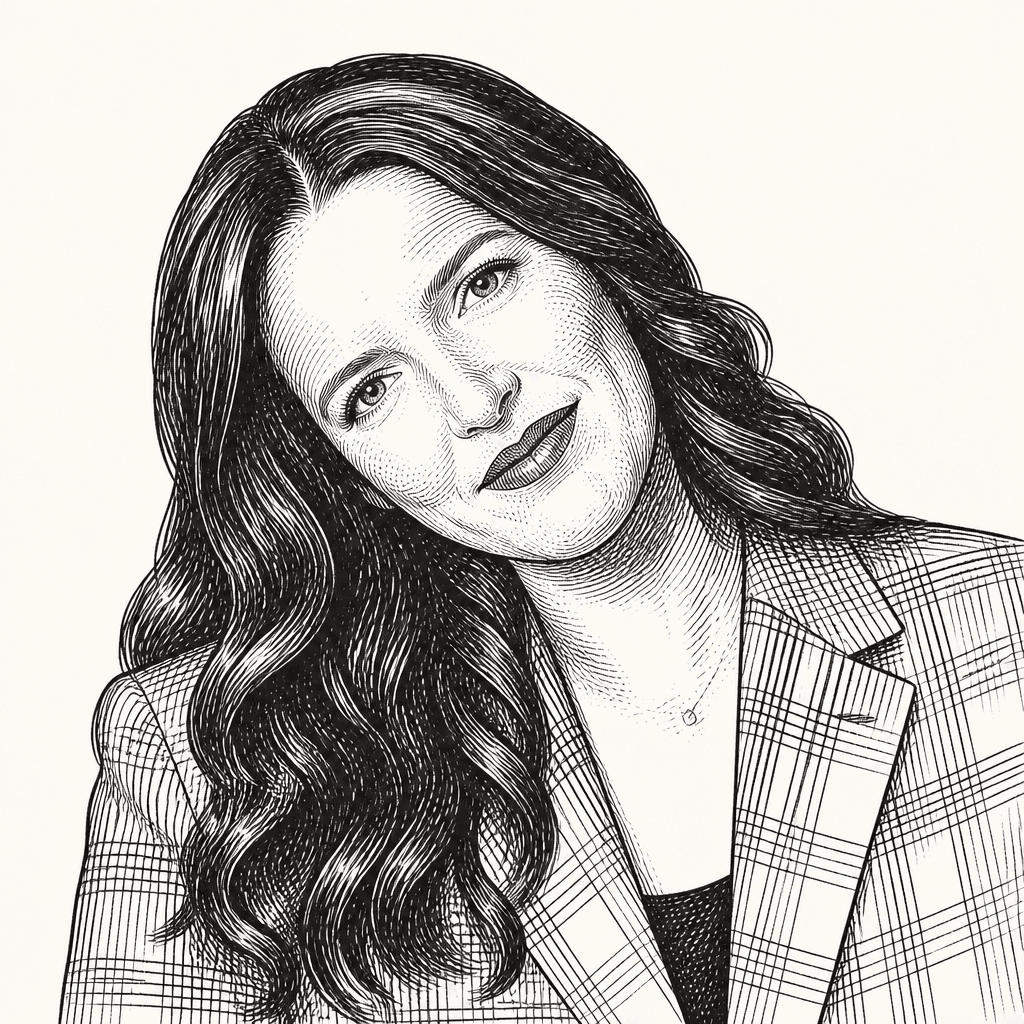 Kate Bowler
 Adrienne Brodeur
 Peter Reynolds
 Tim EhrenbergThe Aspen InstituteWednesday, October 28, 202615 min read
Kate Bowler argues that joy can coexist with pain and incompleteness, rather than serving as proof that life is going well. Peter H. Reynolds’s stories of a teacher’s encouragement and his son’s presence amid crisis likewise show how attention to what others offer can make room for creativity and hope without erasing hardship.

Joy can coexist with the ache of being human
Kate Bowler does not treat joy as evidence that life is going well. She describes an “ache” inside people: a bittersweet awareness of incompleteness and of their own limits. That ache can make people vulnerable to despair, she said, but it also points to a capacity for hope and transcendence. Sorrow and joy belong to the same range of human feeling.
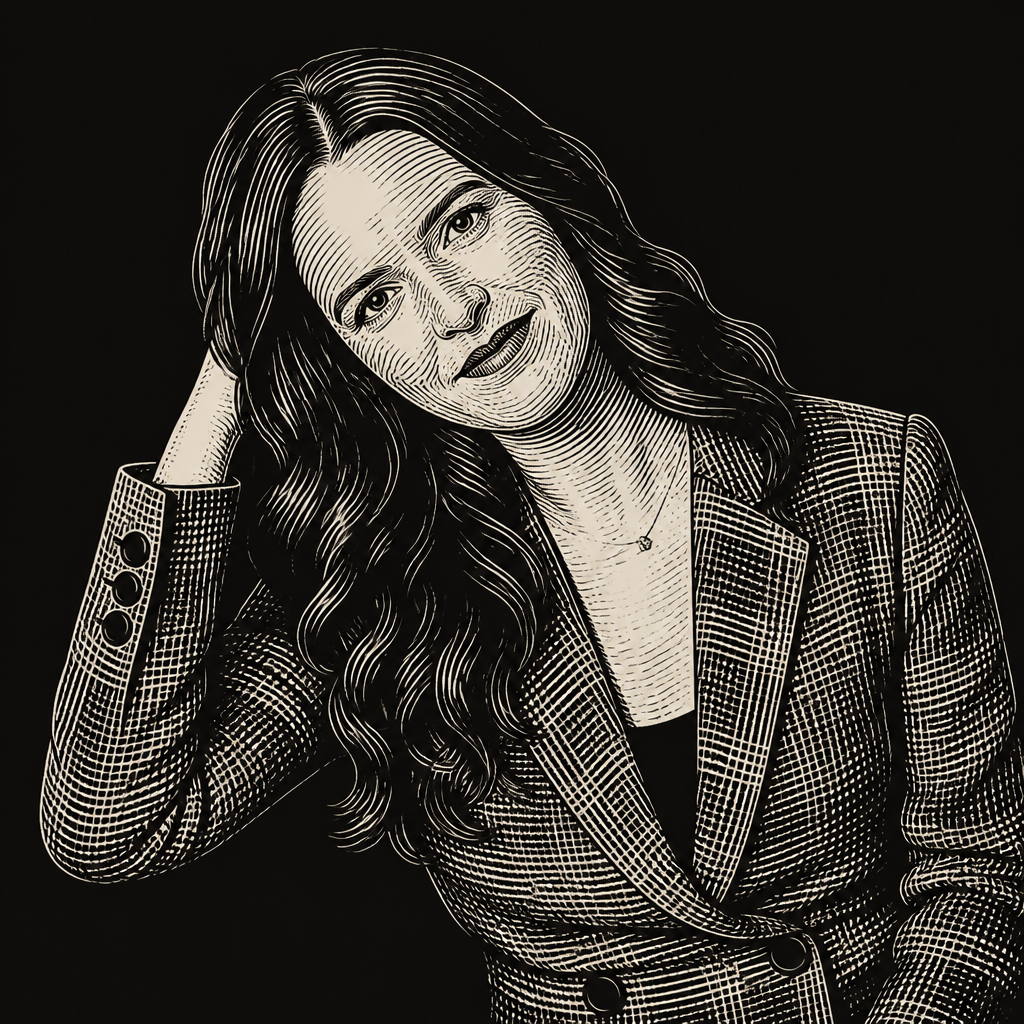
Bowler distinguishes joy from the promise of constant happiness. A culture that imagines people should be happy all the time can make ordinary difficulty feel like failure. Joy is different: a capacity that can remain available in an unfinished, painful life. When Tim Ehrenberg asked why some people focus more readily on joy and others on sorrow, Bowler did not describe one group as naturally optimistic. She suggested people have an equal capacity for both, and that the ache of being human is one end of a wider capacity for “magnitude.”
That distinction became concrete in her account of returning to the hospital after a stage-four cancer diagnosis. She had responded well to immunotherapy and was beginning to feel fine when a copperhead snake bit her. The bite sent her back to the same hospital, among many of the same people. Bowler said that during her earlier experience she had been sent home with Pepto-Bismol and told her symptoms were probably stress because she was a woman with a big job; she later learned she had stage-four cancer. Now she faced another frightening medical situation, including the prospect of expensive antivenom and the familiar fear of not being believed or being overwhelmed by events she could not control.
Bowler asked how long the antivenom process might take and learned it could last up to 24 hours. When she asked whether the doctor would have to stay with her, she learned someone would need to supervise her. “Great,” she told him. “Because I have some things I’d like to share about the medical establishment.” She launched into a monologue, passed out, and woke in another room.
A nurse was there. Bowler apologized for her behavior and tried to explain how hard it was to keep rebuilding a sense of herself when life returned her to the same fears. The nurse told her that her husband had died the previous month and that she had two young children at home. Sometimes, she said, the hospital was the only place where everything felt as she expected it to: “everything is beautiful and everything is terrible and everything is impossible.”
The nurse also apologized for what had happened to Bowler in a place where she should have been cared for. Bowler described the encounter as a kind of grace from someone who owed her nothing. It did not erase what had happened. It changed what she could see in the middle of it: even when she felt bitter and trapped, another person could offer mercy, and a window could open.
For Peter Reynolds the light came as a thought about his young son during the Boston Marathon bombing. Reynolds was in Boston; his twin brother was crossing the city and had been on the phone with him when the call went dead. Seeing the explosions repeated on television, Reynolds worried that his brother was only a few blocks away. He looked over at his son, who was napping, and felt grateful that the boy did not have to see the footage. Then he thought that when his son woke, “the world would be better because his light would be added to this darkness.” Reynolds said he wrote down that thought to share with others: there is more light than darkness in the world, and people can be that light.
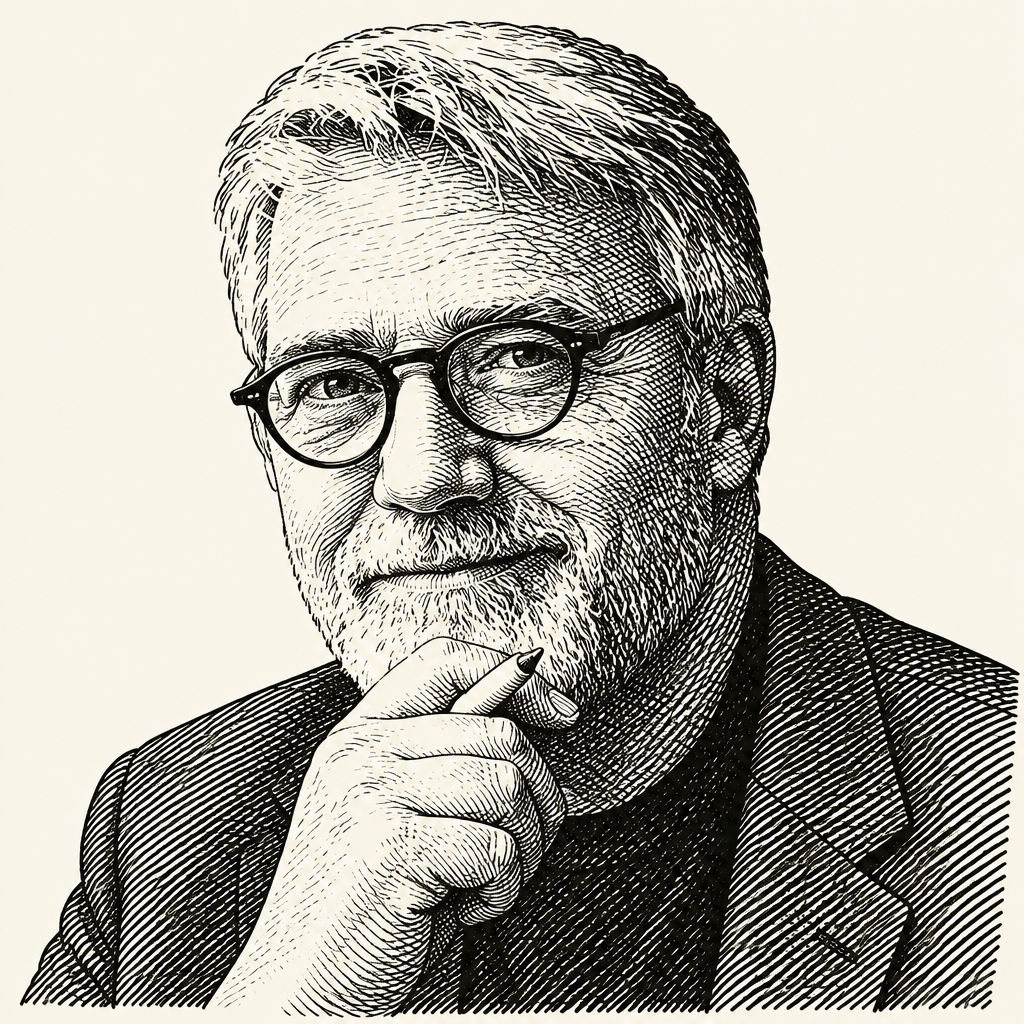

The minute he opened his eyes, the world would be better because his light would be added to this darkness.
Neither account makes hardship necessary or claims that it can be resolved by a change in attitude. Bowler’s story turns on a nurse’s unexpected care; Reynolds’s on his worry for his brother and the thought of his son’s presence. The light they describe is not a denial of what is painful, but something that can emerge alongside it.
Creative permission often begins with someone noticing
Reynolds’s best-known story of creative permission, The Dot, starts with Vashti facing a blank page. She is stuck; the page feels like a torment. A teacher notices and offers a small nudge: make a mark, then see what happens. Reynolds sees the story not as a lesson about artistic talent but as an invitation to begin. Many people, he said, are ready to make something or to be joyful, but need encouragement to take the first step. He compared it to being invited to a party: some people throw the party, and others need an invitation to attend.
He knows what such an invitation can do. In seventh grade, Reynolds was drawing in class when his math teacher, Mr. Matson, asked him to stay after. Rather than tell him to stop, Matson suggested connecting his interest in drawing to math: could Reynolds make a story that taught it? Reynolds made a comic book. Matson saw that it could also be used as a storyboard for an animated film.
The teacher then admitted he did not know how to make one. That mattered to Reynolds, who had assumed teachers always knew the answers. Matson found a media teacher at the high school who could help them. At 12, Reynolds made his first animated film to teach. He later founded FableVision Studios, and credits Matson with connecting the dots between what he loved and what he could make. Matson did more than praise Reynolds’s drawing: he treated it as something that could teach, and made the next step a shared task.
Reynolds’s own childhood drawing began earlier. In kindergarten, he remembers drawing “wildly sprawly colored lines” and enjoying the work. He kept drawing in class, though teachers often told him to look up front and save it for after class. His recollection of Mr. Matson is a counterexample to that familiar correction: a teacher saw the activity as a starting point rather than a distraction.
The pattern runs through Reynolds’s work and the stories he hears from readers. He calls his picture books books for “human beings,” not only children. Adults, including older readers, have told him that The Dot gave them permission to pick up a pen again. In school visits, he sees how quickly children stop identifying as artists: nearly every kindergartner raises a hand, but by third grade fewer do, and by fourth grade students may point to someone else as the artist. Many, he said, have shut down by fifth or sixth grade.
Then, often in retirement, people take up watercolor or photography. Reynolds calls the long stretch between childhood and retirement a gap worth minding. The issue is not that people cease to have a song in them; it is that they can lose permission, or time, to express it. “Mind the gap,” he said—not as a demand that everyone become an artist, but as a reminder that the impulse to make things can be put aside for decades.
Bowler’s word for the kind of apparently unproductive activity that can make creativity possible is “noodling.” She borrowed it from Russell Hoban’s children’s book How Tom Beat Captain Najork and His Hired Sportsmen. Tom wins a series of competitions partly because of the wandering, playful things he has done: fishing with sticks, taking side roads, and seeming to waste time. What looks inefficient turns out to be the source of his ingenuity. For Bowler, beautiful things may come after a stretch that looks like wasted time.
Reynolds called collaboration a kind of alchemy: unexpected elements coming together to produce something neither could have made alone. Bowler shared a story about visiting an alchemist’s den in the Czech Republic. The rule she remembered was that the king might punish alchemists for lying about making gold, but not simply for failing to make it. She drew a wry connection to artificial intelligence: people may be able to handle a lot of “off-roading,” but should be more honest about what a system can do. Alchemy, in Reynolds’s sense, is a possibility rather than a guarantee: unexpected elements can produce something new.
A mark on a blank page, a teacher’s question, a detour, or another person’s contribution can all be beginnings. Reynolds’s story also shows that encouragement need not come from someone who already knows how to finish the work. Matson’s admission that he did not know how to make an animated film helped turn the project into a shared search for help.
Routine can make joy harder to notice
If sadness is not the enemy of joy, Bowler said, what gets in its way is hyper-routine: being so locked into the same patterns that people stop looking up and noticing their lives. She called it “tech neck,” the habit of attending to what is coming at us rather than the people and experiences around us. The problem is not simply that life gets busy. Repeated routines can narrow the range of what people see and do.
Familiarity changes our sense of time. Bowler recalled a conversation with writer Alexander McCall Smith about how a year of school can feel long, while a year in one’s forties seems to pass quickly. One reason, she suggested, is that adults may not be allowing themselves new experiences, new connections, new creative work, or new forms of joy. Newness gives life texture; without it, days can blur.
She sees joy taking different forms at different ages. In children, it can be delight, surprise, and close attention to small things—the playful “noodling” that adults may mistake for inefficiency. In middle age, it can appear as hope rooted in love: the recognition that the world is full of people whose presence makes it impossible to stop caring about the world. In later life, finitude can make joy more vivid. Bowler invoked Rabbi Steve Leder’s line that a flower’s beauty lies partly in its fading. Knowing that life is limited can sharpen the feeling of how precious it is to be here.
Reynolds offered a story about his mother, who lived to 99 and was still writing her memoirs near the end of her life. At 90, she said she felt 30, then revised that to 23, and finally settled on 17. Her doctor encouraged her to finish the memoir, but she asked for a couple more weeks. She continued writing for eight months, called Reynolds’s twin brother to say she was done, and died the next morning. On the manuscript was a note: “It’s finished.”
Bowler and Reynolds describe joy not as a single mood but as something that can take different forms across a life: a child’s close attention, an adult’s sense of being known, or an older person’s awareness of time. Bowler’s concern is that routine can make those experiences harder to notice.
Grief needs room for stories that do not resolve neatly
Bowler connected the difficulty of talking about grief to the cultural rules around suffering. In public, she said, people are often permitted a short account of a devastating loss—but not repetition, and not too much time with the unbearable part. The listener wants the “wisdom” or lesson that will make the loss add up. That demand can leave the person suffering alone with the parts of the story that do not resolve.
She described the expected script as a kind of arithmetic: list the subtractions, then explain what they mean. But people should be able to say that they wish they could go back, or that life will never be as good as it was before. Refusing those statements, she said, does a disservice to the shape of a person’s life and story. It reduces the account to “one note every time” and turns pain into a private tragedy.
You have now listed all the subtractions, now tell me the wisdom. Tell me the lesson that will make it all add up.
Reynolds agreed that conversations need room for both highs and lows. Grief can leave people without words partly because loss is so large, and because everyone knows that death is part of life while still not wanting to face it. He said he was beginning to find some peace in the thought that a person’s energy can continue to ripple outward: through art, photographs, children, or an organization they helped. Writers, he noted, leave books that people can pick up and experience as a conversation with the person who made them.
Books can also be a form of continuing conversation. Reynolds described reading as a process of making a film in the mind. As a child, he counted the pages between illustrations in chapter books, treating each picture as an island. Eventually, he realized that when books no longer supplied pictures, readers could make them themselves. He still values that work of imagination: words become scenes, and the reader makes the pictures.
Bowler emphasized a different but related kind of imaginative work. Reading lets people enter the lives of others and care about problems that are not their own. She called it an exercise in “radical otherness”: a way to escape the confinement of one’s own experience and to practice imagining what another person might think or feel. She connected the same process to friendship. Friendship, she said, is an act of imagination: people have to guess what another person finds funny or strange, and what might bring them closer. Without such imaginative practice, she worries, loving one another and building community become harder.
When Ehrenberg raised an article titled “The End of Reading is Near” and asked what would be missing if people stopped reading books, Bowler’s answer centered on witness and empathy. Books allow readers to take on another person’s world and to care about people they might not otherwise choose to care about. That imaginative movement matters in part because people can feel locked inside their own experiences. Reading offers a way to attend to lives and problems beyond them.
Reynolds resisted the claim that reading books is simply about to disappear. He suggested that negative forecasts can attract attention and make people afraid, while also saying it can be good to feel protective of something one values. He owns the Blue Bunny Bookstore outside Boston, originally a children’s bookstore and now also a café with a section for adults. He encouraged the audience to support independent bookstores, including Aspen’s Explorers Bookstore.
His defense of books was not that every reader must experience them in the same way. He imagined someone putting War and Peace into ChatGPT and asking it to show them the movie. If that person took in the story’s essence, was moved, or became a better listener, he said, perhaps that could be enough for them. But it is not how he wants to read. Reynolds prefers to use his own “ChatGPT”—his brain and imagination—to turn words into a film. The work of making those pictures is part of what reading gives him.
The two answers put different weight on the same question. Bowler emphasized reading as a practice of empathy and imaginative attention to other lives. Reynolds emphasized the reader’s own imaginative participation, while resisting the assumption that new ways of encountering stories necessarily mean books have no value. Neither treated reading only as a way to obtain information. Both described it as an experience that can change what a person notices: other people’s lives, or the pictures and meanings the reader makes.
Creative permission depends on places and people that make room
Reynolds’s account of Mr. Matson shows how much can turn on whether an adult recognizes a student’s interest as something worth developing. But encouragement is not the only condition he worries about. Asked what he aches for, Reynolds said he wants public schools to have the funding they need. In visits to schools, he has seen places with no room for theater, children eating in the gym, and hundreds of students relying on an inadequate projector in an unairconditioned room. He has also seen well-resourced schools, both private and public. The contrast drives him to ask why the country cannot direct more of its innovation and passion toward education.
Bowler described a different kind of support: whether people have language and community that can hold their suffering without forcing it into a lesson. About eight years before the conversation, she began offering free resources for people experiencing pain. The project’s name changed from Everything Happens for a Reason to Everything Happens, dropping the promise that suffering must have an explanation. She called the work a kind of “theological hospitality industry”: if someone is sad about something terrible and wants spiritual accompaniment, they can come by.
The resources are especially for Christmas and Easter, and also for Lent, which Bowler called the saddest time of the Christian year and her favorite. Christmas can be difficult when memories are made around a missing person or a changed family, she said, because people may feel they cannot speak about what is absent. She described Lent not as a period of dieting or self-improvement, but as a time centered on a suffering God who would not leave people alone. If someone is not suffering, she said, they can practice walking beside someone who is.
The team chose a tone of “kind, smart, funny,” though Bowler joked that religious and funny do not naturally go together. Bowler said about 250,000 people use the resources during the two seasons. Their purpose is to remind people that they are not alone, that interdependence is the way forward, and that suffering does not mean there is something wrong with them. In a world that keeps trying to teach people a lesson, she said, they do not need to be the lesson; they can simply be loved.
Bowler also worries that people are losing shared language for understanding one another. She referred to statistics she had looked at that week, saying that political language had, for the first time that year, eclipsed almost all other ways people speak to one another. She compared it to people once speaking French and German and now speaking only politics. This was Bowler’s description of the pattern she had noticed, not a statistic the discussion independently established. In the communities she knows, including religious communities, political language can crowd out other ways of speaking. Polarization, in her description, means people have lost the words to talk to each other and the imagination to be useful to one another. She wants a language of empathy and shared meaning that is not constantly pulled into political purposes.
The support Reynolds and Bowler describe takes different forms: material resources and creative opportunities in schools, and places where people can speak honestly about suffering and accompany one another. Both matter to the conditions under which people can make, learn, and remain connected. A teacher’s invitation can help a student begin; a community’s resources and language can help make room for the work and the life around it.