AI Backlash Could Define the 2028 Presidential Race

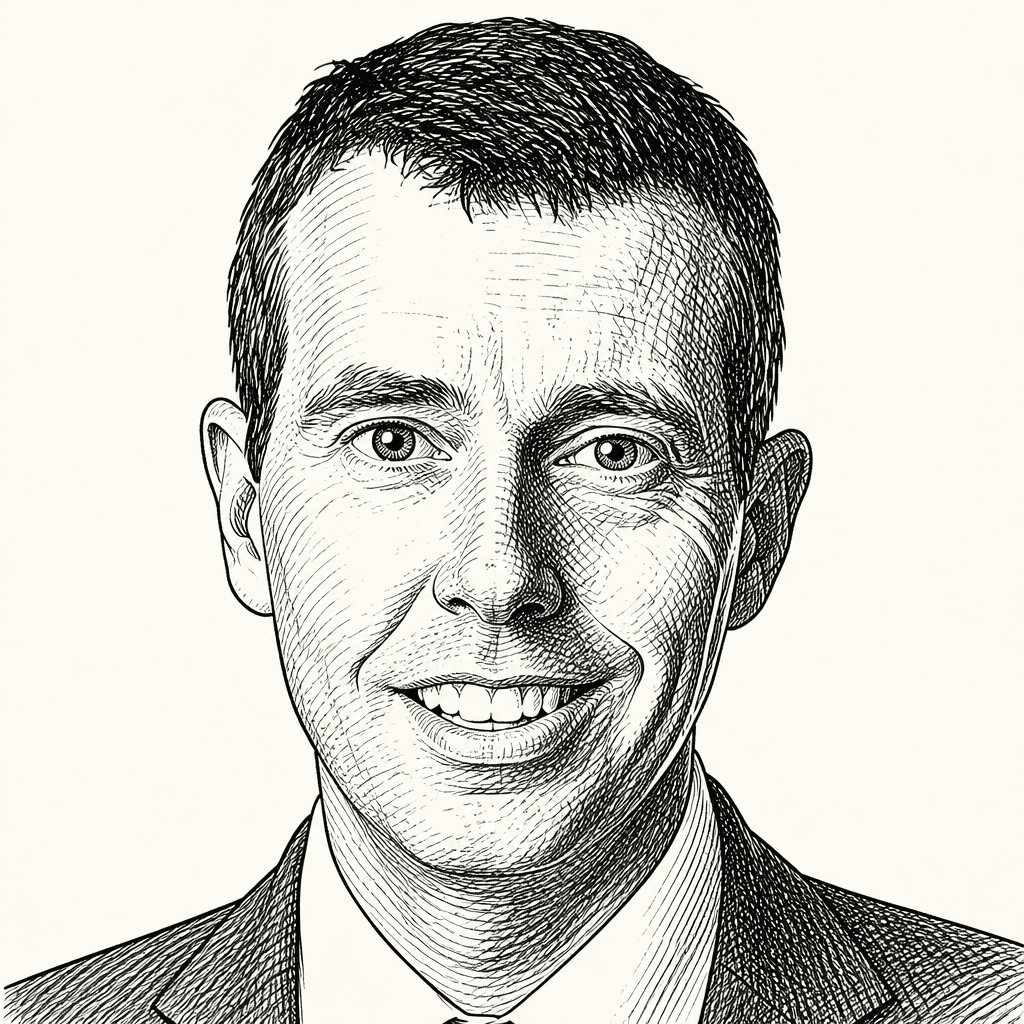
David Plouffe, Barack Obama’s former campaign manager and a partner at Orchestra, argues that AI is becoming a political problem because Americans experience it less as a tool than as another elite-driven transformation being imposed on them. In his view, economic anxiety, distrust of technology leaders, the legacy of social media, fears about children and jobs, and local fights over data centers could turn AI into a dominant issue by the 2028 presidential race. Better messaging will not solve that backlash, Plouffe says; voters will need concrete evidence that they have agency, economic pathways and local benefits as the technology spreads.
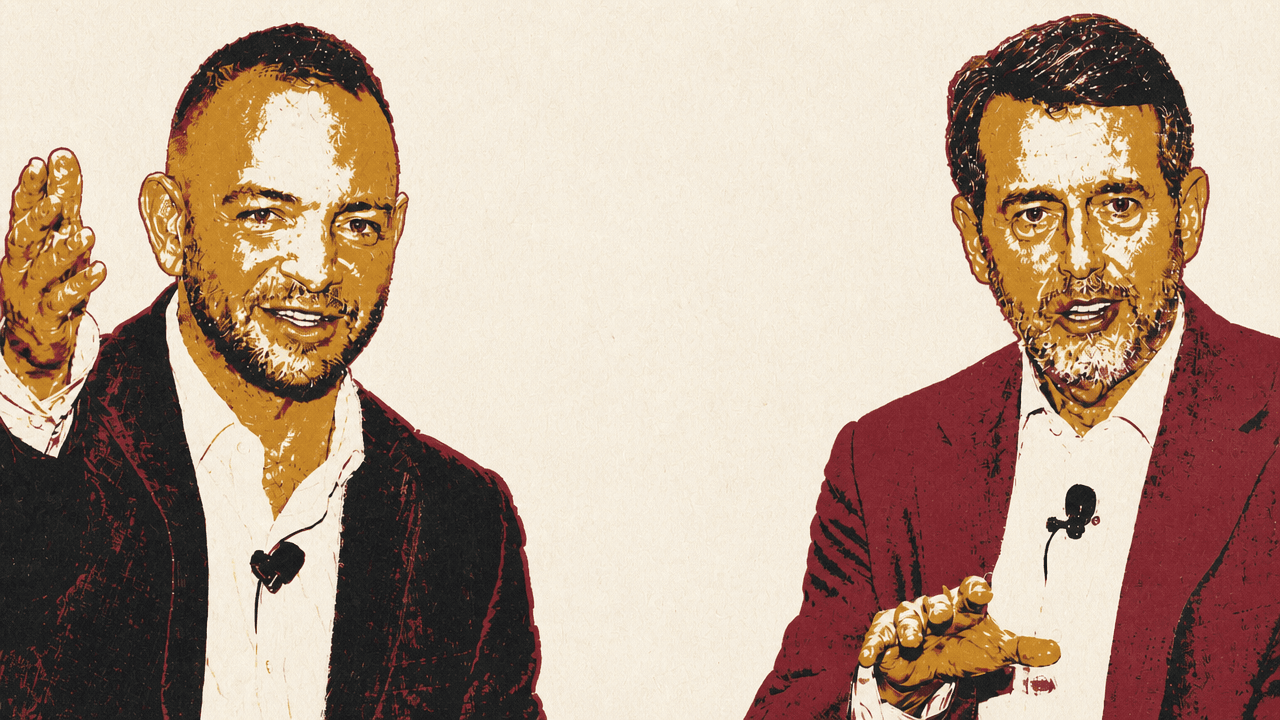
AI could become the issue voters run against
David Plouffe’s highest-stakes forecast is that AI could plausibly become the dominant issue in the 2028 presidential race, not because voters have mastered the technology but because they feel it is being imposed on them. They are being told, in his account, that jobs may disappear, children may not need college, the United States must beat China, energy infrastructure must be built, and the social contract may change. The public hears all of that from powerful technology leaders it already distrusts.
Plouffe does not think AI will decide the 2026 election. The dominant force in that cycle, he said, will be spending — “Star Wars out there” — and relatively few voters will cast a ballot because of AI. But by November 2028, he thinks it is “quite possible,” though not certain, that AI could be the dominant issue in the presidential race. A year earlier, he said, he would have thought that prediction sounded crazy.
The reason is not only the pace of technological change. It is the cross-party character of the backlash. Six to nine months earlier, Plouffe said, relatively few Republicans were loudly negative about AI, understandably given Donald Trump, David Sacks, and JD Vance’s support for light-touch or no regulation. But he now sees prominent MAGA voices sounding “indistinguishable from Bernie Sanders and AOC” on AI.
That creates an opening for candidates in both parties to attack the technology from a protectionist or anti-elite posture. Plouffe imagined a presidential nominee looking into the camera during an October 2028 debate and promising a “kill switch” if job losses become too severe, terrorists use AI to endanger society, or the mental-health crisis worsens. People in a tech audience might laugh at the technical or practical absurdity, he said. But politically, he predicted, such a promise could be a “90-10 issue.”
If the job losses get too severe, if terrorists are using this technology for purposes that will endanger our society, if we’re seeing the mental health crisis get worse, I will make sure there’s a kill switch.
Plouffe does not believe a literal kill switch is realistic. His claim is that the public’s desire for control over an accelerating technology could create “great political profit” for politicians who position themselves closer to stopping AI than managing it. He expects some Democrats and Republicans to argue for continued acceleration paired with guardrails, especially through the lens of competing with China. But he also expects more politicians in both parties to say the country must find a way to stop AI, even if stopping it will not actually happen.
JD Vance is a key example in Plouffe’s analysis. Because Republican primary voters are, in many cases, as negative about AI as Democratic primary voters — and sometimes more negative — Plouffe predicted Vance would separate from Sacks and Trump on AI by the first or second quarter of 2027. Not completely, but enough to reflect the pressure of the electorate that would determine the Republican nomination.
The technology’s military implications deepen the politics. Alex Kantrowitz joked about “battle bots” after Plouffe discussed drones, Ukraine, and the prospect of fully mechanized battalions. Plouffe’s concern was that if countries can fight with machines rather than their own citizens’ bodies, leaders may find conflict easier to enter. As a “casual student of history,” he said, his view is that leaders like conflict, and reducing the visible human cost to their own population could produce more of it.
Even discussion of trades, one of the few supposedly safer categories, comes with caveats. Plouffe acknowledged that many people argue AI will create opportunity for plumbers, electricians, and other skilled trades, and he thinks society should already have had more people choosing those routes before AI. But he warned against treating trades as permanently immune. Elon Musk may be almost alone in saying even plumbers and electricians will eventually be unnecessary, Plouffe said, but robotics will continue to advance, and some tasks that seem difficult to mechanize now may not remain so.
The backlash starts before AI
David Plouffe’s read of public hostility toward AI begins with the conditions into which the technology has arrived. If Americans felt secure about their own finances, confident their children would be better off, less divided, and less suspicious that public life had lost a shared factual ground, he said, AI would still be difficult politically. But it would not be “blisteringly” negative.
Instead, AI is landing inside what Plouffe called a “toxic stew” of economic anxiety, institutional distrust, parental fear, and resentment toward technology leaders. In that setting, AI touches “every erogenous zone of negativity in politics”: job loss, inequality, mental health, energy prices, children’s futures, and the feeling that another major technological change is being imposed on the public before the public has any say.
Alex Kantrowitz framed the problem with two polling references as he described them from the stage: people told YouGov, he said, that they were three times more likely to believe AI would be a force for negativity than positivity, and Pew polling on data centers showed broad concern about energy prices, quality of life, environmental effects, and local impacts. The tech industry keeps telling people AI will be good for their lives, Kantrowitz said, but the public largely despises it.
Plouffe’s answer was not that people misunderstand the technology. Americans are paying attention to what AI leaders have said. They hear warnings from prominent builders that there may be no jobs, that children may not need traditional schooling, that the social contract may have to change. When those same leaders or their peers suggest that companies could eventually pay people some annual stipend — Plouffe mentioned focus-group reactions to proposals in the range of $6,000 to $8,000 a year — the response he hears is not gratitude. It is rejection.
People do not want to be told that ambition will be replaced by a check, Plouffe said. They also do not believe companies will voluntarily hand over their profits. If such payments ever happened, he argued, they would have to be mandated by law, because public-company boards and shareholders would not simply approve large transfers to the public.
They want ambition. They don’t want to be told that they’re going to — and by the way, they don’t believe that the money will come to them.
This is why Plouffe is skeptical that the industry can rely on abstract promises of abundance. The public hears an argument that the wealthiest people in the world, many of them associated with social media companies, will benefit first and most. It hears that workers may be displaced, energy bills may rise, and children may face a weaker future. Against that, a geopolitical case — if the United States does not lead, China will — does not move voters very far.
Plouffe said the China argument is true but politically ineffective. Voters are not going to accept losing jobs, watching their children struggle for employment, or paying higher energy prices so that China does not win. “That dog does not hunt,” he said. For industry leaders who believe geopolitics can “crack the code” of public opinion, he called the assumption “laughable, unfortunately.”
The difficult wrinkle is that individual use and social judgment are diverging. More people are using AI products every day, Plouffe said, and many are getting real value from them: at work, in fitness, in research, in planning a family vacation, in health questions. Yet personal utility has not translated into confidence about society-wide consequences. The open question, in Plouffe’s view, is whether sustained individual use will make people more positive over time, or whether the divide between “useful for me” and “bad for society” will persist.
Hope messaging fails when people fear the downside more
Alex Kantrowitz suggested that Silicon Valley had borrowed, in some sense, from the Obama campaign’s language of hope and change: technology companies often sell themselves as changing lives for the better. But many people do not feel hope in their lives, he said, and may simply not believe the message.
David Plouffe connected that skepticism to a broader collapse of trust in institutions and powerful people. Citizens are “disinclined” to believe optimistic messages from elites, he said, because they suspect they will “get the shaft” while someone else profits.
That does not mean hope has no place in AI messaging. Plouffe identified health as the strongest terrain for it. Many people are already using large language models for health research and self-directed diagnosis, he said, and getting value from them. AI-enabled health breakthroughs are easier to connect to widely shared benefits than recipes, fitness tips, or consumer convenience.
But Plouffe argued that the industry has not done enough to speak to the core economic fear. He wants more attention on small and medium-sized businesses using AI to grow revenue, increase productivity, and expand their employee base or at least avoid layoffs. The public sees major layoffs at large companies, even if people do not read the full business coverage, and those headlines scare them. Stories about cooking and fitness may be pleasant, but they do not answer the question people are asking: will there be an economic pathway for me and my children?
The obstacle is what Plouffe described through loss aversion. In education and health care, he said, even when people think a system is not working, they fear change more than they welcome reform. AI is producing a similar reaction. People may hear plausible stories of productivity, cure, and empowerment, but they also hear warnings of economic devastation. If they are already unhappy with their economic situation, the possibility that it could get worse can dominate any promised upside.
Kantrowitz tested a more blunt message: maybe the benefits of AI will not be evenly distributed, but they will be available to people who choose to use the tools. In that framing, Silicon Valley companies get rich, but so do people who use AI to increase their own impact as employees, founders, or independent operators. Kantrowitz’s instinct was that such a message would not resonate.
Plouffe agreed, and sharpened the point. Telling people that some will be fine and others will receive a stipend would not merely fail politically, he said; it could cause unrest. A social settlement in which a minority succeeds and everyone else is pacified by payments is not politically sustainable. “The country comes apart,” he said. “The world comes apart.”
His preferred approach is not to deny disruption, but to narrate an inclusive economic pathway. He also suggested there are demographic arguments available: slower population growth, aging societies, and a future with fewer workers may make AI economically necessary in ways voters can understand. But he repeatedly returned to concrete examples from small businesses, local employers, and health care — not broad assurances from executives.
This is not a communications problem
Alex Kantrowitz pressed on whether AI’s political backlash is a messaging problem or a “problem problem with bad comms.” Jobs were the immediate test. He noted that some companies, including crypto companies, were announcing layoffs while simultaneously presenting themselves as newly committed to AI. At the same time, he said, the labor market remained strong overall, with recent employment numbers looking good. Perhaps college graduates would be okay.
David Plouffe’s answer was careful: most layoff announcements to date, in his view, are a blend of real AI adoption and convenient downsizing. There is also copycat behavior across sectors. Most voters do not yet know someone who has lost their job directly because of AI, so job loss is still more fear than lived reality for many households.
But Plouffe said people who use these tools all day can already see work changing. Tasks that would have gone to an entry-level employee six months earlier are now prompts. In his own work, he said, AI research has been “earth-shattering.” Large language models are strong at research, ideation, and some scenario planning. He does not yet think they are great at the kind of strategic chess that requires anticipating move, countermove, and further countermove, though he expects they may get there.
That uncertainty is precisely the problem. Plouffe said no one’s crystal ball is perfect, including those of Dario Amodei, Sam Altman, Elon Musk, and Mark Zuckerberg. Still, he tends to believe the “law of large numbers”: when people very close to something repeatedly say profound changes are coming, they are probably mostly right. Even if they turn out to be wrong, they have already put the fear into the public conversation.
The industry response, in his view, should be to lean into the area of greatest concern rather than avoid it. Show small businesses using AI to sell more, expand, and hire. Show companies using AI without firing people. If unemployment were to reach 20% in a few years, he conceded, storytelling would not hold. But good narrative can help “through the day” when fear is ahead of reality.
Then Plouffe stated the larger communications lesson directly.
I’ve never met a communications problem. Ever. You just meet problems. And good communications can sometimes mitigate it, never solve it. And bad communications can make it worse.
When Kantrowitz asked whether Plouffe was agreeing that the underlying AI situation is bad, Plouffe distinguished between reality and projected fear. Some of the problem is real, he said; much of it is a very dark future people are being told could happen, but that is not happening yet.
Part of Silicon Valley’s surprise, in Plouffe’s view, comes from thinking AI is “supposed to be the good thing.” Social media companies may have eventually recognized that many people saw their products as harmful, even if they would frame the harms differently. AI, by contrast, is supposed to cure cancer and empower people. That makes the backlash harder for technologists to understand.
But Plouffe argued that technology culture has a history of getting ahead of itself. When he moved to the Bay Area in 2014, he recalled prominent investors who believed houses should no longer be built with kitchens because food-delivery services would make them unnecessary. Around the same era, he said, people believed that by 2026 children around the world would not have to learn to drive. He thinks children will still need to learn to drive 20 years from now, even with massive adoption, because of production and adoption constraints.
AI, Plouffe emphasized, is different in scale. He believes it may affect human life more profoundly than anything in history, including the Industrial Revolution or the internet. The question is whether it causes disruption within the existing social contract or forces a complete change in that contract. But he also urged tech workers to remember that these are businesses. Shovels, windshield washer fluid, and dishwashing detergent have utility, he said; Procter & Gamble does not talk about changing the world. Mark Zuckerberg’s famous answer to Congress — “Senator, we sell ads” — captured the point for Plouffe: AI may have enormous benefits, but its leading products are still produced by firms with profit-and-loss statements, investors, and downsides.
The social-media legacy worsens AI’s burden. Most people say social media has been negative for the world, Plouffe said, even while acknowledging its benefits. It is not lost on them that many of the people now driving AI come from the same social media companies. Outside the United States, the problem is even more complicated because these are American companies, and Plouffe said his experience negotiating ride-sharing laws globally at Uber taught him that being an American company can itself be a political liability.
Parents fear both economic irrelevance and cognitive shortcuts
David Plouffe described parental anxiety around AI as at least three overlapping concerns: children’s economic future, relationships with chatbots, and learning itself.
The economic piece predates AI. Two years earlier, before most people were using or even aware of AI, parents were already deeply worried about whether their children would be better off. There used to be a divide between white-collar and blue-collar parents, Plouffe said. Now white-collar parents are as concerned as blue-collar parents about their children’s economic future.
Parents are absorbing news about job displacement, even if much of it is still prospective. Plouffe said college-graduate unemployment is 7% to 8%, higher than usual but still under double digits. Parents of children in their mid- to late-20s who have lost jobs see that replacement employment is harder to find. The result is confusion about what children should study, whether they should attend college, whether they should pursue trades, and whether STEM is still a safe bet.
The chatbot concern is less widespread in daily experience, Plouffe said, but vivid stories have created parental alarm. There have been enough “horrific stories” that parents are worried. He said some large share of children of certain ages — he estimated 40% or 50%, while noting he did not know the exact data — say they have a relationship with a chatbot. Parents hear that against a background of loneliness, phones, video games, COVID’s social effects, and young people spending more time alone.
Plouffe allowed that norms could change. In 10 years, relationships with chatbots might seem ordinary, and older people who did not grow up with them might seem out of touch. But right now, parents see the trend as part of a broader weakening of social life.
The learning concern is more direct. Parents increasingly worry that children use LLMs as shortcuts. At the same time, Plouffe said, being a strong prompt writer may be one of the most important capabilities a college graduate can have right now. Parents want children to master the tools, but they also see academic studies suggesting that overreliance can reduce retention. Parents share these stories, circulate articles, and talk about them on weekends.
Younger users themselves are more relaxed, in Plouffe’s view. They tend to think they have it under control: they use AI when they need it and still learn. They are probably right in some cases. Eighteen- and 20-year-olds are not truly AI-native, he said, but they are AI-fluent. Gen Alpha will be AI-native, for better and worse.
An audience member quoted Mark Cuban’s formulation: some people will use AI so they do not have to learn anything, and others will use it so they can learn everything. Plouffe agreed with the premise that the difference is a choice.
Data centers give people a target and a sense of agency
Data centers are, in David Plouffe’s account, a relatively small part of the overall AI story but the most tangible place where citizens feel they can act. They are physical, local, and politically stoppable in a way that model development is not. People can pressure a county commission, city council, state legislature, or local vote. They can demand moratoriums. They can say no to a site in their community.
That tangibility is why the politics are so intense. Alex Kantrowitz noted that polling is especially negative around data centers: people worry they will raise electricity bills, damage quality of life, hurt the environment, and produce limited employment. He also said Maine was, as he understood it, in the process of enacting what he thought might be the nation’s first AI data-center moratorium, at least until roughly the following November.
Plouffe said AI companies and other financial players will have to contend with the backlash. He thought the industry made an early mistake by emphasizing construction jobs. Those jobs matter, he said, but they are temporary. The stronger case is fiscal and local: if a data center is built in your community, residents might be told, property taxes could fall, the town could hire more police officers or teachers, and schools could receive more investment.
The message Plouffe outlined is not heroic or utopian. It is comparative and pragmatic: this infrastructure will be built somewhere. It could be your county or the county next door, your state or another state. If the costs can be contained and the benefits captured locally, a skeptical resident might decide it is better to benefit than to watch someone else do so.
He also said the industry has been smart to accept, at least rhetorically, the idea that companies will absorb increases in energy costs rather than pass them to consumers. People do not yet believe that promise, he said. If it turns out to be true, companies need to tell the story through communities that have already experienced the benefits.
His model for effective data-center messaging was a skeptical local resident, not a corporate spokesperson: someone from a county or town in Maine or Wisconsin saying they were not enthusiastic at first, but learned that another community saw lower property taxes, more police officers, and more school funding. The broader principle was to meet people where they are.
Plouffe used the 2026 election as an analogy. If Democrats have a good election, he said, it will be because many people “hold their nose and vote for them.” He described American politics as suffering from “market failure,” with voters unhappy about both choices. In such an environment, the best messaging often is not aspirational “hero messaging.” It is skeptical, concrete, and honest about tradeoffs.
Data-center fights will not fall neatly along blue-state and red-state lines. Plouffe expects some projects to be stopped, including possibly through statewide moratoriums, over the next three to five years. Siting matters, and the industry cannot simply put everything in deep-red states. But red-state politics are becoming trickier too. MAGA skepticism of AI means Republican areas may also resist.
What data centers reveal most, for Plouffe, is the public’s anger at being acted upon.
People feel that this is just happening to them, and they’re really pissed about it.
They are told there may be no jobs, children may not need college, the country must beat China, their way of life will change, and ambition may be replaced by growing vegetables in an era of abundance. They felt social media happened to them in a similar way, and they blame politicians for failing to protect them. Some politicians, Plouffe said, do not want to be caught behind another technological wave.
Optimism depends on whether younger people get power
David Plouffe’s optimism centers first on young people. Through his work with the Obama Foundation, where he chairs the program committee, he spends time with young leaders around the world trying to improve their communities. He described that as the most inspiring part of his days. Young people, he said, still have ambition and are willing to fight through obstacles.
On AI specifically, Plouffe thinks young people are less fearful because they are using the tools. Even while being told jobs may disappear, they believe they can leverage the positive side. Alex Kantrowitz added that young people often say “I can” before age, resource constraints, and institutional friction teach people to say “I can’t.” He described children learning to code with Claude Code, connecting it to Arduino, and building hardware products.
Plouffe also finds optimism in health breakthroughs, many of them enabled by AI. He is conflicted about large investments aimed at extending human life to 120 rather than 80 or 90, which he called arrogant and possibly inconsistent with how life is “supposed to happen.” But interventions that let people avoid dying young or live longer in the face of disease are, to him, profoundly exciting.
He put autonomous vehicles in a similar category, while framing the benefit as conditional on broad adoption. If adopted at scale in trucking and passenger transport, he said, they could be the biggest public-health victory since anti-smoking efforts, because vehicle deaths are a leading cause of death among people under 25. The possibility of bringing that close to zero is, in his view, a major reason to be optimistic.
Still, Plouffe resisted Silicon Valley’s instinct to let optimism obscure danger. He described the Bay Area and California as places where people can be shielded from how bad things look elsewhere: by climate, time zone, wealth, social environment, and a surrounding culture of optimism and action. After Washington, where he saw a bias toward inaction and the belief that problems cannot be solved, the Bay Area’s bias toward action was a privilege to experience. But he argued that the right posture is a blend: realism about the challenges, and recognition that technologies being created now could profoundly improve the world.
That led him back to leadership. Plouffe said the world has poor leaders, and he singled out California’s gubernatorial field as depressing given the scale and difficulty of the job. He grouped governor of California, mayor of New York, and president of the United States as extraordinarily hard jobs, not prizes to be attained. Anyone considering such roles should first ask whether they actually want to do the job, because it will age them, make them miserable, and force them to choose daily between bad and worse options.
What encourages him is a younger generation that treats public service less as a career ladder than as a tour of duty. A law-school graduate may become a line prosecutor for a few years. A data expert may work at the VA. Someone may spend two or three years in a city manager’s office rather than commit to a lifetime in government. Plouffe thinks that is what public life needs: more people willing to enter flawed institutions for a defined period to improve them.
Historic founders still need democratic institutions around them
Alex Kantrowitz returned to a generational question. Plouffe had been his commencement speaker, telling graduates that they had already made history and could make it again. Now many AI lab leaders are roughly of that generation: Sam Altman, Dario Amodei, and others building systems that may become the defining contribution of millennials and their peers. Kantrowitz asked whether Plouffe would have expected that legacy, or whether he would think, “I can’t believe it came to this.”
David Plouffe’s answer was that AI could be the largest change in human history — perhaps since fire, perhaps larger. He does not think its builders set out to destroy. He sees enormous possible upside in disease, climate, city planning, food, education, career guidance, and human learning. If a generation helps cure cancer, save the planet, feed more people, or improve education, its ambition will have mattered.
But Plouffe returned to “the human element.” More people from the AI generation and younger generations need to give themselves to public life, even when government is ugly. The founders and CEOs of AI companies will be historic, he said, without question. Whether history judges that role as good, bad, or mixed remains open.
The political challenge is generational as much as technological. Plouffe argued that more people in their 20s and 30s need to run for office and win, so voters can see themselves in their representatives. He said the Democratic Party would be stronger if many older officeholders, especially those over 70 or 75, were gone, but his point was not only partisan. Someone who is 82 cannot fully understand how an 18-year-old wants to live or will live, he said. The people making decisions for the young often do not understand the lives they are shaping.
That gap shows up in economic policy, housing, work, and technology. Plouffe said many Democrats still talk about the economy as if people will work one place for a whole life, 40 hours a week. Housing rhetoric often centers homeownership and the white-picket-fence ideal, while many people in their 20s experience shelter through rental housing, and not all young adults want the same path to ownership. Leaders who do not understand how AI will change jobs, education, health care, communication, and information flows are making a “grave, grave mistake.”
Autonomous vehicles illustrate the same failure of imagination. If adopted at scale, Plouffe said, they will completely change how cities should be designed. Yet most communities ask how autonomous vehicles fit into existing systems rather than what those systems could become.
For Plouffe, the central demand is not to choose between AI optimism and AI pessimism. It is to put AI at the core of how society thinks about where it is going, while ensuring that political power is held by people closer to the lives being reshaped. The founders may become historic because they built the models. The harder question is whether democratic institutions, public leaders, and citizens can shape the world those models help create.