Culture and Distribution Powered Blackstone’s Rise to Nearly $1 Trillion
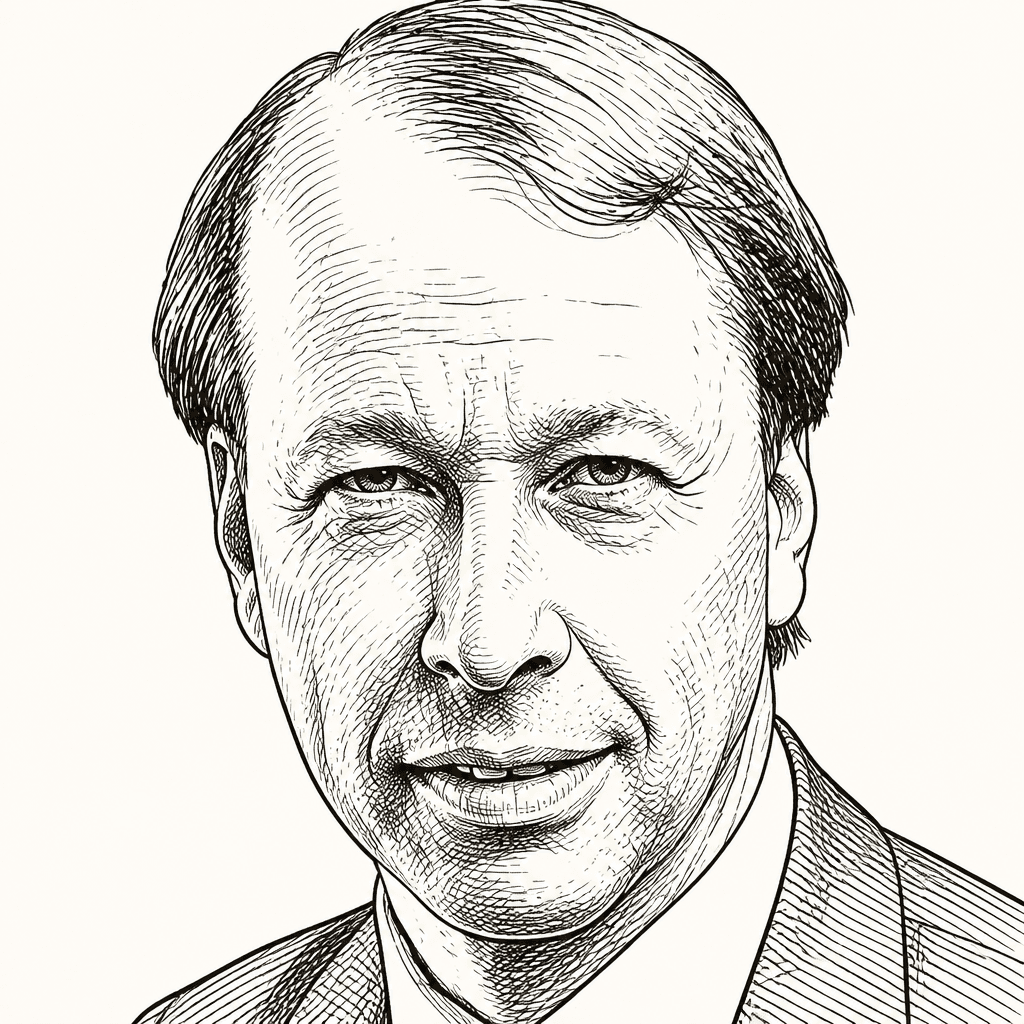

Tony James, former president and COO of Blackstone, tells David Haber on the a16z Show that his career at DLJ, Costco and Blackstone was defined less by asset class than by a repeatable operating pattern: enter under-scaled franchises before the opportunity is priced, then use culture, disciplined decision-making and structure to let them compound. He argues Blackstone’s rise from roughly $16bn in assets to near $1tn depended on turning a collection of subscale businesses into a firm-level machine, with investment committees, distribution and succession treated as sources of advantage rather than administrative chores.
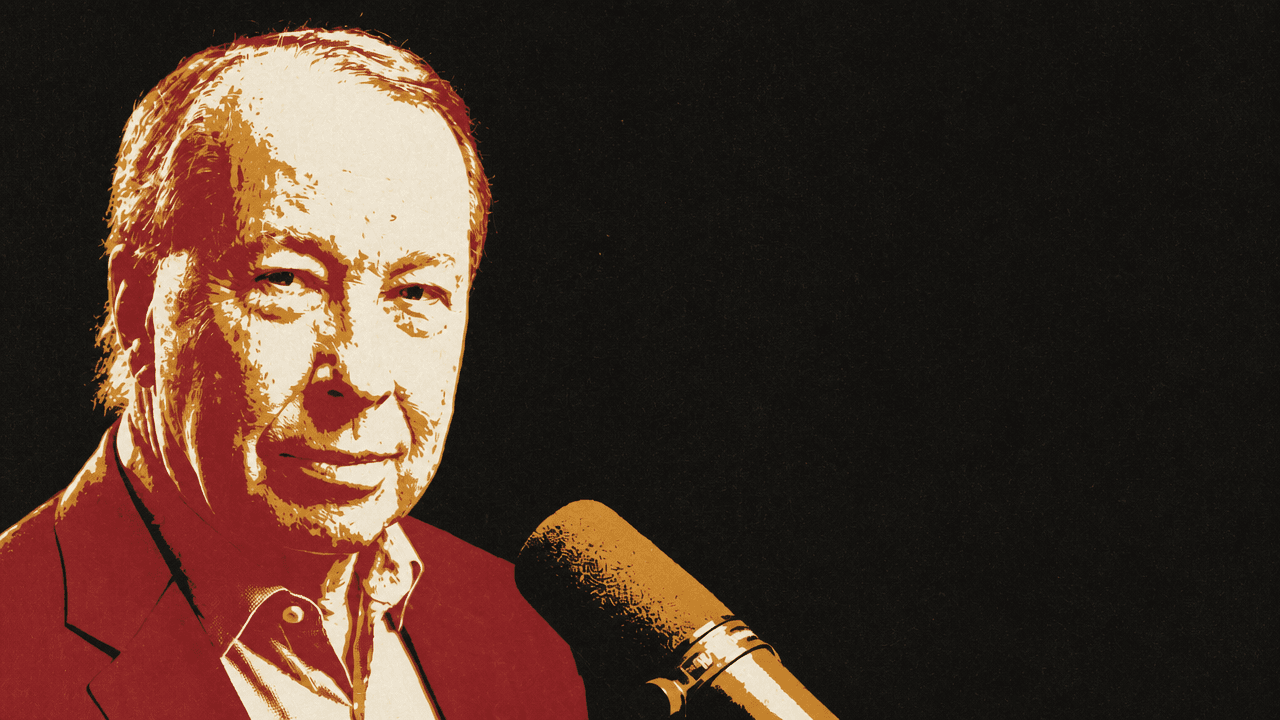
James’s playbook was turning under-scaled platforms into franchises
The through line in Tony James’s career was not a single asset class. It was a pattern: find an under-scaled platform before the opportunity is fully priced, build the culture and structure that let it compound, and keep pushing through the steep part of the S-curve before the work becomes mostly defense.
Tony James framed the most productive phase of company-building as the middle of that S-curve: after the flat entrepreneurial beginning, before the mature phase becomes “protect the castle.” That preference explains the arc from DLJ to Costco to Blackstone. James was describing an operating pattern more than an investment category.
Blackstone was the clearest case. David Haber noted that people know Blackstone today as a trillion-dollar AUM business, but it looked nothing like that when James joined in 2002. Haber put the starting point around $14 billion in assets; James described it as roughly $16 billion. The firm had private equity, real estate, hedge fund fund of funds, a tiny credit business, M&A, and restructuring advisory. In James’s telling, all were somewhat subscale.


Private equity had raised a fund and made a couple of disastrous investments, with write-offs equal to about a third of the fund within a year. Advisory was down 50% to 75% from its peak and not improving. Fund of funds was tiny and not very profitable. Real estate was still small. James did not join because Blackstone was already inevitable. He joined because it was positioned at the part of the curve he liked most.
He had considered starting his own firm, and said LPs and professionals encouraged him to do so. But he wanted a larger canvas than “two guys in a corner.” Every business Blackstone was in, DLJ had already been in, and those businesses had reported to him. He believed he had seen the same growing pains at DLJ a few years earlier and knew how to work through them. “If I could get my hands on Blackstone,” he said, “I could be dangerous.”
The scale changed dramatically. James said Blackstone’s AUM went from about $16 billion to nearly $1 trillion during the arc he was describing, but he was prouder of the market value. AIG had invested $100 million for 10% of Blackstone and fund-investment rights, implying at best a $1 billion value. When James left, he said Blackstone was worth $170 billion.
James stressed that the growth did not come from simply gathering more assets at lower quality. He said Blackstone’s fund IRRs went up while the business scaled. That distinction mattered because an asset manager can grow by accepting more commodity-like returns. His claim was that Blackstone avoided that trade-off.
The partnership with Steve Schwarzman started with unusual clarity. James first worked seriously with Schwarzman in 1989 on the CNW railroad deal, where DLJ was an equity shareholder and also providing high-yield debt, M&A, and other financing work. The sticking point was a reset note priced around 15% that could reset up to 18%. Schwarzman resisted because he believed DLJ would reset it to the maximum. James called that instinct a strength: Schwarzman had “a great great nose for how to get screwed in a deal and how to avoid it.”
DLJ needed the financing done because it had provided a bridge loan. When Schwarzman asked whether James would put personal money behind the reset risk, James said yes. The personal exposure was small relative to what DLJ could lose if the deal failed, but it gave Schwarzman the pound of flesh needed to move forward. Years later, after DLJ was sold and James had completed a two-year commitment at Credit Suisse, Schwarzman called and asked him to lunch.
James’s first reaction was hesitation. He told Schwarzman that he was a tough boss and that James had not really had a boss in 15 years. Schwarzman’s pitch was that James would run the firm day to day, they would talk constantly, and Schwarzman would back him unless performance failed. James said they agreed 98% of the time, and that Schwarzman lived up to the bargain. Blackstone was Schwarzman’s “baby”; giving away that level of control was something James said “not one in 100” founders would have done.
The machine started with culture and investment committees
At Blackstone, Tony James focused first on culture. From DLJ and Costco, he had come to believe that culture was central to performance. That meant changing people and leadership. He said virtually every business leader was changed. The firm moved from a collection of talented but difficult people who did not work together toward a team orientation.
James rejected the idea that all process is bureaucracy. Good process, in his view, can encourage better decisions, better information sharing, and more efficient use of time. He was deeply opposed to bureaucracy and hierarchy. At one point, he had 56 direct reports, which he described as an attempt to minimize hierarchy because hierarchy brings bureaucracy.
His management style, he said, fit “small elite teams” better than a giant organization. He did not think he would be good at managing the U.S. Army, Costco, or a huge Swiss bank. But for elite investment organizations, he emphasized robust debate, lack of hierarchy, modeling the behavior expected from others, and the need for the leader to be a strong investor.
In Blackstone’s investment committees, deal teams were expected to arrive with conviction. If they did, James would almost by definition challenge them. He acknowledged that people accused him of arguing the other side no matter what they said, and said there was some truth to it. The purpose was to find weak points, omissions, and inconsistencies.
James called investment committees Blackstone’s “cultural crucible.” They transmitted how the firm thought, how people spoke to one another, the level of analytical rigor, and the lessons from successes and failures. A leader who merely presided over them, or had not done the work, lost much of that transmission.
He also believed the head of an investment firm had to be able to stand on equal footing with the investors. Respect came from being able to talk to top investors without losing a step. If he did not read committee materials carefully, sloppiness would rise. Finding the detail on a later page that conflicted with an earlier thesis sent a message: someone is watching, and the work has to be flawless.
The process was not purely mechanical. There were times, James said, when investing required feeling, “seeing around corners,” or recognizing that a committee discussion had become unfairly stuck on an error and lost momentum. In those cases, he might put his finger on the scale. But he still described Blackstone’s decisions as collective. Groups, especially investing groups, made better decisions than any one individual.
That collective model was also a scalability decision. James described Blackstone before his changes as a firm with independent, talented people who would not challenge one another or do the work on one another’s deals, plus one smart but bottlenecked CIO. That was not a scalable model.
The moat became the firm, not just the funds
David Haber offered a distinction between a fund and a firm. In his formulation, a fund can optimize for carry with the fewest people in the shortest time; a firm has to produce returns while also building compounding sources of competitive advantage. Tony James agreed with that framing and applied it to Blackstone.
For James, one of the hard parts of running a firm was making people in a fund care about more than their fund. The balance was delicate: enough firm-level concern, but not so much that fund-level accountability disappeared. He said there was no theoretical model for getting the rewards right; his approach came from trial and error.
Blackstone’s growth created a problem. LPs, in James’s framing, wanted monoline boutiques: one strategy, one genius in the corner. Blackstone was becoming a supermarket, and a big one. The managerial question was how to turn that disadvantage into an advantage without stopping growth or accepting mediocrity.
One answer was thematic investing across businesses. Haber gave e-commerce as an example: conviction could show up not only in an e-commerce company but also in warehouses or cloud infrastructure. James described taking a “mosaic tile” from each unit and assembling a clearer view. No one signal was decisive, but reinforcement from independent businesses could reveal a theme early enough to matter. For a large firm moving significant capital, that early detection was critical.
By the time they’re obvious, it’s priced in.
Another answer was retail distribution. James said retail investors had about 2% of their assets in alternatives, while institutions generally had about 25% and more sophisticated endowments about 50%. Insurance assets were also underpenetrated. He saw institutions as only one third of the available market, with retail and insurance representing the other two thirds.
Blackstone built a large retail distribution capability early. James said it had 500 people. The effort did not begin simply by hiring salespeople. Blackstone created Blackstone University to train brokers at wirehouses on alternatives, then a masterclass for deeper training. It built a proprietary CRM and data system to know more about the questions and behavior of Merrill Lynch clients, UBS clients, and thousands of RIAs.
James called retail distribution the dominant strategic asset Blackstone had, and one he believed others could not easily replicate. The advantage depended on breadth of product, always-open vehicles, revenue scale to support overhead, and brand reinforcement. It was also a hedge against the day Blackstone’s returns were not the best. In his phrasing, he was willing to live by the sword while Blackstone had the hot hand in investing, but he did not want to die by the sword.
The same firm-building logic applied to acquisitions. James said Blackstone wanted a few large, dominant businesses, not many small ones. The GSO acquisition became the basis for a $100 billion credit business. Strategic Partners, bought from Credit Suisse for $119 million, became a $120 billion secondaries business, according to James, and “worth tens of billions.” He said Blackstone made about a dozen acquisitions, and every one worked, though two did not move the strategic needle while still generating three or four times the money.
The criteria were specific: cultural fit, ambition to scale, appreciation for what Blackstone brought, a fair balance between what the house took and gave, the possibility of leadership in the category, confidence in top-quartile investing, and buying small enough that Blackstone shareholders captured the growth rather than paying someone else for it.
| Lever | James’s description | Strategic purpose |
|---|---|---|
| Culture and leadership | Changed virtually every business leader and moved toward team orientation | Made the organization more scalable and less dependent on isolated stars |
| Investment committees | Robust debate with little status hierarchy | Turned decision-making into the cultural crucible of the firm |
| Thematic information sharing | Mosaic tiles from multiple businesses | Helped detect early signals before they were obvious and priced in |
| Retail distribution | 500-person capability, Blackstone University, proprietary CRM and data | Built a distribution asset James said others could not easily replicate |
| Acquisitions | Bought small teams or platforms that could scale inside Blackstone | Expanded into large businesses while keeping growth value for Blackstone shareholders |
The IPO converted partnerships into a company
Blackstone’s IPO was not just a financing event. Tony James described it as a complex conversion of loosely connected economics into a public company. Blackstone was not a single firm in the formal sense, he said; it was 173 independent partnerships with different ownership percentages. Every fund had different ownership from every other fund. Rolling those interests into one entity required giving everyone the right number of shares.
There was also no clear accounting model for a public alternative asset manager like Blackstone. James said they considered multiple approaches to carry: recognizing it when realized, marking accrued carry to market, or using option models to value it. Tax structure was another question. Blackstone initially chose a publicly traded partnership structure because insiders preferred the tax treatment, though James said the market did not like it and the company later converted.
The cultural problem was just as important. Blackstone’s ability to go public depended on strong investment performance, and James did not want the IPO or the public-company burden to distract the investing partners. The firm built corporate overhead so investment professionals would not be pulled into the process or the ongoing public-company machinery. James said that added $75 million a year in operating cost at the time.
The IPO also made people very wealthy. James worried about demotivation as much as distraction. Blackstone was asking people to give up some annual income in exchange for stock that could be worth tens or hundreds of millions of dollars. To keep people working, the firm restricted stock sales for eight years and used vesting terms that allowed unvested stock to be taken away if someone stopped performing. James said Blackstone did not lose anyone it did not want to lose for eight years, and people remained motivated.
The process itself was tightly held. James said Schwarzman delegated much of the plumbing to him, and for nine months he worked on it at night with outside bankers and lawyers rather than internal teams. He reported to Schwarzman and Pete Peterson, but treated it as a secret project to avoid distracting the firm and triggering internal battles over status and economics.
DLJ was the origin story for the same operating logic
When Tony James joined DLJ in 1975, it had an investment banking team of five and had not completed a financing or merger in two years. “There were at least a hundred firms bigger than it was,” he said. The attraction was not the franchise as it existed; it was the absence of structure. If the firm started to work, young people could be pulled up faster than they deserved. That feedback loop accelerated learning, confidence, and responsibility.
DLJ eventually grew, in James’s description, “from essentially nothing to the fifth largest securities firm,” compounding at more than 15% for 25 consecutive years. The firm became known for a culture people loved, and he emphasized that the emotional attachment mattered: people spent much of their lives at work, and DLJ’s environment created loyalty that survived long after the firm was sold.
The strategic inflection came in 1980, when KKR took Houdaille Industries private. James saw that a small firm could use principal capital to “end run” bigger competitors. DLJ did not have more bankers, more clients, more capital, more distribution, or more track record. But it could buy companies it could not win as clients, then do their financing, advisory, and capital markets work.
That became the basis for what James called a true merchant bank: investment banking and principal investing built side by side. He argued that the larger banks should have beaten early private equity firms such as KKR and Forstmann Little, but they were ambivalent. Their client-service model made them wary of owning companies that might compete with clients. Their old-line bankers did not understand the new business and did not want to understand it. That institutional hesitation gave DLJ room.
DLJ’s first fund, James said, had a 90% IRR. He added that the era was easier: prices were lower, companies were more undermanaged, assets were heavier, and leverage was much more available. In some cases, by rolling fees, DLJ could effectively own a company. A landmark deal buying retailing subsidiaries from Household International put the merchant banking business on the map. DLJ bought a group that included Vons, Ben Franklin, TGI, and Coast to Coast Hardware, sold pieces quickly, and ended up, as James described it, owning Vons “for free.”
DLJ’s high-yield strategy was built in the shadow of Drexel. Drexel had the credibility to issue “highly confident” letters. DLJ did not. “If we said we were highly confident people would say, well so what? You don’t matter,” James recalled.
DLJ’s answer was a bridge fund. It was a way to say, in effect, that the firm would put real capital behind its commitments. But the bridge fund also exposed DLJ to existential risk. James said DLJ “bet the fund and we bet the firm on every bridge loan.” The lack of capital eventually became an Achilles’ heel, but before that, it forced disciplined credit and market judgments.
The model also created a distribution advantage. Because DLJ often controlled the issuer, James said the firm could build in a little extra yield. That helped its high-yield issues trade up after issuance, and in debt, he noted, a small positive move could be meaningful. The market came to regard DLJ as a high-yield distributor whose offerings were worth buying at issue.
When Drexel collapsed, larger firms remained ambivalent about high yield, especially because the market carried a “taint” after Drexel. DLJ, sitting in second place, “inherited the world.” James said the firm accounted for 40% of high-yield trading volume for 12 years. Drexel’s failure was a huge boost to DLJ’s banking business, though not especially to its principal business.
The sale of DLJ to Credit Suisse in 2000 came from the opposite judgment: the hand that had worked was no longer a winning hand. James cited both macro and micro reasons. Glass-Steagall was coming down and banks with larger balance sheets were entering the market. Research, one of DLJ’s strengths, was being separated more from investment banking. Cash equities had moved from negotiated rates to low commissions, while larger firms could make money in derivatives that DLJ lacked the technology to build.
At the same time, DLJ’s bridge fund was $1 billion, and bridge loans themselves had grown to $1 billion; with $100 million of DLJ’s own capital at the bottom, one mistake could have threatened the firm. James said many colleagues blamed him for the sale because DLJ’s culture had become so meaningful. But he defended the timing. DLJ sold for $14 billion in cash; two or three years later, he said, Morgan Stanley sold for $8 billion. If DLJ did not have a winning hand, he argued, it exited at the right time.
Costco supplied the operating lessons in their simplest form
Tony James led the Series A into Costco, and he added that DLJ also backed Starbucks. The Costco story began when Jim Sinegal and Jeff Brotman came to him with a version of the Price Club model for the Pacific Northwest. A Goldman analyst, Joe Ellis, had written a report that laid out the business model in a way James found powerful and elegant. It had one proof point in San Diego, and the new market was affluent.
What convinced him most was Sinegal. James described him as one of the best executives he had ever met, possibly the best: driven, exacting on details, clear on principles, and unwilling to compromise for expediency. Sinegal, he said, traveled 225 days a year as CEO, attended openings, and knew the price of every item in the store.
Brotman brought another part of the founding equation. James described him as a clever real estate lawyer who also owned retailers in Seattle and understood that market. The model was not a new technology where adoption was uncertain. It was prosaic enough to understand and already working in one location.
James has remained tied to Costco for decades. When an investor backs founders before there is a company, before revenue, and before orders, he said, the investor feels a founder-like sense of ownership. At the time of the discussion, he was on his third Costco CEO. The attachment was emotional, but also informational: as an investor at Blackstone, the view from “the second largest retailer in the world” gave him insight into goods, consumers, costs, tariffs, shipping, and supply.
The business lessons he took from Costco were unusually spare. Take care of the customer. Build quality for the long term. Avoid short-term expediency. Stay focused. Execute details flawlessly. Keep improving the value proposition.
Focus, focus, focus, execution, flawless execution of details, build for the long term, build quality, and keep driving your prices down, keep enhancing your value to your customer. Never let that be static.
James used batteries as an example. If Costco finds a new source and saves a nickel, he said, 100% of that nickel goes into lower prices rather than higher margin. Most companies either nibble away at the customer value proposition to improve earnings or let it remain static. Costco keeps driving it higher.
Charlie Munger reinforced that confidence. James served with Munger on Costco’s board for 30 years and described him as intellectually uncompromising, blunt, loyal, and principled. Munger believed in Costco when others worried about Walmart, Amazon, or Whole Foods. According to James, Munger’s answer was consistently that Costco was the best and should compete directly.
James also emphasized Munger’s ability to compress judgment into a line. When James asked about newspapers, Munger told him the newspaper business was “not a business” but “an oil well that’s depleting to zero.” Asked about the Wall Street Journal, Munger replied that it was not a newspaper but a trade journal. James said he spoke with Munger every two weeks, called him a rock and mentor, and kept a bust of him in his conference room.
Succession was part of the job, not an epilogue
Tony James told Schwarzman early that he planned to retire at 70. He said he was glad he made that commitment because without it, letting go would have been harder. Blackstone was, in his description, his third run after DLJ and Costco. He wanted to build something he was proud of but did not want to hold the seat for the rest of his life.
He also viewed succession as the Achilles heel of alternative asset managers and asset managers generally. Problems may not show up immediately; they may appear three, four, or five years later. For James, succession planning was not separate from managing Blackstone well. It was one of the core deliverables.
That meant choosing a successor, grooming him, making sure his move did not damage his business, avoiding disappointment among others, and ensuring he was fully ready. James described John Gray as a natural leader, an effective external spokesman, very hard-working, decisive, and strong in investment instincts. Gray also ran Blackstone’s largest business.
James said it would have been a failure if he had not handed the reins to someone who could take Blackstone further. He argued that many leaders stay too long because the seat is profitable, ego-gratifying, and hard to relinquish. His view was that a leader should move out while still at peak performance and while the company is still rising. If the leader waits until the company tops out, momentum is lost before a successor has a chance to restore it.
James remains optimistic about private capital, but not every structure
Tony James said he looks at private markets as a whole rather than as a set of isolated businesses. He remains a believer that private markets can significantly outperform public markets over time. He also argued that many investors hold too much in liquid stocks and bonds even when they do not need the liquidity. That liquidity has an opportunity cost and can tempt investors to do the wrong thing at the wrong time.
But he was not uncritical. In private credit, yields had been attractive around 12%, then capital flooded in. Yields fell into the mid- to high-single digits for the same risk, while competition reduced covenants and other protections. Retail structures that receive money monthly and need to invest it immediately can force managers to buy whatever the market offers. Drawdown funds, by contrast, allow managers to do nothing when there is nothing good to do.
James expects some correction in private credit, though he said it would not be like 2008 because the assets are not held by banks at 30-to-1 leverage. After a shakeout, he still expects opportunities to buy private credit debt at higher returns than publicly traded high-yield debt.
He also pointed to a backlog in private equity. He said there are about 30,000 mid-market private equity portfolio companies that cannot be sold, cannot go public, and have no strategic buyer, representing “20 trillion or something” in value. Those companies eventually need liquidity. He sees opportunity in company-by-company selection through co-investments or continuation vehicles, where investors can analyze seasoned assets at attractive prices with lower fees and with sponsors doubling down.
James was especially critical of the economics of traditional drawdown funds when a good deal only doubles. Investors commit capital, pay fees before money is deployed, wait for a deal, and then, after fees and carry, may end up with 1.4 times their money over five years. His response was blunt: after tax, he said, a New York municipal bond may be almost as attractive. The better opportunity, in his view, is to hold strong private assets longer and let them compound. He said private capital and family-office capital are already oriented more toward long holds, and LPs need to evolve in that direction.
He also mentioned venture and life sciences. Companies are staying private longer, and venture funds and firms have become much larger than in the past. If investors are good enough at choosing companies, he likes the opportunity to ride them longer. Life sciences, he said, has “explosive upside,” though it is harder than other venture because of the body, regulation, and related complexities.
The career advice was to choose growth over early pay
Luck played a major role in his career, Tony James said, and he did not really plan so much as react. Still, he identified the conditions he would look for if starting again.
He would seek unstructured opportunity: an environment where no one told him exactly how to do something and then expected compliance, but where he could figure out what to do and how to do it. He would prefer non-hierarchical, non-structured organizations. He would look for places where he could change the paradigm, both because that was intellectually engaging and because that was where upside came from.
Growth mattered most. James advised against moving firms for another $100,000 of pay next year. He would instead look for lifelong learning, empowerment to do meaningful work, room to take risks, and a firm that backs people who take smart risks.
His nonprofit work with Historically Black Colleges and Universities reflected a similar operating instinct. What began as an idea around income-share agreements and student-loan reform turned into a portfolio-management-style support organization for HBCUs. James said HBCUs educate 8% of African-Americans who go to college but produce 16% of Black graduates, and those graduates earn on average 50% higher lifetime income than Black graduates of non-HBCUs. The organization he described now has 11 offices and works with about 70% of HBCU students in America, offering practical help in areas such as IT, operations, marketing, student tracking, job placement, loans, and financial statements.
At the end, when Haber noted that many successful people credited James with shaping their careers, James turned the credit back to the teams. He said he was lucky to have talented people “playing their hearts out” for the firm and for him. The trust came, in his view, from people knowing he was out for the firm first, not himself. If the team was winning and rewards were fair, the circle reinforced itself.