Public-Market Concentration Is Pushing Investors Toward Private Assets

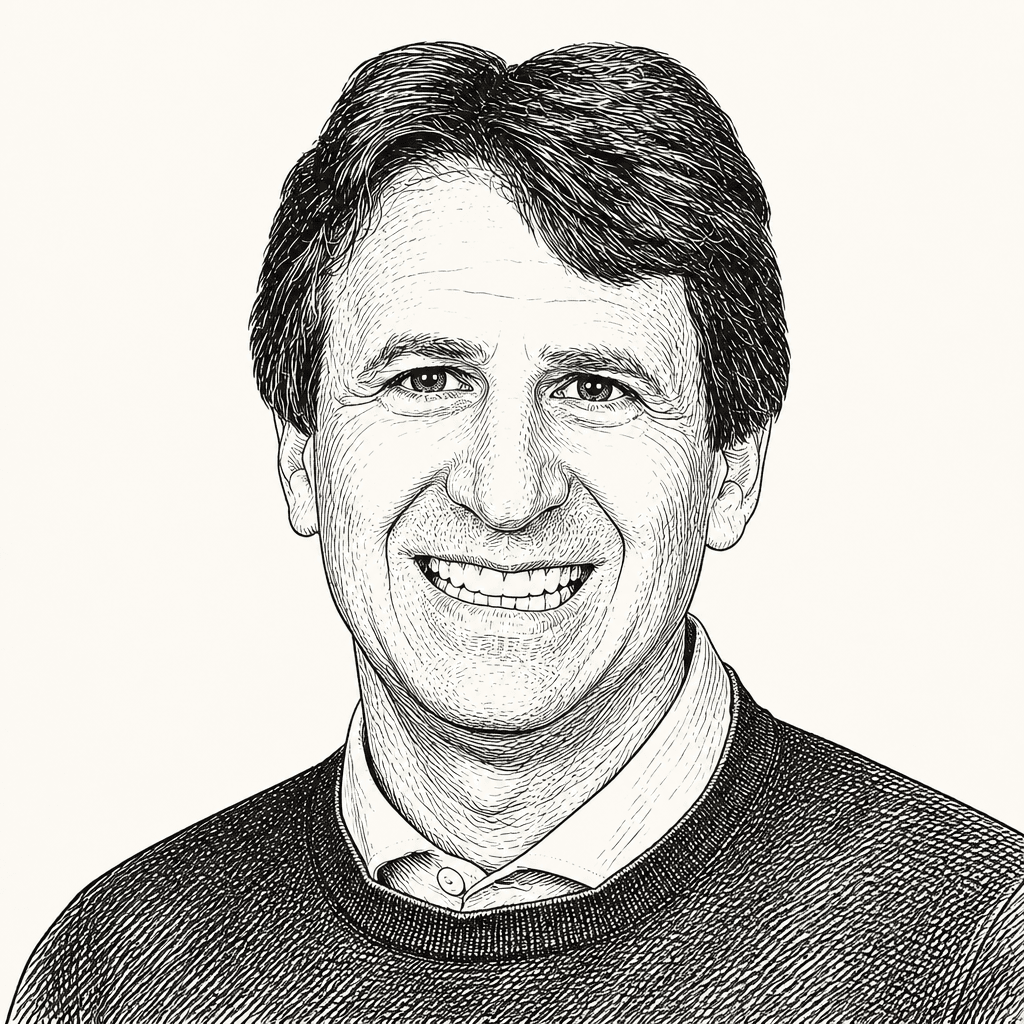
Marc Rowan, cofounder, CEO and chair of Apollo Global Management, argues that private markets are becoming central to capital allocation because public equity and fixed-income exposure is increasingly concentrated. In an a16z Show interview with David Haber, Rowan makes the case that Apollo’s future lies in originating investment-grade private credit for retirees, insurers and institutions while financing data centers, energy, defense, robotics and other capital-intensive technology infrastructure. He also says private-market products must adopt more public-market features, including daily pricing and standardized data, if they are to reach new pools of capital.

Private markets are becoming the diversification trade in Rowan’s account
Marc Rowan’s central claim is that the old public-market map no longer describes where economic exposure actually lives. Apollo, he said, is still often described as a private equity firm, but that label misses both the firm’s composition and the broader change he sees in capital allocation. Apollo is now “a little bit over a trillion dollars” in assets under management, divided between retirement services and asset management. Roughly 80% of those assets, Rowan said, are credit, and “the vast majority” of that is investment grade. The remaining 20% is split between what Apollo calls hybrid or partner-like equity and traditional private equity fund assets.
That reframing matters because Rowan sees public markets as increasingly concentrated while private markets, in his view, carry more of the economic activity investors are trying to reach. In U.S. equities, Rowan said, 10 stocks are now nearly 50% of the S&P 500, and they are “all levered to the same trend.” That concentration has so far worked for investors, but he warned that “we’ve levered most of the retirement system of the country to 10 stocks.” If the trend reverses, he said, investors may question the wisdom of that exposure.
Rowan argued that a parallel concentration is forming in global fixed income. Historically, he said, the market was dominated by 10 large banks; in his view, it is moving toward domination by five large banks and five large technology companies. For investors seeking diversification, his conclusion was blunt: “There’s no place to get it other than private markets.”
The on-screen context reinforced the concentration argument: a grid of large-company logos including Nvidia, Apple, Microsoft, Amazon, Alphabet, Eli Lilly, Tesla, Meta, and Berkshire Hathaway appeared before transitioning into a gold-textured concentration image. Another on-screen article header read: “AI Debt Now 15% of Corporate Market, Creating New Concentration Risk.” The visuals sat alongside Rowan’s point that both equity and fixed-income exposure are becoming more crowded around related themes.
Private markets, in Rowan’s description, are no longer a side allocation or a specialized alternatives bucket. He called them “80% of the action going on in the world” and pointed to major private companies that remain unavailable to many ordinary investors. His examples included Anthropic, OpenAI, SpaceX, Cognition, Cursor, and Anduril — companies he described collectively as representing “multiple trillion dollars of value,” while most investors have “zero exposure” to them. He expects industrial companies to make similar choices, staying private longer for familiar reasons.
Rowan connected this to three “fundamental goods” he believes Apollo serves. First, he described the firm as “the largest provider of retirement income anywhere in the world.” Second, he called Apollo “the largest source of financing” for a global industrial renaissance across the U.S., Europe, Asia, and elsewhere. Third, he said Apollo offers diversification away from increasingly concentrated public markets.
The drivers of those businesses, as Rowan framed them, are demographic and industrial. The world is aging; people have not saved enough for retirement; there is a “massive retirement income gap.” At the same time, corporations are borrowing to build infrastructure, energy capacity, energy transmission, next-generation manufacturing, AI systems, defense capacity, and data centers. Apollo’s role, in this telling, is to match the capital needs of mostly investment-grade borrowers with the income needs of retirees.
Rowan’s image for the business was not quiet asset management. “Sometimes I feel like we’re at First and Main, and the traffic runs 24/7,” he said. “We’re tired.”
Apollo’s advantage is not capital alone, but origination
Marc Rowan treats Apollo’s permanent capital base as important, but not sufficient. The sharper distinction, in his account, is between managers that can buy what already exists and institutions that can create assets worth owning.
For a conventional asset manager, Rowan said, assets under management is a good proxy for success. If clients give that manager more money, the manager can go into public markets and buy what exists. Apollo cannot do that in the same way. “We can only invest as fast as we originate,” Rowan said. “As fast as we create.”
That makes originated assets the scarce resource. In Rowan’s account, the limiting factor is not capital; it is Apollo’s capacity to create investments interesting enough to own. If every asset the firm originates is scarce, then as a business owner Rowan wants Apollo to earn more from each asset. Fee-based asset management matters, but he also wants principal exposure: “I want to own the upside for as much of the asset as the market will allow me to do.”
The principal model is also an alignment mechanism. Clients entering private markets may not have the same information as Apollo, and Rowan said they take comfort from knowing Apollo is investing alongside them. “There is nothing like being a partner with your clients, eating your own cooking,” he said.
That is why Rowan rejects the simple industry contrast between “capital light” and “capital heavy.” He said Apollo should be “unapologetic” about having a large capital base. In a changing world, he argued, brand and reputation have value, but so does the ability to guarantee outcomes. Capital is what allows Apollo to guarantee outcomes for issuers and for insurance or retirement-income customers.
This is also how Rowan distinguishes private credit from the narrower public discussion around direct lending and BDCs. Private credit, for him, begins with the skill of managing a credit book. Credit is not equity: “In credit, you only get your principal and interest.” Credit investors should not, as a rule, be paid for risk-taking in the same way equity investors are. They should be diversified, senior where risk warrants it, and attentive to collateral and time horizon.
The second requirement is cost of capital, or access to different costs of capital. Rowan said Apollo’s willingness to match low-cost retirement liabilities with safe long-term yield assets has been central to its success. He was careful to distinguish “safe long-term yield assets” from risky ones, saying risky long-term yield does not belong on a regulated balance sheet.
The borrowers he listed as major issuers of private investment grade were not obscure middle-market names: Intel, Air France, EDF, AT&T, Meta, BP Energy, and others. In Rowan’s view, public-company CFOs and CEOs increasingly understand that there are three financing markets.
| Market | Rowan’s description | Best fit |
|---|---|---|
| Banks | Borrow short through deposits and lend short | Short-term financing |
| Public markets | Good long-term lenders for standard issuance | Plain-vanilla long-term financing |
| Private capital | Good long-term lenders for non-standard structures | Complex long-term financing that requires bespoke underwriting |
Banks are the best short-term lenders because they borrow short through deposits and lend short. Public markets and private capital are both long-term lenders, but public markets are built for standard issuance. “If you want anything other than plain vanilla, you need to come to the private market.”
Data centers illustrate the point. Financing a data center can involve energy, chips, offtake arrangements, and multiple parties. It may be creditworthy, Rowan said, but it is not simple. It is not merely a 10-year bond underwritten by a single issuer. Apollo’s willingness to apply brainpower to investment-grade origination creates assets the firm needs for its own retirement-services business and that other insurers, pension funds, endowments, and individuals may also want.
Private-market products must adapt to public-market users
Marc Rowan described the alternative asset industry as having been built around one capital source: the alternatives bucket of institutions. For decades, that meant funds, quarterly reporting, drawdowns, and a relatively small set of clients willing to operate on private-market conventions. In his view, that era is being supplemented by five new markets: individuals, insurance companies, the debt and equity buckets of institutions, traditional asset managers, and 401(k) plans.
Those markets, he said, “want nothing to do with a drawdown fund.” They live in a public-market world, and Rowan called it hubris to think they will conform to private-market structures. If private capital wants to serve those markets, it must conform to their expectations without destroying the economics or creating unacceptable mismatches between risk and reward.
That is the rationale for Apollo’s move toward daily estimated values. Rowan said the firm would start with its investment-grade private suite of products and be at daily estimated value by June 30. By the end of September, he said, the approach would cover the entirety of Apollo’s credit business.
But daily value alone is not the product. Rowan listed the rest of the required infrastructure: standardized information, standardized CUSIPs or ISINs, standardized data warehouses, market making, regular disclosure of prices, and other dealers. “This is about creating an ecosystem,” he said.
His belief is directional rather than perfectionist. The first version will not be perfect, but it will improve. He said he has “never seen a market in the world where you have transparency and price discovery that is not 10 times its size.” The discomfort of transparency, in his view, does not change the destination. “Change like everything else, it may be uncomfortable for people, but it’s coming.”
Equity may eventually move in the same direction, Rowan said, but he drew a boundary around the present effort: “That’s not this year’s business.”
The industrial renaissance requires venture and credit to meet
David Haber described an opportunity between fields of expertise. Venture-backed technology companies, especially in defense, energy, robotics, manufacturing, public safety, and AI infrastructure, are becoming more capital-intensive. They may begin with venture equity, but many will eventually need forms of financing that look more like Apollo’s world.

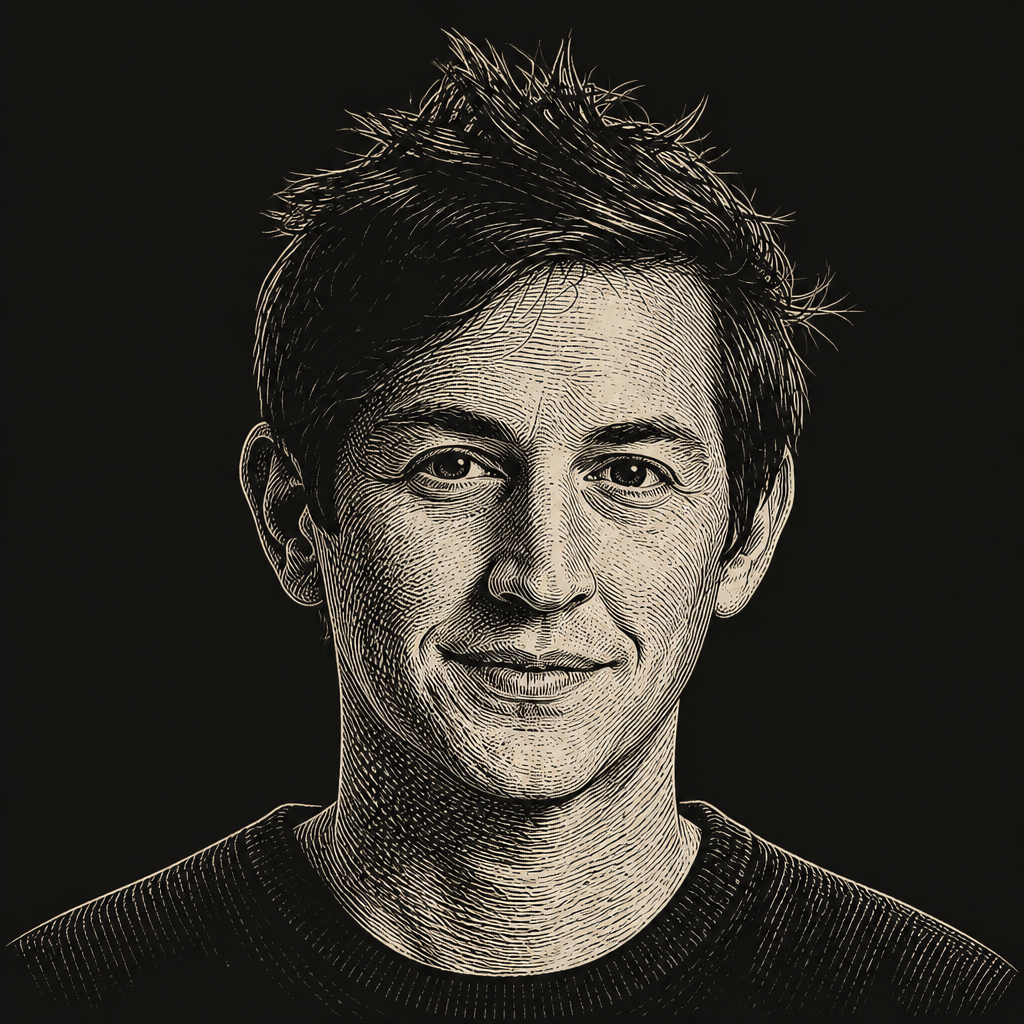
Marc Rowan said the opportunity is “immense,” limited less by interest than by time. He first generalized the point: value often appears between established allocation buckets. Institutions historically allocate into public equities, public fixed income, liquidity, real assets, and alternatives. But private equity that is safer and lower-returning than a classic alternatives allocation does not fit neatly. Private investment-grade credit does not fit neatly either when fixed-income buckets are built around public assets. For Apollo, Rowan said, those in-between categories have been some of the best opportunities precisely because capital formation is poor and no one owns the risk as a day job.
He sees the same pattern forming between venture and large-scale credit. Venture has historically not been capital-intensive in this way. Now, he argued, it will be capital-intensive “on a scale that is unimaginable.” The money required for data centers, chips, robotics, manufacturing, and defense is too large and inefficient to finance entirely with equity.
The job, Rowan said, is to parcel out risk. The venture or equity side underwrites the fundamental business risk of a company. The infrastructure side can finance reusable assets and assets with hard value at a different cost of capital and risk rating. In 2025, he said, the market proved that data centers, chips, and energy were all needed. In 2026, he expects investors to start recognizing the size and concentration implications of that buildout.
Rowan cited “800 billion of CapEx from just four public companies this year,” before counting private companies, as evidence that capital demand is approaching a new scale. If the trend continues, he said, investors will become concentrated in certain names and may hit concentration limits. He expects spreads to widen and strong entrepreneurs to form partnerships with “financial entrepreneurs” who can democratize credit assets, hybrid equity, and related structures.
Robotics is part of the same logic. Rowan pointed to autonomous driving as evidence that difficult real-world autonomy problems can be solved. If Waymo’s problem involves self-driving in a constantly changing environment where safety is paramount and the system cannot stop, he suggested that autonomy for construction equipment or other robotics applications may be less difficult. The financing question follows: why should all of that be funded with equity? Equipment rental, he said, already exists as a lower-cost and larger-scale capital market.
For entrepreneurs, Rowan’s advice was to engage “early and partner-like.” Apollo’s scarce resources are time and money, and time is shortest. He wants entrepreneurs to explain not just their current state but where they are going and how Apollo can win with them. This is especially true in specialized areas such as defense, where no financier can simply “show up” without understanding the ecosystem.
He also described a changing liquidity path for private-company founders. Historically, great entrepreneurs created value and waited for public markets as the exit. In a faster-changing world, Rowan said, they may want an interim private liquidity event, allowing them to recycle capital into higher-return opportunities while continuing to participate in the private capital structure and eventually reaching a public exit or fuller monetization. He expects more partnerships around ecosystems such as OpenAI’s and Anthropic’s as growth and finance become more intertwined.
AI is forcing investors to reprice enterprise software exposure
Marc Rowan’s view of AI is both expansive and specific. Apollo operates, he said, under the assumption that “every job is going to be replaced or enhanced.” The question is not whether AI affects businesses, but where it replaces work, where it augments judgment, and how quickly investors recognize the difference.
That has immediate consequences for enterprise software. Rowan said there is “no going back,” while emphasizing that his view is not universal to every company. He dismissed the idea that investors should only now be realizing AI would affect enterprise software. “Really?” he said. “How could we as responsible credit people do this?”
The first visible pressure has been in credit, because that is where the press has focused. But Rowan argued that if credit is problematic, the equity is more problematic. He said 30% of the private equity industry over the past decade has been devoted to enterprise software, and he expects the returns of in-ground private equity exposure to be “disastrous” because so much capital was put into that category at prices that assumed a future without AI.
That does not mean the companies disappear. Rowan’s point is valuation and exit demand. Enterprise software companies may continue operating, but their prospects for selling into public markets or to other buyers are reduced.
The price that they paid reflected a future that did not have AI in it and now there is AI in it.
Rowan separated three levels of AI adaptation inside an established business. Many employees can imagine how their current job changes with AI. Fewer can imagine how the business should exist when “data and software become free.” A third level is imagining how to start entirely new businesses when startup costs fall and velocity rises.
Where AI can check its own answer, Rowan expects rapid replacement. Coding and software change quickly because “the AI can check whether the AI is right.” In domains without a right answer, such as judging the best Shakespeare essay, improvement is possible but slower because human judgment remains necessary. He mapped the distinction onto business functions: accounting and trade operations are areas where replacement may happen faster; work requiring judgment and know-how is more likely, at least near term, to be augmented.
He does not treat that boundary as permanent. “None of us know how this ends or how good the judgment will eventually be,” he said. The practical posture is paranoia about replacement risk and a bias toward businesses that adopt change. Rowan said he is bullish on companies with a change mentality and “very bullish on wages,” but he expects employment cycling. He has previously described the shift as “blue collar ascendency and white collar decline,” and he said that will be difficult for politics and for cities where much white-collar employment is concentrated.
As a lender, Rowan said AI does not introduce a wholly new principle. Change has always been a central underwriting reality. Around 2000, markets lent against yellow pages, which once seemed hard to replace because they were free, granular, and culturally embedded. Rowan noted that associates now ask what yellow pages were. TV stations, radio stations, cable television, satellite television, mobile telephony, and fiber have all been diminished or replaced in cycles. The lesson for credit is diversification, seniority where risk is high, hard collateral, and shorter underwriting horizons. Credit investors should not pretend they can make a 20- or 30-year decision in fast-changing areas; they can make 3-, 5-, or 7-year decisions.
“Credit is a skill,” Rowan said. “And it is not a skill that everyone possesses.”
Apollo’s underwriting model began as clean-sheet problem solving
The origin of Apollo’s current model, in Marc Rowan’s telling, is not a nostalgic Drexel story. It is the source code for how he thinks a credit institution should behave: start with the business, design the product around the problem, and never forget that funding structure can kill a financial firm faster than asset quality shows up in the marks.
Rowan joined Drexel Burnham Lambert after Wharton in 1984, while most of his classmates went to Goldman Sachs. Drexel appealed to him because it financed entrepreneurs and new companies, which meant the work required less reliance on the refinements of finance and more serious understanding of business. These were not the highest-quality companies of the day. They were companies with real questions around the business model.
That environment forced a “business-first mentality.” Financing below-investment-grade companies meant understanding fundamentals rather than relying on third parties. It also meant creating markets and instruments that did not yet exist. According to Rowan, the familiar toolkit of high-yield bonds, leveraged loans, ETFs, and securitized products was not there to be taken for granted. The firm had to use “clean sheet thinking.”
He described the creation of instruments and practices as “problem, solution, problem, solution”: PIK securities, silver-backed or silver-indexed bonds, highly confident letters, bridge financing. That mentality, he said, still powers Apollo: understand the business, understand the credit, and be willing to invent the right structure rather than force a transaction into an existing box.
Michael Milken’s influence, as Rowan described it, was partly about urgency and partly about synthesis. When markets went sideways, Milken would call Rowan from New York to California immediately. At the end of each trading day, Milken would ask Rowan a question he could not answer. Rowan did not interpret that as provocation. He said Milken was teaching him to connect dots across geopolitics, technology, financial markets, personalities, relationships, and transactions.
The pithiest lesson Rowan took from Milken was: “You either accept change or change is visited upon you.” Rowan returned to that idea throughout the discussion, applying it to capital markets, AI, institutional culture, and Apollo’s own evolution.
The funding lesson came from Drexel’s collapse. Rowan described 1990 as a mess: global recession, banking crisis, Texas real estate crisis, New York real estate crisis, and savings-and-loan crisis. He left Drexel on a Friday, returned on Sunday, and left with his belongings in a cardboard box because Drexel was out of business.
From that came one of Apollo’s formative risk principles. “Financial services firms die from one of two causes,” Rowan said: heart attacks or cancer. The heart attack is funding risk — lending long and borrowing short. He cited Bear Stearns and Lehman Brothers as examples of that pattern and said Apollo’s culture is built never to allow that risk. The cancer is the slow accumulation of bad assets. Apollo’s “principal mentality,” in Rowan’s telling, means admitting mistakes, taking losses, moving on, and not doubling or tripling down.
Apollo itself began almost accidentally, but the accident reinforced the model. A group of former Drexel colleagues was still sharing office space and working on client transactions without a firm behind them or any hope of being paid. They received a cold call from Crédit Lyonnais, the French government bank, about starting an M&A boutique under its banner. In 1990, Rowan said, that was a terrible idea: there was no M&A and total loss of confidence. Someone remarked instead that it would be an “awesome time to deploy capital.”
A few months later, Apollo had $800 million from Crédit Lyonnais. By the end of the year, Rowan said, it had $6 billion of the bank’s money, at a time when “no one had $6 billion.” The group had never invested money before, and the institution backing them was not an investor. Yet Apollo became, according to Rowan, Crédit Lyonnais’s largest profit center, earning it regularly more than $3 billion a year for the next few years.
The arrangement ended when Crédit Lyonnais, under pressure from its own support of French industry, sold Apollo to its largest client, François Pinault, in an effort to maintain capital. Rowan said Pinault believed he was buying the industrial assets Apollo had invested in, such as Samsonite, Culligan, and Vail Resorts, rather than an investment firm. Over time, Apollo made Pinault money and diversified its investor base to U.S., European, and international institutions.
For about 18 years, Rowan said, the history remained “pretty contained.” The larger transformation came later, but the underwriting habits were already there: business first, structure second, funding risk always in view.
Moral leadership means taking positions before slogans do the work
Marc Rowan tied institutional leadership to the same change-versus-complacency theme that runs through his capital-markets argument. On his public role after October 7 and his criticism of leadership at his alma mater, the University of Pennsylvania, Rowan said that if he had thought about it more, he might not have done it. But the situation struck him as “incredibly unfair and incredibly ill-advised.”
His objection, as he described it, was not to free speech as such. Rowan called himself a “free speech absolutist” and said he believed the Palestine Writes conference should go forward. His criticism was that, in his account, the university was funding and promoting it, requiring Jewish students to attend during the Jewish High Holidays, and had outsourced ownership of the conference to someone Rowan described as a known Hamas sympathizer and terror sympathizer. “Other than that I was fine with it,” he said.
Rowan’s broader critique was that universities had lost clarity about their role. Is the role academic excellence and research, or social change? If it is social change, whose social change? In his view, what he saw at universities was not solely an antisemitism issue, though antisemitism was part of the context; he described it as an anti-American, anti-system issue, marked by anti-capitalism and anti-merit.
He said donors responded by giving the university one dollar per year rather than their normal donations, which, in his telling, got the university’s attention. He also referred to public testimony in Washington, where he said the inability to call terrorism and murder reprehensible became too much for the public and leadership to tolerate. Rowan said the chair and president of the university ultimately resigned.
The connection to Apollo is Rowan’s view that institutions must be able to take consistent positions before pressure forces them into slogans. When he took over Apollo in 2021, he said, he wanted to be able to say the same thing in Texas as in California because “it’s too hard to remember a story.” On climate, his rule was: “make it better, not worse.” That did not satisfy absolutists, but Rowan said Apollo would finance hydrocarbons if that made the situation better rather than worse.
On employment, Rowan rejected hiring or admitting people on the basis of immutable characteristics, calling the idea “as anti-American as I could possibly imagine.” Apollo’s standard, he said, is “merit, adjusted for distance traveled.” Distance traveled is not group identity; it is what an individual has overcome while still achieving. That is who Rowan said he wants in companies, universities, and entrepreneurial ecosystems.
He described the Apollo principle behind these choices as “do right over easy.” It would have been easy to say “no carbon,” or to say nothing. It was harder to say the firm would make things better, even if that included financing hydrocarbons. It was easy to sign up for a metric; harder to insist on merit plus distance traveled. Rowan said the positions had not been cost-free, but he would do them again.
The reason, in his account, is that people in his position have been given a rare opportunity. He described a transition “from success to significance”: not simply accumulating more success, but deciding what to do with influence.
Apollo is trying to make founder culture survive scale
Marc Rowan said culture is now what occupies most of his time. Apollo has spent six months negotiating the answer to one question: “What makes Apollo Apollo?” As a small firm, culture was visible and transmitted naturally. At the scale Rowan described — 4,000 people in asset management and 2,000 in retirement services — it has to be deliberate.
The challenge is especially acute for senior lateral hires. Young hires can be taught both the business and the culture through Apollo’s standard development process. A 15-year veteran arriving from another firm may be commercially effective, but Rowan wants the firm to be equally intentional about transmitting norms. If someone works for Rowan, John Zito, Jim Zelter, or Scott Kleinman, they may absorb the culture differently. Apollo’s culture project is meant to make those expectations explicit.
The resulting work product, Rowan said, is on Apollo’s employment website and is meant to be both controversial and honest. It is for people considering whether to join and for current employees trying to understand the norms. The next task is to hire, review, promote, and onboard against it.
One principle remains central: playing to win. Rowan sees successful companies as vulnerable to a familiar arc. They achieve success, become afraid to lose, and mistake the process for the product. The desire to win becomes overwhelmed by fear of mistakes. Apollo’s counter-programming is to normalize fast failure and ownership. Rowan said even he is right “60% of the time, max.” The key is to fail quickly and fix it quickly.
“You do not get fired here for making a bad decision,” he said. “You get fired here for not recognizing it or not owning it and not fixing it.” Apollo has, in his phrase, a “wall of shame”: every senior professional has lost money for the firm.
Rowan wants the culture that survives him to include clean sheet thinking — not merely improving the old answer, but asking what the right answer is. He wants informality, including what he called “intellectual insubordination” rather than real insubordination: an environment where the right answer wins and people can treat one another as humans. He wants a challenge culture, but also one that recognizes “moments that matter” in people’s lives.
That last point is practical, not sentimental, in Rowan’s framing. The business runs on experience, and experience only compounds if partners stay for their full careers. People will have happy and sad moments outside work; how the firm treats them then may be “almost more impactful than anything else we do.” The balance Rowan wants is intellectual intensity and human durability.
He also framed Apollo’s next stage as institution-building, not fund-running. The alternative asset industry began as private equity, then added real estate private equity, infrastructure private equity, and credit that often looked like private equity. Many firms stopped there, having amassed enormous wealth. Some went further into retail. Apollo, Rowan said, is trying to build the structure, products, and infrastructure required to address retirement-income shortages and to finance the global industrial renaissance.
That is why daily pricing, market making, enterprise infrastructure, and product innovation matter to him. Rowan does not expect the next five years to be passive. He expects firms to look more different five years from now than they did after the last five years of change. The culture he wants is one that expects change, accepts it, and moves people into new work rather than defending the old shape of the business.