Risk Management Is Contingency Planning, Not Prediction

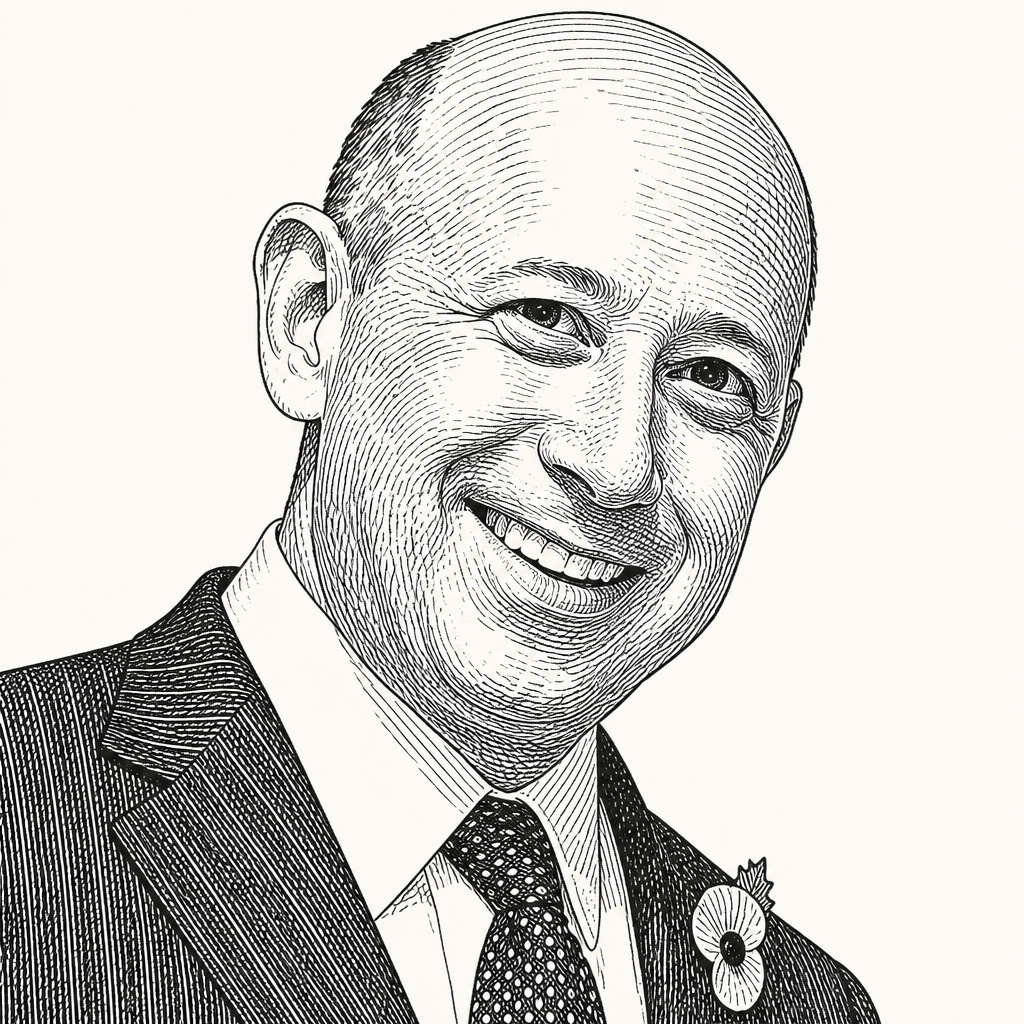
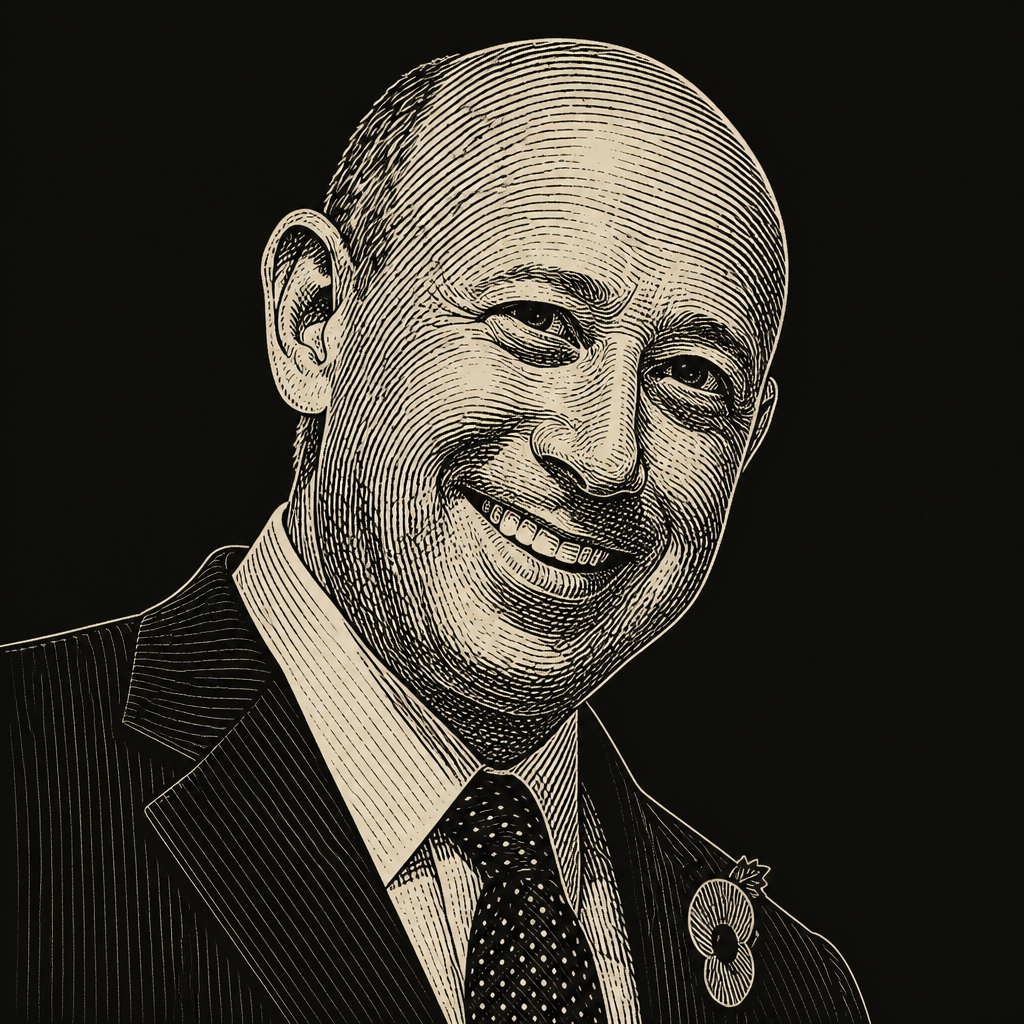
Lloyd Blankfein, the former Goldman Sachs chief executive, argues in a conversation with a16z’s David Haber that resilient institutions are built less on prediction than on disciplined contingency planning. Drawing on Goldman’s partnership culture, its financial-crisis risk controls and his view of AI, Blankfein says leaders must take risk while preserving the systems, information flow and judgment needed to survive being wrong.
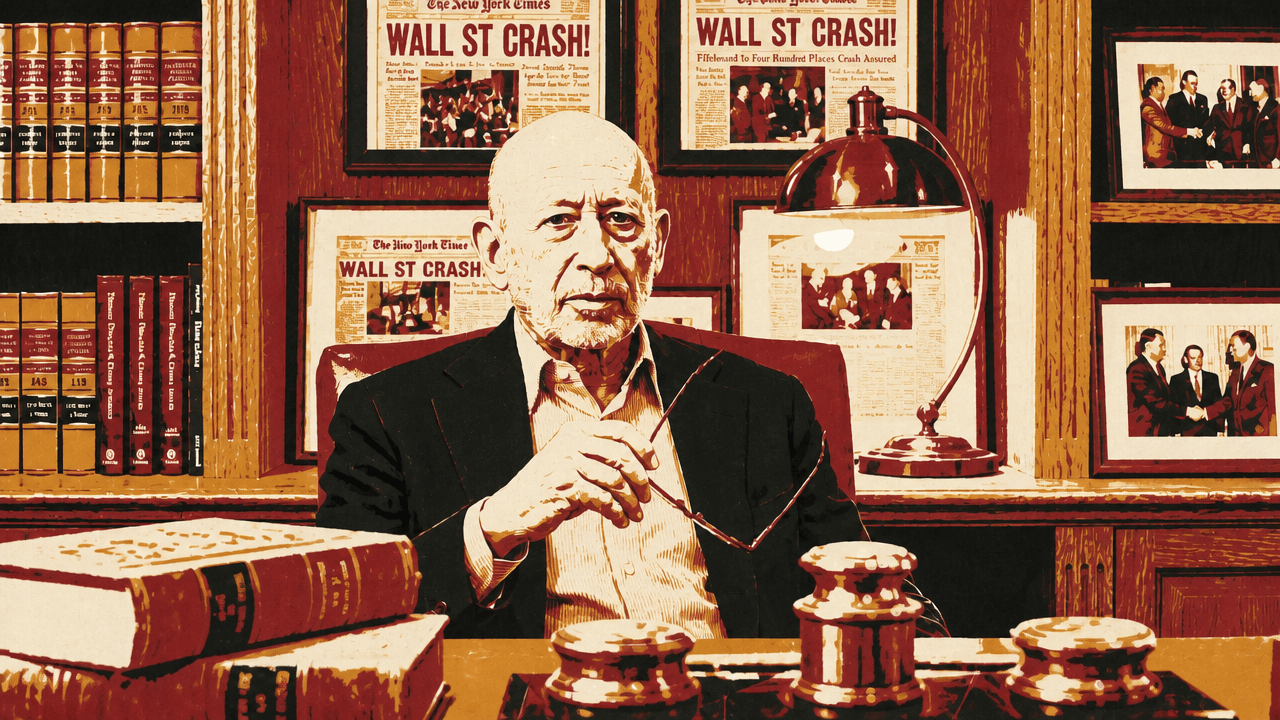
Risk management is not prediction
Lloyd Blankfein describes investing as a permanent split-brain exercise. The job is not simply to find ways to make money for clients and for the institution. It is also to keep asking whether the risk being taken is concentrated, misunderstood, or survivable. “You have to do both,” he says: take risk and manage risk.
That framing matters because Blankfein is skeptical of the way people talk after uncertainty resolves. In his view, once the present becomes the past, “everybody’s a genius.” People remember themselves as having understood what was obvious only after the fact. His test for confident hindsight is simple: if someone was so prescient about what just happened, they should be able to say what happens next.
Once the present turns into the past, everybody's a genius. Most of what we do with respect to risk is not so much predicting, it's a lot of contingency planning.
The practice he describes is less about assigning probabilities to a favored forecast than forcing an organization to rehearse adverse futures before they arrive. Around a risk table, Blankfein says, the useful question is not, “What do you think will happen?” It is: what could happen, what would you do if it did, and what can be done today at low cost to reduce the damage?
He returns several times to the insurance analogy. Insurance is expensive when the hurricane is already on its way. It is cheaper when the danger is still distant and emotionally unavailable. Risk management, in his account, is the discipline of buying the right protection when nobody feels the need for it.
That is also why contingency planning can look, from the outside, like prediction. An organization that has already thought through a scenario hears the starting gun earlier. Blankfein uses a track-and-field metaphor: if a runner leaves too quickly after the gun, officials call it a false start because the reaction time is implausibly fast. He wants people “called for a false start” in that sense — not because they knew the future, but because they had already rehearsed enough futures to move immediately when one began.
This distinction between prediction and preparedness runs through his view of management. A person who makes money is not necessarily taking good risk. A person who loses money is not necessarily reckless. A manager’s job is to preserve that distinction when the outcome is already known and the temptation to judge backward is strongest.
Blankfein separates being wrong from being stupid. Smart people are wrong, he says; in risk businesses they will be wrong often. The failure mode for bosses is allowing “after-acquired information” to contaminate their judgment of what a person could reasonably have known at the time. A serious risk culture has to evaluate decisions made “in the fog,” not decisions reconstructed after visibility improves.
It’s very important not to treat somebody who’s wrong like they’re stupid.
That does not mean tolerating avoidable losses or replacing judgment with sympathy. Blankfein’s standard is demanding: know what was known then, understand whether the process was sound, and do not pretend that the later outcome was available to the person making the decision. The same principle applies to technology cycles, financial crises, and career calls. A bad outcome may reveal a bad decision. It may also reveal an uncertain world.
Crisis reveals who can still do the job
David Haber raises Blankfein’s reputation for calm under pressure, including a reported incident during an active-shooter scare in which Blankfein asked someone under a table whether they planned to finish their salad. Blankfein confirms the story but frames it less as bravado than as an instinct to disarm the moment. He says ducking under the desk was sensible. His comment was a way to break the spell and keep people from submitting to the chaos.
That is how he describes his own crisis temperament more broadly. His resting state, he says, is already “a little bit wound,” so a crisis does not necessarily wind him further. Things slow down for him. He becomes alert to what people around him are thinking and tries to get them moving. In most crises, he says, the critical requirement is not theatrical command. It is getting people to do their jobs.
Blankfein does not claim to like crises. Goldman, in his telling, had “the crisis of the century roughly every four or five years,” and he does not romanticize that experience. But he says repeated exposure taught him something about people that cannot reliably be inferred from surface traits. Some who look built for crisis are not. Some who do not look imposing turn out to be exceptionally useful when pressure arrives.
His example from the financial crisis is deliberately counterintuitive. He recalls one person who was a great athlete, “a real man’s man,” and did rodeos on the weekend, but was terrible in the crisis. Others who “didn’t look like they could walk up a whole flight of stairs” were very good. The lesson he draws for boards and leadership teams is blunt: if you need to know how someone behaves in a crisis, the best evidence is whether they have already been through one.
That standard extends to information flow. Haber relays that Ashok Varadhan, whom Blankfein identifies as Goldman’s longtime head of trading, credited Blankfein with being unusually good at gathering information from the organization: approachable enough that people would come to him, and willing to speak not only with a division head but with the people below that person.
Blankfein says he deliberately avoided discouraging inbound information. If someone brought him a fact he already knew, he would not say, “I already know about it.” He wanted no one to self-censor later on the assumption that senior people must already be informed. Redundancy was a cost worth paying. It taught him both the content of what was being reported and something about the messenger.
If the only information that reaches the top is filtered through formal hierarchy, the leader learns what the hierarchy permits. Blankfein wanted overlapping signals, even repetitive ones, because under stress the cost of missing a signal can be much higher than the cost of hearing it twice.
The partnership culture was a way of governing power
Goldman’s partnership culture, in Blankfein’s account, was not just a pre-IPO ownership structure. It was a way of governing an institution whose senior people expected to behave like owners of the whole firm, not executives of separate silos.
He distinguishes that from a more ordinary corporate culture. In a partnership, senior people are not merely subordinates. They are co-owners. Their fortunes rest on the enterprise as a whole. They expect information about the whole, influence over the whole, and time to be heard before major moves are made. The leader has to socialize decisions, absorb objections, and sometimes delay or change course.
David Haber notes that Edith Cooper, described in the conversation as a former Goldman executive Haber consulted beforehand, characterized Blankfein as less hierarchical than many leaders: before making a hard decision, he would gather input and socialize the move. Blankfein says that has both political and cultural value. People near the top naturally want to align with the leader if they can, but sometimes they simply think the leader is wrong. Socializing a decision gives them a chance to engage before opposition hardens. It also honors the ownership psychology the firm wanted to preserve.
The reason to preserve it, Blankfein says, is stability and commitment. People who feel like owners remain attached to the institution. Even those who leave carry the identity. Blankfein points to Goldman’s alumni office, which he says he put in place, as an example of institutional loyalty extending beyond employment. The logic is reciprocal: it is “crazy to expect loyalty if you don’t show loyalty,” and “crazy to expect commitment if you don’t show commitment.”
Goldman’s IPO threatened that culture because, as Blankfein frames it, the firm needed permanent capital and a bigger balance sheet. He says that after Glass-Steagall was repealed, lenders and investment banks were no longer as separate as they had been: firms that gave advice could also finance the implementation of that advice. If J.P. Morgan was going to become an advisor, Goldman had to become a better lender and financier. In Blankfein’s telling, that could not be run on the impermanent capital of a partnership.
Going public legally was instantaneous, while preserving the culture took decades. Blankfein says Goldman went public “in an instant” but spent roughly 25 years doing it in a way that would not undermine partnership behavior. The tools he describes included partnership elections and compensation that emphasized firmwide performance. An individual business’s success mattered, but the most important variable was how the whole firm did.
That design was meant to force hard collective choices. Blankfein gives the example of investment bankers who might represent different potential buyers in the same auction. Goldman might represent the seller, finance a buyer, or be a buyer itself. The question, in his account, could not be resolved by each person maximizing a local P&L. It had to be sorted out around what was right for Goldman Sachs as a whole.
Blankfein’s metaphor is a jungle full of 800-pound gorillas. If there is one, it gets its way. If there are 20, then 19 have to say, “Excuse me, after you.” The art is getting powerful people to subordinate their immediate interest at key moments because the platform will make them more effective over time.
That same cultural logic affected how Goldman shifted risk after becoming public. Blankfein says a private firm can tolerate uneven earnings over a long cycle: three fantastic years, five flat years, two losing years, and still a good result. In a public company, he says, shareholders care not only about earnings but about the earnings multiple. Volatile earnings are punished through a lower multiple. Over time, in his account, Goldman shifted a lot of that risk-taking into off-balance-sheet vehicles: earning “20 cent dollars” rather than “100 cent dollars,” but with lower risk, a higher return on equity, and a higher multiple as a result.
He insists, however, that Goldman did not want to lose the risk-taking culture entirely. Principal investing mattered not only because it made money but because it let the firm engage clients as peers rather than supplicants seeking brokerage business. Goldman could partner, co-invest, forbear, and understand what clients were going through because it was a principal itself. That “swagger,” as Blankfein puts it, was part of the franchise.
The partnership culture also gave the firm patience through cycles. When investing businesses made a lot of money, their people might want to leave and start their own firms. When they lost money, the firm might want to cut them loose. Blankfein says Goldman’s partnership orientation allowed it to look through those short-term pressures and judge the business over a cycle.
Entrepreneurship inside an institution depends on ignoring the org chart
Blankfein’s own route into Goldman came through an acquisition that he says was, at the time, viewed as a disaster. Goldman bought J. Aron, a commodities trading firm, in the early 1980s. Blankfein was an acquiree, so he does not claim firsthand knowledge of the acquirer’s original expectations, but he later learned that the acquisition did not initially look successful.
His analogy is Columbus looking for the Indies and finding America: the discovery was valuable, but not for the intended reason. Goldman bought a commodity arm in a period of high inflation and rising commodity prices, when Wall Street firms believed they needed those capabilities. What it also acquired, Blankfein says, was a more entrepreneurial, street-oriented culture than Goldman’s traditional Ivy League and MBA pipeline.
J. Aron’s culture was different even within the social category both firms occupied. Goldman was “upper echelon”; J. Aron was “streety.” The best entry-level job for much of J. Aron’s history, Blankfein says, was literally driver for one of the traders. That was one way people entered and rose.
Blankfein did not arrive through the driver route. He grew up in public housing in Brooklyn, in what he describes as a “two-fare zone” far enough from Manhattan that it might as well have been thousands of miles away. His family lived in NYCHA housing, and he says that in his building, making more than $90 a week would have made a family ineligible. He is careful not to turn that into a claim of having the hardest possible story; he says he later met people who crossed deserts or grew up in war zones. But he also says he did not know much about the wider world and did not carry the “burden of high expectations.”
Harvard changed the horizon. Blankfein says that before college his ambition was simply to go to an out-of-town school and get out of Brooklyn. He had barely traveled, had never been on an airplane, and saw Harvard for the first time when his sister took him there. He describes arriving from a failing high school with very low verbal scores and an almost perfect math score. The culture shock was real, but so was the opening of possibility.
After college and law school, he worked at a law firm for several years before deciding it was not for him. When he tried to move to Wall Street, he says he got no job offers from the firms he approached, including Goldman. The only offer came from J. Aron, a small commodity trading firm he had never heard of. He joined as a precious-metals salesperson. Goldman acquired J. Aron around that time, which is how he entered Goldman.
His story about creating a business around interest-like returns for Middle Eastern investors is meant to show what an institution can do when it is not captive to title or hierarchy. In precious metals, Blankfein dealt with clients who wanted stable, predictable investment returns but, under their rules of engagement, could not receive interest. Commodity cash-and-carry trades could embed something economically similar to an interest rate while looking like an investment return, but the commodity markets were too small for the scale clients wanted.
Blankfein saw that financial futures tied to the S&P 500 might allow a similar structure at much larger scale. He took the idea to Bob Rubin, then a senior Goldman leader and later Treasury secretary, despite having no meaningful title. Blankfein recalls asking what his title was after J. Aron merged into Goldman and being told, “Call yourself Contessa if you want.” Rubin nonetheless connected him with someone on the equity desk and told them to work with him. The first order, Blankfein says, was for $100 million, then a very large trade.
The lesson he draws is not that all junior ideas are good. It is that institutions need a way for ideas to move across formal boundaries. He says he was not a “victim of the organization chart,” and large organizations have to work to preserve that condition. In technology and venture, Haber notes, young iconoclasts are celebrated. In bigger institutions they are often harder to hear. Blankfein sees entrepreneurship inside an institution as a cultural achievement: the ability to let someone with no title but a good idea reach the people who can help make it real.
Mark-to-market was a warning system before it was a P&L system
When Haber asks why Goldman navigated the financial crisis comparatively well, Blankfein’s answer is direct: risk management. The lack of a large consumer business hurt Goldman reputationally afterward, because ordinary people did not know the firm. But operationally, he credits the firm’s risk culture, rooted partly in the partnership’s old unlimited-liability structure.
The psychological effect of unlimited liability was powerful. Blankfein says partners had not only their capital accounts at risk but their homes. When he became a partner, he asked whether he should put his house in his wife’s name. He recalls being told that no Goldman partner had ever lost money because of firm losses, but plenty had lost money because they put assets in a spouse’s name. The joke landed because it contained a warning: personal exposure focuses attention.
One consequence was religiously marking assets to market. Blankfein says mark-to-market was not merely a P&L system; it was a risk management system. Goldman had a separate group, away from the investors and traders, responsible for marking positions. When disputes arose, management sided with that valuation side of the house. Traders who disliked a mark had a remedy: sell something and show the market price.
That discipline mattered because, as the crisis developed, Blankfein says assets still labeled AAA could not actually be sold anywhere near their marks. Goldman pushed people to test the market, and the bids vanished or came in much lower. Blankfein says he did not necessarily believe the market was intrinsically “right”; he thought there might be opportunity in the dislocation. But fighting the market in that moment was like fighting gravity. The firm kept marking down until the price was one at which something could sell.
That made selling easier later, because losses were already embedded in the books. It also meant Goldman saw trouble earlier. Mark-to-market forced bad news into the system before it became impossible to ignore.
AIG is his central example of pre-crisis protection. Goldman had large paper exposure to AIG, but Blankfein says it was fully hedged because Goldman had bought credit protection. It also had a collateral agreement with AIG despite AIG’s AAA rating. He suggests Goldman may have been one of the only firms to demand that kind of margin agreement from an entity with such a high rating. The reason was not theoretical: “again, it was our money.”
The same ownership culture shaped how Goldman handled commitments. Haber mentions a line attributed to Blankfein: commitments are in the past and relationships are in the future. Blankfein gives the example of a Chrysler loan commitment during the crisis. Chrysler’s CEO asked whether Goldman would honor the commitment and whether it would do so early. Blankfein says he promised to honor it exactly: not for more than Goldman had committed to, and not earlier than committed. In a crisis, high integrity did not mean doing whatever a client asked. It meant doing what the firm had obligated itself to do.
For Blankfein, this is where institutional permanence matters. He joined Goldman after Goldman and Sachs themselves were dead; the firm already existed as an institution. He expected it to be there long after him. That changes crisis behavior. A firm that expects to exist on the other side of the crisis cannot casually dishonor commitments. He contrasts that with situations where a firm might shut down and reopen later with different partners under a different name.
He gives the same advice to younger employees. The people in one’s analyst class or early cohort may run important institutions decades later. Their memory of how someone behaved under pressure can become fixed. The financial crisis, he says, is now old, but grudges, good feelings, and hard feelings from that period remain sticky.
The AI problem is the old technology problem with more leverage
Blankfein says technology was always changing finance, especially markets businesses where small advantages can become winner-take-all. If an execution or risk system communicated digitally with an exchange floor, being physically closer to the exchange could matter because milliseconds mattered. In those situations, he says, it was not that speed produced a marginal edge. The faster participant got the bid or offer, and everyone else was left with nothing.
Finance therefore had strong incentives to adopt technology early. Blankfein says, apart from the hyperscalers building the technology itself, financial firms were among the most aggressive users. But he also emphasizes a point that cuts against simple cost-saving narratives: in regulated financial institutions, new technology initially increased costs.
The reason was parallel operation. Goldman had to keep using the system it trusted while simultaneously running the new system it hoped would be better. It could not simply break things and apologize. Blankfein contrasts this with parts of Silicon Valley. He mentions Robinhood as a “great company” that early on had slip-ups and could apologize. Goldman, he says, was not allowed to operate that way. It had to run things repeatedly and be “perfect the last 49 times” before moving.
That meant the firm was always crossing from one “lily pad” to another. A proven system would remain in production while the next system was tested. Once the new one earned confidence and was implemented, another newer system would already be in beta. Over time, technology improved efficiency. But at the point of adoption, it added redundancy, testing, and anxiety.
Goldman’s SecDB risk-management system is Blankfein’s example of durable internal technology. Haber notes that former Goldman executive Marty Chavez credited Blankfein with helping drive support for SecDB across the firm. Blankfein deflects credit but praises the system’s modularity and flexibility. Unlike rigid systems, it could be changed and extended.
He compares SecDB to his HP 12C calculator, a device he says he has owned for about 40 years and whose battery lasted roughly 22 years. His point is about design that survives fashion. The original iPhone now looks old to him. The HP 12C still looks usable. SecDB, in his telling, had that quality: not glamorous novelty, but resilient design that continues to work because it was built to adapt.
Those operating instincts — parallel running, early warning, mark-to-market discipline, and contingency planning — are the setup for Blankfein’s view of AI. He does not treat new technology as something institutions can avoid. He treats it as something they must adopt without surrendering the controls that let them know when it is failing.
Blankfein’s view of AI combines acceptance, anxiety, and refusal to indulge fantasies of stopping it. He does not claim to know whether AI is analogous to electrification, the internet, or something larger. “Never repeat, but often they rhyme,” he says of technological history. The responsible posture, again, is contingency planning.
He takes seriously the conviction of the large hyperscalers because, in his words, they are “dominated by founding shareholders” putting their own money, ego, and corporate capital behind the bet. That does not make them right. But to Blankfein it signals deeply held belief rather than professional managers making abstract bets with other people’s money.
He also expects many wrong turns. The world may not need 10 large language models. Perhaps it needs four, or two large winners, or some other configuration. Some technologies will fail. Some working technologies will still not become successful companies. In hindsight, people will call many investments stupid. Blankfein argues that some may indeed be stupid, but many will simply be decisions made under uncertainty before later information existed.
The more serious risk, for him, is not the popular science-fiction version in which AI is smarter than humans and turns them into “pets.” It is the combination of leverage, opacity, and inadequate testing. In finance and other high-stakes systems, a single software error can execute enormous consequences before human intuition catches it.
In older trading rooms, Blankfein says, people might be shouting and distracted, but if someone quoted the wrong price or bought when they should have sold, the whole room could stop. Human intuition and shared context helped people notice when something sounded wrong. Today, much of the action happens invisibly behind the scenes.
AI intensifies that problem because users may not know the thought process. Blankfein contrasts it with Google, which gave a bibliography the user could check. With some large language models, he says, one may not see the chain of reasoning or have the same intuition about how an answer was produced. If the application is imprecise — “horseshoes or throwing hand grenades” — that may be acceptable. If numbers matter and mistakes are intolerable, institutions may have to run systems in parallel for much longer.
Not because it’s smarter than us and it’s gonna turn us into pets, but because we don’t have the ability to test whether it’s right or not.
That inability to test may justify regulatory slowing in some areas, Blankfein says. He identifies governmental and regulatory risk as one of the underappreciated risks in markets around AI. Regulators may be right to slow certain uses, not because the technology should be wished away, but because reliance on systems that cannot be adequately tested is itself a danger.
His scale examples are warnings about how modern systems increase the consequences of error. Blankfein points to Bhopal as, in his words, a terrible industrial accident in which “single digit thousands” died, and to Fukushima as an atomic-age event whose consequences, he argues, could have been much larger if the wind had blown differently. The point of the analogy is not an audited comparison of disasters; it is his claim that leverage changes the downside of mistakes.
At the same time, Blankfein is not anti-technology. He says the positives of AI are evident and does not spend time listing them. He is broadly in favor of tools that make people more leveraged, expecting that society will find new goods and services to provide. He compares it to agriculture: at the start of the 20th century, he says, more than half the country worked in agriculture; now it is single-digit percentages, and people found other things to do. If AI generates enough wealth, perhaps people work fewer days or shorter hours and use the time elsewhere.
But his acceptance is pragmatic rather than utopian. You cannot unlearn a technology, he says, just as one cannot wish the atom had never been split. Whether the balance of nuclear power and atomic bombs is good or bad, the knowledge exists. For AI, he sees no value in spending time on whether it is happening. It is happening.
Companies that become powerful cannot remain unknown
Haber suggests that technology companies, especially AI labs, may inherit the public backlash that large financial institutions once received. Blankfein agrees immediately: “guaranteed.” His advice is drawn from what he believes Goldman failed to do before the financial crisis.
Goldman was a wholesale firm. Consumers did not get mortgages from Goldman, open checking accounts there, or visit local branches. Institutions, companies, and governments knew Goldman. The public did not. Blankfein says the firm had a public-relations department whose job was to keep Goldman’s name out of the paper. That worked until it no longer could. Goldman was too important, influential, and successful through the crisis to be anonymous.
In that vacuum, others defined the firm. It became an easy target: Lehman Brothers was nearly gone, Bear Stearns was gone, large commercial banks had lost vast sums, and Goldman was still standing. Its alumni held prominent government roles, including Blankfein’s predecessor as Treasury secretary. Goldman had no broad public “anchor” of understanding to counter the narrative.
His advice to AI leaders and other powerful technology companies is to explain the value they create before they are under attack. Doing so may feel ego-driven or immodest, but understatement has costs. If the public does not understand the function an institution performs, then when a crisis or alleged misstep arrives, the institution will be trying to build its case defensively, under fire.
Blankfein believes Goldman should have done more to explain that important businesses existed because the firm took risk, linked capital with those who needed it, and financed companies during difficult periods. As examples, he says Goldman took Tesla public at a time when, as he puts it, it was still a big deal for companies to go public before making money. He also mentions Microsoft and other companies in the broader context of businesses whose growth, in his view, illustrates why capital formation matters.
The advice for technology leaders is not only communications polish. It is institutional self-preservation. If a company performs a socially important function, Blankfein argues, it should make that function legible before the moment when opponents define it. Once people decide the company has misstepped — whether or not it has — it needs a counterargument already established in the public mind.
Range is a career asset, not a luxury
Blankfein’s advice to young people is explicitly not limited to working hard or becoming technically good at a chosen field. He argues that early life should be used to become “complete people.” That means range: history, humanities, varied activities, and the kind of breadth that makes a person more interesting, more resilient, and better able to deal with colleagues, investors, and subordinates over a long career.
He offers this “with all deference to the success of Peter Thiel,” in the context of skepticism toward very narrow early specialization or dropping out too quickly. Blankfein’s view is that life and careers are long, and the rush to treat ages 18 to 24 as the only productive years is misplaced. Young people are likely to live longer, he says, yet seem more hurried to become commercially successful early.
History matters to him because it disciplines panic. People often believe the present is uniquely polarized or dangerous. Blankfein says it is important to remember the Civil War, the late 1960s, the National Guard shooting people on campuses, political assassinations, draft avoidance, Soviet tanks entering Czechoslovakia, and the Cuban Missile Crisis, when the United States was at DEFCON 2. The lower the DEFCON number, he notes, the more severe; DEFCON 1 is nuclear war. Compared with those periods, he argues, current turmoil should not be treated as unprecedented simply because it feels intense.
Knowing that previous generations survived severe moments should provide comfort that difficult things can be done again. The point is not that every era is the same. It is that historical awareness prevents people from mistaking immediacy for uniqueness.
Haber adds that he values living at the intersections of fields and believes opportunities often live between areas of expertise. Blankfein agrees but adds a warning: those intersections can be “over the edge of cliffs” and beyond the visible horizon. He reinforces the point by noting how perceived centers of opportunity change. At one time, he says, people wanted to learn Japanese because Japan seemed dominant in technology. Hank Paulson and Blankfein spent significant time going to China when that was central to global business. He remembers when the technology corridor associated with “Silicon Valley” was Route 128 around Harvard and MIT, not the area around Stanford.
For Blankfein, that mutability is an argument for range. Specific commercial opportunities rise and fall. A broader person is better prepared when the center of gravity shifts.