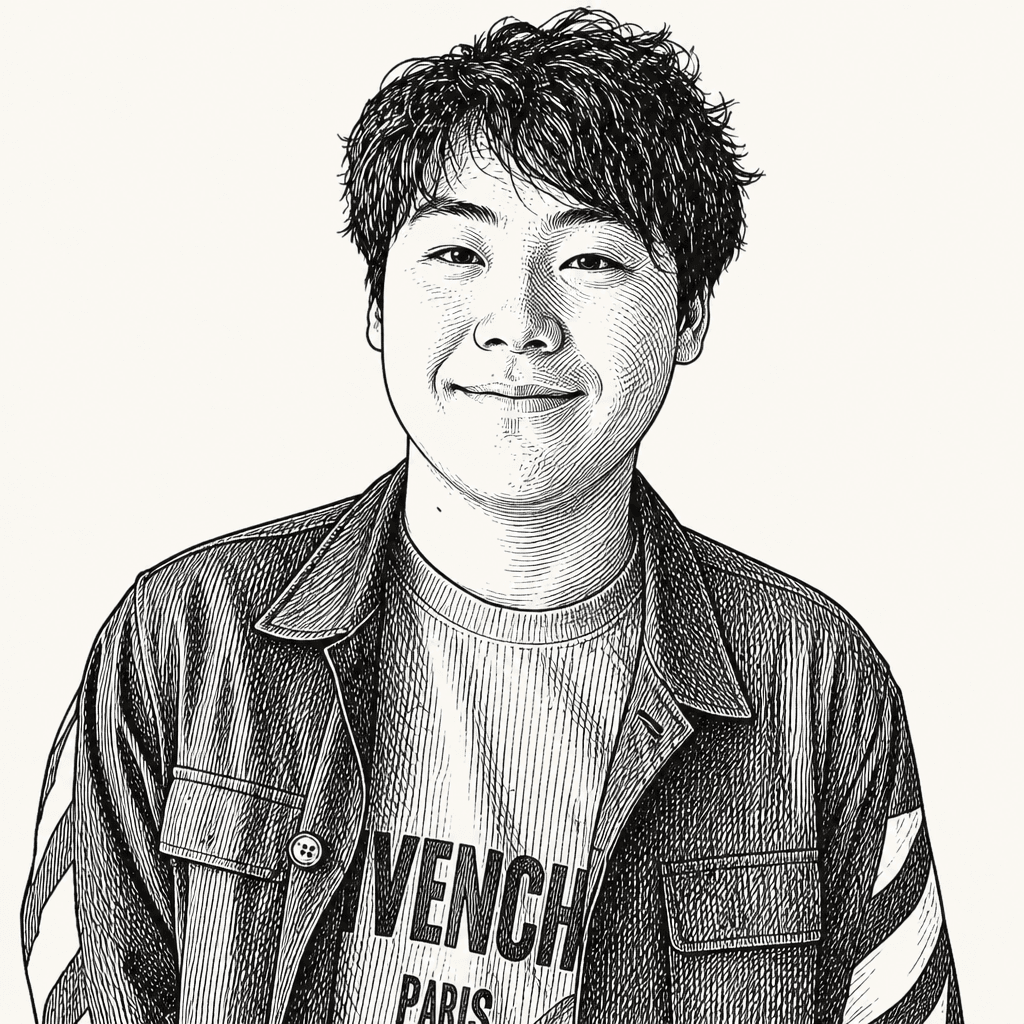
Yuanqi Du
Senior Researcher at Microsoft Research New England whose work focuses on probabilistic and geometric machine learning for AI-driven scientific discovery in chemistry, physics, and biology. He is also a community builder and organizer of AI-for-Science, generative-modeling, and learning-on-graphs workshops and seminars.
Stochastic Control Closes the Sampling Loop for Rare-Event Analysis
Microsoft Research’s Yuanqi Du and Carles Domingo-Enrich recast rare-event simulation as a stochastic optimal control problem, arguing that the committor function at the center of Transition Path Theory can be learned by using each current estimate to steer new trajectories into the transition region. Their framework turns committor estimation into a feedback loop: a transformed value function induces a Doob-style control, that control generates more useful reactive samples, and the samples improve the estimate. They present REACT-VM, an off-policy Value Matching objective with a stated first-order optimality guarantee, as the more principled version of the method, and report stronger benchmark results than variational committor-learning baselines.
Dynamic Measure Transport Needs New Rules for Density-Driven Sampling
Aimee Maurais argues that dynamic measure transport, now central to diffusion models and flow matching, needs different design principles when the target distribution is specified by densities, likelihoods, or prior samples rather than training data. In a Microsoft Research seminar, she presents three lines of work toward that goal: gradient-free particle dynamics using likelihood evaluations, PDE-constrained path design to avoid unstable interpolations, and localized transport velocities that exploit conditional-independence structure in high-dimensional Bayesian and data-assimilation problems.
Split-Flows Make Mapping Entropy Computable for Molecular Coarse-Graining
Tristan Bereau presents Split-Flows, a flow-based method for connecting atomistic and coarse-grained molecular representations by adding explicit noise variables for the degrees of freedom lost under coarse-graining. The argument is that this augmentation turns a many-to-one mapping into a tractable coordinate transform, enabling both generative backmapping and computation of configuration-dependent mapping entropy. Bereau says the approach makes information loss measurable for complex molecular systems, though it depends on a differentiable bijective construction and still faces scaling costs.
Machine Learning Turns PDE Singularity Search Into Computer-Assisted Proof
Caltech applied math PhD candidate Yixuan Wang argues that high-precision computation can make singularity questions in nonlinear PDEs tractable only when it is tied to stability analysis and rigorous verification. In a Microsoft Research seminar on Navier-Stokes blowup and weak-solution nonuniqueness, Wang presents machine-learning tools such as PINNs, neural operators, and Kolmogorov–Arnold Networks as ways to discover candidate singular structures, not as substitutes for proof. His broader case is that numerics, analytical a posteriori estimates, and interval-certified computation must work together if singularities in systems such as Navier-Stokes are to be identified and verified.