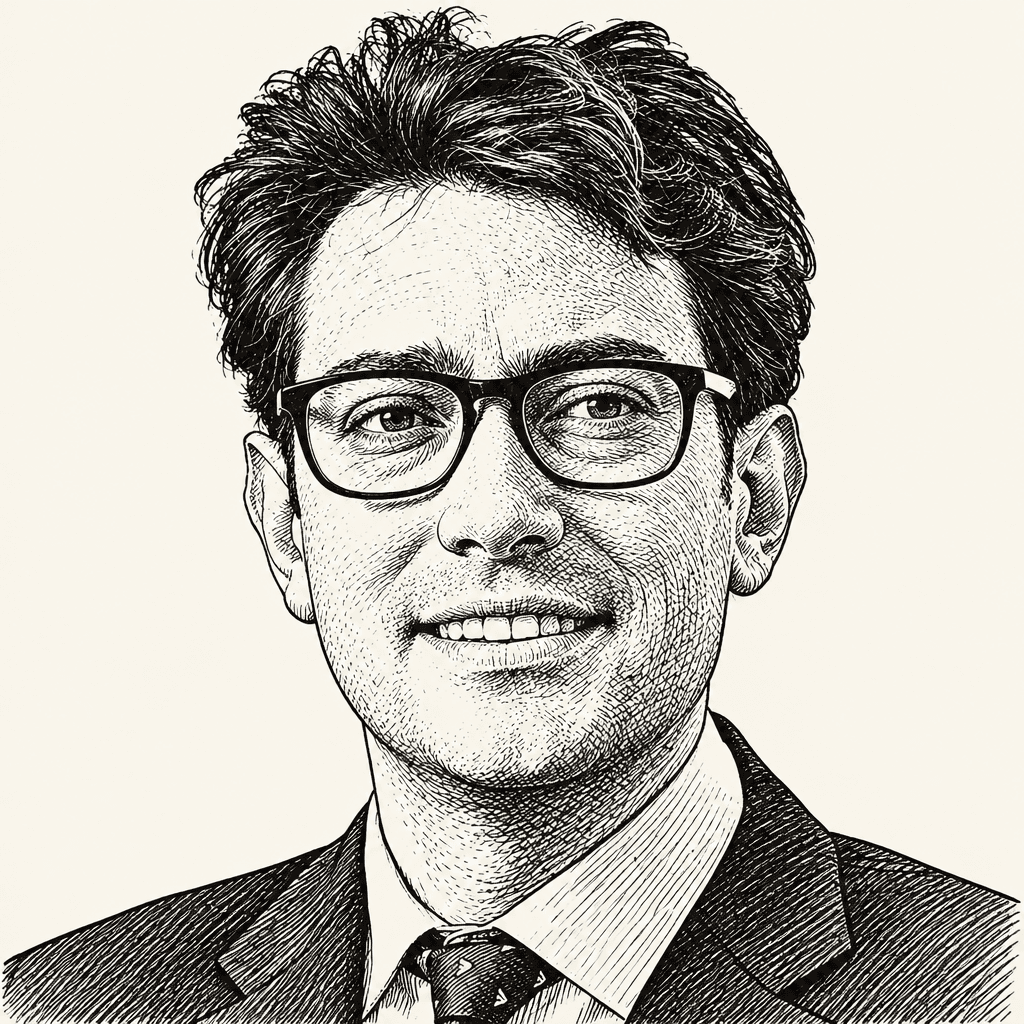
Marco Pavone
Marco Pavone is a Stanford professor of aeronautics and astronautics whose research focuses on autonomous systems, robotics, and control. He teaches AA 274A, including a lecture on robotic sensors and camera models.
Direct and Indirect Methods Solve Trajectory Optimization in Opposite Orders
Stanford professor Marco Pavone argues that finding a feasible robot trajectory is different from finding one that minimizes time or control effort: the latter is an optimal-control problem. In this lecture, he explains two ways to solve it—derive continuous-time optimality conditions before discretizing, or discretize first and optimize the resulting finite-dimensional problem. He develops the indirect approach through Hamiltonians, costates and endpoint conditions, then shows how a free-final-time trajectory can be formulated for a boundary-value solver.
Low-Dispersion Samples Can Make Randomness Unnecessary in Motion Planning
In Stanford’s 2019 lecture on sampling-based motion planning, Professor Marco Pavone argues that planners can search complex robot configuration spaces without explicitly constructing their full obstacle geometry. Instead, they test sampled configurations and connections for collisions, trading a difficult global representation for local checks. Pavone compares PRM’s reusable roadmap with RRT’s incremental search, explains how dynamics change feasible connections, and presents results showing that well-spread deterministic samples can provide asymptotic guarantees without randomness.