Mission-Controlled Governance Can Keep Successful Companies From Turning Extractive



Eric Ries, author of The Lean Startup, argues in his new book Incorruptible that companies often lose the qualities that made them valuable because standard governance treats them as instruments for shareholder returns rather than institutions with a purpose. In a conversation with Garry Tan, Ries says founder control, aligned investors and dual-class shares are too fragile to protect a mission once a company becomes valuable enough to attack. His answer is legal and governance design—public benefit corporations, mission-controlled boards, trusts or industrial foundations—that gives a company’s purpose authority beyond any founder, investor or executive.

Success makes a company worth taking
Eric Ries frames the problem behind Incorruptible: Why Good Companies Go Bad... and How Great Companies Stay Great as a missing part of the startup playbook. Founders are taught that if they reach product-market fit, success will protect them: the company becomes valuable, the founder becomes powerful, and power creates freedom. Ries’s warning is that the opposite risk appears at scale. The more successful an organization becomes, the more valuable it becomes as a target.

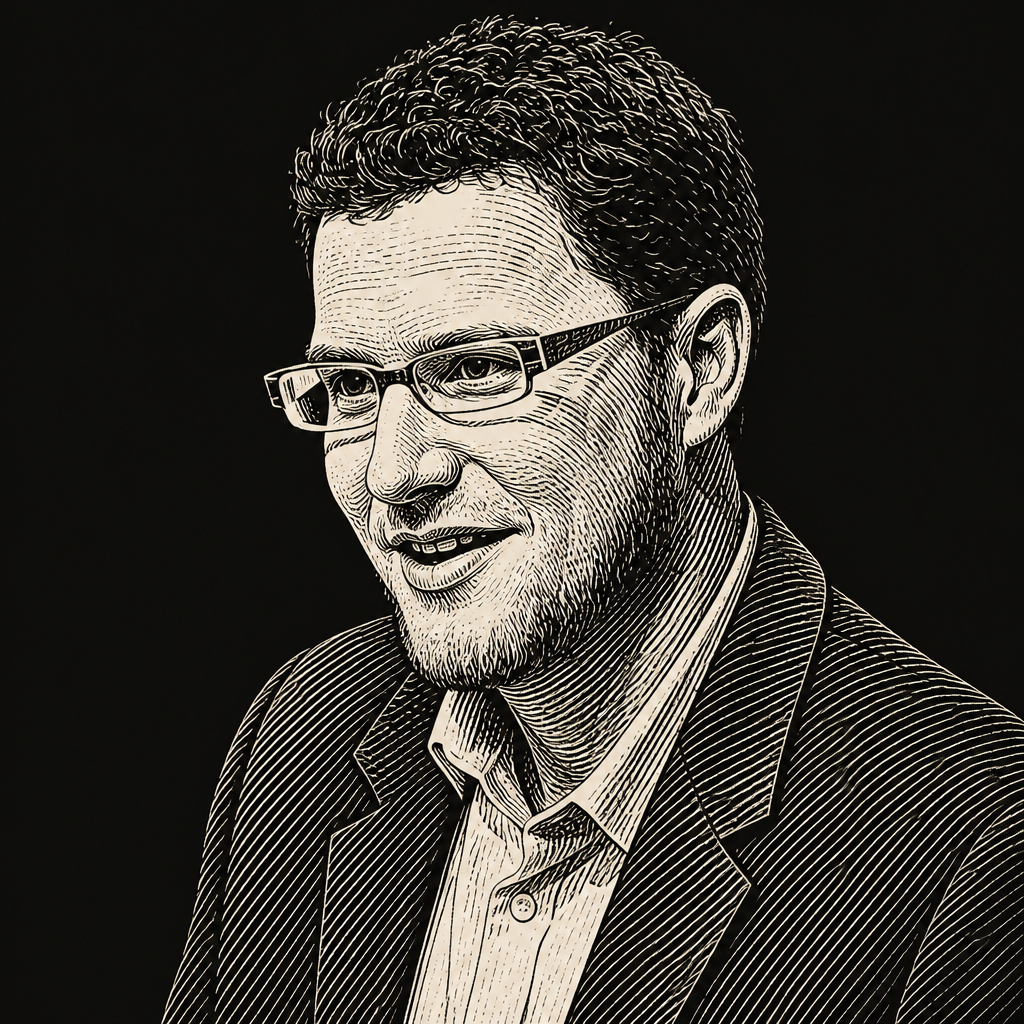
That is the gap he says his new work is meant to address. The Lean Startup helped founders create companies, but did not give them tools to protect what made those companies trustworthy. He describes watching companies where “the thing that made them special gets lost,” founders lose control, and the company stops becoming what they hoped it would be because they did not understand how to protect what they had created.
The objection is not anti-profit. It is a distinction between making money by creating value and making money by extraction.
The best way to make money is to create more value than you capture, right? To build something that people want.
Builders broadly understand that intuition, in Ries’s view. He names Tim O’Reilly and Paul Graham among the people in the industry who have said versions of it. But contemporary corporate doctrine, he says, pushes everyone to pretend “all kinds of making money is equally good,” even when some ways of getting rich create no value at all.
Ries gives the example of attending an event for a founder who had built a major company, made “unbelievable amounts of money” for investors, and then been pushed out. Employees and former employees came from across the country, including people he had laid off. A founder Ries calls “the professor,” who was building a powerful AI-plus-bioscience company with potential misuse risks such as bioweapons or pandemics, heard that description and said it sounded like the kind of company he wanted to build.
Ries told him he was misunderstanding the scene: “This isn’t a party, it’s a wake.” The founder was alive. The company was still public. What people were mourning was the loss of the company’s mission guardian. Even if the new CEO was capable or well-liked, any promise that investors disliked could lead to replacement. “So what are his promises worth?”
That is the institutional pattern Ries says now dominates: “temporary organizations being led by temporary managers on behalf of temporary investors.” He points to falling stock holding periods, declining company lifespans, and shorter executive tenures as part of the same structure. When trust declines, he argues, it is not mysterious. The economy has been built to run this way.
Shareholder primacy is treated as law even though Ries says it was never enacted as one
Garry Tan puts the default founder understanding plainly: if a company is a Delaware C corporation, it has to relentlessly pursue profit, or there may be grounds to remove leadership. Ries calls that doctrine shareholder primacy: the idea that the corporation is not fundamentally a living organization that creates products, serves customers, and earns trust, but a financial instrument for investment returns.


Ries’s warning to the professor was that he was already on a “one-way ticket” to the outcome he feared because he had adopted standard governance practices. The professor believed his lawyer would never have written a charter that required him to maximize shareholder value. Ries told him to call the lawyer. The next day, the professor felt betrayed: the lawyer said he had used best-practice documents and that, if “the most evil company in the world” wanted to buy the business, the company would have to sell. The professor’s reaction was that if employees knew that, they would quit.
Founders mistake these defaults for natural law, Ries argues. Shareholder primacy, in his account, does not go back to Adam Smith and does not represent some eternal pillar of capitalism. It became a “normative consensus”: everyone agrees that everyone agrees this is how companies should act.
The historical contrast matters because, as Ries describes it, the modern default replaced an older idea of purposeful incorporation. For much of corporate history, companies were chartered to do a specific thing: build a canal, create a railroad, pursue an identifiable public benefit. A board’s highest obligation was to defend that purpose. A nineteenth-century company charter would not say “maximize shareholder value”; Ries says that would have been treated as beyond the corporation’s legal authority.
General incorporation changed one part of that system for the better. Instead of needing a state legislature to grant a charter, anyone could form a company. Delaware adopted general incorporation in 1899. But Ries says even that rule assumed a company would still have a purpose. Over the twentieth century, lawyers increasingly advised companies to use broad charter language: “any lawful act or activity.” Founders, he says, often have never read their charters and do not know that their company’s stated purpose is effectively a blank.
In Ries’s history, the decisive shift came in the 1960s and 1970s, when a small group of academics, judges, and legal scholars interpreted general-purpose language as shareholder primacy. He invokes Milton Friedman’s formulation that the social purpose of a corporation is to increase its profits. What made the move powerful was that it was not presented as one possible view of corporate purpose; it was presented as the purpose of a corporation.
Shareholder primacy was never put to a referendum or enacted by a legislature, Ries emphasizes. Yet directors behave as if it is law because, according to Ries, courts enforce it in practice and boards expect to be sued or removed if they violate it. He uses Twitter’s sale to Elon Musk as an example: the board, in his view, was forced to sue to complete the transaction because it believed fiduciary duties to shareholders required it to do so.
The paradox, as he describes it, is that legal scholars still have to explain why something that is “not technically a law” is enforced like one. They distinguish between a legal obligation and a legal duty, but the practical result for founders is the same in Ries’s account. A board that refuses the financially highest bid may be forced into litigation; a CEO who resists shareholder-maximizing demands may be fired.
The practical advice begins with refusing the consensus. Ries asks founders whether they are part of this normative consensus. They usually say no, but also say they cannot say that publicly. His response is that they can. If enough founders say it is controversial, it is no longer a consensus.
The founder-control answer is too fragile
Ries does not argue that founder control is useless. He says it is better than investor control. But it is often treated as a complete solution when it is not. Dual-class shares can sunset, be negotiated away under pressure, be defeated by financing needs, or vanish with the death of the founder. Even when they work temporarily, they can leave the founder as a “human shield” who can never safely leave.
Garry Tan raises the case of Jeff Lawson at Twilio as an example of the fragility. Tan describes Lawson as having built Twilio from nothing to $4 billion in revenue, with the stock up 390% since IPO. Ries says Lawson took the company public with dual-class founder control that sunset after seven years. During those years, the company experienced the pandemic tech run-up and then the collapse in telecom and tech stocks. At the time Lawson was fired, Ries says, the stock was down about 80% from its peak, even though revenue was up from the IPO and from the pandemic peak.
The timing is the part Ries finds hardest to accept. In his telling, Lawson’s protections expired, and he lasted only 199 days beyond that expiration. After seven years as a public-company CEO, less than a year of grace after the sunset showed how little past value creation counted once the governance shield disappeared.
The issue is not whether founders should face accountability. Ries says they should. The issue is the assumption that firing the founder and bringing in standard professional management is the correct remedy when markets are dissatisfied. Often, he argues, that marks the end of what made the company work.
He uses Edwin Land at Polaroid as a historical comparison. Polaroid, in Ries’s account, had been an R&D powerhouse with roughly 1,500 research scientists, and Steve Jobs admired it deeply. When Land was fired, Jobs called it “the dumbest thing he’d ever heard,” according to Ries. Polaroid “never invented another thing ever again” after removing its founder, Ries says.
The broader problem is that companies are too often built as either investor-controlled or founder-controlled. Investor control creates pressure to extract. Founder control can preserve mission for a while, but it makes the mission depend on one person. Ries wants a third structure: mission-controlled companies, where the mission has sovereignty independent of any individual.
That distinction also leads him to criticize “emperor for life” arrangements. Founders sometimes think dual-class shares make them invincible, but “having the votes is not the only thing that matters.” Investors can still pressure a founder by withholding capital or demanding governance changes. Dual-class can also produce an unhealthy psychological effect, which Ries connects to “hubris syndrome”: less generosity, less compassion, more selfishness, and more fear of losing power.
His proposed repair is not to abandon founder control immediately, but to build a bridge. If a company uses dual-class founder control, it can write into its documents that if founder control is ever defeated, another mission-protecting structure springs up in its place. That could be an industrial foundation-style structure, a trust, or another mechanism described in his book. The important point is that the company should not move by default from founder control to investor control when the founder’s protection fails.
Sol Price’s hierarchy shows what mission control means in practice
The example Ries uses to make “mission control” concrete is Sol Price, whom he calls the father of modern retail. Price founded FedMart in San Diego in the 1950s. Before becoming an entrepreneur, he was a lawyer, and Ries says he carried into retail the concept of fiduciary duty: a duty to put the client’s interests ahead of one’s own.
Price’s question was: who is the client? His answer was the customer. From that came a hierarchy: customers first, employees second, shareholders third. Ries compares that hierarchy to Peter Drucker’s view that employees should come first, customers second, shareholders last, and to Johnson & Johnson’s Our Credo, which placed doctors, patients, and nurses first, employees second, communities third, and shareholders last.
The shared pattern is not that shareholders are irrelevant. It is that shareholder value is an output. Ries calls it “the exhaust that comes out of the engine.” If the exhaust pipe is put back into the intake and made the explicit goal, the company no longer stands for anything. Product quality, design, customer health, wages, and other long-term sources of value become expendable.
Price’s operating behavior made the principle visible. If a competitor offered a product cheaper than FedMart, Price would put signs inside his own store telling customers not to buy it from him and explaining where they could get it for less. His job, as Ries tells it, was to get the customer the lowest price, even if that meant sending the customer elsewhere.
The result was trust. Customers would drive miles out of their way because they believed FedMart was their ally. Trust became an asset.
Once FedMart was public, Price faced continual pressure from investors who wanted higher prices, lower wages, and faster growth. He tried to escape that pressure by bringing in a new controlling shareholder and board who, he believed, understood retail and would protect him. Instead, Ries says, the new board succumbed to the same gravity of best practices. In 1975, Price arrived at work and found the locks changed. He no longer worked there.
Ries treats what followed as a rare business-history counterfactual. In one branch, FedMart’s investors got what they wanted: Price was removed and the company adopted conventional business practices. Ries says FedMart was bankrupt within seven years. In the other branch, Price took two weeks off, leased an office upstairs from FedMart, and started Price Club.
Price Club later merged with a company founded by a former FedMart employee who had quit in protest when Price was fired. That combined company became PriceCostco, now Costco. Ries argues that Costco still embodies the Sol Price principle of fiduciary duty to the customer, and that it is protected by a “governance fortress.” Its board understands its job as protecting the mission, not simply maximizing returns to shareholders.
Costco also gives Ries a way to challenge conventional governance ratings. Costco has routinely received the worst possible governance rating from governance-rating organizations, he says, while Kroger adopted standard best practices. In his comparison, Costco’s subsequent performance was dramatically stronger, while one analyst called Kroger’s performance “Costco in reverse.” His shorthand advice to founders is to hear “best practice” and ask whether it really means “Kroger practice.”
A public benefit corporation is a shield, not a full fortress
When Tan asks what founders can do in the documents, Ries starts with one recommendation: become a public benefit corporation. He calls the PBC “an absolute must do” and “an utter no-brainer,” especially for an early company that has only SAFEs and no equity investors. In Delaware, he says, it is a two-page filing that lawyers can complete quickly.
A PBC is not the consumer-facing “B” certification often seen at farmers’ markets. It is a legal form that restores purposeful incorporation: the company states a public benefit or mission, and the board has room to consider that purpose rather than only shareholder returns.
For founders under investor pressure, that matters because it can act as a shield. If directors are being pushed to fire a CEO for failing to maximize shareholder value, the PBC structure gives them a legal basis to say the company is working toward its mission. It can help protect the board from being sued for considering something other than shareholder value.
But the limit is important. A PBC does not automatically make a founder irremovable for failing to maximize shareholder value. Nor does it make directors removable if they fail to pursue the mission. Delaware directors still have broad latitude to exercise judgment. If they decide to fire the founder anyway, the PBC will not by itself let the founder sue them and win.
That is why PBC conversion is the easiest step, not the whole answer. The company also needs governance structures and people aligned with the mission. Tan presses on board composition, and Ries says the first hard step is being willing to say the company will not follow standard best practices. That stance creates selection bias. The founder wants investors and directors who choose the company because they believe in its mission, not merely because they expect a quick return.
Founders are too credulous about long-term alignment, in Ries’s view. A founder may bring on a partner from a venture firm because that individual seems exceptional, but the investment comes from the firm, not the person. If the partner leaves, the company may be left with a new board member it never chose, holding veto rights and control rights. Founders often have not read the venture fund’s LPA and do not understand the fund’s incentives.
He is also skeptical of the standard independent-director model. The theory is that independent directors are objective because they have no stake in the outcome. Ries calls that the problem: they have no financial incentive for the mission to endure. At the same time, they do have an incentive to be perceived as pro-investor because investors recommend people for independent-director roles. In a “classic Silicon Valley board” of two VCs, two founders, and one independent, founders should not kid themselves, he says: investors already control the company.
The alternative is double accountability. Investor directors have duties both to the company and to their own limited partners; everyone accepts that they can manage both. Ries says independent directors need a similar accountability structure. One solution is a second entity with outside trustees that appoints directors, either the independent directors or, in some structures, all directors. He compares it to a two-branch government.
| Tool | What Ries says it can do | What it does not solve by itself |
|---|---|---|
| Public benefit corporation | Restores purposeful incorporation and gives directors a shield for considering mission alongside shareholder returns. | It does not make founders irremovable or force directors to pursue the mission in every disputed judgment. |
| Dual-class founder control | Can be better than investor control and can protect the mission while the founder retains leverage. | It can sunset, be negotiated away, fail under financing pressure, or disappear when the founder dies. |
| Industrial foundation | Creates a two-entity structure in which mission-oriented trustees can constrain or appoint the for-profit company’s directors. | It requires founders to choose a less standard structure and defend it against conventional advice. |
| Perpetual purpose trust | Can create outside trustees with appointment power over directors, as Ries says Anthropic’s Long-Term Benefit Trust does. | It still depends on careful design and does not make the company morally perfect or immune from future governance problems. |
Novo Nordisk is Ries’s strongest case for structural mission control
Ries’s central example of a two-entity structure is Novo Nordisk. He presents it as a case where nonprofit directors created more than $500 billion of shareholder value by refusing a transaction the for-profit board wanted.
The story begins, in his account, in the 1920s with Marie Krogh in Denmark. She had received a fatal diagnosis of diabetes, then an illness with no known cure. Her husband, August Krogh, had just won the Nobel Prize. On a North American lecture tour, the Kroghs learned at dinner that Canadian scientists had isolated insulin. They went to see the work themselves and asked to license the technology for Denmark.
The Canadians, Ries says, worried about the danger of a for-profit company controlling a life-saving medicine. Decades before Martin Shkreli became a public symbol for drug-price exploitation, they foresaw the possibility that a company could charge anything to someone whose life depended on the drug. The Danish solution was to build the Nordisk Insulinlaboratorium as a for-profit subsidiary of a nonprofit foundation. The nonprofit had trustees; the for-profit had directors.
That structure endured. Novo Nordisk maintained its scientific integrity for more than a century, according to Ries. But the structure was also tested. In the early 2000s, pharmaceutical best practices favored consolidation and M&A. Novo Nordisk’s for-profit board pursued a merger and reached a signed agreement at a large premium. The last due-diligence item was approval from the foundation.
The foundation trustees asked what problem the transaction solved. Their responsibility was to protect the mission, and Ries says they were allowed to approve a merger only if it was necessary for the survival of the company. The bankers returned with the “eat or be eaten” argument: pharma companies had to merge or die. The trustees noted that Novo Nordisk had been profitable for ten years in a row and growing about 20% annually. They rejected the merger.
People were furious, in Ries’s telling, because the deal was worth about $20 billion and would have made money for many participants. But the counterfactual later became visible. The company Novo Nordisk would have merged with was acquired by Merck two years later, and, according to Ries, all of the major R&D programs would have been canceled. One of those programs was deep into the long development of GLP-1, which Ries says had no evidence even ten years in that it would work. Because the trustees blocked the merger, the research continued.
The long-run result, in Tan and Ries’s telling, was that Novo Nordisk’s valuation later crested around $600 billion and at one point exceeded Denmark’s GDP. Ries treats the difference between the abandoned sale price and later value as evidence that mission protection is not merely morally attractive but economically powerful.
The academic literature calls this kind of structure an industrial foundation, Ries says. There are enough examples to form a dataset, and companies with such structures are six times more likely to live to year 50: roughly 60% probability versus 10%. He mentions Zeiss, the German optics company, as having used such a structure in 1885.
For Ries, this is proof that founders have been sold a false monoculture. They are told the standard Delaware C corporation with standard documents and standard governance is the only serious path. He says that deprives founders of their “birthright”: there are more corporate forms and governance structures than the startup ecosystem usually explains.
Venture capital’s time horizon intensifies the mismatch
Tan identifies one structural pressure from the investor side: the standard venture fund lasts about ten years, and limited partners expect capital to be returned. Ries agrees that this is a major problem because ten years is no longer long relative to company-building timelines.
Many venture practices came from a time when companies might go public three years after founding, Ries says, and the scale of an IPO was much smaller. Tan summarizes the shift as moving from the “three-year overnight success” to the “20-year overnight success.” In that environment, a ten-year fund can push companies toward liquidity before the company’s natural mission and product cycle have matured.
Ries sees the refusal of companies such as Stripe to go public as a rational response to public-market pressure. People complain that companies remain private too long, but he asks what else should be expected if the public system creates gravitational pressure on companies to abandon mission or submit to short-term demands.
The tools founders use to resist that pressure have often been improvised rather than well-designed. More founder control is one such tool. Tan notes that Y Combinator has advocated for founder control. Ries calls it better than nothing, but not enough. Founder control can block investor pressure for a while, yet it leaves no durable bridge to institutional mission protection.
The deeper problem is that startup governance is often delegated. Founders dislike governance because it sounds boring, Ries says, just as many once dismissed management as boring before The Lean Startup. But when governance “comes back to bite,” founders are unprepared. Builders have to read what they sign, understand their charters, and decide what kind of company they are trying to build before the defaults decide for them.
Anthropic is presented as an early test of mission-protecting AI governance
Tan brings the discussion back to artificial intelligence by recalling that the first PBC he heard about was Vicarious, founded by Scott Phoenix, which chose that structure because it was trying to create AGI and did not want to be forced into a “paperclip maximization” path by shareholders. He then asks about Anthropic, where Ries helped design the Long-Term Benefit Trust.
Ries is careful not to claim credit for Anthropic’s success. He says he played only a small part and gives credit to Dario, Daniela, and the team. But he argues that Anthropic illustrates the combination he advocates: ethos plus integrity.
The ethos, in his view, is AI safety. People can agree or disagree with Anthropic’s values, but the company genuinely believes them. Ries remembers meeting the team shortly after they left OpenAI, when people were giving up lucrative jobs to pursue the mission. That mission, he argues, is part of Anthropic’s talent advantage. People want to work there because they believe it is trying to be “the good guys,” and that alignment contributes to focus.
The integrity side is the structure. Anthropic understood that if its technology worked, it could be worth trillions, and the incentive to take it over would be enormous. Even a carefully curated cap table could fail. Ries notes that Anthropic thought it had highly aligned investors, including Sam Bankman-Fried, but a large stake later ended up in a bankruptcy auction. The lesson, for him, is that choosing the right people is not enough.
Anthropic spent about two years defending and developing the governance idea through term sheets before establishing the Long-Term Benefit Trust, according to Ries. He identifies it as a perpetual purpose trust rather than a nonprofit foundation. The structure has outside trustees with power to appoint directors to the for-profit board. It is not the same legal form as Novo Nordisk’s foundation structure, but the concept is similar: an external mission-protecting body with appointment power.
He connects that structure to Anthropic’s willingness to act consistently with its values. When people ask why Anthropic is, in his words, “the most courageous of the AI labs,” he says the trust is part of the reason. By “doing the right thing,” he does not mean moral perfection or immunity from criticism. He means acting consistently with the company’s own values, where those values are oriented toward human flourishing and the company has enough structural strength to defend them.
Ries cites Anthropic’s decision to turn down a $200 million contract as an example. He says someone sent him a video of sidewalks around the company’s San Francisco headquarters chalked with messages saying thank you. In a city where tech and AI companies are not always popular, he treats that response as evidence of a counterintuitive benefit: standing up for the mission can deepen trust. He also says Claude went to number one after that decision, while emphasizing that Anthropic could not have known that would happen.
The early lesson is not that Anthropic has solved the AGI governance problem. Ries explicitly says there is a long way to go with Anthropic and with AGI. The lesson is that taking extra time to design a structure thoughtfully can be valuable to the company’s success, not merely to its public image.
The operational close is ethos with teeth
Ries reduces the philosophy to two requirements. A company needs an ethos: a higher principle like Sol Price’s fiduciary duty to the customer, Novo Nordisk’s medical mission, or Anthropic’s AI safety commitment. And it needs structural integrity: legal and governance mechanisms strong enough to protect that ethos from temptation, takeover, investor pressure, succession, and the founder’s eventual absence.
Ethos plus integrity equals incorruptible.
That formula is why Ries rejects both naive investor alignment and pure founder sovereignty. Aligned investors can leave, change incentives, sell stakes, or be replaced. Founders can be fired, pressured, die, burn out, or become distorted by unchecked power. The mission has to be embodied in documents, board design, trustee authority, and selection mechanisms that outlast any one person.
The practical first moves are deliberately concrete: read the corporate charter, know whether the purpose clause says anything meaningful, consider PBC conversion before priced equity rounds complicate consent, avoid mission-control sunsets with no successor structure, and choose directors and investors for actual mission alignment rather than prestige or “founder friendly” language.
Ries expects resistance. Every concept and technique in his book has one thing in common, he says: someone will try to talk founders out of it. Lawyers, investors, and ecosystem participants will say it is not standard, not serious, not necessary, or not what successful companies do. His answer is that the economic evidence points the other way: ethical or mission collapse is also value destruction.
The founder’s responsibility is to stop treating governance as someone else’s paperwork. A company built to last for 50 or 100 years cannot depend on a founder always being present, investors always being benevolent, or courts interpreting vague purpose language in a mission-friendly way. The structure is part of the product.