Boom Plans to Use Turbine Sales and Operating Data to Develop Overture

Boom Supersonic has fired a prototype engine core intended for two products: a natural-gas turbine for data centers and the engine for its planned Overture supersonic airliner. Founder and CEO Blake Scholl argues that selling turbines first could help fund Overture and give Boom years of operating data before the engine flies. The plan took shape after Rolls-Royce withdrew from a collaboration with Boom, leaving the company to build its own engine.
The engine core has fired; its first market is power generation
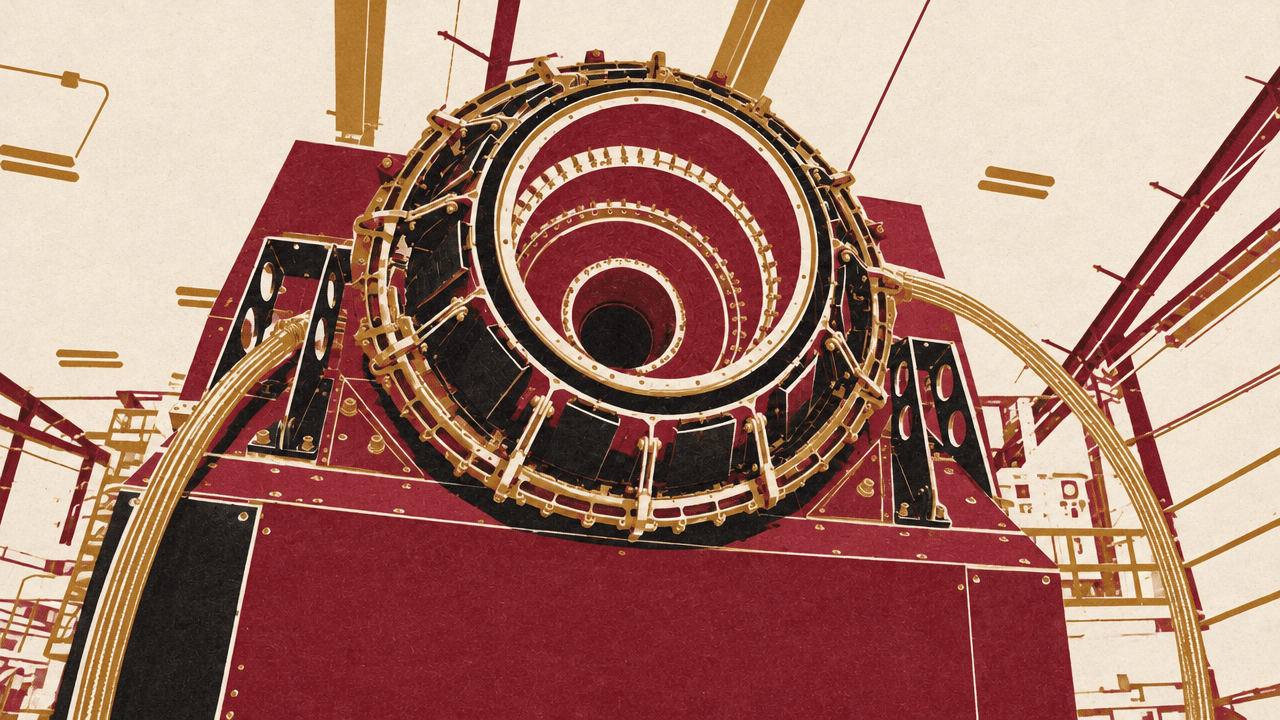
On November 21, 2026, Boom Supersonic fired its prototype engine core for the first time. The core is intended to serve two products: Superpower, a natural-gas turbine for electricity generation, and Symphony, the engine for Boom’s planned Overture supersonic airliner. The first product is meant to generate revenue and operating experience before the engine flies.
Boom founder and CEO Blake Scholl says the company concluded early that no off-the-shelf engine could do the job it wanted for Overture. Its first employee was an engine designer from Pratt & Whitney, who initially proposed modifying an existing Rolls-Royce engine instead. That approach, Scholl recalls, appeared likely to save billions of dollars.

It also offered credibility. Scholl says that when a company says it is building an airplane, people in the industry ask what engine it will use. Naming Rolls-Royce gave Boom a reason to be taken seriously. The company announced a collaboration with Rolls-Royce in 2020, but Rolls-Royce withdrew in September 2022.
Scholl says he learned the news over dinner with a supplier, as his phone began filling with messages. Boom had rolled out its XB-1 demonstrator and signed up United and American Airlines, but he says the breakup made it impossible to raise more money or continue ordinary conversations with customers and suppliers. He describes the choice that followed as stark: stop, or build the engine itself.
The Rolls breakup was like the startup equivalent of a stage four cancer diagnosis.
Boom announced its own engine program in December 2022. Scholl says he had already come to believe the company should build the engine itself, though neither his team nor the industry thought it was practical. The decision set Boom on the path to a shared engine core, with one application for flight and another on the ground.
Scholl describes the change for power generation as taking the fan off the front of the engine and putting a generator on the back. In his account, the core can then produce 42 megawatts of electricity on natural gas instead of 40,000 pounds of thrust at Mach 1.7. Boom’s first engines, therefore, are intended for data centers rather than aircraft.
The turbine business is also meant to change how Boom pays for Overture. Scholl says the power product could become a profitable, multibillion-dollar business. If the company makes two turbines a month, he says, it would turn cash-flow positive when it ships the first one, generating more money than it needs to develop the airliner.
Turbine sales could fund the aircraft and build operating experience
The data-center opportunity became concrete for Scholl in 2025, after XB-1 broke the sound barrier. He says he was reading about long grid-interconnection queues and a shortage of turbines. In his account, ordering a power turbine from GE meant a wait of five years.
Scholl tested the potential market by texting two people, including early Boom investor Sam Altman. He asked whether a 40-megawatt-class natural-gas turbine would be useful to AI. Altman replied, as Scholl recounts it, “Yes please, as many as you can make,” and directed him to someone on his team. Scholl took that response as an initial check on demand, not as evidence that the product had been proven in the field.
He also sees the turbine as a way to accumulate engine operating data before using the technology in an aircraft. Scholl contrasts a typical 5,000-hour engine test with years of continuous turbine operation. A 5,000-hour test might expose a problem that occurs once in 5,000 hours, he says, but would not necessarily reveal rarer failures. If Superpower turbines run continuously for years, he argues, Boom could eventually have a much larger body of operating experience to present to regulators, customers, and the public.
Scholl’s million-hour figure is a projection, not an achieved test result: he imagines turbines accumulating that amount of runtime by operating around the clock for years while generating electricity. He says that scale of use could make the engine “the most tested new jet engine ever.”
The company’s production ambitions are large. Scholl says Boom had planned to make one gigawatt of turbines in a year. One prospective customer, he says, wants to deploy 1.6 gigawatts every 30 days. He describes demand after the turbine is proven in the field as extending “as far as the eye can see.” These are expectations and customer interest as Scholl describes them, rather than delivered capacity.
Jared Friedman, managing partner at Y Combinator, says the United States needs to add roughly 100 gigawatts of generating capacity over the next decade to support data centers. He estimates that would represent about $300 billion worth of Superpower turbines.
Scholl argues that incumbent manufacturers have limited incentive to expand production. He describes established industrial companies as benefiting from constrained supply: customers pay more, margins rise, and stock prices improve, while a large investment in capacity could be punished by Wall Street. In his view, those incentives help explain why turbine makers have not quickly responded to customers seeking more power.
He connects that argument to a broader interpretation of US industrial history. A chart shown during the discussion tracks electricity generation per person from 1882 onward. Its annotations show annual compounded growth of about 6% from 1920 to 1973, about 1.4% from 1973 to 2000, and about -0.1% since 2000. The chart attributes its figures to Historical Statistics of the US, the EIA, and Census/BEA population data.
Scholl interprets 1973 as a turning point for both aviation and electricity generation, noting that civil supersonic flight was prohibited that year. The chart supplies the electricity-growth figures; the claim that the flight ban and the slowdown mark a shared break is Scholl’s interpretation of the timing, not a conclusion demonstrated by the chart.
| Period | Annual change in US electricity generation per person |
|---|---|
| 1920–1973 | About 6% compounded growth |
| 1973–2000 | About 1.4% growth |
| Since 2000 | About -0.1% |
A blade bottleneck pushed Boom toward in-house production
Friedman identifies turbine blades in the engine’s hottest section as a key supply bottleneck. He says GE’s gas turbines are sold out through 2030; the blades must withstand hot gases and require specialized alloys and manufacturing methods.
Boom encountered the constraint when it began sourcing parts for its own engine. Scholl says the first plan was to buy 3D-printed turbine blades. A supplier quoted $1.3 million and an 18-month lead time for one ship set. Scholl then asked how much the printer cost and how long it would take to get one. He says the answer was $1.1 million and about two weeks. Boom decided to buy the printer and make the blades itself.
That decision fits the plan for the nearly 200,000-square-foot Superpower Superfactory in South Denver. Scholl says the factory is intended to take raw materials through to completed turbines under one roof, with most production processes vertically integrated. Boom expects to make 85% of each Superpower turbine by weight in-house.
When the company signed the lease in January, Scholl says, the building was an empty shell. The team had to lay a foundation even as it began installing and activating machines. During the visit, he points to stainless-steel castings and nickel-superalloy forgings that will be cut down into parts for the first customer units.
Scholl says Boom initially believed it could not afford the production equipment and would have to outsource or rent other companies’ capabilities. In hindsight, he says, outsourcing proved expensive and slow, and the company was lucky to survive it. For Boom, the case for in-house production is not simply ownership of equipment: it is the ability to make and revise parts without waiting on a long supplier chain.
He gives a small example from an earlier engine build. Some parts were difficult to reach, and the team needed a wrench of a particular shape that could not be bought off the shelf. One engineer drew it in CAD, the machine shop worked overnight, and the right wrench was ready the next morning. Scholl says a change like that could otherwise take weeks or be impossible.
Single-crystal blades make software part of the manufacturing process
The engine’s most demanding parts must, in Scholl’s description, spin at 10,000 revolutions per minute and withstand 3,000 degrees Fahrenheit continuously for three years. He says the hardest components are made from single-crystal metal. The most advanced turbine blades, he explains, are one crystal: “one perfect grid of atoms, just like a diamond.” He describes the methods for producing them as industrial knowledge held closely by the major engine manufacturers.
Boom is building a single-crystal foundry in the building next to the factory. Scholl says the goal is to make the process digital enough that a designer could design a blade on Monday, cast it that afternoon, and have a new part ready to test the next day.
Software is intended to shorten the design loop. Scholl, a former software engineer, says Boom began putting software engineers on hardware teams to automate work that their colleagues were doing. He says the cost of software development has fallen, and that employees throughout the company—including the receptionist—can now code with AI assistance.
During the factory visit, Friedman shows a Blade Runner interface with a turbine-blade model, graphs, and parameter sliders. Scholl says an engineer can adjust a slider and see the geometry update in real time. The company’s aerodynamic simulation runs on its own GPU cluster, he says, allowing the engineer to see how a change affects the blade’s aerodynamics and structural behavior.
Scholl contrasts that process with the time required for engine iteration. He says the fastest anyone had completed a whole-engine iteration was three months, while six months was more typical. With Blade Runner, he says, one engineer can do in real time what previously took a team of 100 six months. His claim concerns the design and analysis work; Boom’s stated plan for rapid casting describes the next step of making parts to test.
The first fire is a milestone, not the end of the program
Boom’s engine core fired for the first time on November 21, 2026. Scholl says the Superfactory remains under construction, although some machines have already been activated. The next stated milestone is to begin shipping turbines in mid-2027.
Scholl says Boom has 165 people: about 40 in manufacturing and about 125 in engineering and other roles. The company has set an internal target of keeping its headcount outside manufacturing below 250 while developing both the power turbine and the supersonic airliner.
Friedman notes that XB-1 was built by a team of 50. Scholl says he believes small, elite teams can do things larger companies cannot or will not do, and sees XB-1 as evidence for that approach. He puts the odds of people eventually flying supersonic on a Boom airplane above 50%, though he says he did not previously think the odds were that high.
Even if the larger plans fail, Scholl believes XB-1 will stand as a lasting achievement. He says the team’s work made supersonic flight possible and argues that overcoming setbacks is part of what makes an achievement memorable. The engine core’s first fire marks a concrete step toward the next aircraft program, but the company’s path from a working core to turbines in service and an airliner remains ahead.