Razorpay Turned India’s Payments Friction Into a $180 Billion Platform

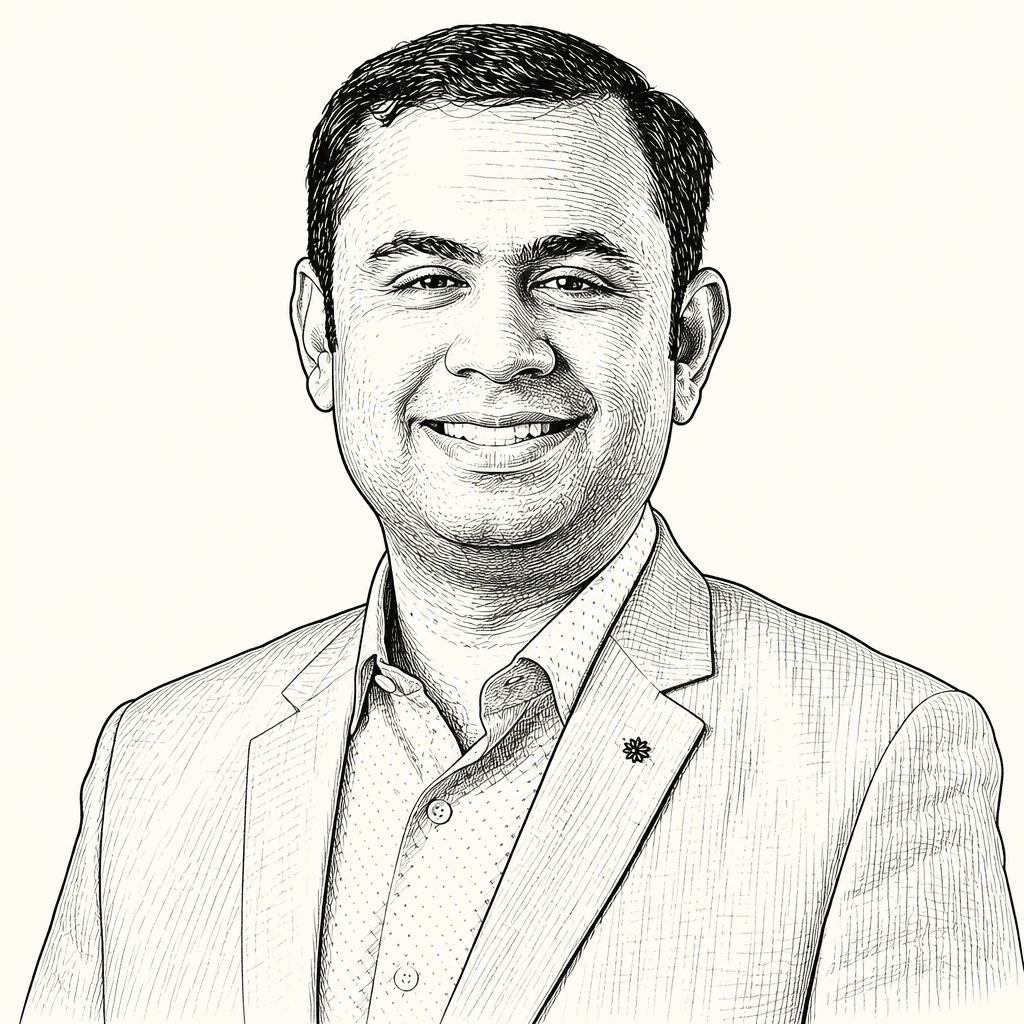
In a Startup School India fireside with YC’s Jon Xu, Razorpay co-founder and CEO Harshil Mathur argues that the company’s rise in Indian payments came less from an initial fintech thesis than from staying with a painful customer problem through regulation, bank failures and market skepticism. Mathur says Razorpay turned delays into a moat, customer trust into an operating principle, and early bets such as UPI into openings incumbents missed. His broader case is that founders must keep direct ownership of the decisions that define the company, especially as AI lowers the cost of building and raises the cost of slow judgment.
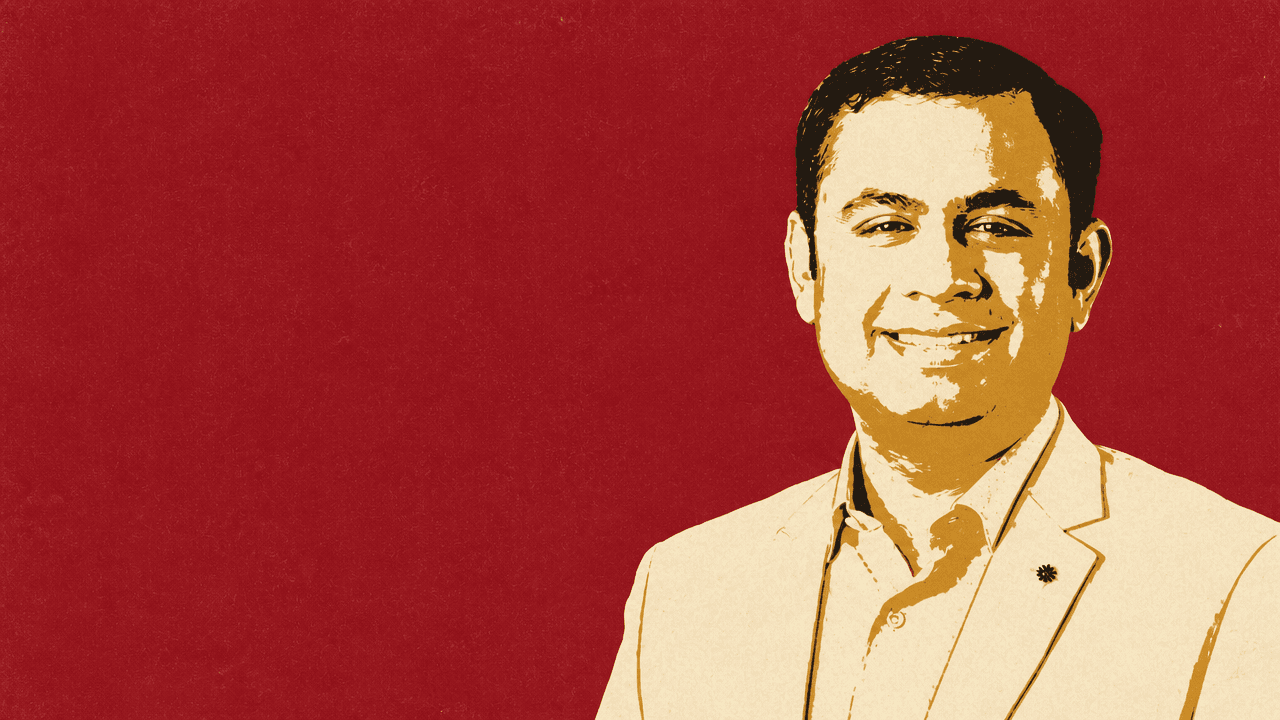
Razorpay’s early advantage was surviving what slowed everyone else down
Razorpay’s early advantage, in Harshil Mathur’s telling, came from converting three liabilities into protection: regulatory delay, acute customer pain, and moments that could have destroyed trust. The company did not begin with payments expertise. It began with a developer running into a workflow that seemed backward: in India, it was easier to accept cash than digital payments.
Jon Xu introduced Razorpay as the first Indian company Y Combinator invested in, a Winter 2015 company that became India’s largest payments platform. Y Combinator describes Razorpay as processing more than $180 billion annually. Mathur’s account of the company’s beginning was less about a clean financial-services thesis than about a programmer encountering a broken system while building something else.

Mathur did not grow up intending to build a payments company. He was a programmer who took a job at an oil company in the Middle East after college, found that oil was “not really my calling,” and spent evenings and weekends building side projects. One of those projects was a social crowdfunding platform. To make it work, he needed to accept payments in India.
The standard channels were difficult even to start with, and the product experience was “really, really poor” because it had been designed for large companies, not technical founders trying to add payments to a new product. He found the same complaint in Facebook groups for Bangalore and Pune startups: accepting payments in India was extremely hard.
The contradiction that bothered him was that cash was easier than digital payments. To Mathur, that ran against the basic direction of internet businesses: digital systems were supposed to widen access, not create new silos.
The first go-to-market idea was not startups. Razorpay applied to YC with a plan to sell payments to educational institutions, where fee payments were large and still often handled through physical or non-digital channels. The logic looked sound: digitize school and university fees and take a small percentage.
Customer conversations killed that plan. Mathur recalled visiting universities in Jaipur and pitching digital fee collection. One administrator’s response exposed the weak demand: if digital payments meant paying Razorpay an extra 1%, why not simply charge 1% more in fees? The institutions did not need to make collections smooth. Students and parents would pay however the institution required them to pay.
At the same time, startups around Razorpay’s coworking environment did want digital payments. They were the customers who felt the pain. Mathur said the team “quickly pivoted” away from education and toward startups, a move he described as “a really good decision in hindsight.”
The next constraint was that even after choosing the right customer, Razorpay could not simply launch. Mathur said the company spent the three months of YC without processing a single live transaction. It had an in-principle approval before YC, but it took almost a year after that to complete the first live transaction.
Mathur contrasted that with most software companies, which can start from a bedroom, launch an e-commerce store, and begin selling. Payments did not work that way. Razorpay needed certifications, approvals, licenses, and final authorization before it could transact.
His answer to the team’s impatience became one of the company’s core beliefs: the wait was painful, but it was not unique to Razorpay. Everyone else would have to go through the same process. Regulation could feel unfair, he said, but in this respect it was fair: large and small companies faced the same rules. That made the regulatory burden a moat.
“The hurdles become a moat over time,” Mathur said, because few companies would have the patience or energy to clear the same requirements. The hard part was not selling to customers; customers wanted the product. The hard part was everything around the business. In his formulation, if a business is hard to sell to customers, that is a problem. If it is hard for other reasons and customers still care, the difficulty can become protection.
Conviction came from customers, not from certainty
Harshil Mathur rejected the retrospective version of startup conviction. It is easy to say now that the team always believed, he said. In reality, every month he and his co-founder asked why they were building in payments at all.
Other companies were getting funded in e-commerce, food delivery, and other categories. Mathur and his co-founder were technical founders. They could have coded something else. The reason they stayed was not abstract market belief; it was repeated customer confirmation. Founders and potential customers kept telling them the same thing: payments were painful, and no one was solving the problem the way they needed it solved.
That customer pull gave the team energy during a period when the company could not yet prove much through transaction volume. Mathur tied the lesson back to YC’s “make something people want”: as long as enough people wanted what Razorpay was building, the founders had reason to keep going.
The first major crisis tested whether that customer trust could survive operational failure. Razorpay received its final bank approval one week before YC Demo Day. Until then, the team had considered deferring to the next Demo Day because it was not ready to launch. Instead, it launched, went live, announced on TechCrunch, and attracted investor interest.
Then, about two weeks after Demo Day, the bank that enabled Razorpay pulled the plug. Mathur said one customer had complained, the bank said it could not support Razorpay anymore, and the platform was stopped. Razorpay had roughly 50 live merchants using it for payments. Overnight, all of them were shut off.
For a payments company, that was one of the hardest possible positions. Customers had finally trusted a small payment gateway with money collection. Now Razorpay had to tell them their businesses were affected because Razorpay’s bank partner had stopped support.
The team tried to plead with the bank for more time and failed. Razorpay then made a principle-level decision: it would call every customer, explain exactly what had happened, and say what it was doing about it. He contrasted that with the instinct in a crisis to stop answering phones because there is not much useful to say. Razorpay decided to take the anger directly.
Six or seven people sat in a room and called every customer. Some understood. Some did not. Some abused the team. Mathur said they listened anyway. After four or five days, Razorpay found another partner and brought many merchants back live.
We’ll get all the scolding, we’ll hear all the abuses, but we’ll never stop picking the phone.
Some of those merchants, Mathur said, are still with Razorpay. The lesson he drew was that B2B, especially financial services, is a business of trust. In that kind of business, nothing replaces the human touchpoint.
That belief still shapes how Razorpay handles support. Mathur said the company has a rule: if a customer support query crosses two, three, or four exchanges, someone should pick up the phone and call. Even if it is less efficient, the trust created by a human saying “I am with you” is stronger.
That also sets a boundary around Razorpay’s use of AI. The company is using AI “in everything except replacing customer support,” Mathur said. In his view, support is not only a channel for problem-solving. It is a channel for establishing trust that a human is spending time on the customer’s problem.
The India thesis required rejecting faster exits
Jon Xu pointed to another early pressure: larger competitors, including global payments companies, noticed Razorpay because of YC and approached the founders with acquisition offers. Some suggested Mathur and his team should join them and build India on their behalf. Xu described the implicit message from competitors as: they were already in the space, Razorpay lacked background, and they could crush the startup or buy it.
Harshil Mathur said some offers were genuinely exciting because the companies were strong. The reason Razorpay did not take them was India. He believed India was “very, very hard and very different,” and he did not think many global companies understood the level of long-term investment the market would require.
In Razorpay’s YC application, Mathur said, he described India’s payments market as $60 billion in total GMV. Today, he said, Razorpay alone does $180 billion. He used that contrast to explain how hard India was to model in 2014 or 2015. If he had told a global company that a $60 billion market required $500 million to build for, he said, that would have been a difficult case to make. But the correct bet was that the market would scale massively.
Mathur said he still sees $180 billion as small and believes India will be at least a trillion-plus payments market. But he argued that this was hard to explain to global players that had not seen markets grow at India’s pace.
The principle Razorpay used was simple: unless joining someone else would help the founders achieve their ambition faster, there was no reason to do it. Mathur said they never found such a partner.
Capital efficiency followed from B2B logic
Jon Xu described Razorpay’s growth between roughly 2017 and 2020 as unusually fast and unusually capital efficient, saying the company grew by an “insane multiple,” around 40x, while staying lean. He asked how Mathur thought about raising money when many founders assume large ambitions require large burn.
Harshil Mathur said that during the 2015 to 2020 period, low burn was not always rewarded. Investors often expected startups to spend aggressively. When Razorpay raised its Series A, it brought in about $10 million to $11 million. Its monthly burn was under $200,000.
The company put the money into fixed deposits in India. Mathur said the interest on those deposits exceeded the company’s burn, making Razorpay profitable. Its investor was unhappy because the money had been provided to burn and grow, not to earn interest.
Mathur’s defense was rooted in the difference between B2B and B2C. He described B2B as “a very logical business”: a company adds value to another business, and that business pays for the value. B2C, in his framing, often requires spending heavily to acquire users, build engagement, and monetize later through another channel. B2B has less room for that story. The customer either sees value or does not.
That does not make B2B easy. It makes the business more intense because the customer evaluates every day whether the product still adds more value than it charges. If it stops doing so, the customer will move elsewhere. Moats and product depth matter, but the core relationship is always tied to value delivered now.
That logic also explained why Razorpay could use smallness as an advantage. Mathur’s clearest example was UPI.
UPI launched in April 2016. He said there were many skeptics at the time, and the two largest banks in India had not integrated UPI until demonetization in November 2016. Many payment gateways did not integrate UPI because they believed that without the two largest banks, usage would be limited.
Razorpay had little to lose. It had launched in 2015 and had about 10,000 merchants in 2016. In September or October 2016, Mathur said, Razorpay became the first payment gateway in India to go live on UPI, before the largest banks had done so. Then in November, the large banks went live and demonetization happened.
- April 2016UPI launched in India.
- September or October 2016Razorpay went live on UPI as the first payment gateway in the country to do so, according to Mathur.
- November 2016The largest banks went live on UPI and demonetization happened.
- Following weeksLarge companies including Zomato, Swiggy, and BookMyShow went live on Razorpay because it could support UPI.
- Following six monthsMathur said other payment gateways took about six months to go live on UPI.
Razorpay was ready when others were not. Mathur said no other payment gateway could support UPI at the same scale, so large companies that Razorpay had not previously served went live on Razorpay within a couple of weeks. UPI gave the company a temporary wedge into customers and markets it otherwise could not have entered.
For Mathur, the lesson was that startups can make bets incumbents delay. The downside was limited: if UPI failed, Razorpay was still fighting the same battle. If it succeeded, the company would have a differentiated way into the market. That is what happened.
AI forced Razorpay to treat itself like a company to be disrupted
Harshil Mathur described AI as a fundamental shift that required recalibration from the top. He and Razorpay’s leadership were spending significant time on AI tools, and he joked that he was “addicted to Claude Code.” His point was not only personal enthusiasm. Founders often start companies because they love building and coding, then lose that direct building role as layers form and the company grows. AI, in his view, lets founders get back to building “in some shape and form.”
That hands-on use changed how Razorpay thought about its own product. Mathur said the team sat down a few months earlier and asked: if Razorpay were started today, how would it be built? They mapped how integration, onboarding, support, the platform, and customer interaction would look in an AI-native version of the company.
Then they decided to build toward that version.
Mathur called the alternative the incumbent fallacy: believing that because the company already has scale and products, it can wait to respond. He connected this back to UPI. Existing payment players believed they could respond if something changed. But markets can change faster than incumbents can react.
Razorpay’s AI response, he said, was to avoid behaving like an incumbent. The company would identify the changes AI was creating and bring them into the product before a new startup did. Mathur said Razorpay reinvented the platform end to end and launched it a couple of months before the discussion. He described the traction as “massive,” while acknowledging that some of the technology is not perfect yet because AI is still evolving.
The internal cost was that Razorpay already had capital, teams, and existing ways of working pointed at the current platform. Mathur said asking teams to hurt the company in the short term in order to pivot toward what made sense long term was hard. But he argued it was necessary.
Any company who takes that call that we’re going to respond to the market is already dead.
His reasoning was that AI will compress the time required to build. If capital moats and infrastructure moats had already declined in importance, AI would also reduce the “building moat.” The remaining differentiation would be speed and judgment: how fast a company can decide what to build, and whether it understands what the market will become before the market forces a response.
Founder mode became a ten-year lesson
Jon Xu asked how Mathur had changed over the course of building Razorpay from a small founding team to a large company. Mathur answered by talking about a mistake: moving into “manager mode.”
Founders usually begin in the trenches for the first two or three years, Mathur said. Then the company starts working, executives and leaders are hired, and the founder starts to believe those leaders can take over the things the founder used to do. Mathur said he made that shift for a couple of years, trusting strong leaders and managing them instead of getting into the work.
He now sees that as a serious mistake. He drew a distinction between micromanagement and founder mode: the founder should not be in everything, but must be in the things that matter most. For Razorpay as a product company, that means product vision and direction. Mathur argued that no leader, however strong, can think about those questions in the same way as the founder.
In manager mode, the founder’s job becomes managing the leaders who own the work. In founder mode, as Mathur described it, the founder still delegates broadly but personally enters the few domains where the company’s direction is being set. The contrast is not between control and trust. It is between delegating execution and outsourcing conviction.
His underlying claim was blunt: no one will care about the company as much as the founder does. Not on day one, not in year 10, and not in year 20. The lesson took him almost a decade: delegate everything except the core things that define the company’s direction.
Mathur’s final advice to founders tied together AI, conviction, and time horizon. AI will make the tools of company-building easier, he said, but it will not make entrepreneurship easier. The core requirement remains the ability to connect deeply with a problem and spend years solving it.
His worry is that because AI makes products easier to build and deploy, founders may attach themselves to problems they do not truly care about. It is now easier to write code, launch a website, and get something live. But building a large company still asks a different question: can the founder spend the next 10 years on this problem?