Groww Deferred Monetization After Organic Growth Validated Customer Pull

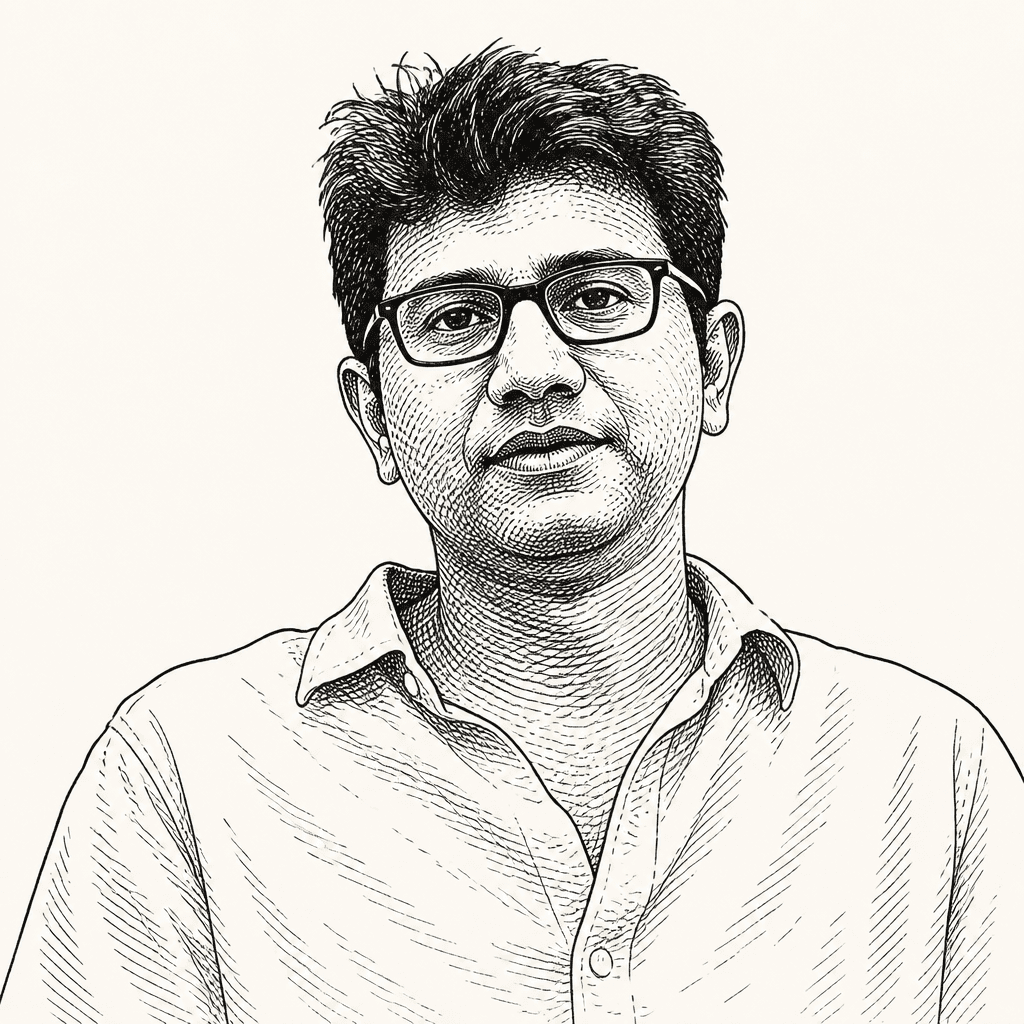
Groww co-founder and CEO Lalit Keshre argues that the Indian investment platform’s early advantage came from following customer pull even when it made monetization uncertain. In a Startup School India conversation with YC’s Jon Xu, Keshre says Groww abandoned its robo-advisor idea after users demanded more choice and transparency, then spent years prioritizing organic growth, retention and product intensity over revenue. His broader case is that consumer fintech founders should reduce ambiguity where they can, but stay close enough to customers to know which unresolved risks are worth carrying.
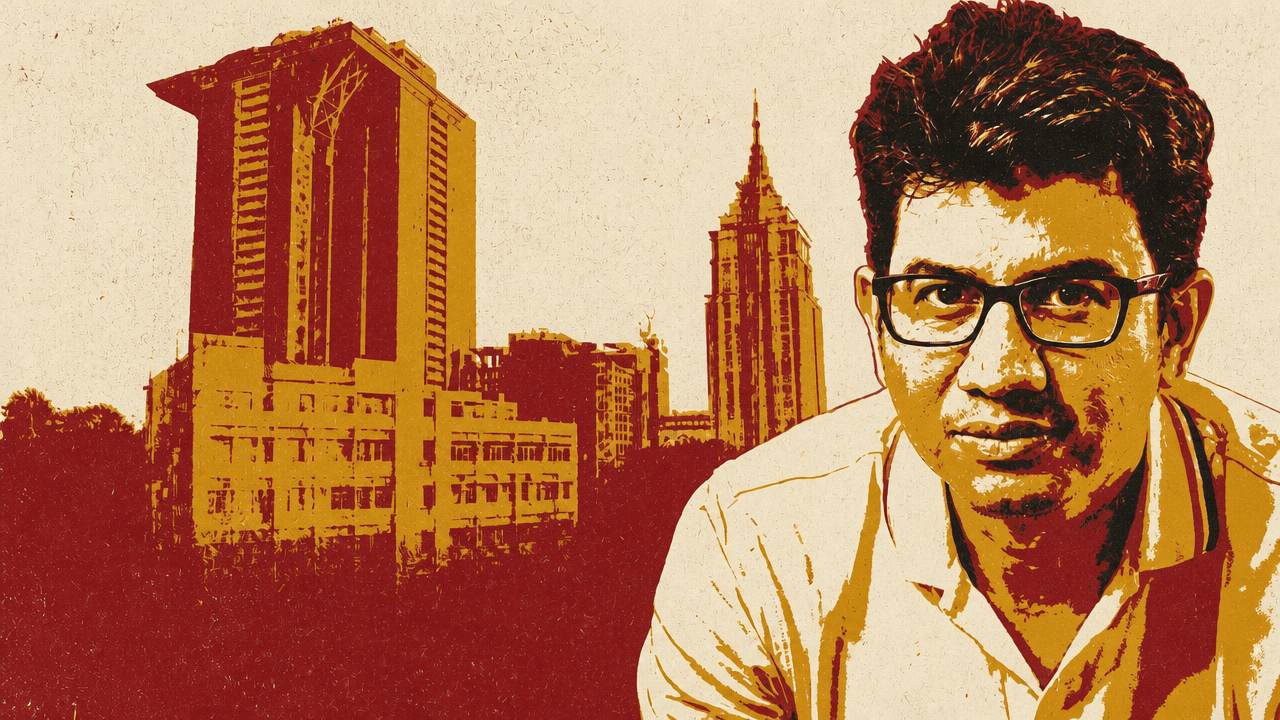
Groww found its market by moving from advice to selection
Lalit Keshre described Groww’s founding insight as something that emerged only after the first version failed. The company did not begin as the broad retail investment platform it later became. In 2016, Keshre and his co-founders started with a robo-advisor, influenced by the popularity of companies like Wealthfront and Betterment in the United States. Jon Xu opened by noting the scale of what followed: Groww had been in Y Combinator’s Winter 2018 batch, had since experienced “astounding growth,” and had gone public in November.

The macro problem looked obvious to the founders: India had more than a billion people, hundreds of millions were already buying online through platforms like Flipkart, but there were less than 20 million investors, by Keshre’s account. The initial answer seemed to be automated investment advice for those customers.
It did not work.
What changed the company’s direction was not a grander theory about finance but a repeated user question. Customers kept asking: why this product and not that one? They asked for specific products that were not on the app. They challenged the recommendations. Those signals led Groww away from robo-advisor thinking and toward what Keshre called “selection”: a product where users could see the available products, compare choices more transparently, and transact with less friction.
The analogy Keshre used was Flipkart. Customers in India, in his telling, cared about choice and transparency. The lesson was not that users literally asked Groww to build a fully transparent investment product with seamless payments and onboarding. It was that their objections pointed there.
Most of the time, like, you would not build what customer is directly asking, but you read between the lines.
Keshre said Groww began in April or May 2016, and the product “what you know” launched in May 2017 — almost exactly one year later. The hypothesis behind that launch was direct: open everything up, show full transparency, make payments and onboarding seamless.
The expectation was modest. If 100 customers came in the first month, Keshre said, the team would have been happy. They got 600.
That early response gave the team what Keshre called a strong feeling of product-market fit. The proof was not simply signups. It was retention, engagement, customers talking about the product, and organic acquisition. He treated organic growth as a key signal: when users come without paid acquisition, retain day after day, engage more, and talk about the product, the company has reason to believe something real is happening.
Monetization was the one question Groww chose to leave open
Jon Xu pressed on the most counterintuitive part of Groww’s early decision: the company opened up the platform and leaned into transparency even though that could delay revenue. Xu framed it as a decision that ran against the usual instinct to charge customers and monetize early.
Lalit Keshre said startups always have multiple question marks. The job is not necessarily to eliminate all of them at once. It is to reduce the number of unresolved questions until the risk becomes concentrated enough to take. In Groww’s case, the company saw customer love, word of mouth, low acquisition cost, engagement, and retention. The remaining question was monetization.
He treated that as acceptable, especially for a consumer business. If there are no question marks, he suggested, the opportunity may not be a true consumer bet.
The sharper test came when Groww’s vocal customers began asking why the app offered regular mutual funds rather than direct mutual funds — zero-commission mutual funds. These were not passive users. They were the power customers in Groww’s WhatsApp groups, the people most likely to talk about the product and influence others. But moving to zero commission created the obvious business problem: how would Groww make money?
Keshre said the team looked at the shape of the product rather than the immediate revenue line. If a consumer product has very low customer acquisition cost, high retention, high engagement, high customer love, and is moving a lot of money, he said, it is hard to find an example of a company that cannot eventually make money.
| Milestone | What Keshre said happened |
|---|---|
| April or May 2016 | Groww started with a robo-advisor idea. |
| May 2017 | The selection-and-transparency version of Groww launched. |
| First month after launch | The team expected 100 customers and got 600. |
| First four years | Groww operated as a zero-revenue company. |
The eventual monetization lever came from another customer demand. Users who were already investing in mutual funds asked why they could not buy stocks on Groww. Stocks became the unlock for monetization, according to Keshre.
His point was not that revenue no longer mattered. It was that customer pull had reduced several other risks enough for Groww to leave monetization as the major unresolved question for a time.
Customer research was done wherever a signal could be found
Keshre’s description of Groww’s customer discovery was deliberately unpolished. The team created WhatsApp groups. They used Quora, which he said was popular in India at the time. He and his co-founders went to movie theaters before screenings to talk to potential customers. Once a customer signed up, they might be placed into a personal WhatsApp group so the team remained accessible and could keep listening.
The reason was simple: with only 20 people on an app, it is hard to derive reliable insight from product analytics alone. The founders had to “expand your horizon” to increase the surface area of customer signal.
This is where he distinguished between listening literally and interpreting usefully. Customers did not hand Groww a product spec. They did not say: show every investment product, make the information transparent, and remove payments friction. They asked narrower questions, complained about missing products, and questioned why one option was being shown instead of another.
For Keshre, the founders’ job was to identify “the elephant in the room” behind those questions. In Groww’s case, that meant product selection, transparency, and frictionless payments and onboarding.
Xu emphasized the scale of the early organic growth, asking how much of Groww’s initial growth came from people talking about it rather than paid acquisition. Keshre’s answer was almost absolute: “Almost 100%.” He added that even today, most of Groww’s growth is organic and word of mouth. When customers are asked how they found Groww, he said, many cite a friend, cousin, or — for older customers — their children.
The customer conversations were not a pre-product ritual that disappeared once the company grew. Keshre described them as part of the operating system of a consumer company.
Regulation became a way to remove variables
Lalit Keshre said Groww made a strong strategic choice early: it would operate only in the regulated zone.
He divided the landscape into three categories: regulated areas, unregulated areas, and grey zones. The unregulated and grey zones might account for a meaningful portion of available opportunities, but Groww decided to avoid them. The company would take licenses and conduct business inside the rules.
For Keshre, the value of that decision was not only compliance. It reduced variables. If the company knew it would operate only in regulated territory, then many tempting but ambiguous choices were removed from the table. Execution became simpler because the strategic boundary was already defined.
That theme returned in his discussion of co-founders. Keshre repeatedly described early company-building as a process of making strong choices that eliminate ambiguity. A startup can change strategy, but it needs certain fixed principles to keep decisions from reopening endlessly.
In fintech, the regulated-zone choice was one such principle.
Product love is measured by strong reactions, not politeness
Lalit Keshre said one of Groww’s “10 commandments” is to obsess over design. He did not treat design as surface polish. He connected it to product quality, founder usage, and customer intensity.
His operating advice was to be a power user of your own product. He cited Paul Graham’s advice that if you are building a consumer product, you should build for yourself, because at least then you have one customer. Keshre said he personally uses Groww more than two hours a day and spends roughly two hours a day talking to customers using the product.
Quality assurance teams and formal processes may exist, but for Keshre “the real feeling” comes from actually using the product and staying close to customers, especially power users. He argued that power users catch details others miss and provide a sharper signal when a new feature launches.
The signal he wants is not universal approval. It is intensity.
Some people should say, oh, this is just awesome, I love it. Or they should say, this is terrible, I hate it. Both of these are okay. If it is don't care, that is the problem.
For Keshre, indifference is worse than dislike because indifference means the product did not matter. A feature that some users hate may still have energy in it. A feature that no one cares about has no pull.
Jon Xu connected this back to the YC maxim “do things that don’t scale,” noting that even at Groww’s size, Keshre is still talking to customers. Keshre agreed. In his view, the consumer world is about understanding the customer, and the founder’s distance from the customer is a competitive risk.
AI makes the how easier, but not the what
Lalit Keshre tied Groww’s view of AI and competition to the same operating principle: stay close enough to customers and technology to feel what is changing.
On competition, Keshre began with paranoia. Groww, he said, is always paranoid because younger people may understand their generation much better than older founders do. One reason he came to Startup School India, he joked, was to be around younger people.
But he warned that focusing too much on competition can pull a company away from customers. The best way to handle competition, in his view, is not to obsess over competitors but to understand customer preferences, how they are changing, how trends are changing, how technology is changing, how AI affects customer experience, and how productivity improves.
Keshre also described his own use of coding tools such as Claude Code. He said he used to be a coder, had not coded for many years, and then began coding again with AI tools. The significance was not only personal curiosity. His claim was that a leader cannot properly imagine the implications of a technology from too great a distance. Just as talking directly to customers gives a founder a feel for how customers live and think, “dirtying your hands” with technology gives a founder a feel for what has become possible.
AI coding tools, in his description, remove much of the housekeeping work from programming. That changes what a small team — or even one person — can attempt. In the older internet-company model, he said, building a startup might require engineers, a product manager, a designer, operations people, and a business person to manage profit and loss, revenue, and cost. A team of 10 to 15 people could be required just to build.
Now, he argued, a person who has figured out what needs to be built can sit down with free credits and use tools like Claude to design, manage product work, code, and write automation tasks for operations. The barrier to doing something has “gone down so significantly.”
But he drew a boundary around what AI changes. The “how” of building has become much easier. The “what” still depends on understanding customer needs and wants. AI can help with that understanding, but it does not replace the need to nail it.
Groww has to age with its customers without losing new ones
Lalit Keshre said Groww now has millions of customers and is, in his words, the largest in the country. Many of those customers are becoming wealthier over time, and that changes what the product has to become.
He described the customer journey simply. A younger person may begin by buying a stock, a mutual fund, or one financial product. Someone who joined Groww at 25 may later be 35; someone who joined at 30 may become 40. As age and capital increase, needs change. Keshre said wealth is in some way directly proportional to age, and he added that he thinks Groww customers are especially prudent and smart, so their wealth grows faster.
The product implication is that Groww cannot remain only the entry point for first investments. It must evolve as its customers do. If it does not, Keshre said, other smart people will build alternative products for those later-stage needs.
That is why he highlighted wealth management as an area of excitement for Groww. The company also wants to remain the “most exciting choice” for younger customers, especially because in India people can begin investing after 18. The challenge, as he presented it, is two-sided: deepen the product for customers who have accumulated meaningful wealth, while staying attractive to new young investors at the beginning of their journey.
Four co-founders stayed aligned by fixing values and assigning ownership
Lalit Keshre said the first requirement for a long founder journey is aligned values.
He distinguished values from strategy with a physical metaphor. Values are written in pen. Strategy is written in pencil and can change year to year. When Groww’s founders started, he said, they wrote a large document spelling out what they stood for, what they would do, what compromises they could accept, and what choices they would make. The first line was that they would always be customer-first and customer-obsessed.
If those values prevent decision conflicts over 10 or 20 years, he said, the company is in good shape.
The second requirement was clear ownership. In a startup, everyone does everything. Keshre described the founders taking on whatever work was necessary: acting as product managers, writing code, handling operations, taking customer-support calls, doing KYC, managing finance, and making content. He joked that old Groww videos from nine or 10 years ago were “very crappy videos” made by the founders themselves.
But even when everyone helps everywhere, decision ownership has to be explicit. Someone must own technology. Someone must be responsible and accountable for a domain. And for macro decisions where conflict remains, the team must know who the final owner is.
The final requirement was more personal: enjoy one another’s company. Keshre said that even on weekends, when the founders do not see each other, they are still continuously chatting on WhatsApp. The test is whether, on Monday, even after the ups and downs of a founder journey, you still want to go to the office to work with those people.
Jon Xu connected this to YC’s frequent advice on choosing co-founders: pick people you are genuinely excited to work with, because the relationship will last a long time.
The work has to pull hard enough to outlast the hard parts
Lalit Keshre closed with two pieces of advice that intentionally conflicted. First, he told younger founders not to listen too much to older people like him when doing a startup. The world is changing too fast, and advice is shaped by the context of what the adviser lived through. Younger founders, he said, may have much better context now.
Then, despite that warning, he gave one more piece of advice: work on something that does not feel like work. Time should blur. The founder should enjoy the act of building.
He said someone had asked him what sacrifices he had made while building Groww. His answer was that the company had always been fun to build. There were low times, but he struggled to think of it primarily as sacrifice. The important thing, he said, is “having fun.”
That final point fit the rest of his operating philosophy. Consumer products require repeated listening, strong reactions, long periods of uncertainty, regulatory patience, founder-level product usage, and co-founder endurance. Keshre’s claim was that a founder is more likely to survive those conditions if the work itself keeps pulling them back.