Uncertainty Threatens Both Our Plans and Our Sense of Self

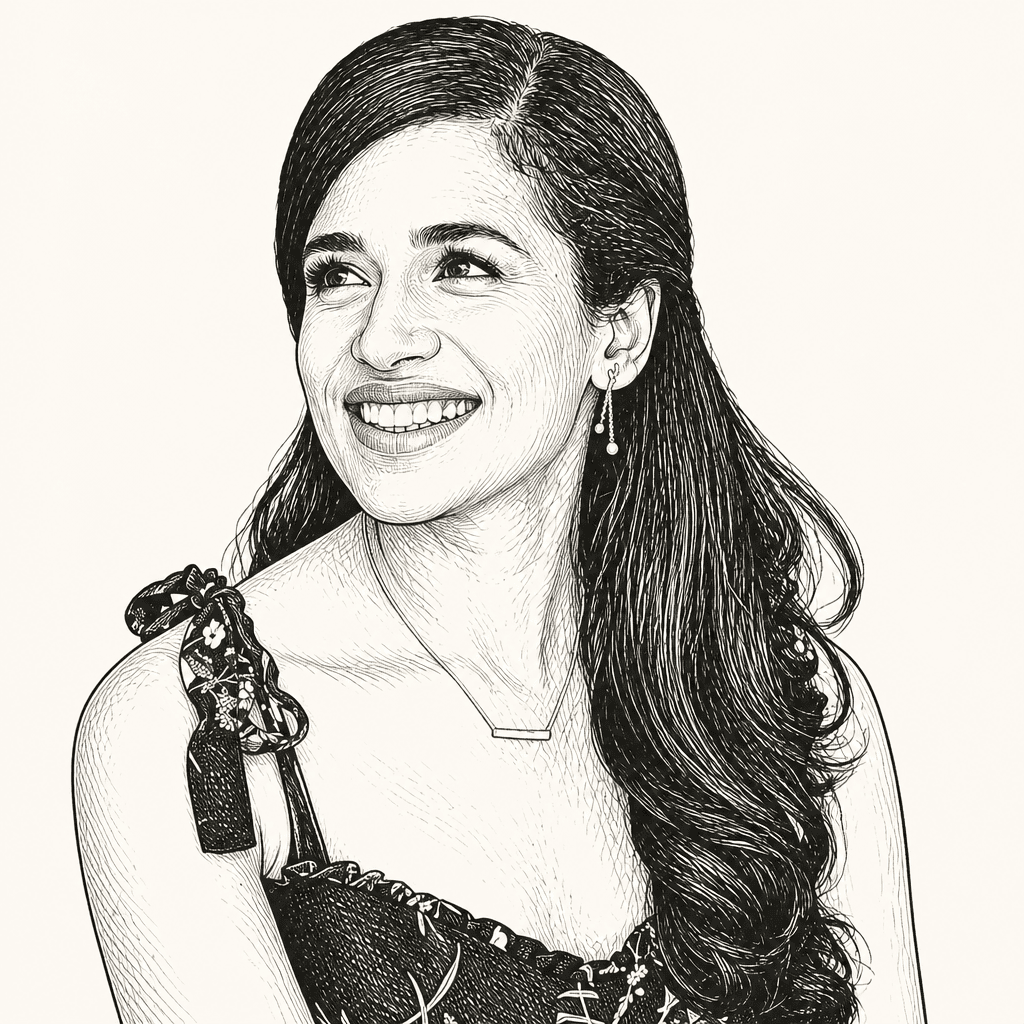
Cognitive scientist Maya Shankar and author Simone Stolzoff argue that uncertainty is painful not only because it obstructs planning, but because it can destabilize the identities people use to understand themselves. Their case is not for treating fear or loss as inherently beneficial: rather, they say people can navigate upheaval by anchoring themselves in values and relationships that outlast a role, naming what they feel and acting before certainty arrives.

Uncertainty harms twice: it blocks a plan and destabilizes the self
People facing a 50 percent chance of a painful electric shock were more anxious and stressed than people certain to receive one, Simone Stolzoff says. The prospect of pain was not the only burden. Not knowing whether it would arrive was worse.


Maya Shankar sees the finding as consistent with what human minds are built to do. People are prediction machines, constantly scanning for risks, anticipating them and trying to get ahead of them. That capacity is useful when action can change an outcome. It becomes punishing when events are outside a person’s control and planning offers no route to resolution.
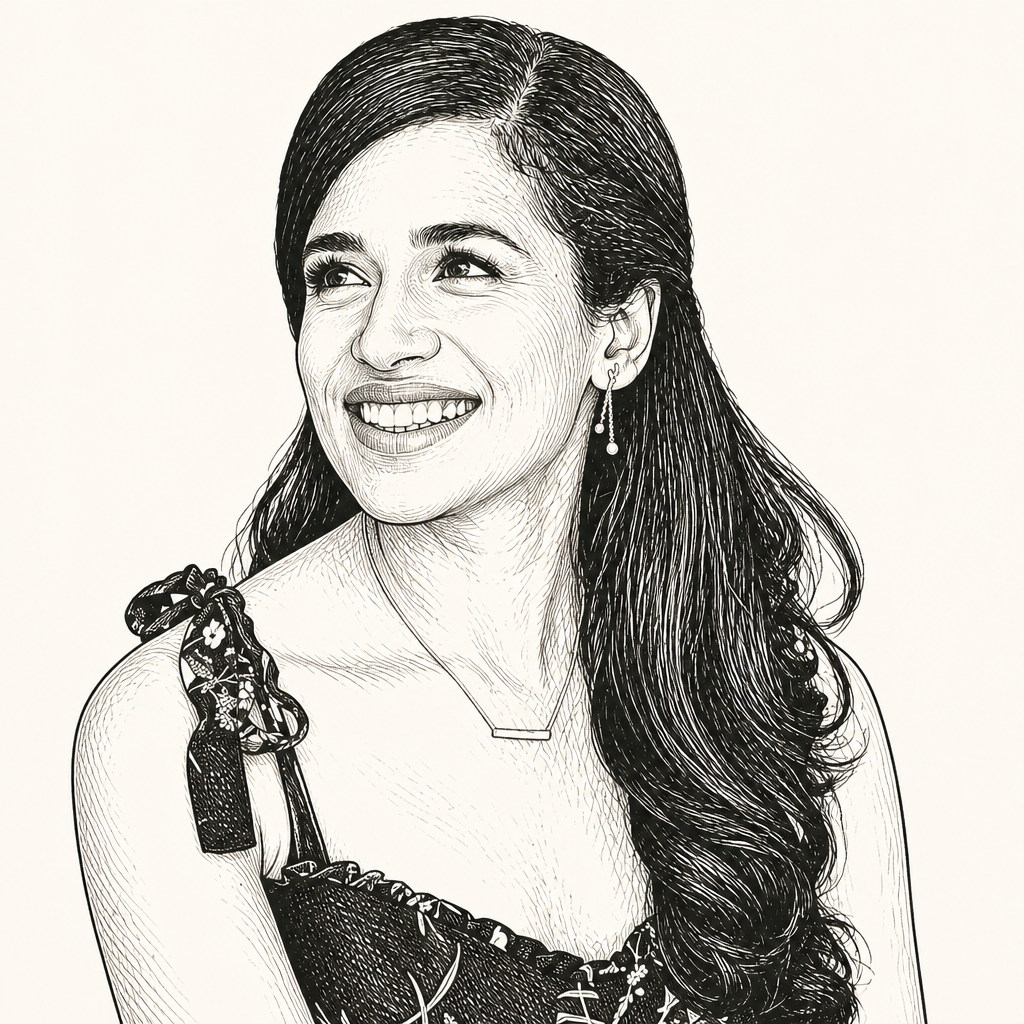
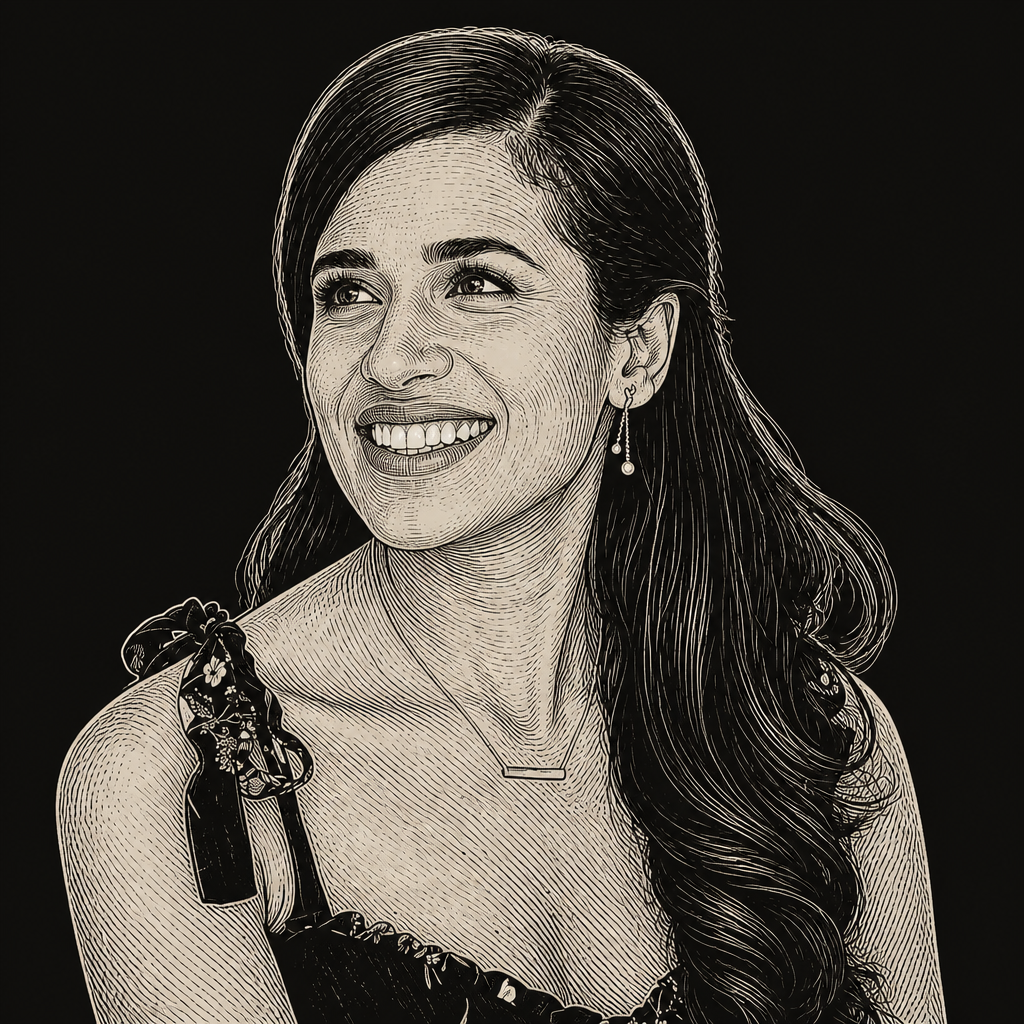
Their account of uncertainty has two parts. It denies people a plan: until they know what they are facing, they do not know where to direct their time, energy or resources. It can also threaten the identity through which they understand themselves. A layoff, illness, loss or altered family plan does not merely introduce an unsolved problem. It can call into question whether someone is still the athlete, professional, parent, partner or creator they thought they were.
Waiting for medical results is a familiar version of the first problem. Shankar cites research described by a physician: people can be more stressed while awaiting a test result than when they learn the diagnosis. Stolzoff points to similar findings among breast-cancer patients, for whom the period between a biopsy and diagnosis can be harder than treatment. Once the facts are known, even difficult facts, people can direct their energy. Before then, they cannot necessarily plan or know where to spend their resources.
Shankar suggests that uncertainty may be uniquely difficult because it preserves an illusion of agency. While a result remains unknown, people keep grasping for ways to alter it. Once information arrives, the situation can feel more fixed. The result may be bad, but it is legible.
From an evolutionary perspective, Stolzoff argues, this sensitivity made sense. A rustle in the bushes whose source cannot be identified could be dangerous; certainty offers safety. The same instinct can encourage sensible precautions. But it can also lead people to treat uncertainty itself as a threat.
That has costs. Someone may stay in a job or relationship that is plainly not working because leaving requires entering an unknown future. Certainty narrows the field of vision, Stolzoff argues: it makes people confident they know what an election, a market or a life decision will yield. Holding open a state of not knowing can keep possibilities visible long enough to consider them.
Commitment is healthiest not in the absence of doubt, but in spite of doubt.
A role can disappear without taking the self with it
For Maya Shankar, the deepest fear around change is often not practical disruption but a threat to identity. Through her interviews, she came to see that stories about changing circumstances were frequently stories about people losing—or fearing they would lose—the answer to who they were.
Identities and roles serve real functions. Calling oneself an athlete, a teacher, a lawyer, a parent or a musician can create community, purpose and a daily sense of direction. They can also buffer against feelings of meaninglessness. The problem is that a sudden change can strip away the activity or institution on which that identity rested, leaving a person unmoored.
Shankar knows that experience firsthand. She began studying violin at six, trained at Juilliard under Itzhak Perlman and hoped to become a professional concert violinist. A career-ending injury ended that path when she was 15. What she grieved was not only the instrument and the future it represented. She had also lost a community, a source of confidence and a refuge from being bullied as one of few brown students in a predominantly white school.
The loss taught her a distinction that has since become central to how she thinks about resilience: anchor identity less tightly to what one does, and more firmly to why one does it.
In Shankar’s case, the violin had been a vehicle for human connection—with peers, audiences and a wider musical community. Losing the vehicle did not eliminate that underlying value. She later pursued cognitive science focused on human connection, conducted long-form interviews and wrote through years of repeated conversations with people about their lives. The medium changed; the motive remained.
This is not an instruction to avoid commitments or careers. It is an argument for identifying what endures when a role disappears. A person whose identity rests solely on being a particular kind of employee may be destabilized by a layoff. A person who understands that the job expressed service, creativity, intellectual rigor or care for others has more ways to continue expressing that part of themselves.
Simone Stolzoff connects this idea to the case for diversifying identity. In researching work, he spoke with people who had strongly identified with an employer or professional status—being, for example, “a Googler”—until layoffs, furloughs or market shifts forced the question: if the job is gone, who am I?
He recalls Liz, a two-sport Division I athlete who later found identity in teaching and then law. A chronic illness radically altered her life: someone who once swam four to six hours a day became dependent on her mother to bring chicken soup in bed. External achievement could no longer serve as the basis for self-worth. Through conversations with others living with chronic illness, she began defining herself by more durable traits: being a generous friend, caring about particular causes and holding values that no employer or performance review could confer or remove.
The useful question is therefore not merely, “What have I accomplished?” It is: what traits, values and purposes remain available when accomplishment is temporarily—or permanently—out of reach?
Action can produce the clarity that certainty withholds
The alternative to certainty is not passivity. Simone Stolzoff and Shankar resist the instruction to simply “embrace uncertainty.” Shankar notes that the phrase can land as a platitude, or worse, as a dismissal of physical fear and anxiety. The practical task, Stolzoff says, is to distinguish uncertainty from danger and continue moving without complete reassurance.
His first recommendation is to identify anchors: the things that remain dependable while other parts of life shift. An anchor might be a commitment to a place, a spouse, a set of values or a guiding purpose such as Shankar’s commitment to connection. Stability in some domains makes volatility in others more tolerable.
He also describes a metaphor from his time at the design firm IDEO. Leading through uncertainty, he says, is like rowing a boat on a lake hidden by dense fog. The rower cannot see far ahead or know precisely where land lies. But it is a lake, so land exists; and the boat will not move without continued effort.
You might not be able to see very far in front of you, or know exactly where you’ll end up. But you have two jobs: maintain faith that you’ll eventually reach land, and keep rowing.
The second job matters because uncertainty can immobilize people. It can make them reluctant to leave the house, contact friends or test an option. Stolzoff argues that action can absorb anxiety and generate clarity that analysis alone cannot provide. In work on climate anxiety, he spoke with a psychologist who offered a parallel prescription: face a vast problem, find one strand that can be pulled, and act there. The same action that restores a sense of agency may also contribute to addressing the underlying problem.
The history of Tiny Speck illustrates the difference between preserving an existing path and testing an uncertain one. In the early 2010s, the company had raised $17 million for its multiplayer game, Glitch, attracted tens of thousands of active players and received New York Times coverage. Yet founder Stewart Butterfield concluded the business was not sustainable. Less than two years after founding the company, he shut down the game, offered to make investors whole, gave employees an option to leave, and redirected the organization around an internal communication tool it had developed to coordinate work across locations.
That tool became Slack. Stolzoff’s point is not that every reversal reveals a more valuable opportunity. Butterfield could not fully see the opportunity while preserving the apparently successful game; the change created the conditions in which it could be found.
In decisions whose outcomes cannot be known in advance, Stolzoff returns to the idea that a person can still choose in accordance with values. He invokes Martin Luther King Jr.’s image of taking one step and allowing the staircase to emerge. The point is not that the staircase is guaranteed to appear as hoped. It is that standing still rarely supplies the information that engagement could reveal.
Other people can expand the futures we think are possible
A threatened identity can make feared outcomes seem inevitable. Maya Shankar uses Reginald Dwayne Betts’s experience to show how another person’s example can interrupt that conclusion.
Betts was sentenced at 16 to nine years in adult prison for carjacking. Before that, Shankar says, he had been a promising student, class treasurer, identified as talented and gifted, with ambitions to attend Georgia Tech and study engineering. Prison meant the loss of an anticipated life. But he told Shankar that he was also afraid of the person incarceration might turn him into: someone who gambled, became violent to protect himself or became addicted to cigarettes.
Shankar relates this fear to the psychological concept of “possible selves.” People carry expected selves—the futures they think likely—alongside hoped-for selves and feared selves. A disruptive event can make desired futures seem closed while making feared versions of the self feel suddenly plausible. The danger is not only external circumstances. It is accepting those circumstances as destiny.
What changed Betts’s sense of possibility was another incarcerated man, Bilal. Bilal contradicted Betts’s assumptions about what it meant to be a prisoner. He kept his uniform crisply pressed, rose before count time to do 250 pushups and taught younger men to box so they could protect themselves from prison violence. Rather than treating the prison label as a total description of who he was, Bilal made a deliberate choice about how to live within it.
Shankar calls the effect of witnessing this kind of conduct “moral elevation”: the warm response people feel when they observe exceptional courage, kindness or self-sacrifice. In her account, it does more than make observers feel hopeful. It expands their sense of what human beings, including themselves, can do.
For Betts, Bilal’s example made it possible to imagine that imprisonment did not dictate his character. After finding a book of poetry in solitary confinement and reading a poem about a young Black man who had endured sexual violence in prison, he found his own contribution: he could dignify other people’s experiences through writing. He began writing poems and binding collections together with thread from his pillowcase. Shankar describes the later result: Betts became a Yale Law School graduate, a MacArthur Genius Prize winner and a poet writing about race and prison.
The point is not that suffering obliges anyone to produce a redemptive story. It is that people often impose a narrow template on categories such as prisoner, widow, unemployed person or chronically ill person. A visible counterexample can interrupt that template.
Moral elevation is available in smaller moments as well: seeing someone assist an older person, a child stand up to a bully, or an ordinary act of generosity. Shankar emphasizes the reciprocal side of the idea, too. People may not be able to solve every large problem they confront, but their conduct can become evidence of another possibility for someone else.
Simone Stolzoff adds that a person’s own past can supply similar evidence. Recalling prior moments of endurance, courage or transition can build a case that one has handled uncertainty before—and may be able to do so again. This is not certainty about the next outcome. It is evidence that the self is more capable and adaptable than anxiety permits it to seem.
Upheaval can expose the beliefs beneath the fear
Shankar argues that upheaval is not simply destructive. It can be revelatory. She points to the Greek root of “apocalypse,” apokalypsis, which means revelation. A major change can expose values, capacities and assumptions that were previously hidden because ordinary life never required them to be tested.
People tend to believe they know themselves well, she says, but that knowledge rests on a limited and accidental set of experiences. It is not a comprehensive assessment of what they can endure, value or become. Pressure produces information that ordinary routines may not.
For Maya Shankar, difficulty starting a family with her husband and pregnancy losses through their surrogate forced such an examination. She recognized that she had tied a substantial part of her self-worth as a woman to having children. Many beliefs, she says, are inherited through family, culture, teachers and popular media; they can arrive subconsciously and become entangled with identity before anyone has reason to examine them.
The losses compelled her to ask why she believed that life without children would be stripped of color, meaning and purpose, or that her value would be diminished. At the time of the conversation, she says she is child-free and, unexpectedly, feels happiest, most hopeful and most grateful. She would not have predicted that transformation on the night she and her husband learned they had lost identical twin girls. At that point, she regarded the experience as wholly non-redemptive.
Her claim is not that devastating events are good, nor that people should be grateful for illness, heartbreak or loss. The people she interviewed were often not grateful for what happened to them. But they could be grateful for the person they became through confronting it: for a widened perspective, a new freedom or a changed understanding of family and self.
Simone Stolzoff offers a related account of anticipatory grief. During a difficult effort to conceive, he and his wife learned at a three-month appointment that no heartbeat was visible. Their doctor asked them to return a week later before declaring a pregnancy loss. Stolzoff found himself wanting an answer immediately—“Just shock me already”—rather than endure the waiting.
They later learned that they had lost the pregnancy they had called Poppy. Stolzoff says the week of waiting was painful, but it also made him and his wife more attentive to one another; they held eye contact and hugged longer, and repeated, “We are open.” Months later, they conceived again and had a son, Luca. He does not present that later outcome as justification for the loss. Rather, grief clarified the depth of their care and shaped how he experiences parenthood.
He uses Cheryl Strayed’s metaphor of “ghost ships” for the broader problem of consequential choices. Choosing a life is like boarding one ship as other ships leave the harbor—other relationships, jobs, cities and possible futures that cannot be lived simultaneously. No one can run the counterfactual and discover which life would have been best. Living with uncertainty means acknowledging those departing lives without allowing their existence to invalidate the one that has been chosen.
A practical architecture for the moments when the future closes in
The speakers’ practical advice begins with a distinction: uncertainty is not automatically danger. Neither Shankar nor Stolzoff proposes overcoming fear through positive thinking, nor do they suggest that a good outcome can be guaranteed. Their methods aim to keep fear from becoming totalizing—either by turning one threatened domain into a verdict on the whole self or by demanding that a present self solve a future problem with incomplete information.
First, identify the anchors that are not currently in question. For Maya Shankar, that may mean the underlying why beneath a role; for Stolzoff, it can be a commitment to a partner, place or set of values. These anchors do not resolve uncertainty, but they establish what remains steady enough to support movement elsewhere.
Second, make consequential choices in relation to values rather than predicted outcomes. Stolzoff recounts advice from ethicist Ira Bedzow, who asks people facing murky decisions three questions: What do you want? Do you want to want that? And what does this choice say about who you are as a person? The final question matters because outcomes remain unknowable. A choice aligned with a person’s values can still fail to produce the desired result, but it gives the person grounds to stand by the decision.
Third, name the actual feeling rather than treating distress as a single undifferentiated cloud. Shankar recommends affect labeling: identifying whether what feels like generalized negativity is anger, envy, grief or sadness. Naming the emotion can shift a person from being the emotion to having it. That creates what psychologists call psychological distance, enough separation to see the situation from another vantage point.
Fourth, widen the frame through self-affirmation. Shankar recommends spending five minutes writing down valued traits and identities that have not been threatened by the present change. Someone struggling at work might remember their place on a local pickleball team; someone in relationship difficulty might focus on a spiritual life. The purpose is not to deny the loss. It is to restore a multidimensional picture of a life, so that one damaged area does not feel like total collapse.
Finally, Stolzoff urges people to trust the future self. He recalls his friend Emily, whose mother received a potentially terminal diagnosis. An oncology doctor told Emily that the version of her who would face that tragedy, if it came, would enter that moment with more information, context and capacity than she had while imagining it. Emily’s mother recovered, and the feared event never occurred.
The lesson Stolzoff draws is not to ignore risk or refuse preparation. It is to resist rushing out to meet a catastrophe that may never arrive. Future conditions will bring future information. In the meantime, the work is to locate the anchor, identify the feeling, choose in line with values and take the next available action.