Five Design Principles Can Make Downtowns More Walkable and Welcoming

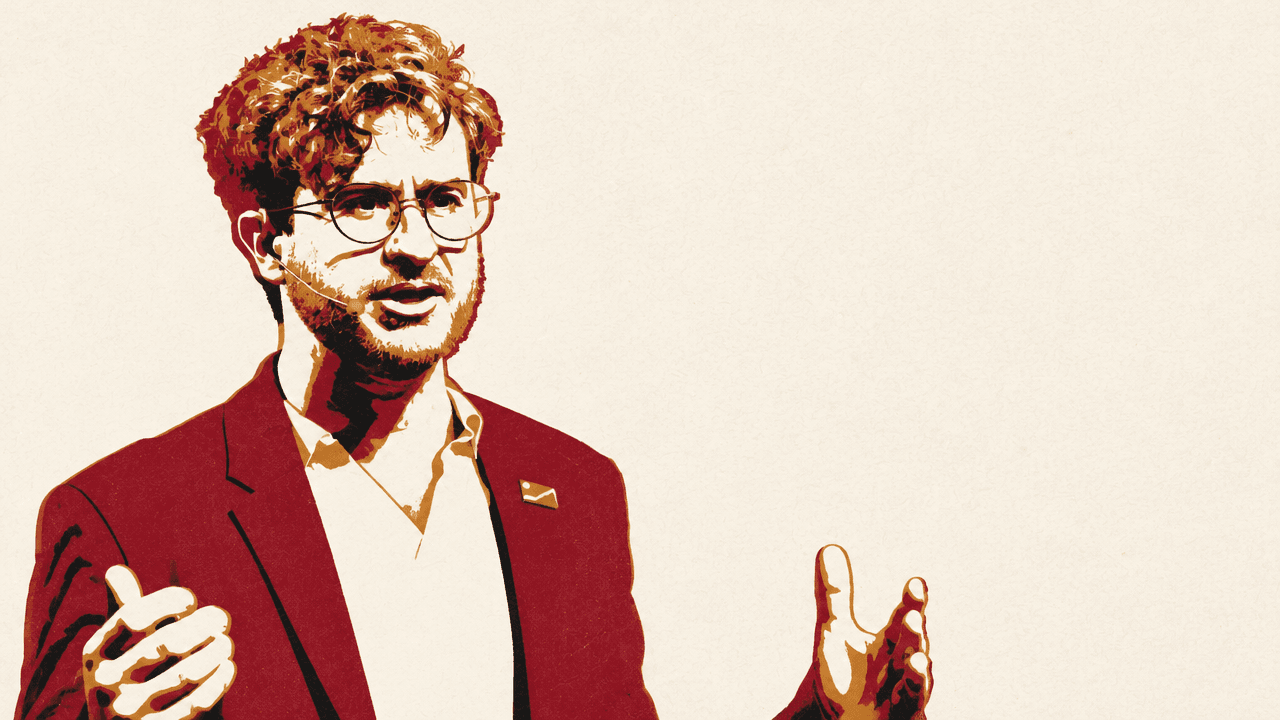
Community designer Zach DeBoer argues that US cities built around cars have sacrificed the social, economic and safety benefits of walkable places. In his TEDx talk, he looks to Disney theme parks not as templates to copy, but as examples of how density, varied buildings, slower streets and local identity can make ordinary downtowns more inviting to explore.
A city’s form shapes more than its appearance
Zach DeBoer began watching Disney theme-park walkthroughs during the pandemic. The parks held his attention not only as escapism, but as studies in what happens when art, human experience and emotion are treated as central to designing a place. In ordinary development, he said, those considerations are often the first to be cut. At Disney, they are essential to the experience.

DeBoer connects that design priority to the consequences of everyday surroundings. Where people live affects their relationships, emotions and habits—and, he argues, even how long they live. Places designed with care and human experience in mind can support well-being, creativity, innovation and more resilient communities.
Most American development, in his telling, works against those aims. Parking lots, repetitive housing and wide commercial roads are not merely unattractive; DeBoer calls them a drain on physical, mental and economic health. He contrasts them with early-20th-century American cities, where work, food and school were often within a short walk or trolley ride. Smaller streets and developments meant people were less spread out, more likely to know their neighbors and more engaged with local life. Downtown streets were shared by pedestrians, carriages, cyclists and vendors, while cities developed distinct identities that residents could take pride in.
That pattern changed as automobiles became common. DeBoer says the number of cars in the United States rose from 8,000 to more than two million between 1900 and 1915. At first, cars shared the road. But their speed and exhaust pushed vendors, cyclists and pedestrians onto sidewalks, leaving streets increasingly dominated by vehicles.
After World War II, he argues, the shift deepened. Suburban growth drew people away from city centers; restrictive zoning separated uses and, in his account, segregated people by race or economic status. Highway expansions and urban-renewal projects demolished historic buildings and entire blocks, often to make more room for cars. The result was a built environment organized around driving rather than the experience of the people living in it.
Some downtowns and historic neighborhoods have rebounded, DeBoer acknowledges, but he says isolated pockets of good design are not enough. His practical question is whether ordinary communities can borrow from the carefully composed streets of Disney parks—not to turn cities into theme parks, but to make them more inviting to explore.
Density makes places more social—and more productive
DeBoer organizes his recommendations around five principles: density, variety, walkability, theming and magic. His first principle is density. In a Disney park, rides, food and other attractions sit close together within each themed area. That concentration makes it easier to feel immersed and creates a livelier setting, he says. In cities, density also increases the chances for interaction and socializing. But his case is not only about community: denser development can produce more economic value from the land and infrastructure a city already serves.
He illustrates the point with a comparison between a small downtown business, Zandbroz Variety, and an Eastside Walmart. The figures shown give Zandbroz a value of $539,600 on 0.15 acres, compared with Walmart’s $11,869,600 on 20.37 acres. In total value and taxes paid, Walmart is larger. But when DeBoer divides those figures by each property’s area, Zandbroz produces $81 in value and $1.50 in taxes per square foot; Walmart produces $13.37 and 26 cents, respectively. DeBoer describes Zandbroz as five times more valuable than Walmart on that basis.
| Property | Land area | Value per square foot | Taxes per square foot |
|---|---|---|---|
| Zandbroz Variety | 0.15 acres | $81 | $1.50 |
| Eastside Walmart | 20.37 acres | $13.37 | $0.26 |
DeBoer also shows a citywide map of taxable value per hectare, with higher-value concentrations clustered downtown and lower-value areas spread out across more of the map. He says the green areas generate limited revenue for the city, or may lose money, while denser downtown development subsidizes the rest. The map is his illustration of the fiscal case for density: how land is used, he argues, affects the return a city gets from the places and infrastructure it serves.
He recommends focusing first on places where people are already gathering, usually downtown, rather than trying to spread improvements evenly across an entire city. That starts with filling gaps. Vacant lots, empty storefronts and parking lots can interrupt a pedestrian’s sense of activity and discourage further exploration. Mixed-use buildings are his preferred long-term response, but he recognizes that construction and renovation can be too expensive for some communities. Lower-cost uses—parklets, community gardens, outdoor stages, food trucks and regular programming—can bring life to empty spaces in the meantime.
Variety gives people a reason to keep exploring
Density alone does not make a street interesting. DeBoer’s second principle is variety: a built environment becomes more engaging when its buildings, businesses and uses are not all the same. He contrasts identical houses with Main Street USA, where differently styled, colorful storefronts house different businesses. Variety, he says, adds beauty and vibrancy; used well, it gives people a reason to turn the next corner.
Mixed-use space is one way to keep a neighborhood active throughout the day and night. But the form of development matters too. DeBoer shows downtown parcels divided into many small lots, then compares them with a contemporary map in which one large parcel replaces many of those smaller ones. Where multiple architects might once have designed separate buildings over time, he says, a single developer may now build an entire block. That can price out smaller developers and make a downtown feel more like an office park than a traditional main street.
Architectural variation matters at the street level as well. Rows of identical forms, DeBoer argues, give people little reason to linger outside. Differentiating facades by color and style can make a street more compelling. He offers a useful complication to the Disney comparison: Main Street USA is structurally closer to a strip mall than to a traditional downtown street, but its outward appearance conceals that fact. The lesson, as he presents it, is that how a place is composed and experienced can matter as much as its underlying layout.
Street design can make walking safer
The third principle is walkability. Disney visitors can move between attractions without repeatedly returning to a car, driving through traffic and searching for parking. DeBoer says children can explore these environments freely and safely. For cities, making streets walkable is a matter of both comfort and life safety.
DeBoer cites figures from the National Traffic Safety Board’s 2017 report, “Reducing Speeding-Related Crashes Involving Passenger Vehicles,” showing pedestrian survival rates after a vehicle collision at different speeds. In the figures he presents, 95 percent survive a collision at 20 miles per hour, compared with 55 percent at 30 mph and 15 percent at 40 mph. The chart displayed in his talk cites the report, available at ntsb.gov. He uses the steep drop to argue that street geometry should encourage slower driving.
Traffic lanes within city limits, he says, should be no wider than 10 feet; in Sioux Falls, he notes, they are usually 11. Wider lanes encourage drivers to go faster. DeBoer cites a study in which accidents fell by 47 percent after a four-to-three-lane conversion, with one lane in each direction and a center turn lane. He says that configuration can improve traffic flow while reducing the potential for accidents.
Some changes can be simpler still. Painting lines to mark parking lanes can make a street look narrower and help slow traffic. DeBoer says that after he worked with Sioux Falls to add parking-lane lines on 18th Street between Minnesota Avenue and Avera Hospital, average speeds fell from 33 miles per hour to 28. Even a modest reduction matters, he says, given the steep change in pedestrian survival rates as impact speeds rise.
At intersections, bump-outs and painted crosswalks can shorten the distance people must cross and make pedestrians more visible. Narrower roads also leave room for other uses: trees, plants, bike lanes and angled parking. DeBoer adds a practical maintenance argument: smaller roads mean less snow to plow and fewer potholes to fill in spring.
Local identity depends on what a city keeps and makes visible
DeBoer’s fourth principle, theming, is the creation of a cohesive environment with a distinct identity. At Disney, he says, each land, ride and restaurant has a backstory and imagined history communicated through its layout, architecture, food and other details. Cities can create a comparable sense of place by preserving the histories, buildings and cultures that made them distinctive.
That begins with what already exists. Houses, buildings, bridges, barns and trees become settings for people’s lives; over time, residents form emotional attachments to them. Demolishing them can sever a connection to both the community and personal history. DeBoer’s instruction is to fill existing gaps before creating new ones.
Prioritize filling in your existing gaps before you start making new ones.
Distinctive landmarks can also orient people and draw them forward. Disney calls its large, eye-catching structures “weenies.” DeBoer says Walt Disney used the term because his dog would follow him from room to room when he had a hot dog. In Sioux Falls, DeBoer names the Old Courthouse Museum, the Cathedral and the Arc of Dreams as landmarks serving that beacon-like role. In rural towns, water towers, churches and grain silos can do the same. He points to a mural on a grain elevator in Faulkton, South Dakota, visible from miles away.
Murals, flags and other civic symbols can make local identity legible. DeBoer describes painting postcard-style murals with communities, using local history, places and people as material; examples include Clear Lake’s rodeo and Centerville’s zebra donuts. A well-designed city flag, he says, can represent a place’s history, culture and aspirations, and give residents a source of pride and belonging. He notes that Sioux Falls has put its flag design on objects ranging from a license plate and guitar to a basketball jersey and apparel.
The same care can make necessary but unattractive features recede—or turn them into points of connection. Disney uses a color called “Go Away Green” to make lights, speakers and utility buildings blend into the background. Cities can use color similarly, DeBoer says, or draw attention to infrastructure by making it art. For his neighborhood, he designed light-pole wraps that look like Sioux quartzite from a distance, but up close include children’s drawings, historic photographs of homes and pictures of residents.
Small surprises make public space feel alive
The final principle is magic, which DeBoer describes as harder to define than the others. At Disney, it comes from the combination of sights, sounds and smells, along with attention to detail and an energetic atmosphere. In ordinary places, he says, unexpected uses of art and active public life can create some of the same attachment.
Public art need not be limited to murals or statues. A beach garbage can could be designed as a fish named Goby; local poetry could be set into a new sidewalk. The point is to make familiar infrastructure surprising and specific to its setting.
DeBoer also borrows Disney’s term “streetmosphere” for the sights and performers that animate a place. Outdoor seating, patios and street musicians can make streets more active. So can temporary closures for block parties, parades and farmers markets. Local sports mascots, school mascots and beloved television personalities can become symbols of a city, much as flags do.
Seasonal celebrations can animate public places, too. DeBoer describes Disney’s holiday decorations, seasonal characters and limited-time food, and says communities can signal that a town is alive and loved with small efforts such as hanging lights or tailgating before a homecoming game. He cites Sioux Falls’ elaborate holiday display at Falls Park as a local example.
He closes with the story of Walt Disney sitting on a park bench while his daughters played at amusement parks, playgrounds and carousels. Disney noticed that parents were left watching from the sidelines and imagined a place where adults and children could have fun together. That idea eventually became Disneyland: a place where people of different ages could make lasting memories together.
DeBoer’s challenge is to extend that ambition beyond vacation destinations. Cities, he argues, can be designed with the same care for how people move, gather, feel and remember—not by copying Disney’s settings, but by making everyday places more human and more worth exploring.