Fundamentals Can Block Discovery When They Leave No Room for Play
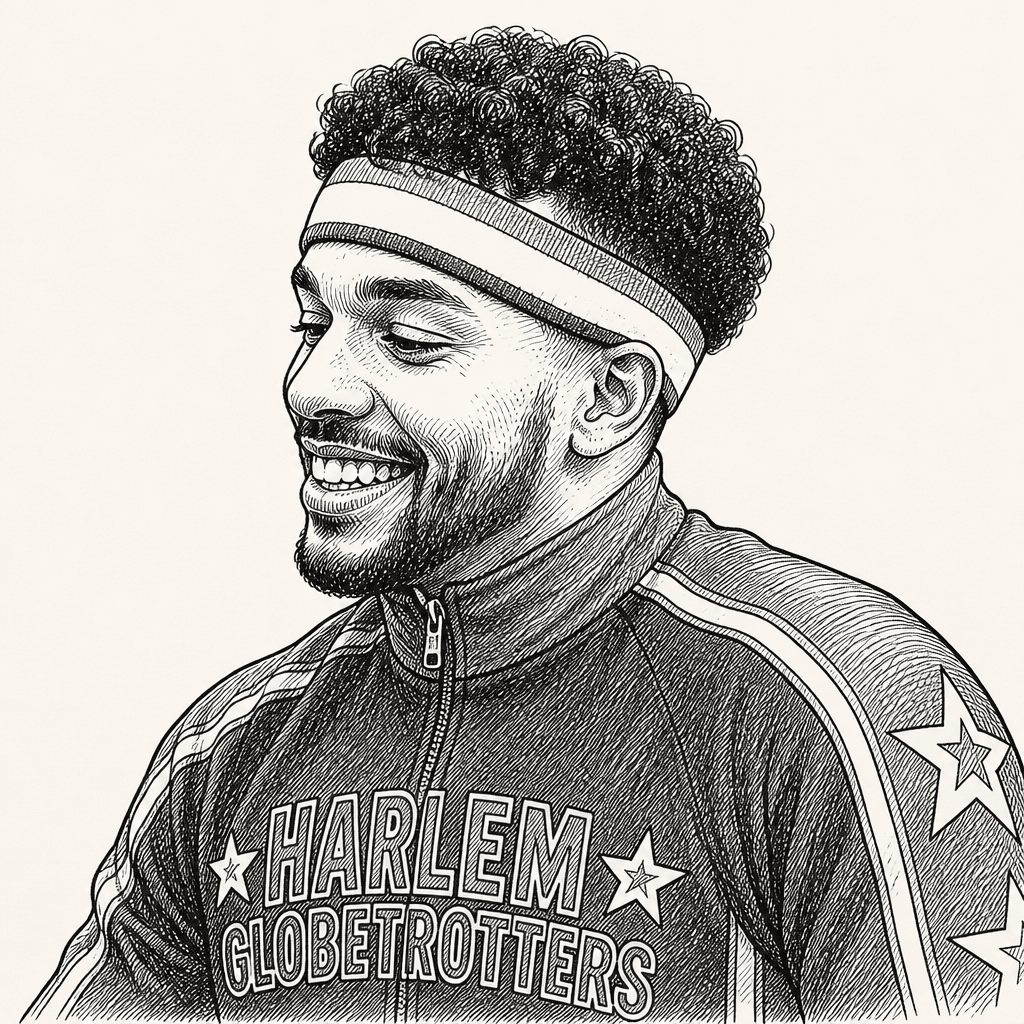
Harlem Globetrotter and artist Maxwell Pearce argues in a TED talk that play is not a break from serious work but one of the ways disciplines evolve. Drawing on coaches who told him to stop dunking, the Globetrotters’ use of mistakes as performance material, and his own artwork made from athletic equipment, Pearce makes the case that progress depends on giving rule-breaking and accidents enough room to become new forms.
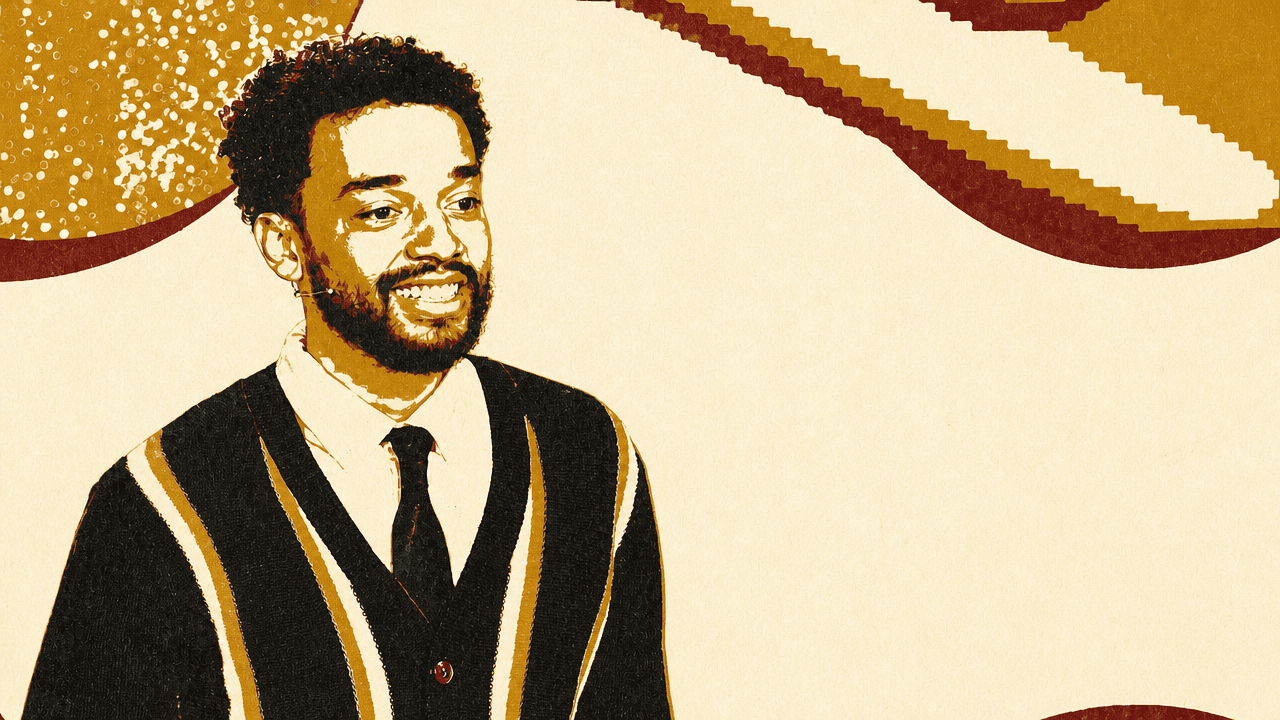
Play is not the opposite of discipline
Maxwell Pearce treats the behaviors often dismissed as distractions from mastery as one path into it. Pearce, a Harlem Globetrotter and artist, describes growing up inside a sports culture that equated respect for the game with obedience to fundamentals, drills, and inherited forms. In that culture, seriousness meant not challenging “the traditional way of doing things.” His high school coach’s instruction to stop trying to dunk became the example that organizes his case.
Pearce does not reject rigor. He says there is “a seriousness in respecting the quality of the game.” But he argues that high-level coaching can confuse respect with rigidity. Excessive yelling, cursing, confrontation, and hyper-seriousness, in his account, narrowed rather than expanded his development. He had been a shy, creative child who loved art, and he says constant confrontation with coaches robbed him of creativity.
His counterclaim is broad: play is “the most important ingredient in every person and every industry’s evolution.” He frames play not as unseriousness, but as the willingness to test boundaries, break rules, and follow accidents far enough that they can become new forms. In his own career, the rule he was told not to break — dunking — became the basis of what he describes as a global reputation for dunking the basketball.
Play is the most important ingredient in every person and every industry's evolution.
Pearce connects that personal story to basketball history as he presents it. He says there was a time when dunking was frowned upon enough that the NCAA banned it for nine years, and that once the ban was lifted, the popularity of the game “skyrocketed.” The point, in his telling, is not simply that dunking became accepted. It is that a move treated as outside the proper essence of basketball later became central to its appeal.
The Globetrotters turn mistakes into material
Maxwell Pearce presents the Harlem Globetrotters as a working example of serious play. He says the team has lasted for 100 years and earned a place in the Hall of Fame by advancing the game while giving joy to audiences. He also says the Globetrotters are credited with integrating the NBA, popularizing moves such as the alley-oop, and creating many others.
That history matters because Pearce’s own specialty is not ordinary dunking but elaboration: basketball moves pushed into unfamiliar combinations. He shows dunks built around actions that do not conventionally belong to dunking. In one, a dog strikes a basketball back to him and Pearce catches it midair before dunking. In another, he jumps over a person holding a basketball, catches a thrown baseball with a glove while airborne, grabs the basketball, and dunks it. In a third, a passer throws the ball backward over their head without looking; Pearce, also looking away, catches it in the air and dunks backward. The clip is labeled on screen: “PRO 2020-2021 PASS OF THE YEAR Max Pearce #1.”
The work is playful, but Pearce presents it as cumulative experimentation. Each attempt expands what a dunk can contain. The reward, in his account, was both creative and professional: the moves advanced the game and opened opportunities he had imagined as a child. His dunks were featured in NBA Live and NBA 2K; a 2K screenshot shown during the talk reads, “DUNKED ON FOR SCIENCE: How NBA 2K Keeps the Game Realistic.” He also points to GQ coverage of his dog-assisted alley-oops, SportsCenter Top 10, and an honorable mention for an ESPY award.
The Globetrotters’ method, as Pearce describes it, depends on a particular relationship to failure. If a trick goes wrong, the performer does not simply stop. A mistake can be absorbed into the act if the player “playfully embrace[s] its direction.” The performer recognizes that something went wrong, but welcomes the unfamiliar position created by the error. Pearce says that if he drops the ball during a trick, he can use the momentum of the mistake to grow it into something new.
What I've learned is that in order to get to that point, you have to be able to roll with it. Because otherwise, you'll stop before you're ever able to discover something new.
That is the operative difference between execution and play in Pearce’s account. Strict execution treats the dropped ball as the end of the attempt. Play keeps the attempt alive long enough for the mistake to become part of the form.
The same rule-breaking carries into his art
For Maxwell Pearce, the case for play does not stay inside basketball. He says the artist in him came before the basketball player, and that sports later gave him tools to identify voids in his life and a platform to fill them. As a shy child, art was his way of expressing himself when sports did not offer that opportunity. He began with drawings of favorite anime characters and paintings of animals, then moved toward people with real stories.
The material shift came when he cut up shoelaces and placed them on a canvas. He was not satisfied at first, but he believed he had found something significant. Over time, shoelaces became part of a larger practice of using athletic equipment from his own life as artistic material: cut-up basketballs from past Globetrotter games, tennis rackets from childhood, shoelaces worn during important moments.
The visual examples make that claim concrete. Pearce shows portraits made from glued shoelaces, then close-ups where individual laces form facial features and clothing. He shows a group portrait whose textures come from basketball leather, sports equipment, and other materials. He also shows a rotating sculpture built from gold-painted tennis rackets, tennis ball cans, and tennis balls; in another view, the sculpture casts a shadow on the wall that forms the profile of a smiling woman’s face.
Pearce’s explanation is that play changes the perceived function of the object. A shoelace is no longer only something that holds a shoe together. A basketball is not only equipment. A tennis racket is not only a childhood sports object. These materials carry stories: the tennis ball that “bounced several thousand times to bring people together,” the spinning basketball that made people smile, the shoelaces worn on a bad day when he knew that he needed to keep moving.
In the artwork, play is not merely a subject. It is the method that lets Pearce see athletic materials as vehicles for memory, identity, and portraiture. He says play gives him “the flexibility” and “the vision” to see these objects as more than what they are used for on a court or field.
Progress needs room for what looks improper
Maxwell Pearce ends with a deliberately expansive line: “The world’s brightest thinkers, engineers of evolution, they all play too much.” The claim is comic in delivery, but it condenses the argument he has built from his own practice.
The coach who told him to stop dunking saw a violation of fundamentals. Pearce later built a career around that violation. A dropped ball could be treated as a failed trick; in the Globetrotters’ idiom, it can become the beginning of a new one. A shoelace, basketball, or tennis racket could remain equipment; in Pearce’s studio, it becomes portraiture, memory, and identity.
The throughline is not rebellion for its own sake. Pearce is arguing for a working permission: to keep moving when the established form says stop, to use accidents rather than erase them, and to ask whether ordinary materials can carry meanings their original use does not exhaust.