Political Disengagement Cedes Power Over Daily Life


Katie Paris argues that opting out of politics does not remove politics from a person’s life; it cedes power over decisions that shape it. With anti-career coach Danielle Roberts, she makes the case that civic participation begins in local institutions and trusted relationships, while Roberts argues that time, rest, joy and community are necessary to sustain that engagement.

Politics acts on people who decline to act on it
Katie Paris puts the central proposition bluntly: opting out of politics is itself a political choice. Choosing not to engage does not prevent politics from influencing one’s life, she argues.
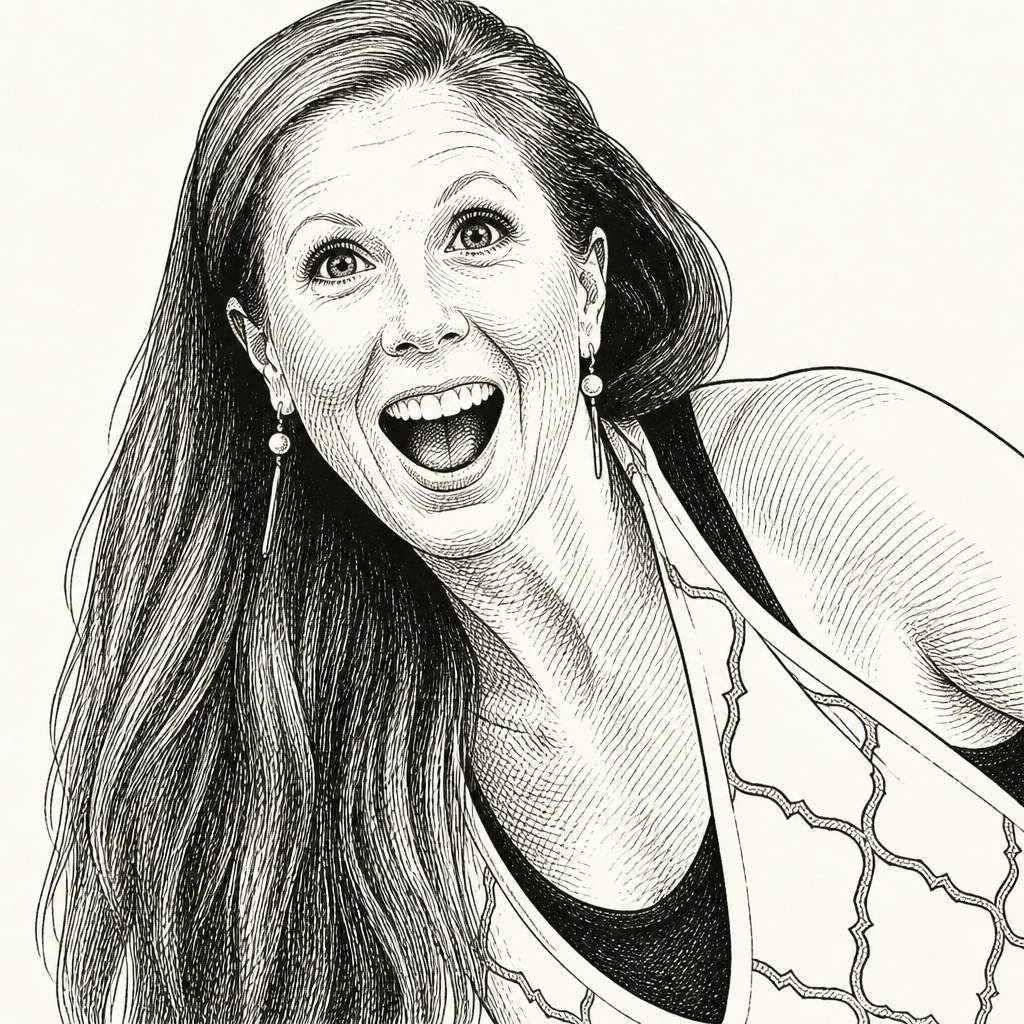

Paris says the word politics carries enough negative connotations that many people reject it outright. But treating politics as something other people do means giving away power. Her definition of democracy follows from that view: everyone having a say, with an equal voice. She is concerned about trends in the United States and elsewhere, and argues that democracy only exists in practice when people actually participate.
For Paris, participation need not begin with trying to influence “the executive level of leadership.” It can begin with institutions close enough to affect daily life directly: a town council or school board. That local scale makes engagement less overwhelming and, she says, more empowering. It also gives people a concrete place to see how one conversation or one person’s involvement can have effects beyond itself.
Danielle Roberts answers a related question more categorically. Is it possible to stand up for what one believes in without participating in politics? No, she says: standing up for a belief means getting involved. Paris emphasizes the power people surrender when they disengage; Roberts makes involvement a requirement of acting on one’s convictions.
You may think you don't do politics, but politics will do you.
Changing minds requires trust, not a better talking point
Both Paris and Roberts treat conversation as politically meaningful, while resisting the idea that a single fact or statistic is enough to convert someone.
Danielle Roberts says language and dialogue matter because a conversation once changed her own understanding of work. A women’s reproductive-health coach told her that the conventional nine-to-five schedule was never designed with women’s bodies in mind. Roberts had not considered the workplace through that lens before; the conversation helped her see inequity as built into its design rather than merely an individual workplace problem.


Paris agrees that conversations can change minds, but adds a condition: a trusted relationship must already exist, especially on difficult issues. People often imagine they can persuade someone by landing the decisive fact, she says, but that is not how humans are wired. Trust and patience matter more. Roberts frames the discipline simply: are people listening to hear the other person, or only listening for their turn to respond?
That emphasis on relationship also shapes their view of connection. Roberts calls belonging a fundamental human need: people want to feel seen and understood. Paris adds that people may need connection in different forms or amounts, but they need it nonetheless.
Roberts sees the same tension in social media. After 15 years in social-media marketing, she says access to information made her a more informed citizen. But algorithmic targeting can also narrow a person’s field of view. The relevant question, she says, is whose voices are absent from the feed—and whether scrolling is expanding someone’s perspective or simply validating opinions they already hold.
Sustainable participation requires time, rest and joy
Danielle Roberts does not treat workplace reform as separate from civic life. She argues for abolishing the 40-hour workweek, citing studies from around the world that, in her account, find four-day workweeks increase productivity and retention while saving businesses money. Technological change since the industrial revolution has altered what work can look like, she says, yet the expectation of constant work has remained. People need time “to live our damn lives,” not merely to work.
I think realistically we could be at a point of three-day work weeks.
Her case is not that less work means lower standards. Roberts argues that workplaces should create room for deep thinking rather than measuring only how much can be done, how quickly. In that model, less and better work could produce happier people and better business outcomes.
Katie Paris responds from her own experience of rest with guilt. She knows that being rested makes her a better idea-generator, teammate, and leader, but says she is still working on getting her body to accept rest as legitimate. Roberts’s answer is direct: rest is productive. People are not programmed to work as much as they do, she says; depriving themselves of rest eventually damages their bodies and health, leaving them unable to do their most important work.
Roberts distinguishes between active rest—doing nothing or sleeping—and restorative rest: hobbies that bring joy, are not work-related, and are not monetized. Community is another form of restoration: being with one’s people and experiencing their care. These forms of rest make work more sustainable and make “infrastructure for democracy” more sustainable as well.
That creates a practical link between the speakers’ arguments about local action and their arguments about work. Participation requires more than an abstract obligation to vote or speak up; in Roberts’s account, it also requires enough time, health, joy and community to remain engaged. Paris likewise calls joy a form of resistance: it sustains people and reminds them what they are resisting for.
Neither speaker treats social repair as a job for a younger generation alone. Asked whether young people can fix what older generations broke, Roberts says, “Not can, we must.” Paris resists the idea that older people can simply place their hopes in Gen Z and hand over responsibility. People of every age have roles to play, she says, and older and younger people both have things to learn from one another.
Participation does not require instant consensus
The closing public vote turns the broader argument into a small practical exercise. After toppling the tower, Danielle Roberts is tasked with proposing a “silly law” and getting six people to support it. Her proposal: every workplace should require a dog.
The responses are not cleanly divided into supporters and opponents. One person says dogs should be optional rather than required. Another cannot support the idea because of a severe allergy. A third offers a qualified yes, preferring larger, calmer dogs to smaller ones. Another supports workplace dogs because they can provide comfort.
| On-screen tally | Count shown |
|---|---|
| Yes | 6 |
| No | 2 |
Roberts accepts qualified support as “yes with some stipulations,” rather than treating conditions or objections as a failure of participation. The exercise is deliberately trivial, but it gives concrete form to the speakers’ broader view: people can take part, dissent, name constraints and still contribute to a collective decision.