Male Friendship Requires Deliberate Structure, Not Occasional Availability


Journalist Joshua Johnson and entrepreneur Blake Mycoskie argue that loneliness and shallow conversation are not solved by simply telling people to socialize more. Johnson says people need to identify what kind of connection they want and use direct, patient questions to make room for it; Mycoskie argues that friendship and vulnerability often require deliberate structure and unhurried time. Both treat digital contact as potentially useful, while acknowledging that no invitation or conversation can compel another person to reciprocate.
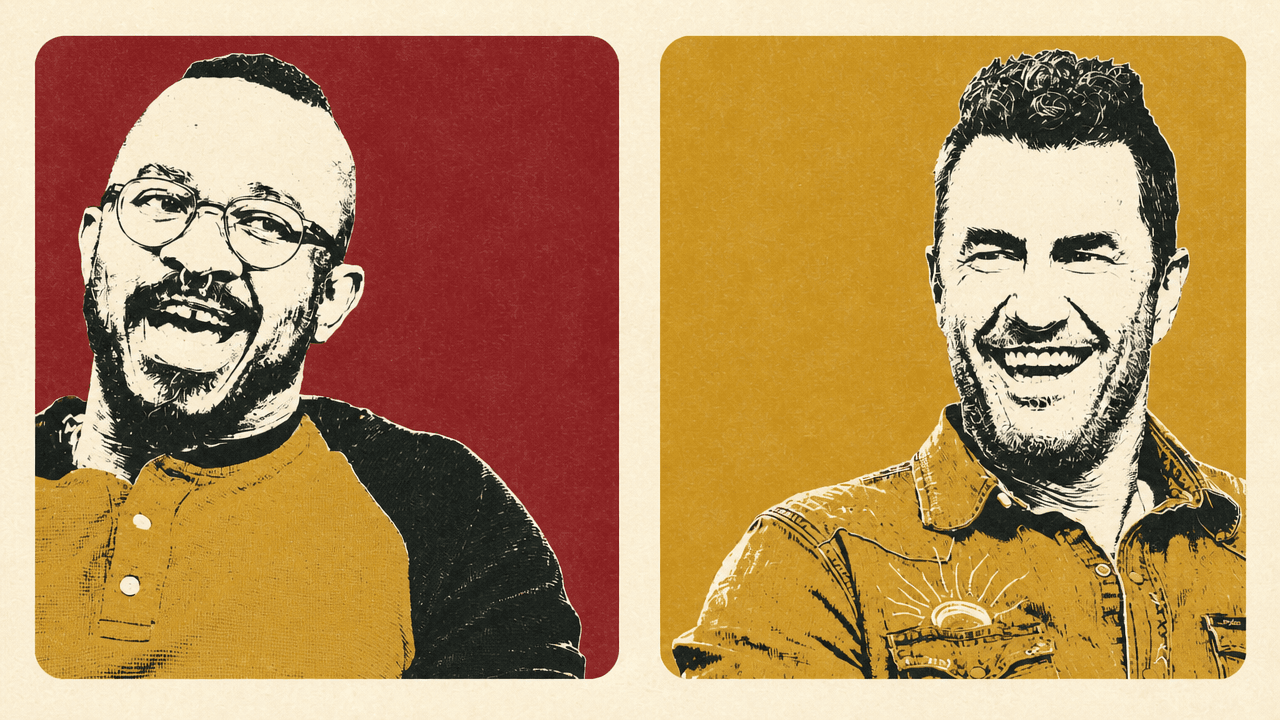
Connection requires intention, but it cannot compel reciprocity
For people who feel lonely but find generic exhortations to “reach out” unconvincing, Joshua Johnson argues that connection may have to start with an inward conversation. Before deciding to become more social, a person may need to identify what connection would actually change in his life.


Johnson’s inventory is concrete: What is one’s social life like? Romantic life? Self-image? What does one actually want? What would a day with the desired relationships look like? Without answers, he suggests, socializing can feel vague and compulsory. A person is left sitting in discomfort without knowing whether an effort is working, what success would look like, or when it will be enough.
The point is agency. Someone who knows what he is seeking can recognize when an invitation or social setting does not serve that aim and decline it deliberately. That is different from being, in Johnson’s phrase, “blown sideways” by the expectation that one should socialize for socializing’s sake.
Blake Mycoskie offers a corresponding practical move: invite someone to coffee and ask about his life. For a man hesitant to disclose loneliness or vulnerability to another man, it may be easier to open up after the other person has gone first. A direct check-in—especially with someone one has been close to before—can give both people a route into a more candid exchange.


Neither man treats in-person disclosure as the only legitimate form of connection. Mycoskie does not believe people have lost the capacity for real conversation. In his experience, people are increasingly hungry for intimacy and vulnerability after prolonged digital focus; he sees it in dinner parties and in the frank mental-health conversations that dominate his work. He also acknowledges that his work places him around people unusually predisposed to raw, honest exchanges.
Johnson questions what “real” means in the first place. A text exchange with someone who is panicking can be genuine human connection, he says, even if it is not the eye-to-eye conversation some people idealize. For someone not ready to say something difficult in person, a WhatsApp exchange may be the most authentic contact available. Johnson sees digital contact not necessarily as an endpoint but as a bridge: some people may need to be “walked” from virtual contact into shared physical space and real time. As they experience the benefit of openness, their capacity for it—and their appetite for it—can grow.
Male friendship can be neglected without anyone deciding to abandon it
Mycoskie’s account of male friendship begins with his father’s regret. Around 19 years earlier, when Mycoskie was roughly 29 or 30 and had recently started TOMS Shoes, he asked his father after Thanksgiving if he could interview him about his life. They were close, and the conversation was meaningful. But Mycoskie’s final question—whether his father had regrets—changed what he did next.
His father described a good marriage, children pursuing their own paths, and a medical practice he had loved. He also described having lost touch with his male friends from college and medical school. He had repeatedly declined golf trips and other gatherings while absorbed in work and family. With his children grown and retirement approaching, he told Mycoskie that he loved his wife but could not spend every moment with her. He no longer had anyone to spend time with, and he was lonely. His advice to his son was not to make the same mistake.
Mycoskie emailed seven close friends from college and Los Angeles, told them the story, and proposed an annual trip. The first was a camping and fishing trip in Colorado. The group has met every year for 19 years and grown to 14 men. They call themselves the Rugged Adventure Club, though Mycoskie jokes that the name became less accurate after he sold TOMS and the trips began to include places such as the Maldives.
Mycoskie says the group taught him how to have meaningful, deep relationships with men and has affected his mental health as much as anything else. His response to his father’s warning was to give friendship a regular, shared structure rather than leaving it to occasional availability.
Johnson’s story about his own father marks the limit of any simple prescription to keep trying. His father died the previous year after a long decline in health. Johnson’s parents divorced when he was five, and the estrangement between father and son deepened after Johnson came out. His father was a Jehovah’s Witness, and Johnson describes the distance as becoming “one thing after another.”
In the final year of his father’s life, Johnson decided to make another effort. He planned a trip to Florida to record his father’s oral history because, as he told him, “I feel like I don’t know you. Like, not really know you.” His father repeatedly confirmed that they would do it. Johnson booked travel, bought recording equipment, and checked in as the day approached.
On the scheduled morning, however, his father said he was not feeling up to it and suggested doing it during Johnson’s next visit. “We’ve got time,” he said. Johnson decided he would not ask again.
He does not claim to know precisely why his father could not have the conversation. But Johnson came to feel that his father could understand fatherhood as providing without being able to offer the human connection Johnson wanted: not what his father could provide, but his father himself. His father knew Johnson was a journalist and was proud of his work, but could not enter the exchange that might have allowed Johnson to know him more fully. Johnson says he still has not written his father’s obituary because he does not know what to write.
How people value themselves shapes what they ask of others
A professional encounter gave Johnson a rule for meeting people without continually adjusting himself to their status. He recalls interviewing Eric Holder while serving as a national host at NPR. Holder was among the first guests of that stature Johnson had interviewed, and Johnson initially felt the pressure of the occasion.
Then it occurred to him that treating a famous former attorney general as a special category felt wrong—particularly because his next guest was not famous at all. He chose instead to treat Holder as he would any guest: welcome him, make him comfortable, and speak with him personably. During a break, Holder’s assistant said they planned to leave halfway through the next segment. Holder decided to stay a few more minutes, extending the interview because he was enjoying it.
If you were going to treat every person you will ever meet for the rest of your life exactly the same, how would you treat them?
That question became Johnson’s standard. People will not all be equally easy to be around, and not every relationship will work, but he stopped calibrating himself to each person’s reputation or social position. He could rely on his values, how he wanted to be treated, and a willingness to let others be themselves.
For Mycoskie, a different internal shift changed what he was able to offer his children. He describes a two-year mental-health crisis during which he was in and out of treatment centers and less able to be present for his family. When he began feeling better, his 11-year-old son asked what had changed and why he could trust that his father would not feel bad again.
Mycoskie told him that he had come to know he was enough simply as he was—not because of what he had built, done, or been recognized for, but because he existed. He extended the message to his son and daughter: they could try out for teams, pursue good grades, and work toward achievements, but none of those things determined their worth.
He says the conversation changed the emotional atmosphere with his children. At dinner, the family now holds hands and repeats a ritual led by the youngest child: “I am enough,” followed by “You are enough” and “We are enough.”
Mycoskie connects that ritual to what he believes children absorb from parents. Someone who does not feel inherently worthy may unconsciously project achievement pressure onto others, especially children. He says that for 48 years he did not feel enough, and believes his son had come to feel pressure to excel at water polo, basketball, grades, or appearance—not because Mycoskie had explicitly demanded it, but because his son could sense it.
The shift is not, in Mycoskie’s telling, a permanent possession. It is a practice. He wears bracelets as a daily reminder to return to that sense of centering and gives one to Johnson during the discussion; “you are enough” is written inside it. Johnson observes that “enough” can be both a period of relief and an exclamation-point boundary. Mycoskie agrees: for people repeatedly told they are not smart enough, attractive enough, or likely to amount to enough, the phrase can also reject the need for validation from those who made those judgments.
A deeper question needs silence and time
Johnson’s central conversational tool is questioning—not as a performance of cleverness, but as a way of letting someone confront the implications of what they have said. He recalls that people who recognized him from public radio would sometimes say, “I never would have guessed you were Black.” The comment used to infuriate him. Eventually, he settled on a two-word response: “Why not?” Then he stopped talking.
The silence was part of the answer. Johnson says there is nothing he could say that would hurt someone more than what they might say to themselves once they reflected on why they had made the remark. Often, the person would apologize. He could then tell them that they now knew something about themselves and could decide whether that was the person they wanted to be. Their self-examination was no longer his burden to carry.
Going through life with a willingness to ask more questions than you make statements, liberating.
For Johnson, questioning does not remove responsibility for how one asks. It requires curiosity, integrity, thoughtfulness, humility, and a willingness not to bite one’s tongue because an exchange may become uncomfortable. It can also establish consent and timing: “Is it okay if I ask?” or “Did you just need to be heard?” Once invited to proceed, he says, ask directly and stand on the question.
Mycoskie emphasizes the condition that lets such questions work: undistracted time. Deep conversations cannot be rushed. When attention is scattered and everyone is pressed for time, people tend not to move beyond the surface; in the pause, he says, depth has room to emerge.
He values setting aside more time than appears necessary. He describes interviewing people who have reserved two hours even when he may have only an hour’s worth of prepared questions. The absence of urgency lets an answer develop and allows a clarifying follow-up rather than a quick move to the next item.
Communication should be treated as a learned civic skill
If he could redesign how people connect, Mycoskie imagines a nonverbal transfer of understanding—something like the physical linking depicted in Avatar, where a handshake could convey consciousness and permit connection through touch without words.
Johnson gives an institutional answer that is more immediately available: make listening, communication, and critical thinking a high-school graduation requirement and a common-core standard. Children are natural question-askers, he says, and connection is foundational from the beginning of life.
Johnson’s own speech-and-debate training in middle and high school was, in his view, the most valuable skill set he learned. He sees the social difficulties associated with young people, computers, AI, and TikTok as expressions of an effort to connect that cannot be sustained “14 seconds at a time.”
His proposal is to teach appropriate conversation, listening, eye contact, and the ability to sit with another person without either staring them down or anxiously waiting for the interaction to end. Young people, Johnson says, already know something is wrong; teaching those capacities early would help them connect with one another and grow into citizens of the world.