Economic Inequality Is Driving Democratic Backsliding
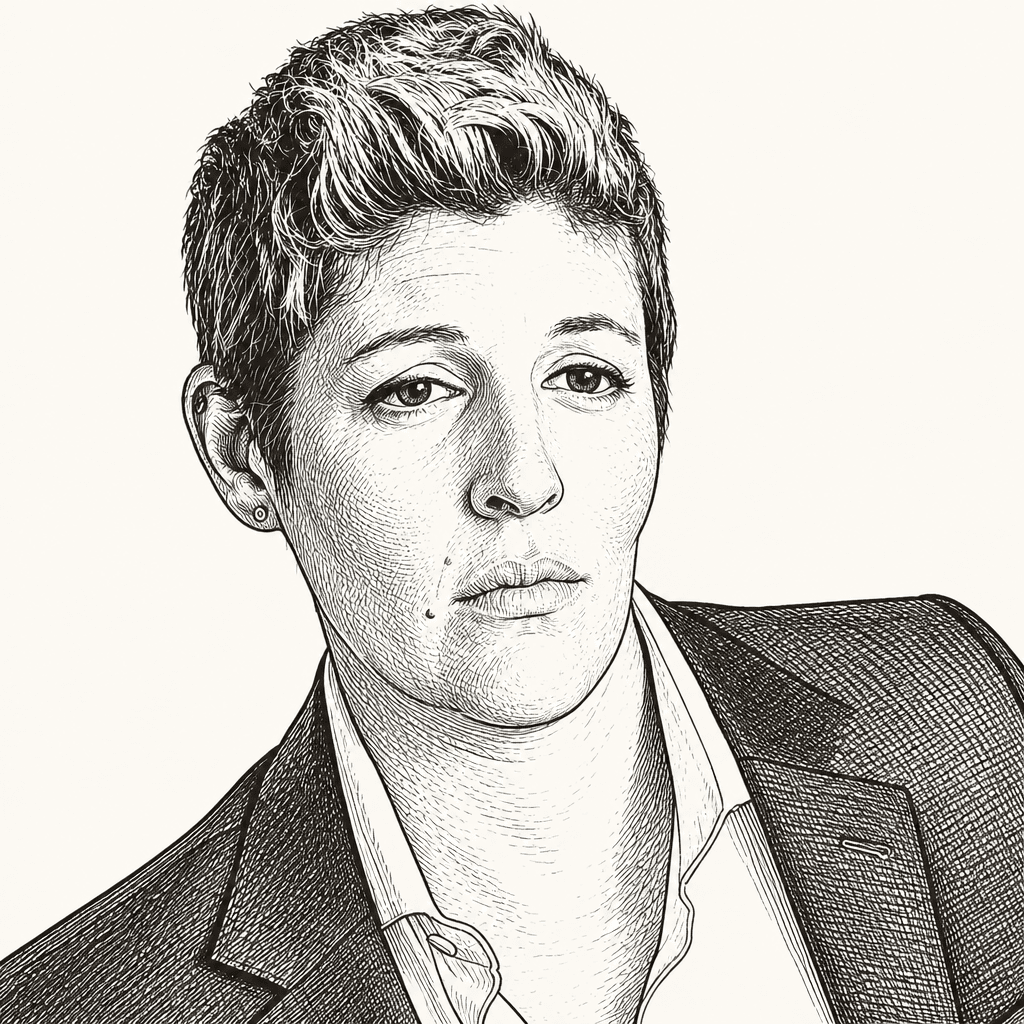
Sally Kohn argues that democracy is endangered not only by attacks on voting rights but by an economic order that leaves too many people without security, opportunity or power. In her proposed “Democracy 3.0,” political inclusion must be matched by broader economic participation through measures such as higher wages, stronger unions, fairer wealth taxation and democratic business ownership. When democracy fails to improve material life, Kohn says, it creates the conditions in which authoritarianism can take hold.

Democratic renewal requires more than protecting the vote
Sally Kohn argues that a durable democracy must offer people both political voice and meaningful economic power. That means restoring and strengthening the Voting Rights Act, she says, but it also means raising wages, getting money out of politics, taxing wealth more fairly and strengthening unions.
These are not separate agendas in Kohn’s account. Political democracy and economic democracy are “mutually intertwined”: economic justice matters not only because it is fair, but because democracy is less secure when people do not experience its benefits in their own lives.
Workers should have voice and power in the same way voters should, Kohn says. “Democracy at work,” in her formulation, means unions. She points to the last turn of the century, when the United States faced extreme wealth alongside extreme poverty and created unions that, she says, helped create the middle class. The country later built a social safety net through programs including Social Security and eventually Medicare, using taxes on wealth to fund measures intended to prevent extreme poverty and suffering.
Kohn does not propose returning merely to the conditions of a few elections ago. She calls for doing more: universal health care, employee ownership and other democratic forms of business ownership, as well as ensuring that new technologies improve people’s lives rather than undermine them.
The underlying standard is concrete. Democracy, she says, should mean that the children of house cleaners and mechanics have the same opportunities as the children of lawyers and technology executives. It should mean that someone who works hard can feed a family and afford a place to live. It should mean that power and profit are distributed more democratically.
Democracy can be more than something we do every couple of years in a voting booth, but something we can eat and something we can live in, and something we can put in our pockets, every single day.
Democracy 3.0 makes outcomes part of the democratic test
Kohn calls this expanded standard “Democracy 3.0.” Her framework starts with Democracy 1.0: the radical proposition that political power should belong to the people rather than kings, empires or corporations. The Declaration of Independence remains an important expression of that aspiration for her, even though neither the document, its author nor the country that followed it was perfect.
The next phase, Democracy 2.0, concerns who is included in “the people.” In the United States, Kohn places abolition, suffrage and the civil-rights movement within generations of struggle to make political participation more inclusive. Their premise was that everyone deserves an equal vote because everyone matters equally.
Kohn cites scholar Isabel Wilkerson’s argument that the United States was not really a democracy until the Voting Rights Act became law in 1965. She contends that the country has since experienced an aggressive effort to reverse that progress, saying that far-right extremists, aided and abetted by the Supreme Court, have dismantled the Voting Rights Act and are trying to take the country backward.
The work of inclusion remains unfinished. But Kohn’s larger point is that democratic debate too often stops at process: who votes, who is represented and how officials are selected. Democracy 3.0 asks what those processes produce.
If people are truly created equal and can participate equally, Kohn argues, then democratic outcomes should be more equitable as well—more widely shared and beneficial to everyone. Economic democracy does not mean equal houses, equal incomes or identical outcomes. Her claim is narrower and more demanding: everyone should have an equal chance at the American dream.
That is why voting rights and economic policy belong in the same democratic project. Political equality is incomplete, in Kohn’s view, if a person’s actual prospects remain overwhelmingly shaped by circumstances over which they had no control.
Extreme inequality turns democratic promise into an empty one
Sally Kohn argues that the United States fails her outcome-based test. A person’s zip code predicts life expectancy, race predicts wealth and parents’ income predicts a child’s future, she says. Those conditions are incompatible with a system that claims to make opportunity broadly available.
She uses wealth concentration and executive pay as illustrations of the distance between formal democratic ideals and economic reality. The top 1 percent of Americans, she says, control as much wealth as the entire bottom 90 percent combined. She also cites a source finding that CEOs make 281 times more than average workers.
Kohn’s challenge is rhetorical but pointed: are chief executives really 281 times more talented, deserving or hardworking than average workers? Her objection is not that all differences in income or achievement must disappear. It is that concentrated wealth and power at this scale cannot be treated simply as a neutral expression of merit.
The result, she says, is a political order that may carry the name of democracy without meeting its substance. Kohn describes it instead as potentially resembling an oligarchy, a kleptocracy or a monarchy in which billionaires and reality television stars serve as kings—sometimes, she adds, both.
If democracy doesn't deliver meaningful economic opportunity, democracy starts to feel meaningless.
For Kohn, the moral case for broad-based opportunity is sufficient on its own, particularly in a country that calls itself both the richest in the world and a land of opportunity. But she insists it is also practical. Economic justice, she says, is how democracy is saved.
Authoritarianism gains where democracy has already failed
Kohn arrived at this argument while researching why authoritarianism was gaining ground internationally for a U.S. philanthropic foundation. She interviewed civic leaders in West Africa, scholars in Eastern Europe and democracy leaders in Latin America, asking what authoritarian leaders were doing so effectively.
Nearly everyone, she says, rejected the premise of the question. Authoritarianism was not surging because it was getting something right; it was benefiting from what democracy was getting wrong. They described authoritarianism to her as an opportunistic disease that can take root when democracy is weak.
Kohn cites Freedom House’s estimate that only about 20 percent of the world’s population lives in a country considered free, alongside rising dissatisfaction with democracy. In the United States, she says, about three out of five people report being dissatisfied with how democracy is working.
A conversation with Kwasi Prempeh, who leads the Ghana Center for Democratic Development, sharpened the explanation. Ghana gained independence from colonial rule in 1957. Many Ghanaians today do not remember a time before democracy, Kohn says, but they do know they are struggling economically under it. The natural question is what democracy has done for them lately.
Prempeh’s conclusion, as Kohn recounts it, is that democracies that fail to deliver broad-based opportunity become vulnerable to autocratic capture. The attraction need not be an affirmative admiration for authoritarianism. When democracy appears unable to improve material life, another system can seem appealing by default because democracy has defaulted on its promise.
Kohn also invokes political scientist Susan Stokes, who examined variables associated with democratic erosion in different countries. Income inequality, Kohn says, emerged as the overwhelming variable in democratic backsliding—so persistently that Stokes said the researchers could not make it disappear “short of unplugging their computers.”
The implication is not that economic policy alone resolves every democratic threat. Kohn’s case is that inequality weakens democracy at precisely the point where citizens ask whether the system serves them. Elections and formal rights remain indispensable, but they cannot sustain democratic legitimacy indefinitely if the economic order leaves broad opportunity out of reach.