Five-Minute Walks Every Half Hour Blunted Post-Meal Glucose Spikes
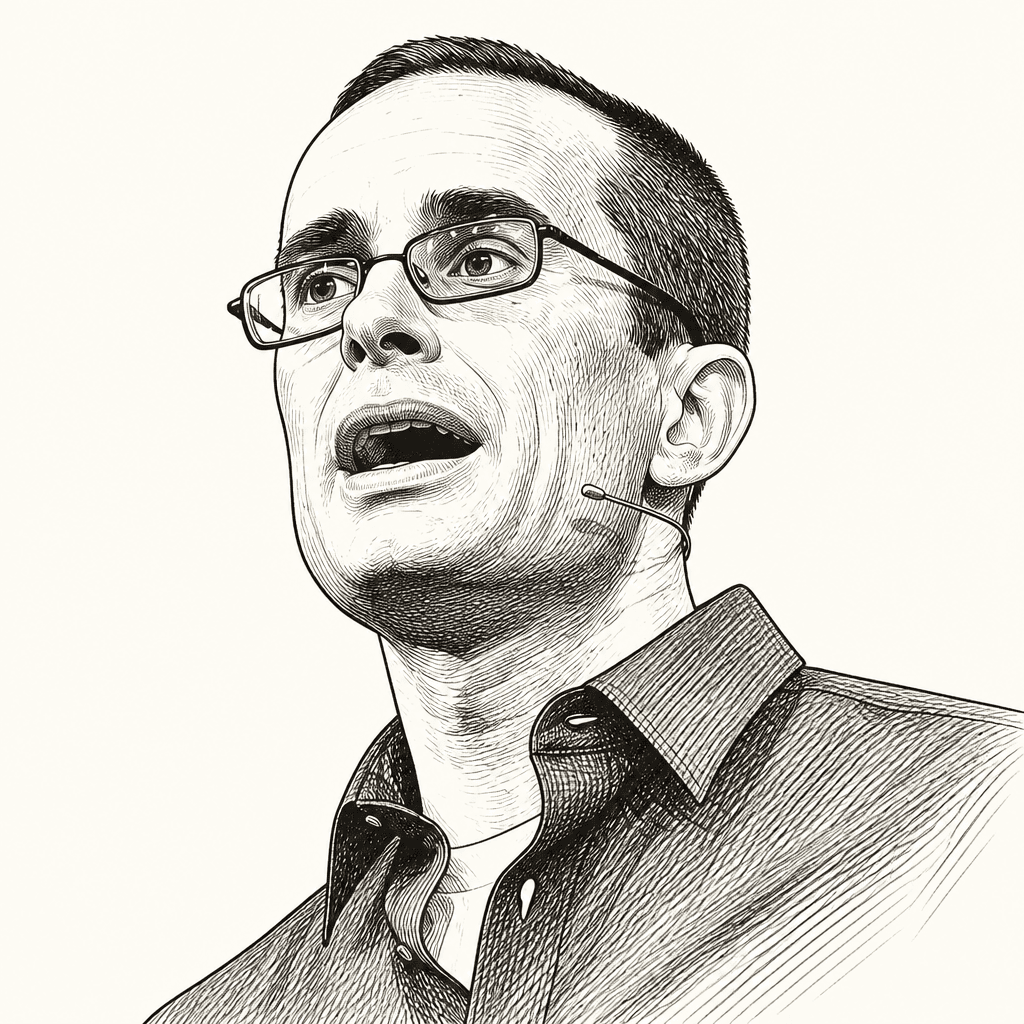
Modern work has not just crowded out workouts; it has stripped movement from the rest of the day, exercise scientist Keith Diaz argues. His research points to a modest remedy: brief movement breaks, including five-minute walks every half hour, which in his lab sharply blunted post-meal glucose spikes. Looser versions still mattered, Diaz says, with real-world participants reporting less fatigue and lab data showing mood benefits from shorter breaks.

Five minutes every half hour changed the glucose curve
The most actionable finding Keith Diaz presents is small but specific: a five-minute walk every half hour reduced post-meal blood sugar spikes by about 60 percent in his lab’s data. The chart he shows, attributed to Duran et al. in Medicine & Science in Sports & Exercise in 2023, compares two conditions over a day: sitting all day versus taking five-minute walks every 30 minutes. In the sitting condition, glucose rises sharply after breakfast and lunch. In the walking condition, those peaks are visibly blunted.
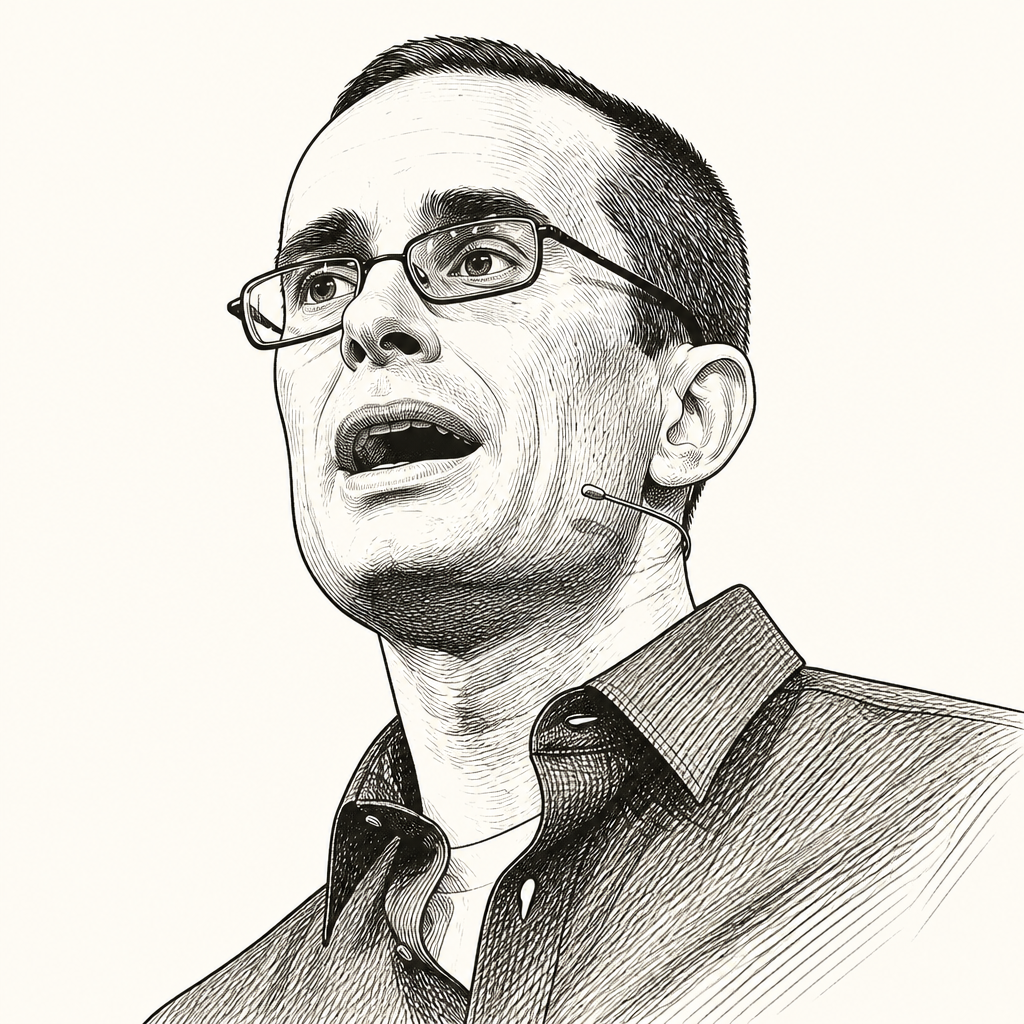

These were not workouts. Participants were not sprinting or even walking fast. They walked at about two miles per hour — “a stroll.” Diaz compares the size of the glucose reduction to what one would expect from medication used to manage blood sugar levels.
That result sits inside a broader claim: the problem is not simply that people miss workouts. It is that movement has disappeared from the rest of the day. One slide puts exercise at roughly two percent of the day. Diaz’s concern is the remaining time, where modern work often means prolonged sitting, screen time and meetings with little physical demand.
The average adult now spends 187 full days a year — more than half the year — sitting or physically idle.
The health frame is blunt. Being highly sedentary, Diaz says, increases the risk of diabetes, cancer, dementia, heart disease and early death, and this remains true even for people who exercise regularly. The evidence he uses to dramatize the cost of immobility includes a bed-rest study in which highly trained endurance athletes lost about 20 percent of their aerobic fitness in three days. Another slide, attributed to Mastrandrea et al. in the Canadian Journal of Cardiology in 2024, states that 40 days of no movement in a typical healthy adult produced heart changes comparable to 50 years of cardiovascular aging.
Diaz opens from his own contrast, but uses it to frame the larger shift. As a summer camp counselor, he ended the day physically tired from running, swimming and playing games with children. In office work, even as an exercise scientist, he ended the day exhausted without having used his body. His distinction is between a body used throughout the day and a body parked for most of it.
The body needs repeated movement, not just scheduled exercise
Keith Diaz explains the limits of exercise alone through muscle metabolism. Muscles, in his account, are not just the machinery that powers movement. They also help regulate metabolism. His example is blood sugar: muscles that contract regularly act like a moist sponge, soaking sugar from the bloodstream; unused muscles are more like a dry, shriveled sponge.
Exercise “rewets the sponge,” but the sponge dries out again if the rest of the day contains little or no movement. That is why the proposed intervention is frequent and brief: contract the muscles repeatedly across the day.
To make that pattern intuitive, Diaz borrows an analogy from an unlikely source: the tobacco industry. In the industrial age, he says, cigars did not fit factory work because workers had only short breaks. Cigarettes became the product that delivered nicotine in brief doses throughout the day. If “sitting is the new smoking,” then the response should borrow the dosing pattern but reverse the substance.
Instead of smoke breaks, the prescription is movement breaks: short bouts of movement, a few minutes at a time, sprinkled throughout the day.
The lab question was deliberately minimal: what is the least amount of movement needed to offset the harms of being highly sedentary? The answer, in the strongest lab result he presents, was the five-minute walk every half hour. But Diaz is also candid that his first reaction to that finding was disappointment. He thought, “There’s no way people are going to do this,” partly because he did not think he could realistically do it himself.
People kept going because they felt better
Rather than end the research at an impractical prescription, Keith Diaz tested movement breaks outside the lab with help from public radio. More than 20,000 people tried taking movement breaks throughout the day, at intervals ranging from every half hour to every two hours, for two weeks. To his surprise, the vast majority liked the practice, and many wanted to keep going.
What they valued was not primarily long-term disease prevention. Few participants highlighted the physical health benefits. The responses shown on screen emphasized immediate effects: “I feel like a completely different person,” “I felt so much more energized throughout the day,” “It got me out of my brain fog,” and “It helped me better focus at work.”
Those responses connect the intervention to the daily experience of sedentary fatigue. Diaz recalls coming home from office work when his children were younger; they would greet him with energy and want to play, and he “just didn’t have it” in him.
The lab findings mirror that experience. In a chart attributed to Duran et al. in Medicine & Science in Sports & Exercise in 2023, fatigue rises over eight hours of sitting while mood falls. The two lines move in opposite directions: the longer the uninterrupted sitting continues, the worse the subjective state becomes. Diaz describes this as one of the hidden costs of prolonged sitting and argues that muscles and brains have a “symbiotic relationship”: they are in constant communication, and the biological need to contract muscle is foundational not only to metabolism but also to mental and brain health.
The real-world experiment also softened the prescription. Participants averaged only four to five movement breaks a day, far below the lab-tested five minutes every half hour. Yet Diaz says they still reduced feelings of fatigue by about 25 percent.
The lab showed a similarly modest pattern for mood. A slide attributed to Duran et al. says “1 minute an hour can help,” comparing mood over time during sitting all day versus one-minute walks every hour. Diaz’s conclusion is careful: small, short and infrequent movement breaks can counter “some, not all” of the hidden costs of sedentary life.
The workplace objection assumes sitting is the productive default
Employers and schools often worry that movement breaks will be disruptive or will hurt productivity and performance. Keith Diaz answers first with practical substitutions: walking meetings, pacing during calls, walking pads, or simply moving while thinking. Movement does not always mean stopping work.
The deeper objection is that the premise of uninterrupted sitting may be backwards. A slide attributed to Elsevier compares brain activity after 20 minutes of sitting with brain activity after 20 minutes of walking, reprinted from work by Hillman et al. on acute treadmill walking, cognitive control and academic achievement in preadolescent children. The walking image shows more activity than the sitting image. Diaz interprets the contrast as a brain after movement looking far more ready to learn and work.
The larger problem, as he describes it, is cultural and technological. Productivity culture, convenience culture and technology have been “reengineering our lives” by removing the need for movement. Groceries can be delivered; robots can vacuum floors; even small physical tasks become avoidable. Movement begins to look like friction — an inconvenience, an interruption, something to eliminate.
Diaz’s smallest example is from home. When a full library parking lot forced him to park a little farther away, his daughter complained. He estimates the extra distance added about 20 seconds of walking. The moment landed because movement had become an inconvenience for her, too.
A few days later, leaving a stadium, he saw that same daughter take the stairs while he rode the escalator. He presents it as a small victory, not a transformation. That scale is the point. Movement breaks are not only a protocol for glucose, fatigue or mood. They require seeing ordinary chances to move as opportunities to reconnect body and brain rather than as inefficiencies to design away.