Good Games Use Constraints to Focus Creative Play

Game designer Eric Zimmerman argues that rules do not limit play so much as give it a structure people can explore. In a TED talk drawing on video games, tabletop games and installations, he shows how carefully chosen constraints can focus attention and invite improvisation—while too many can shut it down. His method is to understand a system, find where its conventions can be altered, and use rules to guide what people do.
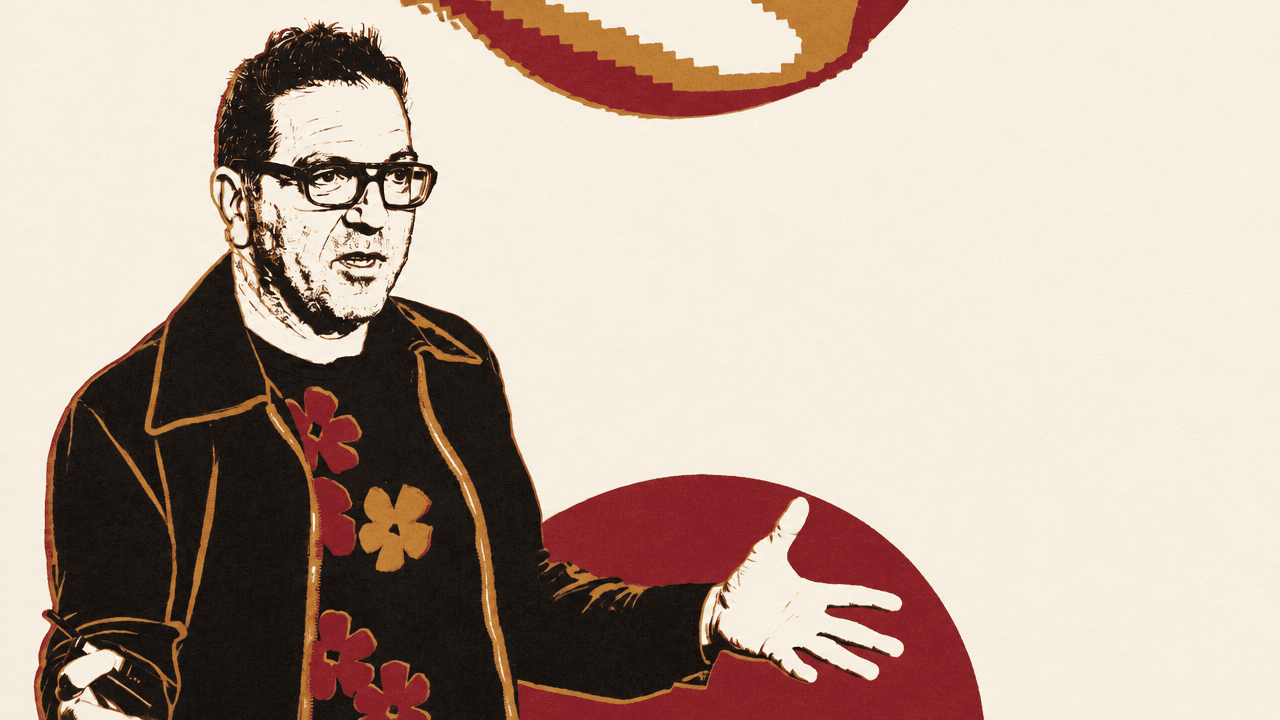
Rules make a system available for play
Eric Zimmerman designs video games, tabletop games and large-scale museum installations. He also writes and teaches game design, treating games as an art form and play as a form of literacy. His starting point is that a game is not its box, cards, dice or pieces. The rules tell players what to do and how to win.


Rules can seem rigid, as Zimmerman’s improvised baseball example shows. If a tree is second base, does that mean the trunk, or a twig extending from it? The players must resolve the ambiguity before the game can continue. Rules establish a shared system; play is what people do when they enter it.
Play is spontaneous and unexpected, but it needs something to play with. Zimmerman demonstrates this with walking: ordinary walking gets someone from one place to another, while skipping, wandering, hopping or crawling changes the activity’s rules. Those variations play with space, time, the body, gravity and sidewalk etiquette.
The same approach can be used to invent. First understand how a system works; then look for places where its structure can be altered. Zimmerman calls play “a very collaborative parasite”: it attaches to a system and adds joy. The designer’s task is to find the leverage points where people can experiment.
Constraints can focus play without closing it off
Zimmerman demonstrates game design with two volunteers, Mila and Ida. First, they alternate saying any word, without repeating one already spoken. The exchange—“cheese,” “play,” “yellow,” “freedom,” “red”—establishes a rule, but Zimmerman says it is not yet much of a game.
He adds a constraint: every word must name something to eat or drink. The answers become ketchup, mustard, pizza, hot dogs and water. But a narrower category does not automatically make the game more engaging; Zimmerman acknowledges that this version may be less interesting than the first.
The next rule links each turn to the last: the final letter of one player’s word must be the first letter of the other’s. Now the exchange demands more attention and invention. Mila says “cake”; Ida answers “Evian”; Mila finds “Nutella”; Ida says “almonds”; and the sequence ends with Mila’s “Shirley Temple.”
The change is audible beyond the players’ effort. Zimmerman hears the audience lean in, whisper suggestions and contribute ideas. The players also explore possibilities within the rules, including a brand name and a multiword answer. The constraints have made the system clear while giving participants a problem to play with.
That balance is the work of design. Too few constraints may leave a game without direction; too many can close off play. Zimmerman jokes that requiring every word to have seven letters might have got him thrown offstage. He describes game design as finding the right amount of constraints to move play into a creative space.
The distinction, as Zimmerman frames it, is between playing within a system and playing with it. The volunteers played within the rules by taking turns, while the audience’s suggestions became part of a more improvisational exchange around the system. Zimmerman treats that wider participation as a sign that the activity has entered a more creative space; he does not suggest that every suggestion broke the rules.
A repeatable method for designing play
Zimmerman’s method begins with understanding the system: how it is structured and how it works. Next, identify its leverage points—the places where people might play with its rules or conventions. Experiment with those points, including in ways that may feel unexpected or inappropriate. As the experience takes shape, use constraints to guide and focus what people do.
At a dinner party, Zimmerman wanted to meet more people than the few seated at his table. After the first course, he took the table’s name tags and randomly moved them to other tables. The guests played along, and Zimmerman says the small intervention made a difference to everyone’s experience.
He also points to the bathrooms at St. Ann’s Warehouse in Brooklyn. Oversized signs marked “MEN” and “WOMEN” identify the entrances, but both connect to the same space inside. The design plays with visitors’ expectations, the social etiquette of bathrooms and the idea of a gender binary. Its effect comes from making familiar conventions visible and then rearranging them.
A larger project applies the same approach to democracy. Zimmerman says he is working with Games for Change and Action for Democracy to consider democracy as a design problem. The plan is to bring game designers and policy experts together to explore how they might play with its structures and move them into a new space. He does not claim to know what the work will produce.