Russia’s Deteriorating Position Raises the Risk of Wider War

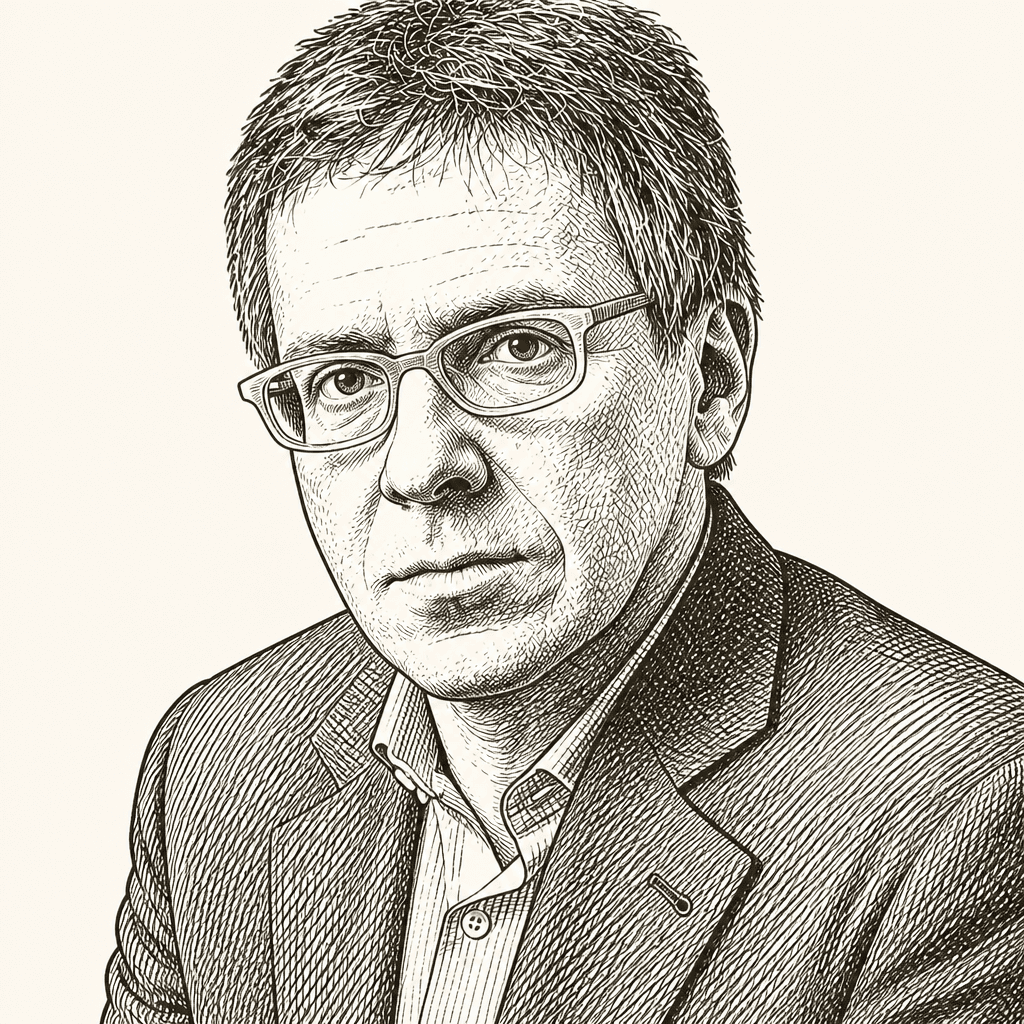
Political scientist Ian Bremmer argues that the Iran and Ukraine wars are both trapped without credible exits, but their risks differ sharply. He sees the Iran conflict as a costly, contained struggle over control of the Strait of Hormuz, while a weakening Russia may respond to setbacks in Ukraine by escalating pressure on NATO and civilian infrastructure. Bremmer’s central concern is that neither Washington nor Moscow has yet found a political settlement that leaders can accept.
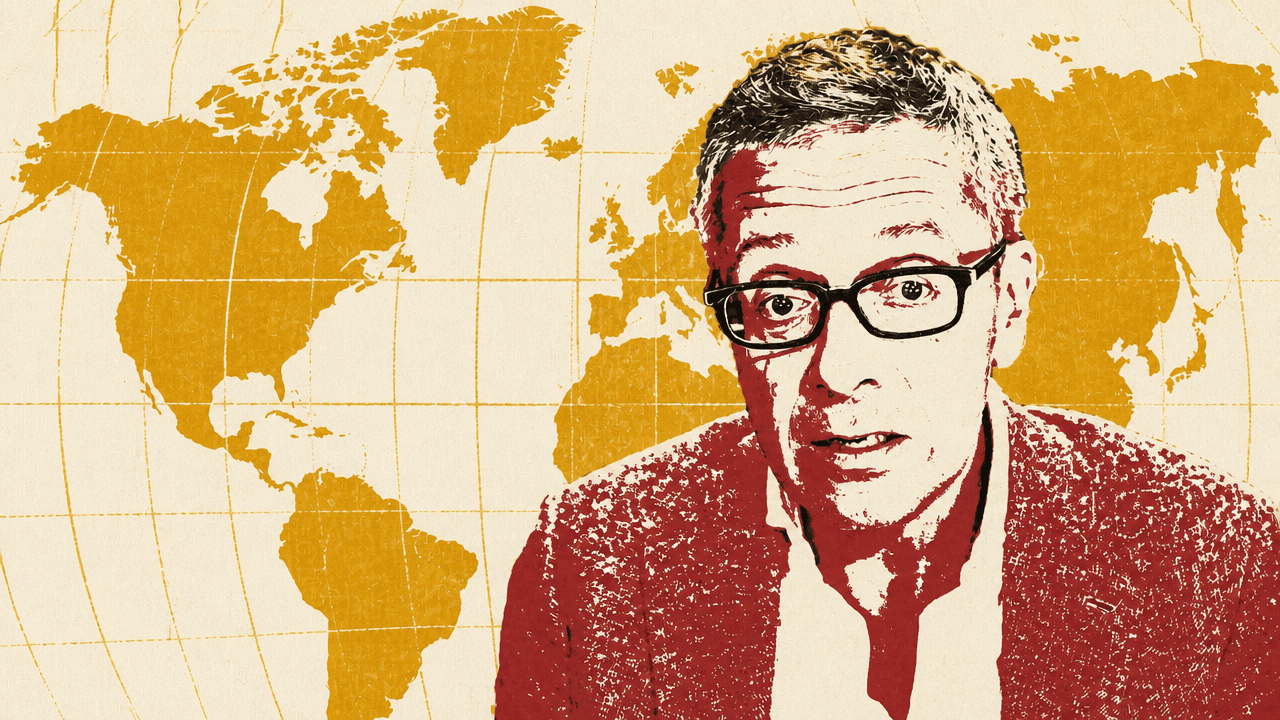
Iran is in an unstable, constrained middle ground; Ukraine may become less so
Ian Bremmer draws a sharp distinction between the two wars. The conflict with Iran is costly, unresolved and capable of imposing severe economic damage, but it is being held in a deliberately constrained form by leaders who understand the price of a broader regional war. Russia’s war against Ukraine, by contrast, may become more dangerous as Moscow’s position deteriorates.
In Iran, neither Washington nor Tehran has found a political settlement, yet both have reasons not to turn a blocked Strait of Hormuz and limited military exchanges into all-out war. In Ukraine, a stronger Ukrainian position has not produced a ceasefire; Bremmer worries instead that military, economic and political pressure on Vladimir Putin could encourage escalation beyond the battlefield.
The common problem is the absence of an exit that allows leaders to protect their interests and political standing. The difference, in Bremmer’s account, is that Iran’s conflict has so far been bounded by visible mutual costs, while Russia may become more willing to create new risks if it cannot reverse its decline.
The Iran war is stuck in a dispute over leverage
Bremmer sees the war with Iran as the result of a basic disagreement neither side has been able to resolve: who has leverage over the Strait of Hormuz, and who can outlast whom.
A memorandum of understanding between Washington and Tehran collapsed within weeks, Bremmer says. Trump’s position is that Iran may sell oil but cannot control the strait. Iran’s military leadership believes its ability to disrupt shipping, strike targets around the Gulf and impose costs on the United States gives it effective control—and that Washington will eventually have to concede that reality.
Both sides have reasons not to yield. Trump believes continued military pressure will force Iran to back down. Iran, Bremmer says, believes it can keep imposing sufficient costs on American forces, regional infrastructure and energy markets to make Washington reconsider.
That does not mean the war has returned to the all-out fighting seen at its outset. Bremmer describes a constrained exchange: American strikes have focused primarily on military targets, with only limited attacks on Iranian infrastructure; Iran has answered in roughly tit-for-tat fashion, targeting American bases and matching attacks on assets such as bridges and desalination plants. The United States, he notes, has not tried to kill Iran’s new supreme leader or broadly destroy the country’s civilian infrastructure.
The restraint is not evidence of a stable settlement. It reflects Trump’s calculation that carrying out his largest threats would provoke unacceptable costs: more American casualties, damage to US military capabilities and a broader assault on US partners across the Gulf. The result is a closed or disrupted strait, continuing military exchanges and no agreed political endpoint.
The Houthi confrontation with Saudi Arabia is related but distinct. The Houthis, whom Bremmer describes as an Iranian proxy, are seeking money from Saudi Arabia in exchange for safe passage as Hormuz disruption raises the value of alternative routes. He expects that, if Saudi Arabia pays sufficiently, the Houthi-Saudi conflict is less likely to become a durable additional front. The decisive conflict remains between Iran and the United States.
Trump’s choices trade ownership of the crisis against greater risk
Bremmer identifies three options under discussion in Washington. None, in his view, offers an immediate reopening of the strait.
| Option | What it would involve | Bremmer’s expected consequence |
|---|---|---|
| Walk away | Leave Gulf states to negotiate directly with Iran | Gulf governments would likely pay Iran substantially, while Trump no longer owns the negotiation |
| Try direct diplomacy again | Seek a compromise after demonstrating willingness to sustain disruption and higher oil prices | Iran may still insist on control of the strait; talks could test whether the conflict has changed its calculus |
| Escalate militarily | Broaden infrastructure strikes or attack Pickaxe Mountain | Could create a nuclear-policy claim for Trump, but risks greater damage and fighting |
The choices differ mainly in who bears the political and material cost. Walking away would leave Qatar, the United Arab Emirates and Saudi Arabia to negotiate an arrangement with Iran—and, in Bremmer’s view, likely to pay for it. Another diplomatic push would test whether Tehran’s calculation has changed after months of disruption, though Bremmer does not think Iran has moved from its demand for control over the strait. Escalation, including possible strikes on the deeply buried Pickaxe Mountain enrichment site, could let Trump claim a win on Iran’s nuclear capacity while leaving the central Hormuz dispute unresolved.
None of them are likely to reopen the strait immediately.
Bremmer’s range is wide: perhaps one or two more months of disruption without major escalation; perhaps six to 12 months with substantially greater disruption and more significant strikes, though still short of a region-wide war.
His own bet is that Trump ultimately wants to move on. Trump’s ego, Bremmer says, makes it difficult for him to accept an outcome in which Iran can claim victory. But the president also wants political wins elsewhere, particularly in the Western Hemisphere, where Bremmer says Trump sees more favorable opportunities. That likely means Washington eventually leaving the heaviest lifting to Gulf states: the United States may have helped create the problem, but regional governments would be expected to negotiate a way out.
The energy shock has been severe, but less catastrophic than expected
Bremmer says the economic damage is substantial, even if the global economy has proved more resilient than markets expected at the beginning of the conflict.
The disruption has removed 13 million barrels a day from the global market, according to Bremmer. But China is importing five million fewer barrels a day, reducing pressure on global supply. More oil is also moving westward from Saudi Arabia, while a couple of million barrels a day are avoiding the strait through an overland UAE pipeline. Diversification and efficiency gains have absorbed some of the shock.
That cushioning does not make the costs trivial. Bremmer puts average US gasoline prices above $4 a gallon, compared with an estimated $3.30 without the Iran war—a difference he translates into roughly $600 to $700 per American family, before broader inflationary effects. Fertilizer, helium, food, petrochemicals, plastics and other oil-linked goods are part of the wider exposure. Iran’s economy has suffered more than $100 billion in damage, he says, while Gulf infrastructure will require expensive rebuilding.
Helen Walters cites an estimated direct US cost of $37.5 billion and a further $67 billion requested from Congress by Defense Secretary Pete Hegseth. Bremmer’s response is that reconstruction and global inflation already bring the aggregate burden into the hundreds of billions. It is not yet Iraq or Afghanistan in scale, he says, but it is “clearly the biggest policy mistake that any US president has made since the Iraq war.”


The central surprise is not that the war has hurt; it is that the damage has remained below what many expected when it began. That resilience, Bremmer suggests, has given leaders more room to continue an unresolved war than a sharper global downturn might have allowed.
Military secrecy does not excuse unclear war aims
Bremmer draws a distinction between operational secrecy and political candor. A commander in chief, he says, does not have an obligation to disclose information that would directly weaken the US negotiating or military position—for example, a shortage of Patriot interceptors or Tomahawk missiles. Full transparency can come later.
But the president does have an obligation to state the purpose of the war, identify its goals, explain how success would be measured and submit those claims to later accountability.
The American president needs to be clear and honest about what the purpose of the war is, about what the war goals are, and how one would know if one has achieved them.
In Bremmer’s view, Trump has failed that test. The administration has not offered stable objectives, and the president’s public statements shift too readily. His example is Trump’s announcement of a 20% toll on every ship entering the strait. Bremmer calls the declaration “patently not true”: there was no mechanism to collect the toll, no agreement with allies, no executable plan and no obvious way to impose it.
The damage, he argues, goes beyond one false claim. A president who makes unimplementable pronouncements undermines his own credibility, his ability to negotiate with adversaries and his capacity to retain allied support. Bremmer says advisers frustrated with Trump’s conduct have been leaking because they believe the president is subordinating the US national interest to personal humiliation and anger.
For Bremmer, the contradiction is particularly stark because Trump twice won office partly on a promise not to begin new wars. The people suffering most, however, are Iran’s 92 million people. Bremmer says the Islamic Republic killed thousands of its own people in January, and that the US war has not improved ordinary Iranians’ lives. The new supreme leader and military leadership, he says, remain brutal and capable of repression.
He dismisses an American or Israeli tactical nuclear strike as implausible. Iran’s leverage does not arise from military dominance, Bremmer argues, but from a weaker country’s capacity to inflict outsized economic and military damage—an outcome he says Trump did not anticipate when launching his decapitation strike against the Islamic Republic.
Israel may press for escalation, but Trump is unlikely to grant it
Bremmer expects Israel to support a more aggressive American campaign, including strikes on Iranian leadership and Pickaxe Mountain. Prime Minister Benjamin Netanyahu is likely to press that case.
But Bremmer expects resistance inside the administration. Vice President JD Vance, who was added to discussions with Netanyahu, is deeply skeptical of Israel pushing the United States into a war that serves Israeli interests more directly than American ones. Trump, too, is mistrustful of Israeli efforts to draw the US further in.
The US-Israel relationship remains solid in intelligence and defense integration, Bremmer says. The constraint is political: if Netanyahu’s objective is to secure a major new American escalation, Bremmer does not think he will succeed.
A weakening Russia may export the pressure rather than accept defeat
Ian Bremmer is more worried about the Russia-Ukraine war metastasizing over the next year than he is about the Iran conflict expanding into a wider regional war. His concern is not that Russia is gaining an easy path to victory. It is that a deteriorating Russian position can make Putin more willing to create risks elsewhere.
Ukraine, Bremmer says, is fighting effectively, striking deep inside Russia while receiving US intelligence support and European-funded backing. Trump’s relationship with Volodymyr Zelenskyy has improved accordingly: Bremmer says Trump sees Ukraine as a winner and notes that Europeans, rather than US taxpayers, are paying for the support. He expects Washington may add significant sanctions on Russia, while stopping short of large direct US checks for Ukraine.
Yet a stronger Ukrainian position has not produced the conditions for a ceasefire. Bremmer points to Russia’s personnel shortages, an economy under pressure from Ukrainian strikes and public anger at home. Those problems could make Putin more dangerous rather than more accommodating, especially because Bremmer sees few institutional constraints on the Russian leader and worries about his isolation and access to reliable information.
The most immediate form of escalation may be asymmetric pressure on NATO. Bremmer says Russia is already supporting arson and vandalism operations and targeting infrastructure including warehouses, railways and undersea fiber-optic cables in Poland, the Baltic states, Romania and the Nordics. The objective, he says, is to widen disagreements inside European NATO: to persuade some governments that supporting Ukraine has become too expensive or dangerous.
Russia may also deepen cooperation with Iran. Bremmer says Iranian drone strikes that penetrate US defenses have hit valuable and mobile targets, including radar, barracks and aircraft, rather than landing randomly. That pattern makes Russian satellite support for Iranian targeting credible in his view.
The Black Sea fits the same logic of expanding costs. Russia is attacking Ukrainian shipping, Bremmer says, in an effort to disrupt food exports. Odesa can remain functional while the route still fails commercially: crews and insurers may refuse voyages if they believe Russian attacks remain likely.
Bremmer does not expect Putin to use a tactical nuclear weapon. He believes China, India, Kazakhstan and other countries important to Moscow would strongly oppose it, and does not think Putin is yet desperate enough to cross that threshold. But he does not treat that as a guarantee against calamitous decisions if Russia’s position keeps worsening.
Pressure from Russia’s partners could help create a path toward a ceasefire. Bremmer highlights Kazakhstan’s President Kassym-Jomart Tokayev urging Putin to accept a ceasefire and begin talks without necessarily surrendering territory, while noting that Zelenskyy has already said he would accept a ceasefire without preconditions. China beginning to make a similar argument matters, he says. Still, absent a change in Putin’s calculation—or a change in Kremlin leadership—Bremmer expects more Russian attacks on civilian targets in Kyiv and more Ukrainian strikes on Russian refineries. That is an escalation pattern, not one that suggests a conflict nearing resolution.