A Founder’s Success Could Not Quiet His Belief That He Wasn’t Enough

Blake Mycoskie says his belief that he was not enough drove years of striving for achievement and, eventually, a plan to end his life that he did not carry out. The TOMS Shoes founder credits telling friends and family he was not okay with saving his life. In his TED talk, he argues that shame keeps people silent about mental illness and calls for treating it as an expected part of life so people can seek support sooner.
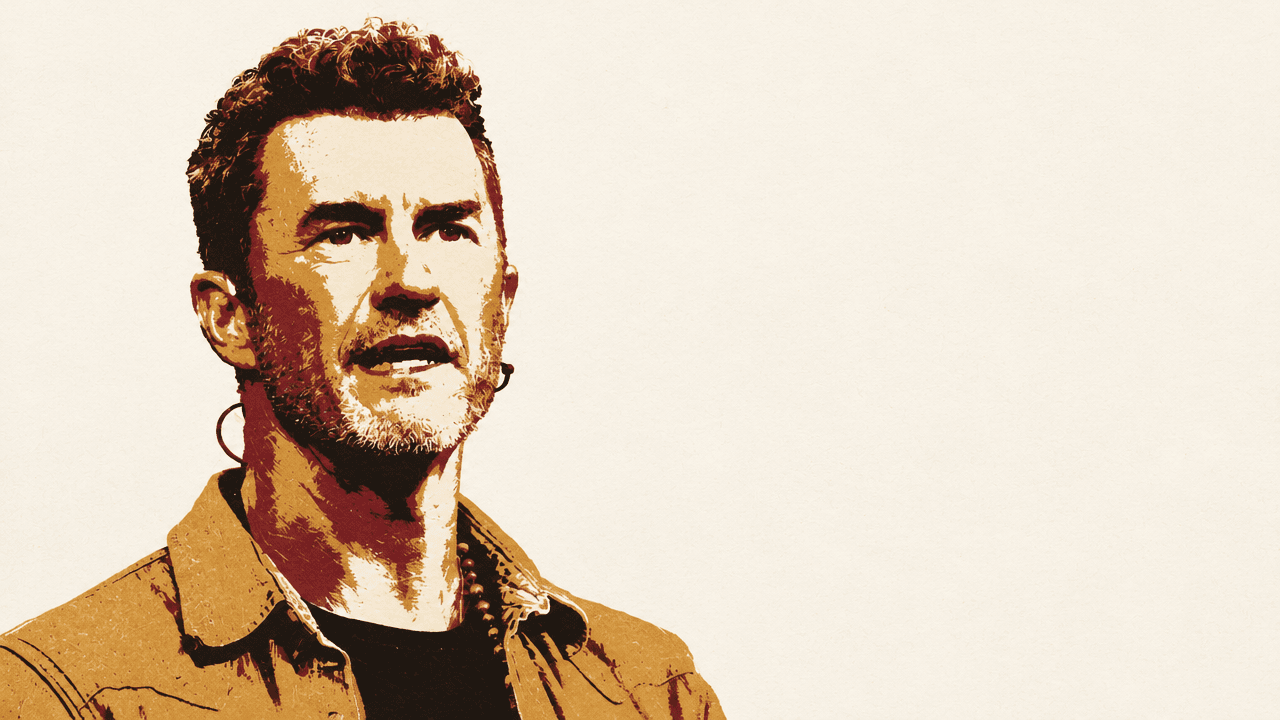
A life built on achievement could not settle the question of worth
Blake Mycoskie remembers the years when he started TOMS Shoes as some of the happiest of his life. He lived on a 45-foot sailboat in Marina del Rey with a few bags of clothes, a bike, a surfboard and a laptop. He woke to the ocean rocking the boat, made coffee barefoot and felt clear, inspired and alive.


Two decades later, TOMS had become a global brand. Its one-for-one model had given more than 100 million pairs of shoes to children in need, and Mycoskie had made more money than he ever thought possible. Yet 23 months before his talk, he became so lost, hopeless and depressed that he made a plan to end his life. He chose the boat as the place to do it, he said, not because he wanted to die there, but because he did not want his family to be the ones who found him.
He did not act on the plan. Instead, he reached out to friends and family and told them the truth: not simply that he was stressed or had lost his purpose, but that he was not okay. He credits that decision with saving his life. Telling this story publicly, he said, was the hardest part of preparing for the talk.
A psychiatrist helped him slow down and examine not only what he was feeling but why. Mycoskie said he had been misdiagnosed as bipolar and had been put on four medications. With the psychiatrist’s help, he spent five months weaning off them. During that time, his anxiety got worse, and the racing thoughts in his head became almost unbearable. Eventually his mind began to settle, and he recognized what he called a “core wound”: the belief that he was not enough.
He saw that belief running through his life. He had never felt sufficient as a child, an athlete, a founder or a person. Looking back at his first 48 years, he understood his accomplishments as attempts to earn his worth: becoming a championship tennis player, starting multiple businesses, building TOMS and becoming a public emblem of conscious capitalism. Magazine covers, stages, awards and praise had not quieted the voice. They had made it louder.
That distinction changed how he understood his own history. In therapy, he began to see his life not as a success story but as a strategy for earning worth. When the strategy failed to deliver the feeling he was pursuing, he said, his world collapsed. The outward record of success had not disproved his sense of inadequacy; in his telling, achievement had become part of the effort to silence it.
His therapist suggested a practice that initially sounded ridiculous to him. The therapist told him that after more than 40 years of hearing that he was not enough, he would live with the belief unless he worked to reprogram his subconscious and rewire his neural pathways. They agreed on a 40-day commitment: repeat “I am enough. I’ve always been enough” for 20 minutes immediately after waking, then repeat it again for 20 minutes before bed.
The sentence mattered when it began to feel true
The practice was not immediately reassuring. The first few weeks felt brutal; 20 minutes seemed like two hours, and the exercise felt trivial. After three weeks, he noticed no difference. He nearly quit and considered changing therapists. He kept going because he was desperate to feel better and, as he put it, nothing else had worked.
Around the 28th day, while sitting up in bed and repeating the words, he felt what he described as an electric shock through his body. He then felt a lightness and peace he had never experienced. What had been a generic mantra began to feel true: he was enough, not because of what he had done or built, and not because of what the world thought of him, but simply because he existed.
Mycoskie describes that shift as more than changing the words he said to himself. The belief moved from something he repeated aloud to something he felt in his body. Afterward, he simplified his life, stripped away noise and stopped performing. The practice, in his account, changed the terms on which he understood his worth: it no longer depended on another achievement or on approval from the outside.
The experience also changed how he interpreted the years before it. If he could spend decades trying to earn his worth—and nearly lose his life in the attempt—he believed the wound was widespread. That led him from his personal account to the public problem he wants to address: people often hide mental distress because they regard it as evidence that something has gone wrong with them.
Treating mental illness as expected could interrupt shame
Mycoskie contrasts the way people talk about physical illness with the way they talk about mental illness. People expect colds and broken bones, plan for them and discuss them. Anxiety, depression and other mental health conditions, by contrast, are often whispered about, concealed or treated as a shocking failure. In his view, that difference matters because shame can keep people from telling others how they are doing.
He illustrated the contrast by asking the audience first to raise their hands if they had ever broken a bone, then to raise their hands if they had been diagnosed with severe anxiety, depression, bipolar disorder or another mental health condition. He estimated that about 40 percent of the room had raised a hand for a broken bone. His father, an orthopedic surgeon, had predicted that figure, he said. Fewer hands went up for a mental health diagnosis.
Mycoskie said that, according to the US Department of Health, about 50 percent of people will be diagnosed with a mental health condition during their lifetime. He asked why people plan for one kind of illness but feel ashamed of the other. Expecting mental illness in the way people expect physical illness, he argued, could reduce shame when it arrives, help people reach out sooner and get help faster, and mean fewer people die.
He connected that argument to his own experience: he nearly became part of a statistic, he said, because he was too ashamed to tell his friends how he was really doing. He also cited research he described as clear: talking about how one is really doing with at least one person greatly reduces suicide risk. He summarized the danger as a chain: shame creates silence, silence creates isolation, and isolation creates risk.
I almost became part of a statistic not because I was weak, but because I was too ashamed to tell my friends how I was really doing.
The bracelet makes an invitation visible
Mycoskie’s response is the We Are Enough Giving Chain. It began with a simple beaded bracelet he made to remind himself that he was enough. In the visuals accompanying his explanation, bracelets marked “ENOUGH” appear on people’s wrists; another image shows a sequence of portraits linked by arrows under the words “WE ARE ENOUGH PASS IT ON.” The images give a visible form to the chain he describes.
He came to see the bracelet’s greater purpose not as wearing it himself, but as sharing it with someone he loves, so that person would know they had his support, were not alone and were enough. The chain works by asking each person who receives an Enough bracelet to send it to just one more person. Mycoskie invited the audience to close their eyes and think of either someone who might need the message or someone who had always made them feel enough; then he asked them to send that person a bracelet.
The bracelet’s intended function is social as well as personal. Mycoskie said wearing it can help destigmatize mental health, but described its more personal meaning as a signal to the people around the wearer: “You can talk to me. You can tell me how you’re really doing.” He believes that if people take up the practice and wear the bracelets, it will contribute to fewer suicides and improved collective mental health.
Mycoskie offers another reason the message matters. When people do not feel enough, he says, they can become fixed on the past, replaying mistakes and carrying shame and guilt. They can also become fixed on the future, asking what they can do, achieve or obtain to finally feel worthy. Grounding the day in the belief that one is already enough, in his view, makes it possible to live in the present. He links that to what he describes as a point of agreement among spiritual teachers: peace and joy can be accessed consistently only in the present moment.
His vision extends beyond a bracelet: a world where people stop hiding, expect mental illness and respond with care rather than shame, and tell one another how they are really doing. The chain is his concrete way to encourage that last step. Mycoskie closes by returning to the circumstances that brought him to speak: he is here because he reached out, and because someone listened. He tells the audience that they are not broken, weak or alone; they are enough.