Some Mosquitoes That Survive Insecticides May Fly More
Biotechnologist Felix Hol argues that controlling mosquito-borne disease requires understanding how mosquitoes behave, not simply relying on insecticides. His team’s early data suggest that mosquitoes surviving some insecticides become more active, though it is not yet clear whether they bite more people. In a TED talk, Hol describes tools his lab built to study how mosquitoes find and feed on people, and says that knowledge could help researchers develop more sustainable ways to limit disease spread.
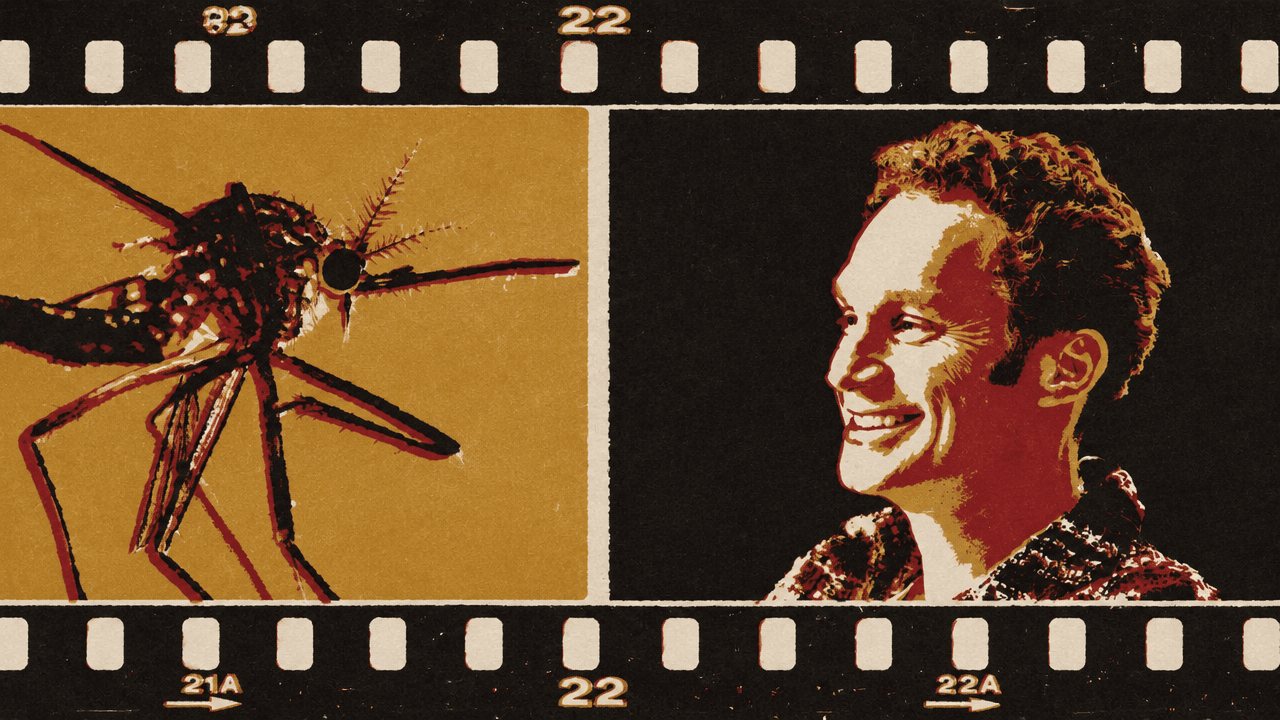
An insecticide may change the behavior it is meant to stop
Mosquito control can have effects beyond killing mosquitoes. Felix Hol says his team has preliminary data suggesting that mosquitoes that survive some insecticides become hyperactive and fly more. Whether that means they bite more people is not yet known, but Hol says increased flying could help them find more people. An intervention meant to reduce disease transmission may therefore alter the behavior researchers are trying to control.
Hol says mosquitoes have become resistant to insecticides after extensive use. He argues that this rapid adaptation should shape efforts to reduce mosquito-borne disease, rather than relying on the next insecticide alone.
We really have to keep that in mind when we're trying to reduce the burden of mosquito-borne diseases.
To study mosquito behavior, Hol’s team at Radboud University Medical Center in Nijmegen built an imaging setup called the “biteoscope.” It uses a skin mimic that looks like plastic to a person but provides key components a mosquito needs to treat it like skin. Mosquitoes can land, walk around and bite into an artificial blood meal while the team records them at high resolution.
The setup lets researchers examine how mosquitoes bite and how often, and ask whether those behaviors depend on infection or on compounds placed on the artificial skin. Hol says lab mosquitoes are available in large numbers and raised under known conditions. But they are not the same as mosquitoes in nature, so the team also works in endemic settings. With permission, researchers collect mosquitoes resting on house walls early in the morning, using a small vacuum, and take them to a field lab.
Hol says the team makes its code and tools open source and uses inexpensive components so others can put them to use. The point is not only to make the biteoscope useful in his own lab: he says the tools work best when other researchers start using them.
The bite’s speed and stealth make it difficult to interrupt
A mosquito finds a person through a sequence of cues. Hol says exhaled carbon dioxide can draw mosquitoes from tens of meters away. The gas activates them; as they get closer, they surge and cast through the CO₂ plume. Nearer the body, they rely more on odors. At closer range, body heat and visual cues become important. Receptors on their feet also let them taste and smell the skin after landing.
When it feeds, the mosquito taps the skin with its proboscis, then slides in a food canal and a salivary duct. The food canal searches inside the skin for a blood vessel. The quickest mosquitoes Hol describes can feed in about 20 to 30 seconds; other species may take a minute or a minute and a half. Speed and stealth matter, he says, because a person may notice the mosquito and slap it.
That feeding process is one reason Hol wants to make mosquito biology observable rather than treating the insects only as a nuisance or threat. A thermal image shown during his explanation displays heat radiating from a human hand and arm, illustrating one of the cues mosquitoes use. Hol also describes how a close look under a stereoscope reveals the facets of their eyes and the scales and hairs on their mouthparts. He says he finds the insects beautiful at that scale.
Understanding the insect can make disease control more sustainable
Hol says mosquitoes have a substantial impact on people, although many things about them remain poorly understood. Of roughly 3,500 species, he says, only about 90 feed on humans. A mosquito can acquire a pathogen when it takes blood from an infected person and then transmit it to another person.
Hol puts annual deaths from mosquito-borne disease at about half a million and says the number is rising. He also argues that these diseases receive less attention than they should because they affect people in Europe and North America less.
For Hol, studying how mosquitoes find and feed on people is part of developing better ways to limit the harm they cause. The biteoscope makes those behaviors measurable under controlled conditions; field collection gives the team access to mosquitoes from outside the lab. By sharing inexpensive tools and code, Hol hopes other researchers can use those methods too.
The goal, he says, is not simply to replace one insecticide with another. He wants to use what researchers learn about mosquito biology to develop strategies that can curb disease spread sustainably. Each finding, he notes, opens many more questions.
We can use everything that we learn about them to come up with strategies that allow us to really sustainably curb the spread.