People Underestimate How Often Attempts at Connection Will Be Welcomed
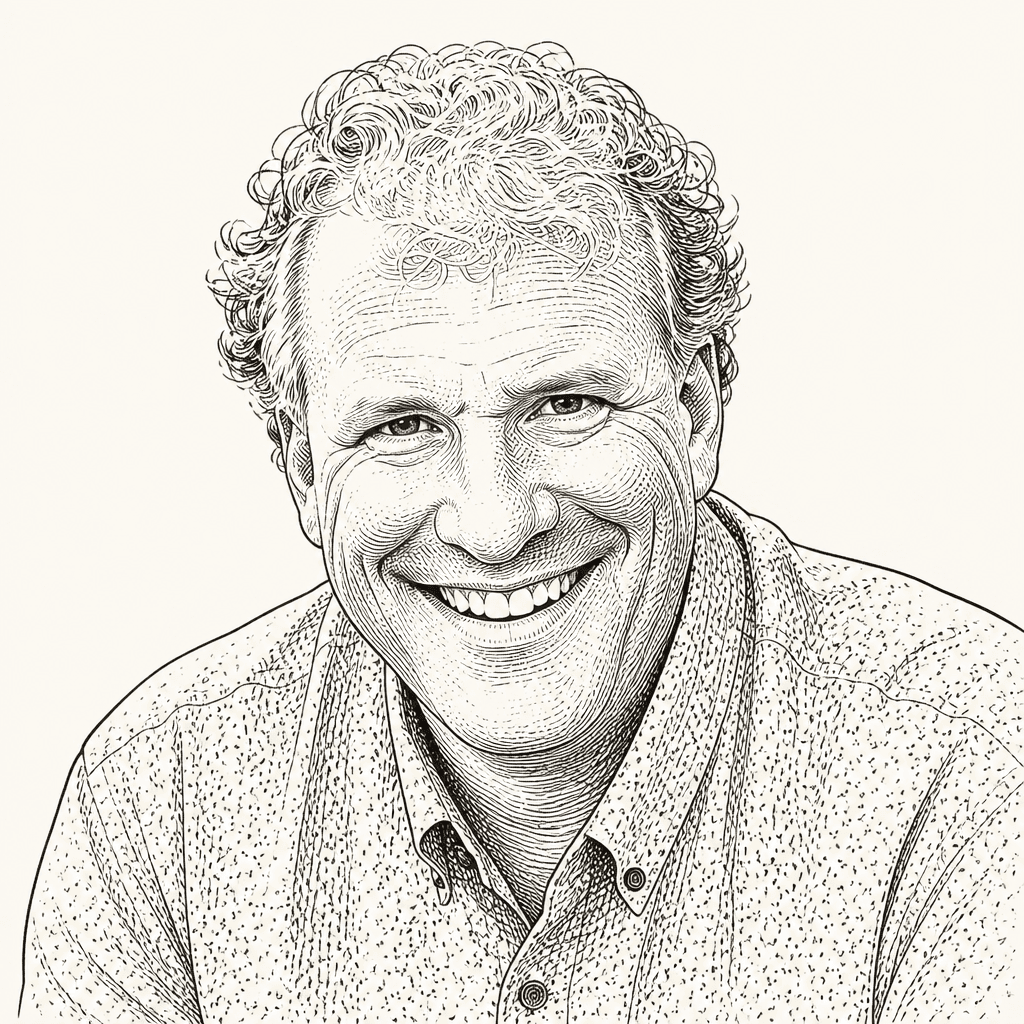
Behavioral scientist Nicholas Epley argues in a TED talk that people routinely avoid social connection because they misjudge how warmly others will respond. Drawing on experiments involving more than 30,000 people, he says this “misplaced pessimism” leads people to skip conversations, compliments, gratitude and offers of support that are usually received better than they expect. His prescription is modest: treat social fear as a forecast to be tested, and when in doubt, reach out.
The forecasting error is the obstacle
Nicholas Epley’s central finding is practical: people often hold back from social contact not because connection is unimportant to them, but because they make overly pessimistic forecasts about how an attempt to connect will be received. They expect the other person may not want to talk, may judge them, or may have little in common with them. In his research, those forecasts are often wrong in a consistent direction.
That error matters because social connection is not merely something that happens to people. It is a repeated choice to approach or avoid: talk to the stranger or remain silent, express gratitude or keep it private, offer support or stay back, be more open in a relationship or conceal what feels vulnerable. If the forecast is too pessimistic, the person avoids the attempt — and then never collects evidence that the forecast might have been mistaken.
Epley calls this pattern “misplaced pessimism.” It is not a claim that every interaction will go well, or that people should reach out in every circumstance. His point is narrower: on average, people tend to underestimate how positively their efforts to connect will turn out. The result is a self-fulfilling social restraint. Someone who believes talking to a stranger will be unpleasant does not talk to the stranger. Someone who assumes a compliment will land awkwardly may not give it. Someone who feels grateful but doubts the value of saying so may leave the gratitude unexpressed.
People's beliefs about social interaction here weren't just wrong, they were precisely backwards.
The paradox behind the finding is familiar. Decades of research, Epley says, show that people are highly social creatures made happier and healthier by connecting with others. Yet ordinary life is full of declined opportunities: people avoid strangers, type instead of talk, remain in small talk rather than going deeper, hold back support, and keep parts of themselves hidden even in relationships where openness would matter.
A small test revealed the gap between fear and experience
The personal version of the problem became clear to Epley on a commuter train to the University of Chicago, where he teaches behavioral science. Passengers were sitting close together for 30 to 45 minutes and ignoring one another. A woman sat beside him, professionally dressed, wearing a stylish red hat he never forgot.
He treated the ride as an experiment on himself. Instead of scrolling or checking email, he would try to turn the commute into a conversation. His immediate reaction was the forecast his later research would study: she probably did not want to talk, she would think he was strange, they would have nothing in common, and he had no good way to begin.
Hi, my name's Nick. I love your hat. I have one just like it.
The opener was ordinary. The outcome was not what he predicted. The woman smiled, the conversation became easy, and they talked about family, work, and hopes for the future. When he stood to leave, she thanked him for taking the time to talk with her.
The editorial point of the story is not that the line was clever or that every stranger wants a conversation. It is the size of the gap between predicted discomfort and actual experience. Epley expected awkwardness. The conversation felt “not just good, but surprisingly good.” That gap became the basis for both a research program and a change in how he approached daily life.
The evidence holds beyond harmless small talk
Epley and his collaborators have conducted well over 100 experiments involving more than 30,000 people of different ages and nationalities. Across contexts, the recurring result is that people expect less connection than they actually experience.
The commuter experiment separated prediction from behavior. In one study, commuters on Epley’s train line predicted how they would feel if they kept to themselves compared with how they would feel if they talked with the person sitting next to them. Their expectation was clear: solitude seemed likely to produce the more pleasant and happier commute.
A second sample was randomly assigned to do one of those things rather than merely imagine it. Some participants kept to themselves; others tried to connect with the person next to them. The results reversed the prediction. Those assigned to solitude reported a less pleasant and happy commute than those assigned to talk.
The next level of evidence moved beyond casual talk. In experiments involving more than 4,500 people, participants had deep conversations with strangers using prompts such as what they were most grateful for or when they last cried in front of another person. Beforehand, people reacted with visible dread. Once the conversations began, Epley says, the difficulty was not getting people to talk; it was getting them to come back. The conversations went better than expected.
The pattern also appeared in discussions across political disagreement. Even when people who disagreed on divisive political issues talked about those disagreements, the conversations went better than participants expected. This was not presented as proof that disagreement becomes easy or that conflict disappears. The claim is about prediction: people misjudge how positive the experience of engaging will be.
A third category extends the finding beyond conversation. When people think of a compliment and then deliver it, recipients feel more uplifted than the complimenters predicted. When people express gratitude to someone they love, recipients feel better than the expressers expected. Random acts of kindness, asking for help, offering support to someone in need, and being open and honest in relationships are, on average, received more favorably than the person reaching out anticipates.
The remedy is to treat social fear as a forecast
The practical response Epley offers is not a personality overhaul. It is repeated testing of pessimistic forecasts. His train rides are now “almost never silent.” He meets people on planes and in cabs. Walking around town, on campus, at work, or in grocery stores has become more pleasant because he has made a habit of keeping his head up, smiling, and saying hello — and receiving more smiles and hellos in return.
The same pattern applies to closer relationships. When he feels grateful, he writes a note. When he needs help, he is less reluctant to ask. When someone needs support, he is less embarrassed to offer it, even if he cannot fix the problem. He says these choices have made him more open and friendlier, changed pretty much all of his relationships, and turned countless strangers into friends or momentary acquaintances. His friendships are better; he thinks his marriage is stronger and that he is a better father.
The change was gradual. He compares it to moving a mountain “one shovel full at a time.” A person changes how they approach others through one small choice after another, noticing where mistaken beliefs are needlessly holding them back and building habits that become part of character. Social confidence, in Epley’s account, grows through accumulated evidence: try a small act of connection, observe the result, and let that result update the next forecast.
The same logic mattered when the stakes were much higher
Epley’s most consequential example is a family decision after loss. Ten years earlier, his wife, Jen, was three months pregnant when they learned that their daughter, already named Sophie, had Down syndrome. Three months later, they learned Sophie had died before birth. They mourned for months.
Jen later asked whether they might consider adopting a child with Down syndrome. Epley frames the question as the same kind of approach-or-avoid choice, but at much higher stakes. He and Jen had already adopted two children, so adoption was not unfamiliar. Still, his first response was doubt: he did not think they could do it, or that he could do it.
The fears resembled the smaller social forecasts, but “multiplied by a hundred or a thousand”: whether they could handle the challenges, whether they could connect with and parent a child who was then a stranger, and how that child would respond to them. His second thought turned to the data — thousands of cases in which people underestimated the joy and connection that came from reaching out. That gave him what he calls “data-driven courage.”
About a year later, Epley and Jen flew to China with their four other children to meet Lindsey, a two-year-old girl with Down syndrome. He says they reached out to Lindsey and Lindsey reached back. At this point the source showed two photos of a young smiling girl with Down syndrome standing among red flowers. The visible text read: “LOVED LOVED LOVED LOVED LOVED.”
He is careful not to romanticize the decision. Raising a child with an intellectual disability is hard — “really hard.” Lindsey is “not just one handful” but “both arms completely full.” Even so, she has enriched and blessed their lives beyond what his pessimistic expectations could have imagined.