The Silent Majority Is Raising the Cost of American Dissent
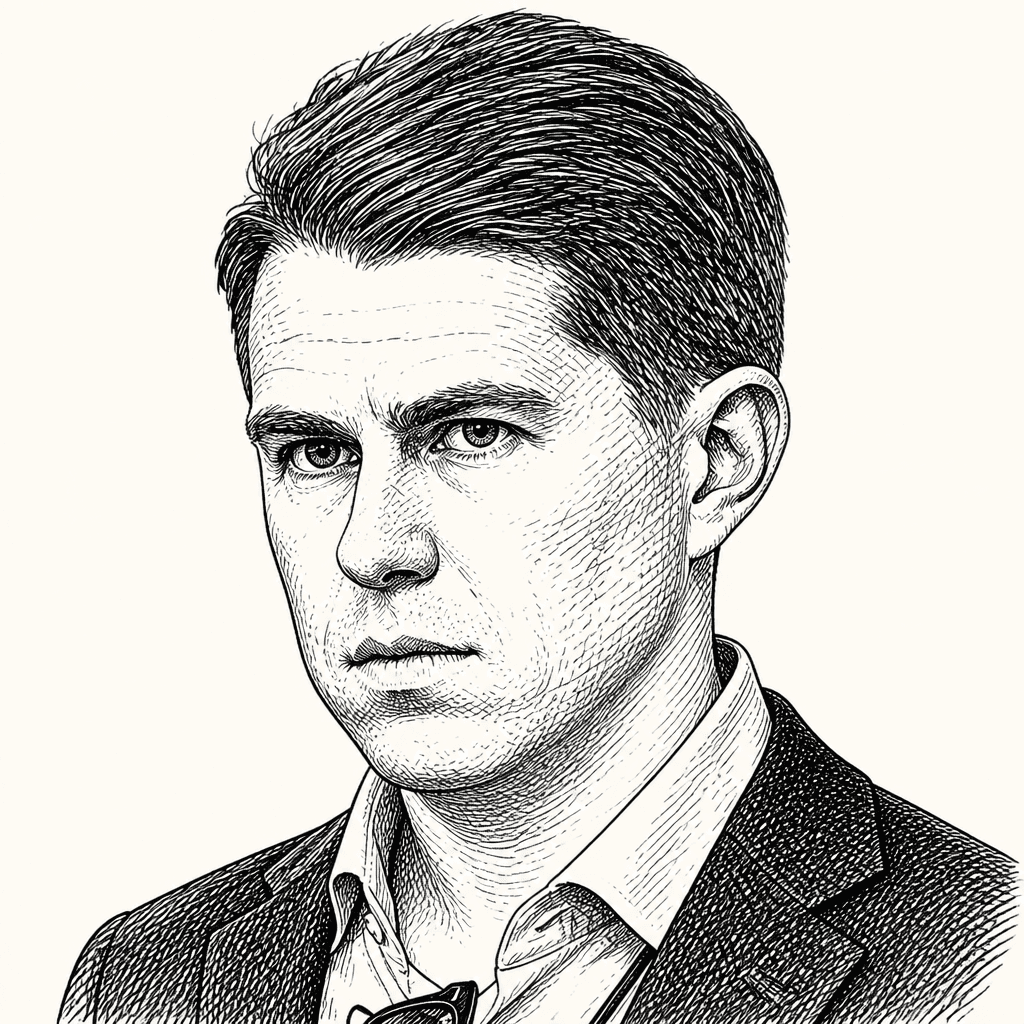
Miles Taylor argues that the rising cost of dissent in America is enforced not only by political leaders, but by citizens willing to punish criticism with threats, doxxing and professional ruin. In a TEDxMidAtlantic talk, the former senior US national security official draws on his public break with Donald Trump and the consequences that followed to make a broader claim: the larger danger is the two-thirds of Americans who self-censor out of fear, allowing threats to decide who speaks in public.
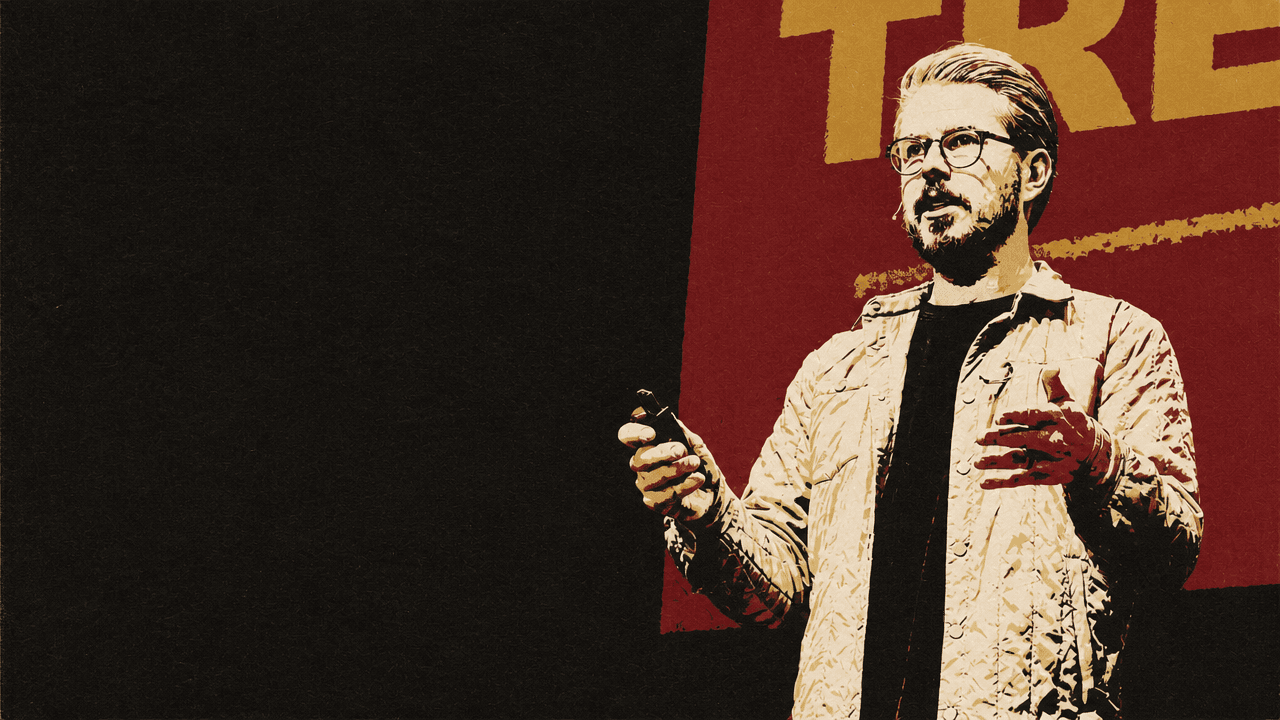
The cost of dissent is no longer an abstraction
Miles Taylor frames the cost of dissent through the consequences that followed his public criticism of Donald Trump. The point is not only that he received abuse. It is that the abuse, as Taylor describes it, became an enforcement mechanism: an effort by private citizens, encouraged by political rhetoric, to make criticism physically, financially and socially unbearable.
The first evidence is deliberately ordinary in its setup. Taylor had been walking his dog, Martini, while his wife was out of town, leaving his phone inside to get away from the buzzing. When he returned, he found hundreds of missed calls from unfamiliar and unknown numbers. The messages ranged from insults to threats. Callers told him that what he was doing to Trump was “disgusting,” that he was “evil,” that he was “a traitor,” that he would be “squashed,” that he should “eat a dick and die,” and that he would be doxxed and unable to walk down the street. One caller said: “You’re anti-American. Leave the country. You’re not welcome here anymore.” Another said he would “deserve the wrath of hell” and “get what’s coming” to him.
Taylor’s response to those recordings is dry — “If you can believe it, those were the nice ones” — but the line sets up the larger claim. The voicemails are not presented as isolated ugliness. They are presented as the personal edge of a civic problem: a political culture in which disagreement is treated as betrayal, and betrayal is treated as grounds for punishment.
His critique begins from inside conservative government, not outside it
Taylor traces his entry into Washington to September 11, 2001. Like many people after the attacks, he says, he wanted to work in government to help prevent such a day from happening again. His first role was at the lowest rung: a page messenger on Capitol Hill during his junior year of high school, delivering envelopes.
Yet he describes that position as giving him “the best desk in Washington DC,” better even than the Resolute Desk, because it placed him at the back of the House chamber, watching Congress in the wake of a catastrophic attack. A photo marks him with a red circle at the back of the chamber during a State of the Union address. What he says he saw then was unity: members of Congress crossing the literal aisle to work on legislation to protect the country.
That origin story matters because Taylor’s dissent is framed not as generalized opposition to a party or president, but as a claim made from inside the institutions he had wanted to serve. He joined the Trump administration in 2017 as chief of staff at the Department of Homeland Security because John Kelly, then his boss, made what Taylor calls “the worst sales pitch” in history: “Miles, it’s not as bad as it looks inside the Trump administration. It is so much worse.”
Taylor says he understood Kelly to mean that experienced people — people who understood government, national security and conservative governance — needed to help “steady the ship” inside federal agencies. In his account, that was the reason he took the job.
What he says he encountered changed his view. In meetings with Trump in the Situation Room, the Oval Office and on Air Force One, Taylor found the president “reckless and impulsive at best.” At worst, he says, members of Congress and cabinet secretaries left the Oval Office “with ashen faces,” saying things such as, “the man is a threat to the fabric of our Republic.”
Taylor makes a distinction central to the argument. He rejects the idea that there was a “deep state” inside the Trump administration. What existed, he says, were people willing to speak truth to power and stop the president from doing illegal things — not people trying to block a lawful agenda.
There was no deep state inside the Trump administration. There were people willing to speak truth to power and prevent the president from doing illegal things.
His frustration was that these concerns were being discussed privately among unelected officials rather than publicly by people accountable to voters. “It was not our job to decide if the president was unfit for office,” Taylor says. “We would not decide if he got reelected in a second term. That’s what you would decide.”
The escalation ladder ran from anonymity to state power
Miles Taylor organizes his own choices around a tension he later makes central to the talk: anonymity can draw attention to an argument, but it can also model evasion at a moment when public accountability matters.
He says he first published anonymously not because he feared owning his opinions, but because he was a student of the Federalist Papers. The founders, he notes, wrote anonymous essays to persuade the public about the Constitution, not because they were unwilling to associate themselves with their arguments, but because anonymity could focus attention on the issue rather than the author. Taylor is careful not to compare himself to the founders. He says he used the same device.
By his measure, it worked: it started a national conversation about the fact that some of the president’s own lieutenants did not consider him fit for office. That conversation, Taylor argues, was important whether people agreed with him or not.
Trump’s response, as Taylor recounts it, was the first major public escalation: a seven-letter, all-caps tweet asking “TREASON?” Taylor draws attention to the question mark. It mattered, he says, because treason is punishable by death in the United States. “At least if there was a question, I had a chance.”
The visual contrast in the talk is blunt. First, the word appears as “TREASON?” — a charge framed as a question. Later, after Trump’s return to power, Taylor says the question mark disappeared.
According to Taylor, Trump subsequently said he wanted the author found and turned in for national-security reasons. Taylor later learned, he says, that the White House gave up the search because lawyers concluded the article was protected First Amendment speech: it was not treason, and they were not going to arrest the author.
By 2020, Taylor says, anonymity itself had become untenable. Staying behind the mask sent the wrong signal: that people could put views into the public square without accountability. Before the election, he believed he needed to “take off the mask,” describe what he had seen in the administration, and let the public decide whether Trump deserved reelection.
Public identification brought material reprisals. Taylor says Trump said at campaign rallies that “bad things” were going to happen to Miles Taylor. Taylor says bad things did happen, and his supporters made sure of it. He had to leave his home on Capitol Hill. He lost the private-sector job he had taken after leaving the administration. He spent his life savings on lawyers, security and other protective measures. On election night in 2020, he says, he was in a safe house in Northern Virginia under armed guard with a pistol under his pillow, because “so many of my fellow Americans believed I should die for criticizing the president of the United States.”
After Trump returned to power, Taylor says, the accusation changed from implication to declaration. In April of “this year,” he received a message from a journalist telling him to turn on the news because the president was talking about him in the Oval Office. Taylor says Trump was no longer suggesting he might be guilty of treason. The question mark was gone. Trump, Taylor says, declared that he believed Taylor was guilty of “the highest crime contemplated in the United States Constitution” — again, a crime punishable by death.
Taylor also makes a separate legal claim about the significance of what followed. He says legal scholars later told him it was the first time in 249 years of the American republic that a president had issued an executive order to investigate one of his critics for First Amendment protected speech. The article does not supply the text of that order or an external legal analysis; the claim appears in the talk as Taylor’s attributed account of what he was told and what he believes the order represented.
He then anticipates the skeptical question: if treason is so grave, why was he not in handcuffs or a jail cell? His answer is that the justice system had not caught up to Trump’s view that criticism of a president is subversive, should be criminalized, and requires a “permission slip.” The important word in Taylor’s sentence is “yet.” The justice system had not adopted that view, he says — yet. But Trump’s supporters, in his account, had already absorbed the signal.
More calls followed. People accused him of going against Trump, warned that “everybody’s on it — and on you,” called him “treasonous ilk,” and said, “We don’t forgive traitorship.” One caller said Taylor and others had “poked the bear” and “woke the sleeping giant.” The message ended: “We’re coming, my man.”
Private threats became family, financial and professional damage
Taylor’s account of the renewed campaign is concrete. The home address he had moved to protect his family was doxxed. Their phone numbers were doxxed. His wife asked whether they would need to sell the house to pay legal fees. The business he had built after 2020, which he says cut checks for 50 people, was destroyed, leaving those people without paychecks.
The hardest part, he says, was not only receiving death threats himself. His wife was threatened. His one-year-old daughter was threatened, and her image was posted online. “That’s not OK,” Taylor says. The family was forced to take legal action against people they had never met.
Even the circumstances of appearing publicly became part of Taylor’s evidence. He says his security adviser did not want him to speak. The reason, he says, is the environment the country is in. The irony, as he states it, is that “a speech about free speech can’t be given in the land of the free without fear of reprisal.”
Taylor does not present his experience as exceptional. He argues the opposite: what happened to him is now “unremarkable.” Similar pressures, he says, are being felt by members of Congress, state representatives, local officials, parks and recreation directors, poll workers and others in public life.
Poll workers, in his description, are threatened with “crowdsourced violence.” Members of Congress are afraid to hold town halls because of constituents on both the left and the right. He gives one data point: when Trump was elected president, Taylor says there were about 1,000 violent threats or death threats per year against members of Congress. By the time Trump left office, he says, that number had risen tenfold to 10,000 per year, and it has roughly hovered there.
Taylor does not say the number alone convinced him. His more vivid data point is “a desk.”
He returns to the congressional page desk from his youth, the one he had treated as a privileged vantage point on a Washington unified against a foreign enemy. On January 6, 2021, he says, that desk was slid from the corner of the House chamber and placed in front of the door as the last line of defense against “a violent mob of insurrectionists.” The accompanying image shows armed security personnel pointing handguns through the broken glass of barricaded doors inside the Capitol.
The reversal is the point. The same desk from which Taylor says he saw cross-aisle unity after 9/11 became part of a barricade against Americans attacking Congress. He says he still gets chills discussing it because of how quickly the world changed.
Taylor also refers, without naming the individuals, to more recent incidents: “the assassination of a top political commentator on the right” and, the week before, “an assassination plot foiled” against the top Democrat in Congress. He uses those references to pose the broader question: who is responsible for making dissent so costly in America?
His answer is deliberately not the one he expects the audience to anticipate. “If you think my answer is Donald Trump, you would be wrong,” Taylor says. “Unfortunately, my answer is you. Or some of you.”
The deeper threat, Taylor says, is not the violent third but the silent two-thirds
Miles Taylor cites a recent NPR survey that, in his description, found one in three Americans now believe political violence would be justified to put the country back on track. Taylor pairs the number with a comparison meant to make the figure feel ordinary and therefore alarming: one in three Americans owns a cat.
He then asks which political affiliation is more likely to hold the view. His answer: neither. According to Taylor, Democrats and Republicans hold that view in statistically equal measure.
The sharper turn is away from the minority willing to justify violence and toward the majority that says it is self-censoring. Taylor cites another recent survey finding that two out of three Americans admit to self-censoring their views out of fear of reprisal. He insists this is not merely a Beltway phenomenon. “It’s you. We’re all doing it. We’re all guilty of it.”
He adds that the same survey found vast majorities of Americans privately agree on many controversial issues — including immigration, abortion and climate change — but are afraid to say so. They are even afraid, he says, to repudiate political violence.
This is the core turn in Taylor’s argument. Responsibility for the high price of dissent, in his view, does not rest primarily with Trump, nor even with the one-third of Americans who think political violence may be necessary. It rests with the two-thirds who remain quiet.
In my opinion, the greatest threat to democracy today is anonymity.
Taylor acknowledges the irony of making anonymity the villain, given his own history as an anonymous critic of the president. But he insists that figurative masks now enable intimidation. When people are afraid to tell the truth, intimidation works.
Lowering the price of dissent means increasing its supply
Taylor ends with an economics metaphor. In a marketplace, he says, supply and demand meet to determine price. If the price of dissent is high, economics offers only two ways to lower it: decrease demand or increase supply.
The first option, in his view, is unacceptable. Decreasing demand would mean reducing the demand for truth, debate and the possibility of reaching agreement on important issues. If one believes in the founders’ vision of America, Taylor says, that is not the goal.
The only acceptable path, then, is increasing supply. In this metaphor, the supply is people willing to dissent openly. “You are the good in that marketplace,” he tells the audience. “We need more dissent. We need people unafraid to step forward and speak the truth.”
The closing question he asks is not simply what is happening in the country. It is whether each person remains anonymous. If the answer is yes, Taylor says, the solution is within that person’s control: “It’s time to take off the mask.”