Peace Deals Need Shared Self-Interest Before Empathy
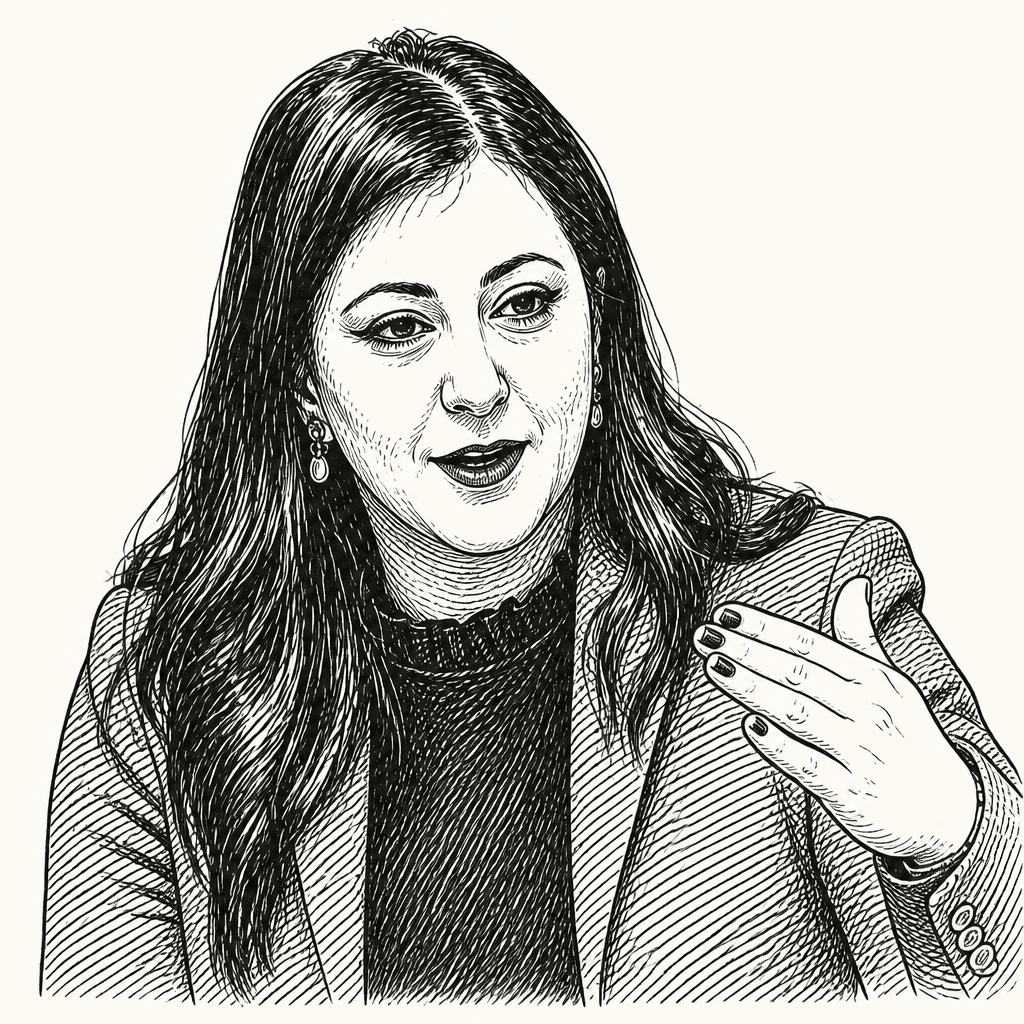
Mediator Hiba Qasas argues that peace efforts often fail because they substitute process and empathy-first dialogue for the legitimacy, incentives, and public trust that make agreements durable. Drawing on her UN career and on a post-October 7 initiative that brought Israeli and Palestinian leaders into collaboration during the war, Qasas makes the case for “principled pragmatism”: start with aligned self-interest, use political transaction to change the future each side can imagine, and let recognition come before any appeal to shared humanity.
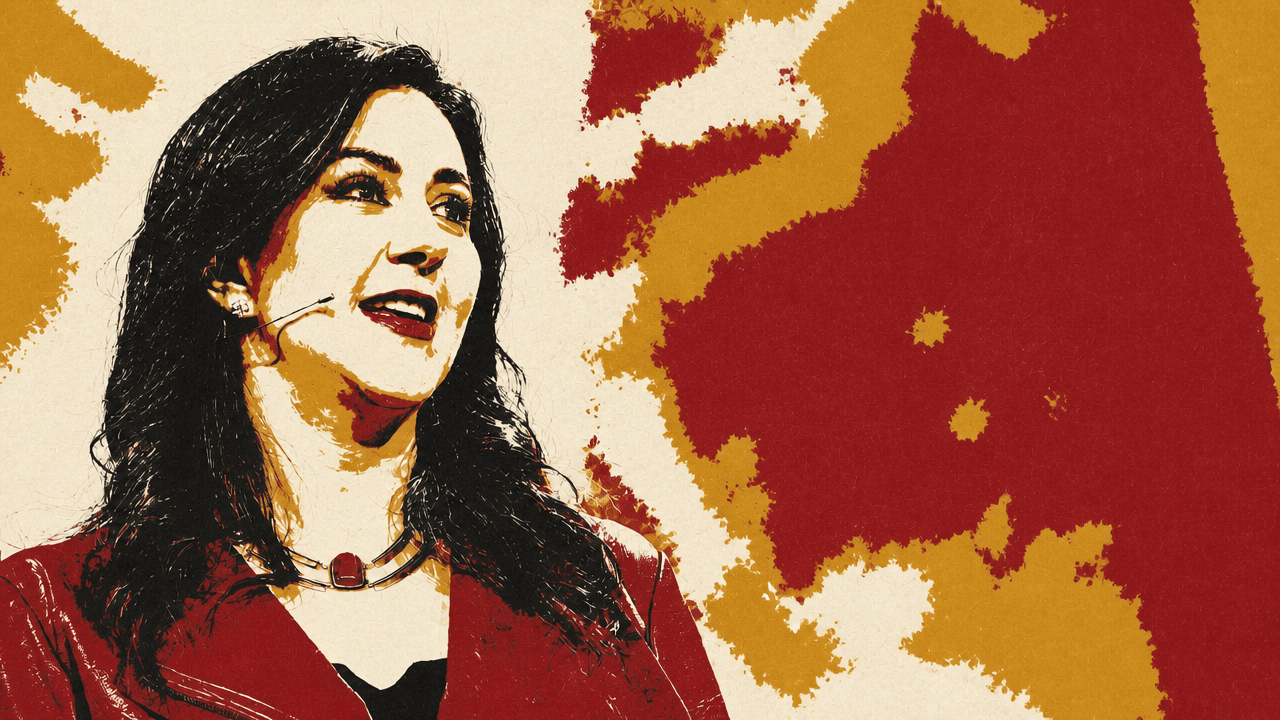
Peace fails when process substitutes for legitimacy
Hiba Qasas frames contemporary conflict in blunt quantitative terms: “One in four people today are living the reality of conflict.” War and violence, she says, are becoming “the reflex, the choice, not the last resort.” Iran is her visible example of how conflict travels beyond borders through energy prices, disrupted trade routes, and political polarization. Even formal endings do not settle the problem: violence often returns within five years of agreements being signed.
Her critique is aimed less at the aspiration of peacebuilding than at the way it has been professionalized. After an international career with the United Nations, Qasas saw a familiar Western liberal model become a routine: bring in mediators and peacebuilders, convene dialogues, push elections, train police, fund stabilization, add women and youth to satisfy inclusion requirements, produce reports, repeat. She does not dismiss that work as useless. Her point is that it can mistake process for progress.
What is often missing is the political basis that lets peace survive: legitimacy, aligned self-interest, and public backing. Afghanistan is her sharpest example. After 20 years of vast intervention and investment, “the story ended exactly where it began. Taliban to Taliban.” In the Middle East, she describes tens of millions of people living amid “unfinished business” from wars, failed political settlements, and occupation.
The reason peace breaks down, in her diagnosis, is not primarily ideology. It is power politics and incentives. For the broader public, it is legitimacy and trust. Legitimacy is not an abstract endorsement of an agreement; it is a felt experience of governance. It is whether people trust the police, whether children can walk safely to school, whether dignity is preserved. Without those conditions, a peace agreement becomes “a lid on a boiling pot”: calm on the surface until pressure finds the weakest point.
Principled pragmatism begins where empathy cannot
Hiba Qasas founded the Principles for Peace Foundation after becoming, in her words, “fed up with the bureaucracy, with the system, with its toolbox.” The foundation draws lessons from dozens of countries and develops principles, tools, methodologies, data, simulations, AI support, and political dialogue infrastructure for people trying to make peace durable.
She calls the approach “principled pragmatism.” It is her answer to a world where “might is right again,” power politics has returned, and transactionalism is fashionable. The alternative is not to counter power with idealism. It is to use self-interest without surrendering principle.
Principled pragmatism is self-interest with a spine.
That emphasis is also personal. Qasas says she recently became Swiss but was born and raised Palestinian, and that people often expect her to begin with victimhood, moral argument, or pain. She does not deny pain. Her point is that pain is often not a usable entry point in conflict. When identities are shaped by loss, violence, and victimhood, othering becomes normal, dehumanization becomes reflex, groupthink becomes shelter, and violence becomes currency.
Her own early experience with dialogue made her skeptical of empathy-first models. At 19, she joined the kind of program international peacebuilding often celebrates: young Israelis and Palestinians taken to a pleasant retreat, encouraged to share feelings, build empathy, hug, and eat hummus. She hated it — not because she rejects empathy or hummus, but because nothing changed when she went home. The reality remained hard, unsafe, complicated, and beyond her control. Months later, the second intifada began. People she had sat with were back in uniforms fighting in Palestinian towns. She lost friends, her house was destroyed, and she lost hope.
The lesson is not that empathy is false. It is that empathy is rarely the first bridge in conflicts where identity and survival are organized around loss. “Empathy for the other side is rarely the entry point,” she says. In her model, humanity comes later.
The hardest room had to start with self-interest
For nearly two decades, Hiba Qasas worked with people affected by conflict while avoiding work on her own. October 7 and the expansion of the war in Gaza changed that. If she believed her own professional argument, she says, she had to bring Israelis and Palestinians into “the hardest room” of her life.
That room began weeks after October 7, while war was raging and loss and trauma were overwhelming. Seventy-six people sat down: Israeli and Palestinian leaders, but not the standard peace-process participants. They included security leaders, business leaders, investors, political figures, journalists, and “serious operators.” They arrived carrying decades of grievances and immediate losses. No one trusted the room, the process, each other, or her.
In that setting, beginning with the word “peace” would have failed. Instead she named the hard premise: both peoples were there out of urgency and responsibility for their own people because the status quo had delivered neither security to Israelis nor dignity or an end to occupation to Palestinians. They were at an inflection point: either break the cycle or condemn both peoples to ongoing loss, trauma, insecurity, and occupation.
The group did not try to find common ground in national or historical narratives. Qasas says there was none to be found in the past. The work focused instead on what each side could not afford to lose: security, dignity, and a future for their children. Her formulation is blunt: common ground does not begin with moral agreement. It begins with self-interest.
She names the sequence STIR: self-interest, transaction, recognition, humanity. The acronym is deliberate. Without stirring the room, positions simply sit next to each other. As she puts it, chickpeas, tahini, and lemon juice placed side by side do not make hummus.
Recognition follows aligned interest
For Hiba Qasas, the central move is sequencing. Recognition does not have to be denied, but it cannot be assumed at the start. Her order is self-interest, transaction, recognition, and then humanity. First comes the shared conclusion that the status quo is unsustainable because it delivers neither security to Israelis nor an end to occupation to Palestinians. Then comes the transaction: a political solution within a regional framework.
For Palestinians, Qasas says, that means an end to occupation and a non-militarized Palestinian state side by side with Israel. For Israelis, it means security and a pathway to regional integration rather than isolation. The common ground is not a shared interpretation of the past, but a shared stake in a different future.
That framework became the Uniting for Shared Future Coalition, which Qasas says now includes more than 550 Israeli and Palestinian leaders — “realists and possibilists” — working together during the war to push for a political solution. Its design reflects the distinction she draws between the grassroots and the “grasstops”: not the already convinced, but persuadable people with influence over power, politics, and the economy.
The coalition’s work included joint advocacy, from engagement with heads of state to briefing the UN Security Council with a shared message. The change Qasas emphasizes is not instant consensus. It is that Israelis and Palestinians who did not see eye to eye began “to speak about the future in the same grammar.” Trust began to grow in the coalition, in the process, and in one another.
Recognition came after the transactional work, not before it. Qasas says she watched Palestinians and Israelis recognize one another’s losses, stop dehumanizing the other, and stop relativizing pain. That is what she says STIR made possible: not a sentimental shortcut to humanity, but a sequence in which aligned interest creates the conditions for recognition.
She is careful not to present this as a resolution of present realities. Both peoples remain trapped in deep insecurity and feel existentially threatened. Palestinians, whom she calls “my people,” continue to live with occupation, settler violence, devastation in Gaza, and the threat of annexation in the West Bank. The wider Middle East, in her account, is at a crossroads: remain locked in confrontation — “same wars,” under different names — or move into a new political, security, and cooperation framework.
Her claim is that the Israeli-Palestinian conflict remains the key fault line fueling radicalization, and that the region cannot move into a new logic unless that conflict is resolved.