Foraging Turns Familiar Neighborhoods Into Places of Food and Belonging
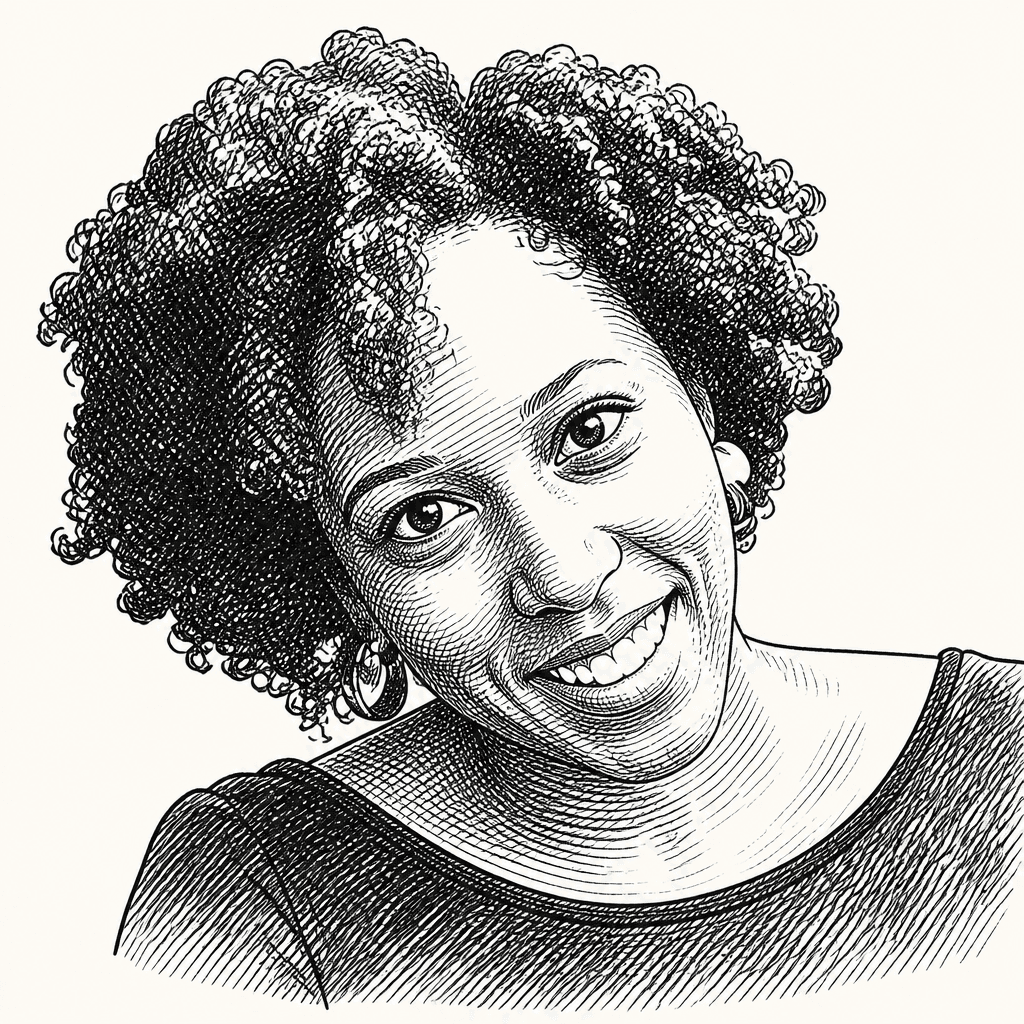

Forager and educator Alexis Nikole Nelson argues that learning to identify and gather wild food is also a way to pay closer attention to the places where people live. In a TED conversation, she makes the case for starting small and harvesting carefully, while connecting foraging to food access, the history of who has been allowed to gather, and the choices involved in how food reaches the table.
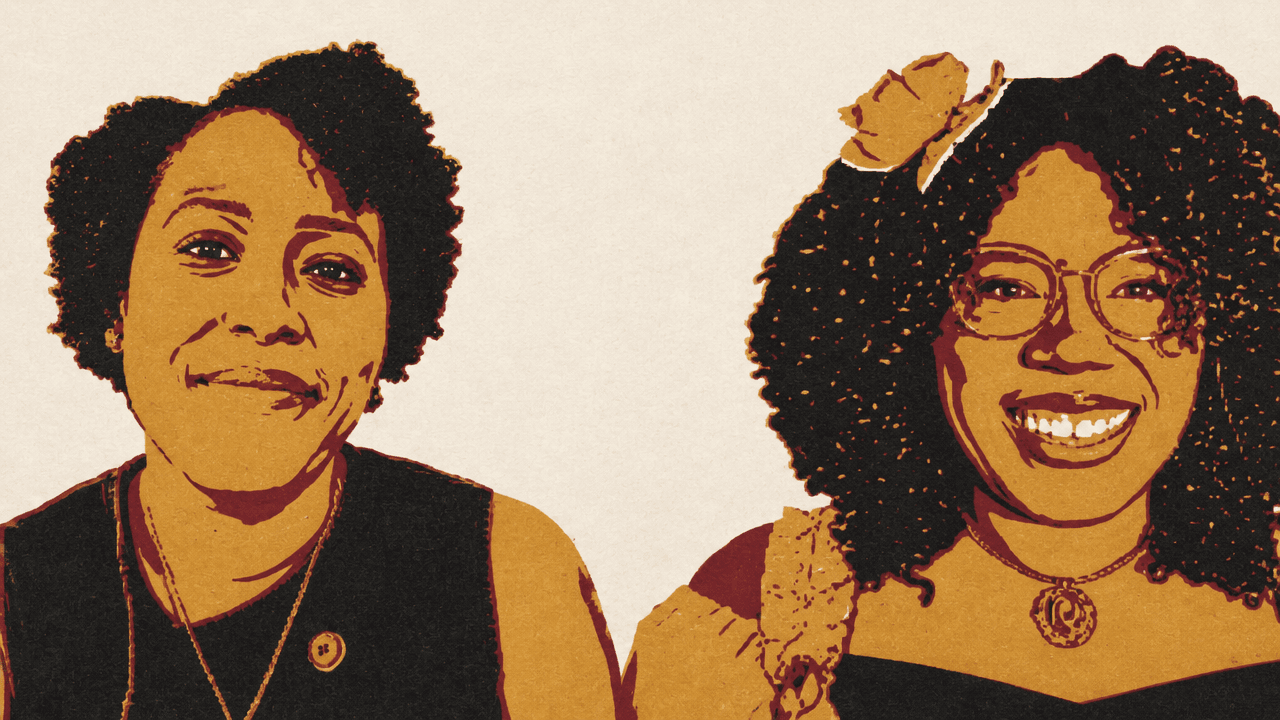
Foraging begins by learning to see
Foraging, as Alexis Nelson defines it, means properly identifying, gathering and using wild plants, nuts, seeds, fruits and fungi. Some people forage for food; others forage for medicinal uses. Identification and knowing how to use what you find are part of the practice, not optional details.


The practice can begin with a single plant. Nelson pushes back against the idea that beginners must quickly acquire the knowledge of experienced foragers. She knows people who look forward to lilac season, gather flowers growing in their neighborhoods and make lilac sugar with their children. That, she says, makes them foragers. The point is not to know everything, but to stay curious about some things.
Starting small matters because foraging asks people to change how they look at familiar places. Nelson says the hardest part is often not finding food but learning to see it. After a day spent absorbing information at a screen, she describes foraging as a shift into a different mental state: pausing, tuning in to the place and letting details register. It means grounding yourself where you are rather than moving through the landscape as if it were background.
She teaches this through a “Noticing Game” on plant walks. Participants close their eyes, take a few deep breaths and listen to the sounds around them. Then they open their eyes and examine one plant, naming what they observe. At first, people tend to classify broadly: if it is big, it is a tree; if it is medium, a shrub; if it is small, a plant. The exercise is to keep looking closer. A stretch that seemed to be all grass may include broadleaf plantain and white clover.
Nelson describes the game as a way to warm up the attention that everyday hurry makes easy to neglect. Participants begin with the broad category, then “zoom in a little” and keep noticing more. The practice can feel meditative, she says, particularly for someone whose mind does not settle easily during conventional sit-and-be-quiet meditation. It is not necessary to be on a remote trail: the walk might go through a wooded area or a grassy field near a school.
That attention can extend beyond the walk. Learning the names and uses of plants makes a neighborhood feel more familiar; knowing plant and animal neighbors can create a sense of belonging similar to knowing the people who live nearby. For Nelson, that connection carries an obligation as well as a pleasure. People who feel good about where they live, she argues, take better care of it. Even in a city, nature is present, and people remain part of an ecosystem.
Nelson’s advice to beginners is simple: “You don’t have to know everything. You just have to be curious about knowing some things.”
Following food from ground to kitchen changes the experience
Nelson traces her interest in foraging to her mother’s garden in Cincinnati. As a child, she asked about the plants her mother had cultivated and learned not only their uses but also what could be done with weeds that appeared on their own. The idea that a child could find food in a lawn, even though no one had planted it, seemed astonishing. She kept collecting plant knowledge from her mother, teachers and camp counselors.
Her father’s interest in cooking gave that knowledge another direction. Nelson grew up between books about plants and a kitchen where food was made, and wanted a book that joined those interests. Happy Snacking, Don’t Die is intended to help readers move from identifying a plant to using it in the kitchen without making either step feel inaccessible. She describes it as a guide for someone who wants to learn about plants and a cookbook for someone who wants to experiment with them.
That combination responds to a gap she felt when she was growing up. Nelson read books such as Euell Gibbons’ Stalking the Wild Asparagus and later checked out many plant books from the library. As she got older, she wanted more books that brought together what she calls the studious side of learning about plants and the curious side of trying them in recipes. She hopes her book can guide someone through the first time they forage, then leave them able to repeat the process and perhaps develop household recipes of their own when a plant comes into season again.
The recipes are meant to be attainable as well as varied. A beginner might make quick-pickled purslane by massaging salt and spices into the stems. Someone ready to spend more time in the kitchen might make rose-water baklava. Nelson says some foraging cookbooks she encountered were beautiful but included recipes that required equipment she did not have, even if she had found the foraged ingredient. She wanted readers to be able to cook what they gathered with the tools available to them.
For Nelson, a recipe can also carry a memory forward while changing what goes into the dish. One of her favorites revisits the crab cakes she loved as a child at Lindsey’s, a small family-owned restaurant her family stopped at on the way to Cape Cod. Nelson is now vegan, and the restaurant closed shortly after the pandemic shutdowns. For the book, she tried to reconstruct the dish from memory, using chicken of the woods in place of crab.
The broader reason to reconnect with food, Nelson says, is that many people are far removed from how it is produced. A piece of food may pass through tens or hundreds of hands before it reaches a plate. She connects that distance to a loss of knowledge and to a feeling of fragility: food recalls can make people suddenly check lists on their phones to avoid bringing home something that could make a family member sick.
Foraging does not, in her view, replace grocery shopping or solve food-system failures. Its particular value is that the person who gathers a wild ingredient can be present through the whole process: finding it, bringing it home and preparing it. Nelson says there is a good feeling in being the entire footprint of a piece of food. The experience can make food less abstract and prompt questions about where it comes from and the people involved in producing it.
She describes recent recalls as a sobering reminder of how fragile the food system is, though she does not expect them to turn everyone into an avid forager overnight. In fact, she says she would not want people to rush into the hobby without taking safety seriously. One alternative she suggests is buying some vegetables at a farmers market rather than getting all of them at a large chain supermarket. Nelson sees that as a way to support the community and reduce the footprint of what she eats, and says it often does not cost more.
She also wants people to consider the labor behind food. Nelson says that beginning to forage can make people less likely to take for granted the work required to get food onto the table, including the labor practices on large industrial farms. She asks people to consider whether human suffering is involved in what they eat. The question does not prescribe one answer for everyone. Nelson is vegan, but says she knows not everybody needs to be. She would rather spend time canning and preserving fruit while it is in season than rely on labor she considers mistreated to eat strawberries in winter.
Her aim is not to make those decisions for other people. She wants them to have more information about food access and its origins, so they can decide what works for them. In that sense, gathering is one point on a wider continuum of choices: learning where food comes from, noticing what is in season, choosing a farmers market, or preserving fruit for later.
Harvesting less is part of knowing how to forage
The act of gathering is not automatically responsible just because the food is wild. Nelson says the problems she sees with overconsumption are almost always connected to commercial incentives: a household generally does not need enough of one plant to wipe out a patch, but the incentive to gather a few more pounds for extra money can change the scale.
She points to ramps, a wild onion prized by fine-dining restaurants in spring. Nelson lives in Central Ohio, which she describes as part of the ramp belt. She says people sometimes arrive with trash bags, take large quantities from public land and transport them partway across the country for restaurants in another region. That is the kind of demand that concerns her: a plant gathered in one place becomes a menu feature elsewhere, while the consequences of taking too much remain with the local patch and the people and animals that depend on it.
Gathering for household use, she argues, tends to make future consequences more visible. If a person takes too much, what will remain for next year, for their children or for future generations? The more plants a forager learns, the less reason there is to rely on one prized species. Familiarity with a wider variety of local plants can also reduce the impulse to treat a particular patch as something to claim.
Nelson’s rule to “never take the first” means first confirming that the plant or fungus is growing in more than one place—not harvesting the first specimen encountered. If a forager pulls up a ramp and sees no others, she says, they may have taken the last one in that area. Once a wider presence is established, take so little that another person would not notice harvesting had happened. Nelson says she regularly stands up and looks back at a spot to check whether her gathering is visible. If it is, she considers that a sign she has taken too much. If getting the amount she needs means covering more ground, she says, that is what she should do.
Nelson connects this restraint to Indigenous practices around the world that, she says, also encourage care when harvesting. Her own rule is practical as well as ethical: none of us is more important than the ecosystem we live in. A forager who learns to value the variety around them, she says, is less likely to feel territorial about one find. Restraint is not separate from the skill of foraging; it is part of learning what a harvest means beyond the amount carried home.
Identification and site knowledge both matter for safety
Nelson’s safety rule is absolute: she does not eat anything unless she is 100 percent sure what it is. If she has even a little worry, she will not eat it. She may bring home a piece to compare with a book and do more research, but she does not treat uncertainty as something to overcome by trying a bite.
That caution includes checking for dangerous look-alikes. Ramps, for example, can be confused with lily of the valley, a poisonous plant that emerges at a similar time. Nelson says she has friends who became sick after gathering and cooking lily of the valley by mistake. There is always another season to try a plant, she says; there is no need to hurry. The pressure to make an exciting find is a reason to pause, not a reason to lower the standard for identification.
Correct identification is only one part of the safety question. Foragers also need to understand the place where a plant is growing. In a yard, Nelson advises checking whether herbicides or pesticides have been used recently. She cautions, though, against assuming that a past application means a site is unusable forever. When people tell her former owners used glyphosate, she says she asks how long they have lived there and tells them that glyphosate has a half-life of 30 days in soil with microbes. That is Nelson’s explanation, not a blanket guarantee that a particular site is safe to forage. She says excessive caution can also prevent people from ever participating; her advice is to investigate and learn more rather than assume.
Some sites are a clear no for her. Nelson avoids golf courses and the areas directly around them because of the chemical maintenance required to keep them pristine. She also advises against foraging at Superfund sites, including places where parks have been established as part of remediation. As foragers move into more complex environments, site assessment requires more knowledge. Freshwater plants bring questions about runoff and chemical spills upstream. Nelson says she uses the EPA’s reported-spills website to check.
Apps can help with learning, but Nelson warns against treating them as the final authority on whether something is safe to eat. She recommends iNaturalist for identifying plants, fungi and animals. Users can log sightings that may contribute to citizen-science work in their area, and universities or research institutions may ask permission to include those sightings in their data. Other users, including experienced foragers and botanists, can confirm an identification or narrow it to a broader category when a photograph does not show enough to establish the species. The app’s map also lets users see observations made nearby.
She also recommends Foraged, an app developed by her friend Jesse, who contributed plant and fungi photographs to her book. It includes entries for forageable species and information about when they are in season in different regions. Nelson describes it as a resource that can grow over time, like a book with additional pages added. Neither app replaces careful identification and site knowledge. Foraging is something to do at one’s own pace; bringing something home does not create an obligation to eat it that day.
Access to wild food has a history
Nelson’s argument about foraging reaches beyond individual habits to the history of who has been able to gather food. She says the United States’ food system has made seasonal and local eating harder by creating expectations of year-round availability. Strawberries in winter and tomatoes in every season mean food travels farther, adding what she describes as a substantial carbon footprint. She also links the growth of large farm conglomerates to the loss of family farms and to the possibility that problems can fall through the cracks in large-scale production.
The distance from wild food, she argues, has also meant losing parts of food culture. Nelson points to poke sallet, cooked pokeweed greens that she says were important in the American South to Black, Indigenous and white families. Canned poke was available until roughly 20 or 25 years ago, she says. Small canneries depended on people gathering the plant and bringing it in for payment. She questions how those businesses could compete with large companies able to sell at lower prices through scale. In her account, the disappearance of a product from store shelves is also a loss of a route through which local knowledge and a regional food could reach people.
Nelson also describes a political history of access. In her account, early ideas of the commons in the United States allowed people without land to gather food on land belonging to the Crown or other members of royalty. She stresses that the people imagined as beneficiaries were not everyone: the phrase was “the common man,” meaning white men, not women or people excluded by race.
Nelson says that after emancipation in the mid-1860s, many Black people in the South relied on foraging, hunting, fishing and trapping because, as she describes it, they had been forced to subsist on scraps while enslaved. Newly freed people who had learned to support themselves did not necessarily want to return as sharecroppers to the plantations they had left. She says laws around foraging began to shift as plantation owners sought to prevent those people from gathering free food on their land. Nelson describes the changes as beginning in South Carolina and rippling outward. She says trespass had been treated as a civil offense and that landowners pushed for restrictions in response to the prospect that freed people could gather food rather than work as sharecroppers.
Nelson says those restrictions subsequently affected poor white workers and Indigenous people as well. When someone objected that the laws affected everybody and therefore were not about race, she responded that restrictions that began as racial exclusions can come to affect other groups too, particularly where racism and classism overlap. Her point is that the changes helped sever people from knowledge and food practices that had mattered in their lives. The history also complicates the idea that access to wild food has ever been equally available: as Nelson puts it, it remains easier to be a forager if you are a rich landowner.
That history shapes how she thinks about the modern appeal of “clean eating.” She says it is striking to see a fancy grocery store sell bunches of dandelion leaves for seven dollars when people may be able to gather them in their neighborhood. But she is also wary of foraging becoming another commodity. When harvesting shifts from feeding oneself and one’s household to making a profit, she argues, it can become poaching.
The access question is not abstract for Nelson. She says she lives in a food desert in a historically poor, historically Black neighborhood, without a grocery store or pharmacy in her zip code. She describes being unable to pick up a prescription there when her psychiatrist was trying to write one she could collect locally. For her, it matters that neighbors, including children, ask what she is gathering and whether they can try it. She sees that interest as part of a community having some say in its food and where it comes from—a form of food sovereignty.
She also distinguishes that concern from the way “clean eating” is often discussed. Some foods promoted as clean or whole are expensive when bought in stores or subscription boxes. Nelson says people who speak most loudly about clean eating may not be the people suffering most from a food system that leaves neighborhoods with limited access. She wants people in her community to have knowledge of foods that are free and good to eat, rather than having food choices determined entirely elsewhere.
Seasonal food asks people to accept its limits
Nelson hopes foraging will become more familiar across people’s lives, including in schools, restaurants and family traditions. She points to friends in Helsinki who forage for chanterelles as a family in summer and fall, and to acorn harvesting in Korea. Acorns may be brought to factories to be processed into starch for dotorimuk, or acorn jelly, or prepared from scratch at home. These examples show different ways a food practice can be carried: through family gathering, local processing or home cooking.
She credits her Montessori elementary school with helping her value stewardship of the natural world rather than trying to bend it to human convenience. She hopes more children will encounter foraging early and carry that attention into adulthood. For her, a strong food culture is not only about knowing which plants can be eaten; it is also about noticing seasons and recognizing that people live within an ecosystem.
A stronger local food culture, she says, would require different expectations. A restaurant using local, seasonal ingredients may run out of a persimmon sorbet near the end of its season. A dish someone heard about may no longer be available by the time they arrive. Instead of treating absence as a failure, Nelson suggests looking forward to the food’s return. That expectation contrasts with a food system in which almost anything can be made available year-round, but only by moving it farther from where it is grown.
Nelson also offers a striking example of an invasive plant with an unexpected use. She says the best perry she has made came from Bradford pears. But she explicitly rejects that as a reason to plant the trees: she describes them as invasive in her area, says they smell bad in spring and are weak in storms, and notes that planting them is illegal in Ohio and some surrounding states.
Nelson is drawn to Japan’s cultural calendar of 72 microseasons, each associated with a short haiku describing plants coming into season and how animals are behaving. She imagines people everywhere having something similar for their own regions: a shared way to notice what is changing nearby. Such a calendar would make seasonal shifts legible, not just as a limit on what a restaurant can serve, but as part of how people experience where they live.
Foraging does not require everyone to become a full-time gatherer. Nelson’s invitation is smaller: begin with one plant, learn to identify it, understand where it grows and notice when it comes into season. That attention can make familiar places feel different and bring questions of food, labor, access and stewardship into view.