Childhood Technology Should Face a Safety Burden Before Mass Adoption
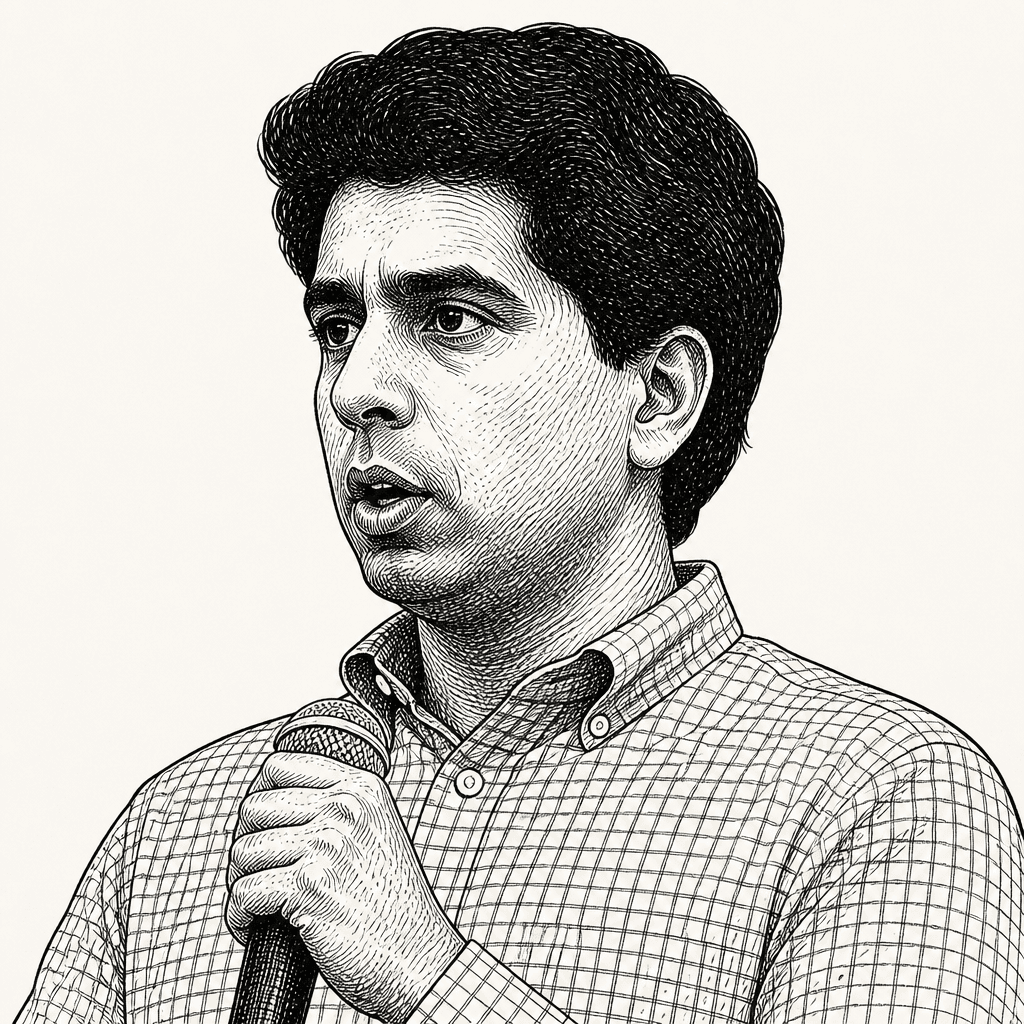

In a 2026 TED talk, social psychologist Jonathan Haidt argues that childhood technology should be governed by “technoskepticism”: companies should have to prove their products are safe for developing minds before they enter children’s social lives, classrooms, or relationships. Drawing on his view of humans as an “ultrasocial” species, Haidt says smartphones, school devices, and AI companions threaten the embodied attention and dependence through which children learn, bond, and mature.

For children, the burden of proof should move to the companies
Jonathan Haidt argues for “technoskepticism” as a burden-of-proof standard for childhood technology. The point is not to reject technology in general. It is to stop letting companies push products into children’s social lives, classrooms, and relationships before showing that those products are safe for developing minds.
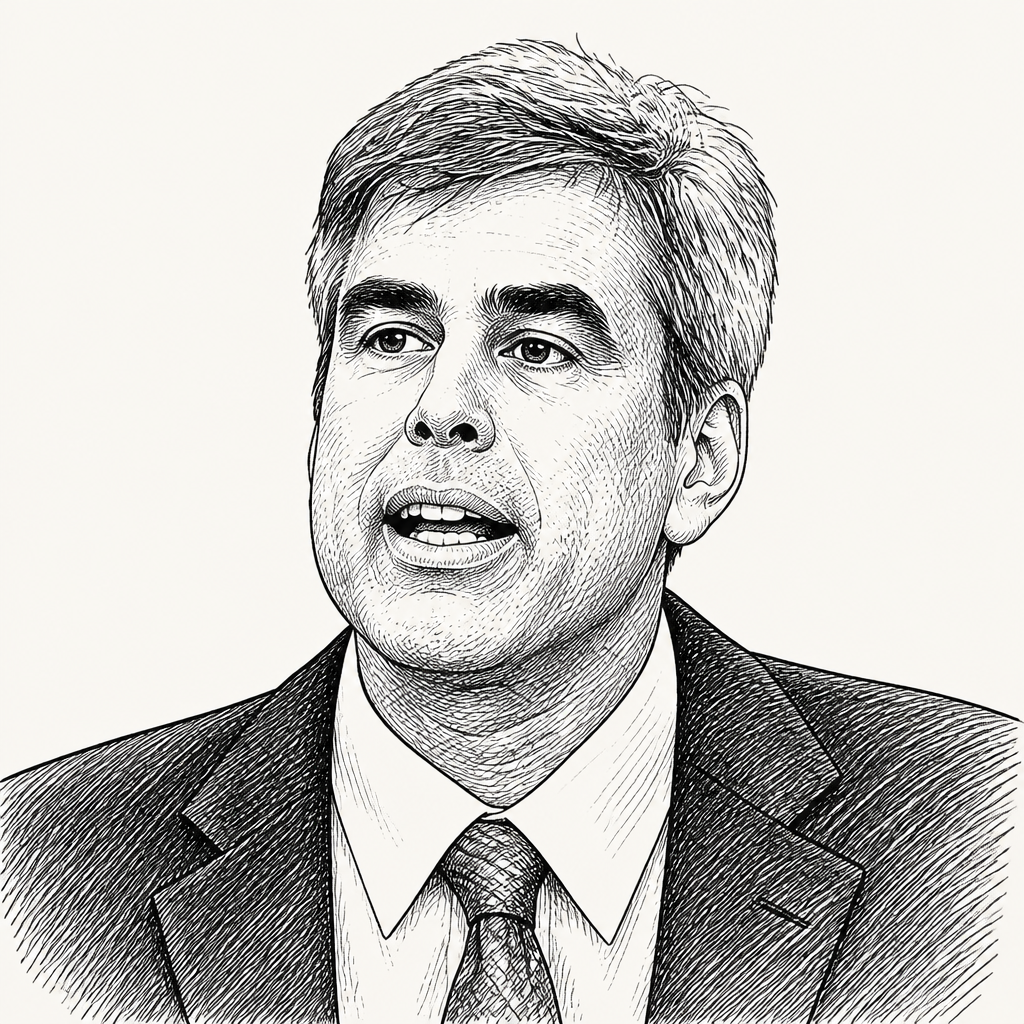

Technoskepticism means that from now on, we put the burden of proof on them.
Haidt frames the standard by analogy to other potentially dangerous consumer products: prove safety before mass deployment, and face responsibility for safety lapses. His claim is not that every digital tool is harmful in every context. It is that childhood is a developmental period, and the default for developmental systems should be caution rather than market access. “When it comes to children,” he says, “these companies have earned our distrust.”
The developmental premise is that children are not merely individual consumers with preferences to be optimized. They are members of what Haidt, drawing on E.O. Wilson, calls an “ultrasocial” species. Humans are not only social like dogs or chimpanzees; they are ultrasocial like bees and ants, capable of deep division of labor and “one for all, all for one” coordination. Human hives, in Haidt’s phrase, are not made of wax. They are made of shared culture and shared experience.
That premise determines the standard by which he judges childhood technology. Durable bonds are formed through bodies, shared attention, and mutual dependence. Eating together, shared laughter, moving in synchrony, and touch are not incidental to social life; they are part of the bonding machinery he wants protected. Technologies that displace those conditions are therefore not neutral delivery systems.
The three rules he puts on screen function as a policy checklist for parents and legislators:
| Rule | Haidt’s formulation |
|---|---|
| 1 | Protect brain development through puberty, at least |
| 2 | Prioritize people and books in education, not screens |
| 3 | No artificial relationships for minors |
Social media replaced embodied bonding with a phone-based childhood
Social media is Haidt’s first target because he sees the smartphone transition of the early 2010s as the beginning of a “phone-based childhood.” Teenagers traded flip phones for smartphones, and their social lives moved onto social platforms. What initially looked like more connection became, in his telling, a shift in kind: quantity pushed out quality, and adolescents spent less time together in person.
The loss was not only the number of hours spent offline. It was the loss of much of the embodied experience through which an ultrasocial species bonds. When adolescent life moved online, teens across the developed world lost many of the settings where bodies, voices, shared attention, and physical presence do the work of connection.
Haidt ties that shift to rising loneliness and anxiety in many countries at the same time. He emphasizes that the evidence is no longer only historical correlation. He cites “multiple lines of evidence” that social media is causing harm at industrial scale. One line is experimental: when people, usually adults or young adults, are randomly assigned to greatly reduce social media use for at least a week, their anxiety and depression decrease. One of those studies, he notes, was conducted by Meta.
But he now thinks his own earlier emphasis was too narrow. In “The Anxious Generation,” he focused on mental-health outcomes because that is where the best data were available and where research attention had been greatest. He now believes that framing understated the damage. The larger harm may be the diminishment of the human capacity to pay sustained attention.
The dominant activity on those platforms, he says, is watching very short videos. Young people call it “brain rot,” a phrase Haidt treats as funny but possibly literal in developmental terms. Adolescence is a period of neural remodeling: the child’s neural network is rewiring into an adult one, and that process is shaped by repeated daily activity and by what the peer world marks as prestigious.
That is why he calls puberty “the worst possible time” to be on social media. The adolescent brain, in his view, should be guided by large amounts of real-world social interaction, not by TikTok’s algorithm. The resulting policy rule is to protect brain development through puberty, “at least.” Haidt ties this directly to age-gating social media, urging countries to follow what he describes as Australia’s example and raise the age for opening social media accounts to 16. Later, he adds that more than a dozen countries have already committed to following Australia’s example.
The education problem is the open internet on every desk
Haidt’s objection to education technology is most precise when he distinguishes narrowly useful tools from internet-connected devices that function as entertainment systems. He is not denying that educational technology can be valuable. His own children, he says, learned a lot from Sal Khan’s Khan Academy. His concern is with “one-to-one device” policies: the routine placement of computers or tablets on students’ desks.


Computers and tablets, as deployed in schools, are not just instructional machines. They are multifunction entertainment systems. If students can reach the internet, they can play video games, watch short videos, watch YouTube Shorts, and access pornography. When one-to-one devices entered schools in the 2010s, Haidt says, national test scores began dropping in the United States and in many other countries, especially those that most firmly embraced educational technology.
He does not claim he can prove that screens and apps caused those declines. Instead, he points to Sweden as a cautionary case. Sweden, he says, led the world in digitizing education in the 2010s: it removed textbooks, put devices on desks, and even required nursery schools to use tablets. After years of experience and declining test scores, Sweden reversed course in 2023, announcing a return to textbooks, reduced device use, and renewed emphasis on books and handwriting, especially in earlier grades. Haidt says the Karolinska Institute backed the government’s position with a report stating that there is clear scientific evidence that digital tools impair rather than enhance student learning.
The same logic appears in his own classroom. Many professors, he says, are banning laptops from college classrooms. His NYU students report that they learn better when classmates are not on devices and when multitasking is not visibly available. The inference is pointed: if college students struggle to learn well with a computer in front of them, it is unreasonable to expect eight-year-olds to do better.
The underlying claim is social as much as cognitive. School is not just information transfer. Students are not “learning machines.” They need to connect with teachers and classmates. A screen-centered classroom can interrupt the human relationships through which school works.
The exchange with Khan after the talk clarifies the boundary. Khan says he agrees “in spirit 100%,” but asks how far the argument should go. Even putting Khan Academy aside, he asks whether students might reasonably use technology to write papers, edit video, do creative work, and build skills.
Haidt’s answer depends on age. For elementary school, his answer is no: young children need basic skills, print, books, and paper. Schools should remove one-to-one devices for young children until the technology is proven safe. He also notes that many of the people who built these technologies choose to send their own children to schools that do not use them.
But Haidt leaves room for a tightly constrained tool. Referring to an example from earlier at TED involving Imagine Worldwide, he singles out the key condition: no internet. He says he had told Khan years earlier that a device containing only Khan Academy — with no YouTube, no open internet, and no other distractions — would be “amazing.” Khan responds that he had been “fishing for that all night.”
So the opening is narrow but real. The problem is not necessarily a screen as a physical object, nor software-mediated instruction in every possible case. Age matters, and any educational device for children would have to be locked down so that it is not also an internet-connected entertainment and distraction system.
Haidt’s institutional claim is that laptops and tablets should never have spread through K-12 education without extensive testing and evidence of safety and efficacy. His fear is that the same mistake is now being repeated with AI.
AI raises the stakes because it can simulate care
Social media took over children’s social lives, and edtech took over classrooms. AI, Haidt argues, is now “coming for their relationships” — as friends, therapists, and even sexual partners.
One concern is cognitive offloading. When students have access to AI, he says, they pass critical thinking to the system. He also says young people are becoming dependent on ChatGPT to make personal decisions and to draft texts and emails. In that account, AI does not merely assist with discrete tasks; it begins to mediate judgment, expression, and agency.
The second concern is attachment. Haidt points to a growing market for AI toys, including chatbots placed in dolls and teddy bears. These systems can be highly responsive to children: always available, always comforting, always ready to respond. Parents, by contrast, are often busy. A child’s attachment system, he warns, may orient toward whatever entity in the environment reliably responds. If the chatbot is more responsive than the parent, the child may “imprint or focus on the chatbot,” compromising the relationship with parents.
That produces his third rule: no artificial relationships for minors, or, in his later phrasing, “beware of artificial relationships for minors.” He does not rule out every future use of AI in therapeutic contexts. There could be a role for AI therapists someday. But the condition is testing first: years of it before such products are pushed into childhood.
The rule is aimed at simulated intimacy. Children should not be given anything that conveys that it understands them or cares about them when, in Haidt’s view, it does neither. “Give them nothing that conveys that it understands the child or that it cares,” he says, “because it doesn’t.”
This is where the critique broadens beyond harm reduction. Haidt argues that some technology builders misunderstand the social nature of human beings. They treat people as consumers with social needs that machines can satisfy. They see liberation in freeing people from dependence on others.
He rejects that idea even under a generous assumption: suppose AI really could provide excellent friends and romantic partners. Haidt recounts that Esther Perel had recently told him she had done her first couples therapy with a mixed couple: a human male and an AI female. The question, then, is whether freedom from dependence on other people would make humans happier. His answer is no. If we no longer depend on others, then nobody depends on us. Nobody relies on us. We are not important to anyone.
A digital head start may be a developmental penalty
Haidt anticipates a familiar parental objection: children will need to succeed in a digital workplace, so why not give them an early start?
He gives two answers. First, these technologies are easy to use. A child does not need a ten-year head start to master social media or AI. Second, the “digital native” advantage has not materialized. For many children, he argues, being a digital native is a curse because it disrupts attention and motivation.
The mechanism is reward availability. Social media teaches children that a small reward, a little dopamine, is always one swipe away. That undermines the ability to do difficult or sustained cognitive work, such as reading a book. In his NYU course on flourishing, Haidt says, a heavy TikTok user described the pattern directly: she would take out a book, read a sentence, get bored, and go to TikTok.
If we want our children to be successful in the digital future, we need to protect them from the damage being done in the digital present.
That claim reframes restraint as preparation rather than nostalgia. Haidt is not arguing that children should never learn digital tools. He is arguing that the foundations of adult competence — attention, motivation, judgment, social reciprocity, and the capacity to persist through boredom — are vulnerable to technologies that train the opposite habits.
The practical program is collective, not private perfection
When “The Anxious Generation” was published, Haidt says, a common objection was that he was too late: the technology was already here, and “you can’t put the genie back in the bottle.” He now argues the opposite. In his view, humanity has begun to mobilize.
He credits mothers as the first organizers, joined by fathers, Gen Z activist groups, governors, and heads of state. The changes he cites are collective rather than purely household-level: getting phones out of schools, raising the social-media age to 16, and encouraging parents to give children more independence in the real world.
Teachers are “thrilled” to get students back when phones are removed from schools, he says. One of the most common things they report is that they hear laughter in the hallways again.
The positive alternative is not only fewer screens. It is more real-world childhood. Haidt points to parents letting children ride bicycles with friends, do errands, and feel useful. His example is a mother in Utah who gave her seven-year-old son the Let Grow challenge, asking him what he thought he could do on his own. The child said he could go into a Chick-fil-A and get lunch. His mother waited in the car. He came out carrying the bags, smiling, and said, “That was so fun!” When she asked whether he had been nervous, he said his legs were still shivering, but he wanted to do it again.
For Haidt, that kind of story captures the point better than the technology debate alone. The movement, he says, is not primarily about technology. It is about reclaiming childhood in the real world with real people.